
Categories
media and publications

Anderson on Advent Calendars – on CBC’s “Cost of Living”

(plus a cat video)

This last week I had the pleasure of appearing on a segment of the CBC Radio program Cost of Living — about Advent Calendars. OK, I say, “pleasure,” but some of you are as avid about Radio One as me, so you know it was more akin to whatever was happening at those early Beatles’ concerts:

Cost of Living with Paul Haavardsrud airs across the country on Sundays at noon, and is rebroadcast Tuesdays at 11:31 a.m. It’s also on-demand on podcast platforms and CBC Listen. We enjoy the show, so it was quite a thrill when CBC producer Leah Hendry contacted me to ask my thoughts on Advent and on Advent Calendars. Being me, I had a LOT of thoughts. I probably wrote and researched as much as I would for a university lecture! Of course, most of it didn’t make it on to the episode. Cost of Living is a highly-scripted production, so I knew my part would be distilled to a few quick clips. As a life-long fan of CBC Radio, and someone who already felt fortunate to appear on Nova Scotia, Montreal, and Saskatchewan CBC shows a number of times, it was a real honour to “go national!” As my friend Ken Wilson put it, “you’re famous! You’re on the national network!”

It just so happened that I heard the segment live when I was in the car, headed to town. So I pulled over, grabbed my phone, and recorded the five minutes for posterity.

Now, you may not be enamoured of listening to the radio as a background to turn signals and shifting back-seat groceries and windshield washer antifreeze. The sound quality isn’t bad for something captured on an Android device after taking off my gloves. But it is “real time, in-the-car” audio.

So if, like me, you prefer your CBC programs polished, and in full, then have a listen to the entire half-hour Dec 5, 2025 episode of Cost of Living. You can listen to it HERE.

Since I had several pages of notes on the history of Advent Calendars, I pitched an article to The Conversation Canada. That piece, titled “The Surprising Theology Inside Today’s Advent Calendars,” is out today, HERE. (They say it’s a two-minute read, shorter than most folks spend every visit to social media.)
On the CBC clip I said I wanted a whiskey calendar. But we actually have these ones pictured, with chocolate and cat treats, originating from Europe (IKEA) and from BC. What kind of advent calendars are you using this year? Let me know in the comments! On a more spiritual level, I’ve been following Ray Aldred’s daily advent devotions “Alongside Hope,” the Lutherans Connect Advent series, as well as enjoying occasional advent reflections from Sheila O’Handley, a real life hermit from Cape Breton whom I had the pleasure of meeting with my class this fall.

After The Conversation article came out, I also had a lovely, and somewhat more spiritual, conversation with Alison Brunette at CBC Breakaway, in Quebec City. You can find that 9-minute conversation HERE.

So, whether reading, listening, reflecting, or just eating chocolate…happy advent!

Bonus Cat Content: Theodore in the Snow

Apropos of nothing else in this post, but in celebration of the fact that the first major snowstorm of the season hit recently, here’s a fun 12-second video for you of our not-so-feral-anymore cat Theodore, who sleeps in the house at night now. Today Sara took this video of his joy jumping back out into the deep new-fallen snow. She missed the part where he rolled crazily around in it when he first dashed out. It’s like a child’s celebration of winter. Enjoy!
Categories
Uncategorized

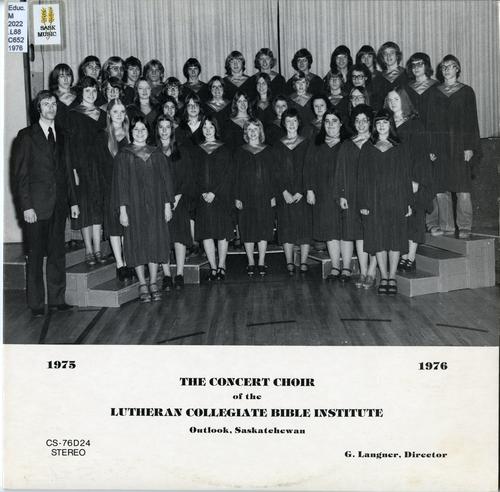
A Long Time Ago, One Advent

1976-concert-choir-photo

Categories
Uncategorized

Angels and Monsters

Angels and Monsters


It’s kind of a joke, but only sort of: I’ll tell my students that if they are ever visited by an angel, they already know exactly what the angel will say, and what they should do. The script is all there in the Bible.

The angel will say two words, I tell them. Guaranteed. And those two words are always the same:

“Fear not.”

And then, I tell the students, their job is to fall flat on the floor in wonder, awe, and holy terror.

The students always laugh. Our generations not being terribly familiar with wonder, awe, and especially holy terror, I suppose they’re laughing at the idea that such an encounter could be so scripted. Or more likely – with the world-wisdom of undergraduates bent on the deconstruction of all myths except the presently-important ones of the market – they are snickering at the idea that such a spiritual and otherworldly encounter could happen at all.

And it is funny, in a way, that the Bible’s angels all seem to have taken the same class in public speaking.  They really do say more or less the same thing. In fact, the phrase “fear not” is firmly attached not just to angels in the New Testament, but also to most of the events where what is “normal” in our world is portrayed as breaking down.

The disciples see Jesus doing what no human being should be able to do: walking to the boat across the storm-tossed water. “Fear not,” he tells them, as the laws of nature are tossed out. The confused women enter the tomb on Easter morning to anoint the dead body of Jesus with oil and perfume and instead of the stink meet a young man who says to them “Fear not.”

Perhaps with all that warning against being afraid, a question that could be asked is “what is there to be afraid OF?” And on that subject, we have plenty to learn.

The Bible uses the phrase “fear not” when there is some kind of theophany….some kind of “appearance of the supernatural”. We have forgotten that the Bible is an alien book, from a foreign, strange and sometimes horrific world. It is full – absolutely full – of a kind of monstrous depiction more reminiscent of a Transformers movie than of an English country garden. There are sea creatures that can swallow a man whole, witches that call up dead prophets, armies of skeletons standing at the ready, hell-rain to destroy cities, plagues, pestilences, and a pillar of cloud and fire scalding the ozone in the wilderness. There are angels and seraphim, magical windstorms and signs in the stars.

The understanding of what constitutes holiness, in the ancient Biblical world, was what was “set apart”. And what was set apart was, almost by definition, considered dangerous. When God is a lifestyle option and Jesus a bobble-headed doll, the idea of a terrible presence is something we have moved off to movies about space invaders and genetic mutations. But for the ancients who wrote the Bible, holiness was not just sacred. It was also scary.

And those who think Christianity is all sweetness and light haven’t looked closely at the two defining moments of their faith: the incarnation and the resurrection.

What could be more bizarre and repugnant than the idea of a holy God taking on flesh? The very term – incarnation – shares its root with something like “chili con carne” (chili with “flesh” or meat), which tells us something about Jesus. He was real (all the Gospels agree on this). He was human, which means he had headaches and ear wax and gas problems. If you cut him he bled. And yet he was, according to Christian teaching, the infinite God, somehow collapsed into a puking, mewling, baby with blood pumping furiously through fragile veins.

Holy miracle, freakish myth or monstrosity: a lot depends on your perspective. Given the unnaturalness of the initial story, it’s no surprise that eventually, there were legends about talking animals (run screaming from the barn) and strange foreign astrologers. In our own day, we have seen a whole slate of movies around Christmas that celebrate the monstrous: The Grinch (a monster), Scrooge (who might as well be), It’s a Wonderful Life, Nightmare before Christmas, One Magic Christmas, and the surreal and very spooky “The Polar Express”, just to name a few.

It’s interesting that the same Tuscany that produced the sweet Botticelli cherubs of the Renaissance also is home to the Etruscan urn reliefs. Many of them carry terrible images of the deceased meeting angels who look suspiciously like the modern conception of angels…except that the Etruscans lived centuries before Christ. The ancients weren’t always happy to meet such angels, and so the reliefs often show them carrying goods on their donkey, or sometimes accompanied by a slave carrying gifts, designed to placate the otherworldy powers.

The Bible unflinchingly looks at the “other” and the unusual, and – here’s the point – names it, quite often, as holy. The Biblical God is no stranger to what is different….God welcomes it. In our world, where there are fewer and fewer babies born with genetic abnormalities, and where the rich and stressed can undertake surgery to “correct” the slightest blemish to nose or ear, breast or chin, where is our reverence for what is strange, and our understanding of the holy “other”?