Categories
stroke-recovery Uncategorized

My “Year + Two Month” Strokeaversary

Somehow my one-year strokeaversary slipped by without a blog post, even though Sara and I marked it privately. Now here we are: way past twelve months. Already to 14 and counting.

I’m not sure why I didn’t push myself to post a one-year column on the actual day.

It could have been that I wasn’t emotionally ready. I was – and I still am – processing the fact that as far as I’ve come, I haven’t yet mended as I’d wished. Paralysed and stuck in my wheelchair a year ago at St. Martha’s Regional Hospital, Antigonish, I told my youngest, Gabe, that by September 2025 we’d be going for another 100 km walk to celebrate my recovery, like we did on the Celtic Shores Trail along the Cape Breton coast in the month before the stroke.

Well….that won’t be happening anytime soon, although I still hold out hope. While I can walk farther and faster than at any point since my brain damage, my best distance is a couple of kilometres with a limp. It’s hardly 100 km in a week like we did in 2024, striding into a new coastal village every afternoon in the late-afternoon sunshine.

I also dreamt that at one year post-stroke the part of my body the slowest to recover, my left hand, would be fully back in use. I imagined somehow I’d be chording smoothly on guitar, holding my mug of tea, and most importantly, typing. The truth is that yes, I can actually DO all those things, sort of! It’s a miracle. And I recognize that miracle when I’m properly “glass-half-full” thinking. For instance, I’ve typed this blog-post using both hands.

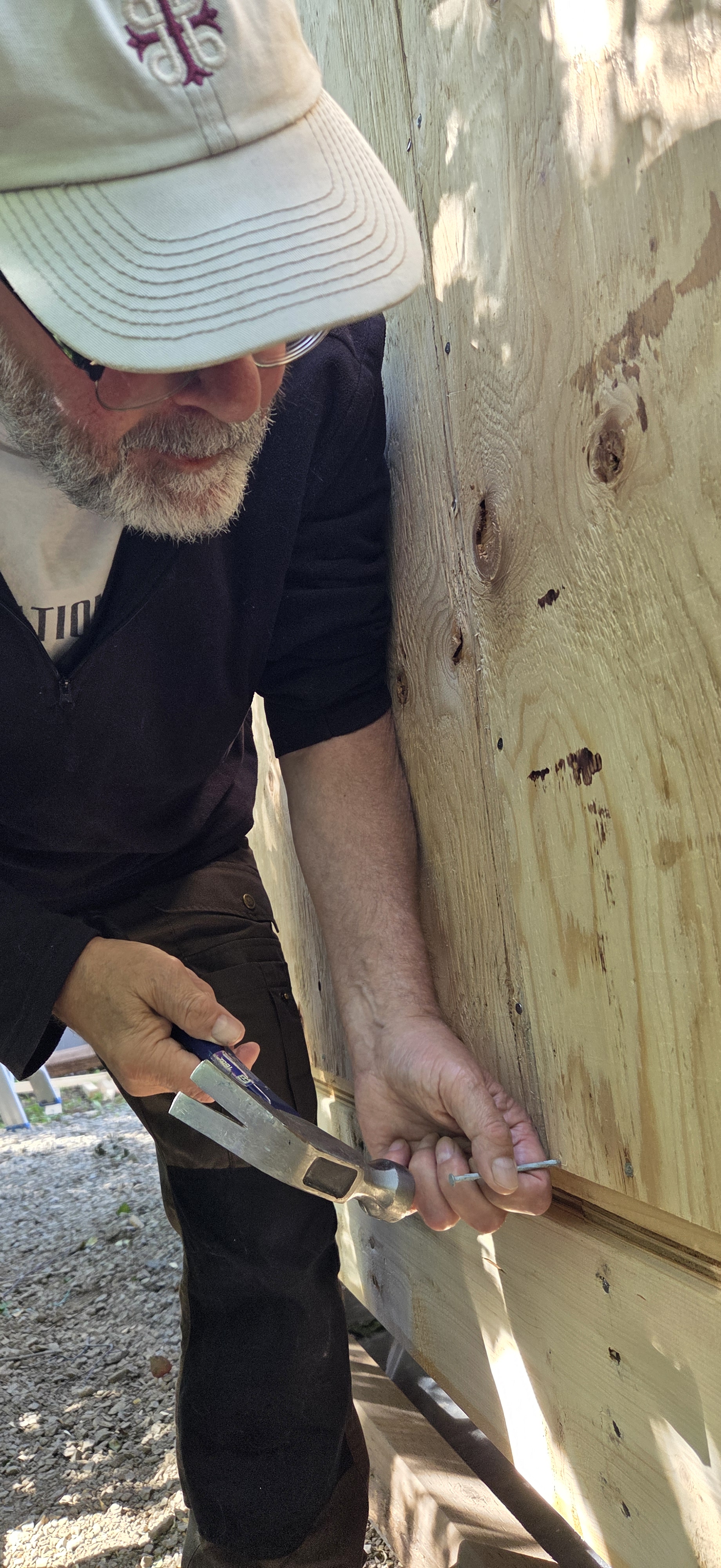
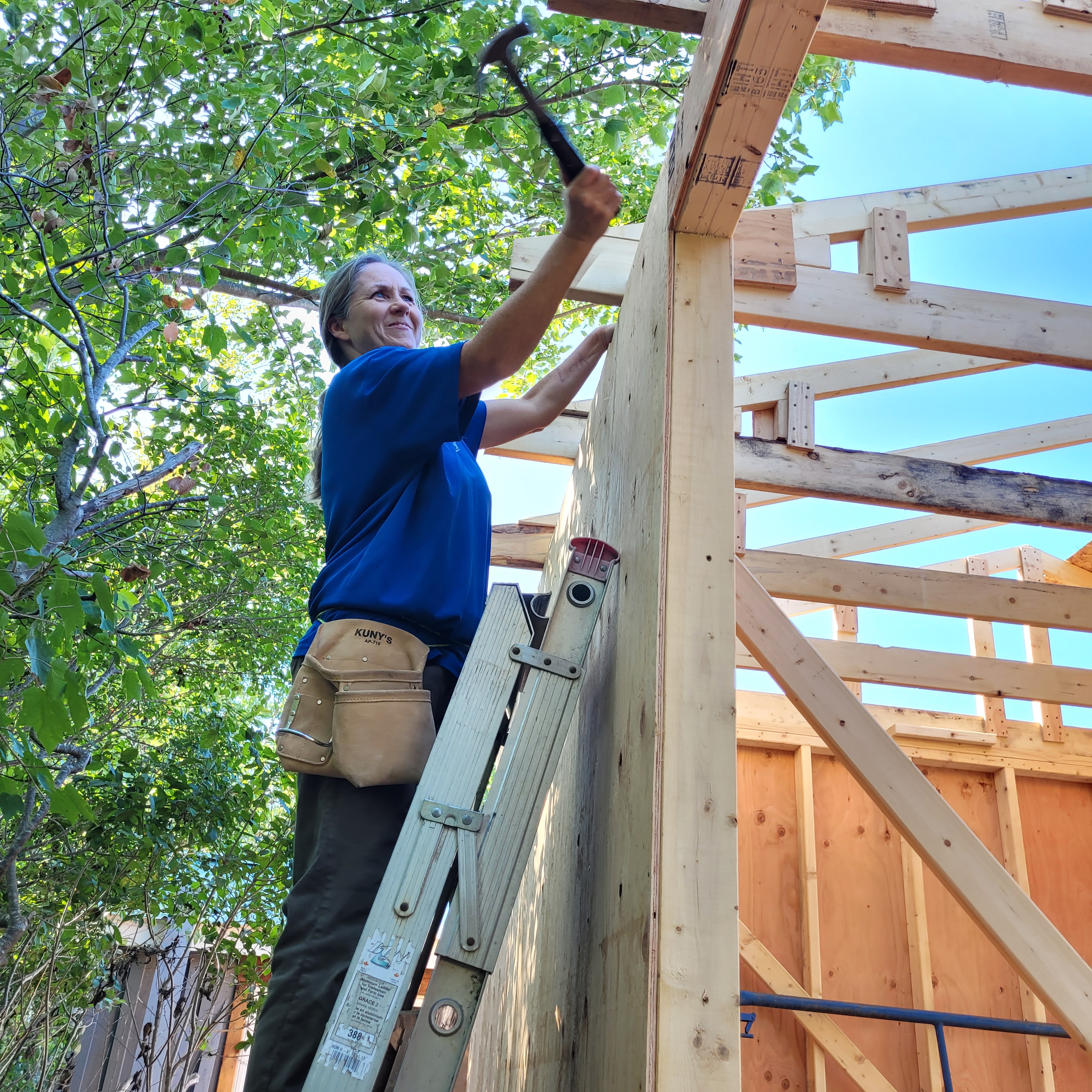
But the deeper truth is more nuanced.  Chording is still slow….usually too slow for a song to really feel like a proper song. A full cup of tea is dangerous to hold in my left hand for too long – and a hot cast iron pan more dangerous still! But I’m able to reach, and lift, and manipulate more with that hand every week. I can now screw the milk and toothpaste lids off and on as a leftie. I regularly empty the dishwasher with my left hand as therapy. I can almost snap my fingers and make the Vulcan salute. Holding a nail in September while hammering was sometimes an act of faith. But the nails got in. Eventually.

Typing is not as slow as it was. But it’s still tedious, difficult, and tends toward errors. Sara says that she can tell my typing has improved because in the last month I’ve written a lot more pieces – articles, reviews, and the like. “You must feel more comfortable composing,” she remarked. “You’re getting back to your enthusiasm for new ideas.”

I feel that too. This fall I taught an online course on Leonard Cohen and St Paul, and had a wonderful time with my adult students. My classes about early Christian asceticism at StFX are fun, and recently I took first-year kids on a tour of the Saint Ninian Cathedral, being sure to point out features I write about in my book “Someone Else’s Saint.” Sara and I each gave keynote presentations on subsequent weeks at different institutions in Halifax, which was a chance for trips “to the big city” and mini-holidays.

My public talks and interviews are happening again. I was interviewed this fall by Jesse Zink of Montreal Diocesan College in his “Principal Meets Author” Series. Be sure to listen to an upcoming episode of CBC Radio’s “The Cost of Living,” where I’ll be on a segment talking about Advent Calendars! This week I’m also presenting in the Research Chairs Colloquium Series at my university, an honour for me.

So, the one-year strokeaversary slipped by.

When she read what I just wrote above, Sara pointed out that maybe it wasn’t disappointment that stopped me after all. Maybe I let the 12-month blogpost slide simply because my fall has been so incredibly busy. True enough. But the anniversary didn’t pass completely unmarked.

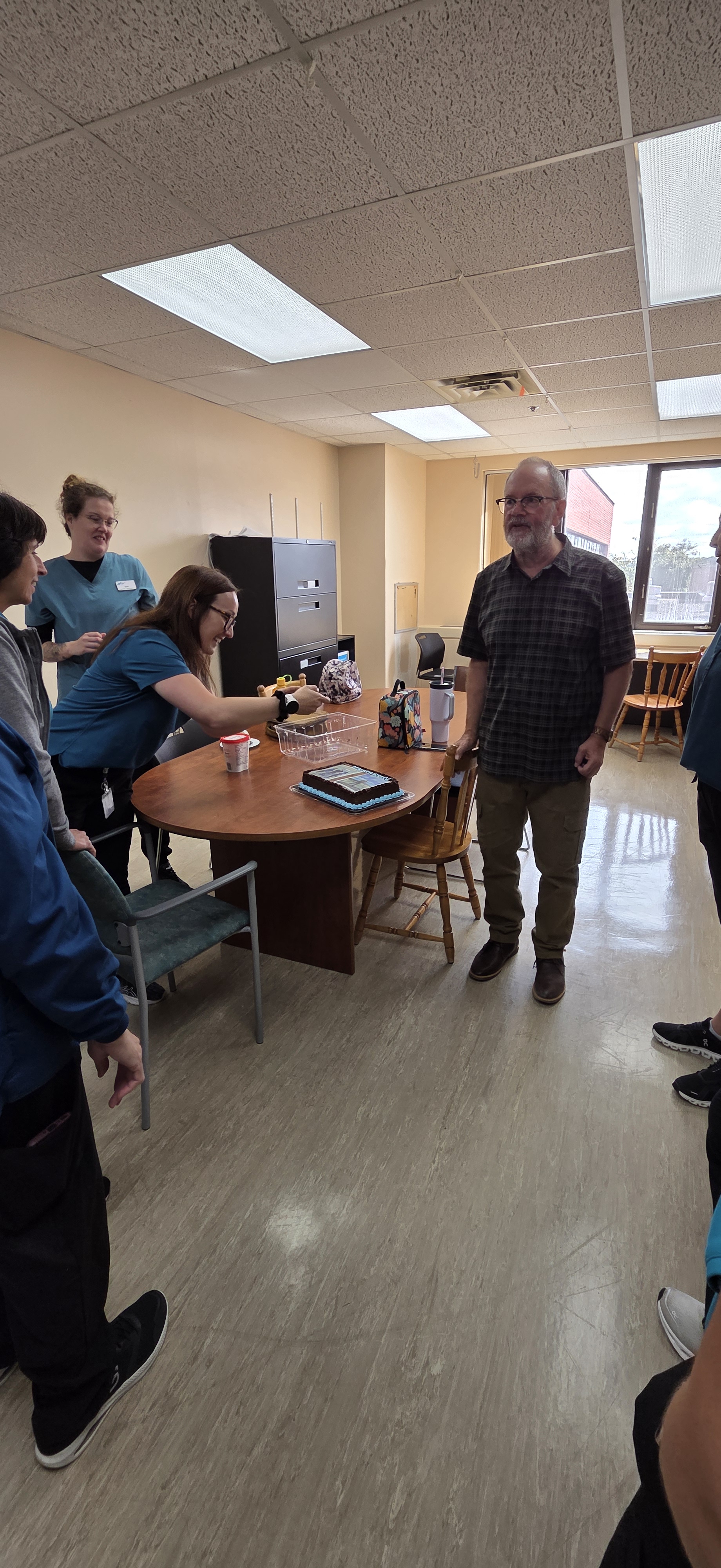
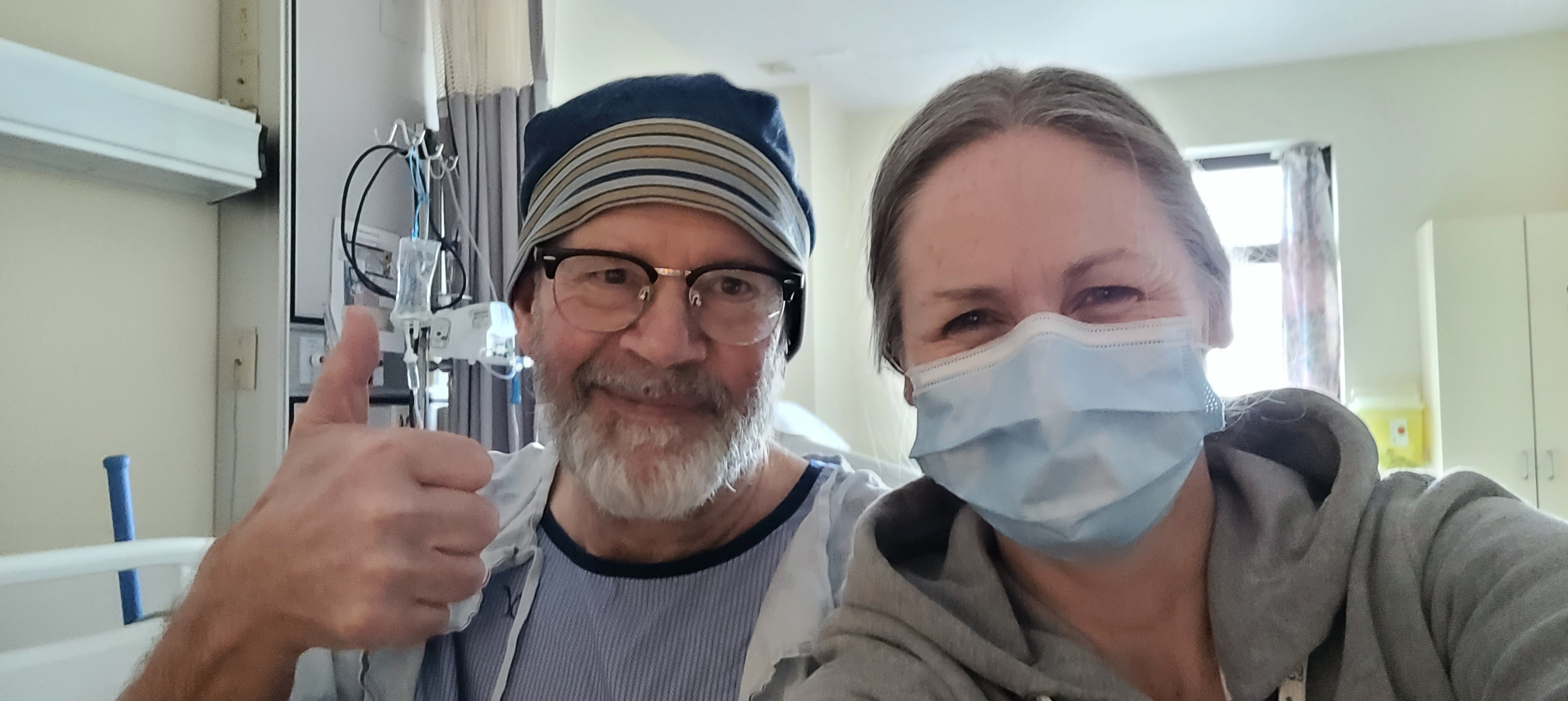
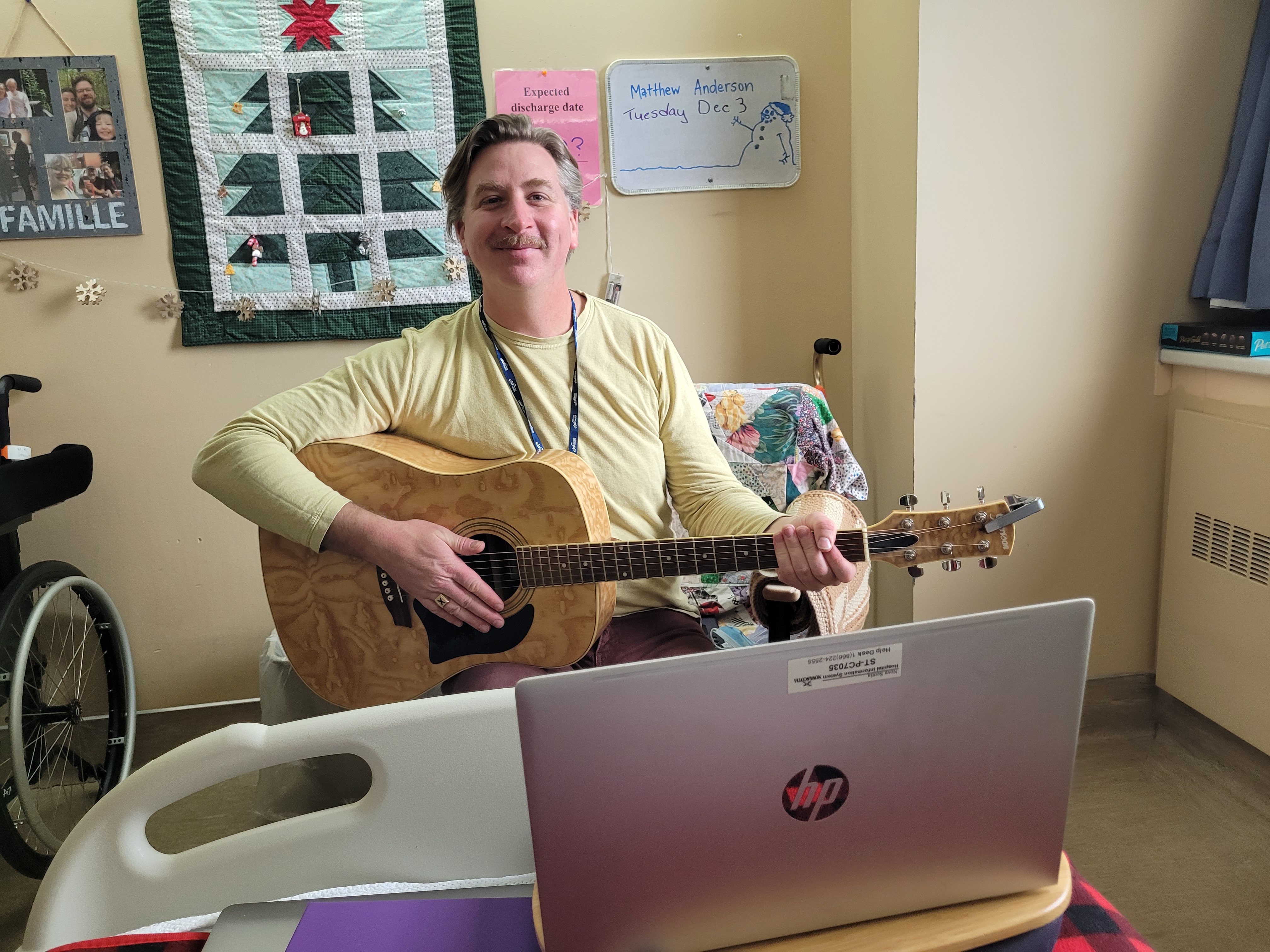
It turned out that I had a follow-up appointment at the hospital one year to the day from my initial TIA – Trans Ischemic Attack, September 16th. So I ordered two cakes from our local Sobeys and Sara and I took them in to mark the day: one for the physio ward, since that’s where I’ve spent so much time post-discharge, and the other for St. Martha Regional Hospital’s third-floor hospital wing, where I lived for almost four months last fall.

Those cakes turned out to be a pretty good metaphor for the hospitalization and recovery process, and for the nature of institutions. On the physio wing, it turned out that almost all of the Occupational Therapists and Physiotherapists who’ve worked with me this past year were there. To a chorus of “oohs” and “aahs” the cake was quickly divvied up. There was lots of laughter and shared memories, and many thanks and congratulations given and received. It was wonderful.

However, when I carried my one-year cake to the nurses’ station, it was a different story. That day, none of the faces looked familiar at all, except my own GP, who was at the desk. Apparently, there’s been quite a bit of turnover recently on the ward. A nurse politely thanked me for the cake, took it, and congratulated me on my recovery. Sara and I stood around a minute or two awkwardly, then left. I’m sure the staff there that day enjoyed the sweets. But through no fault of theirs, they didn’t know me from Adam. There was no one at the desk from “my” past, no one who shared my memories, and no one to mark with me those tumultuous months that were so significant.

That’s life, I guess. In the end, our experiences change us profoundly. Sometimes permanently. But for everyone else, things can sometimes go back to normal pretty quickly.

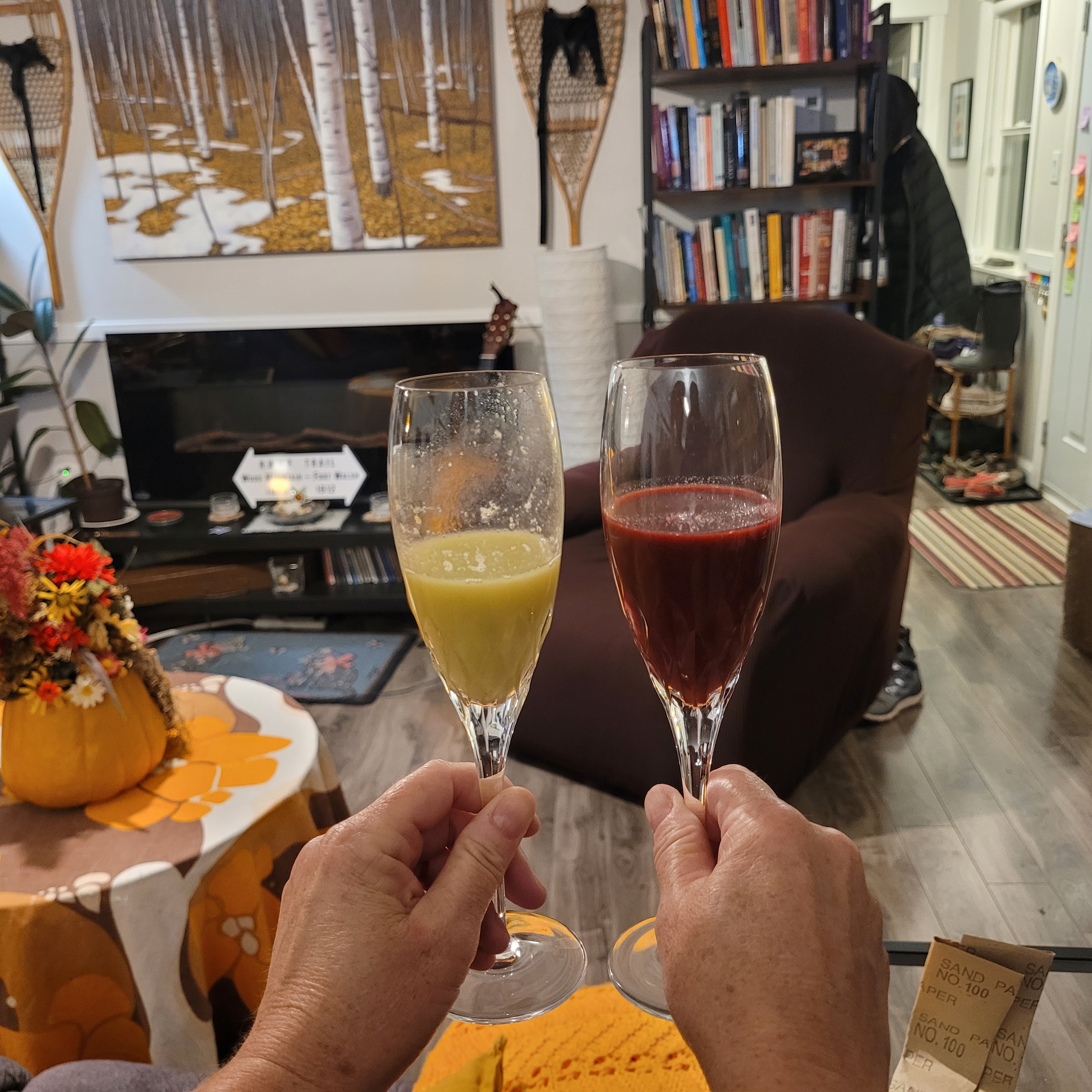
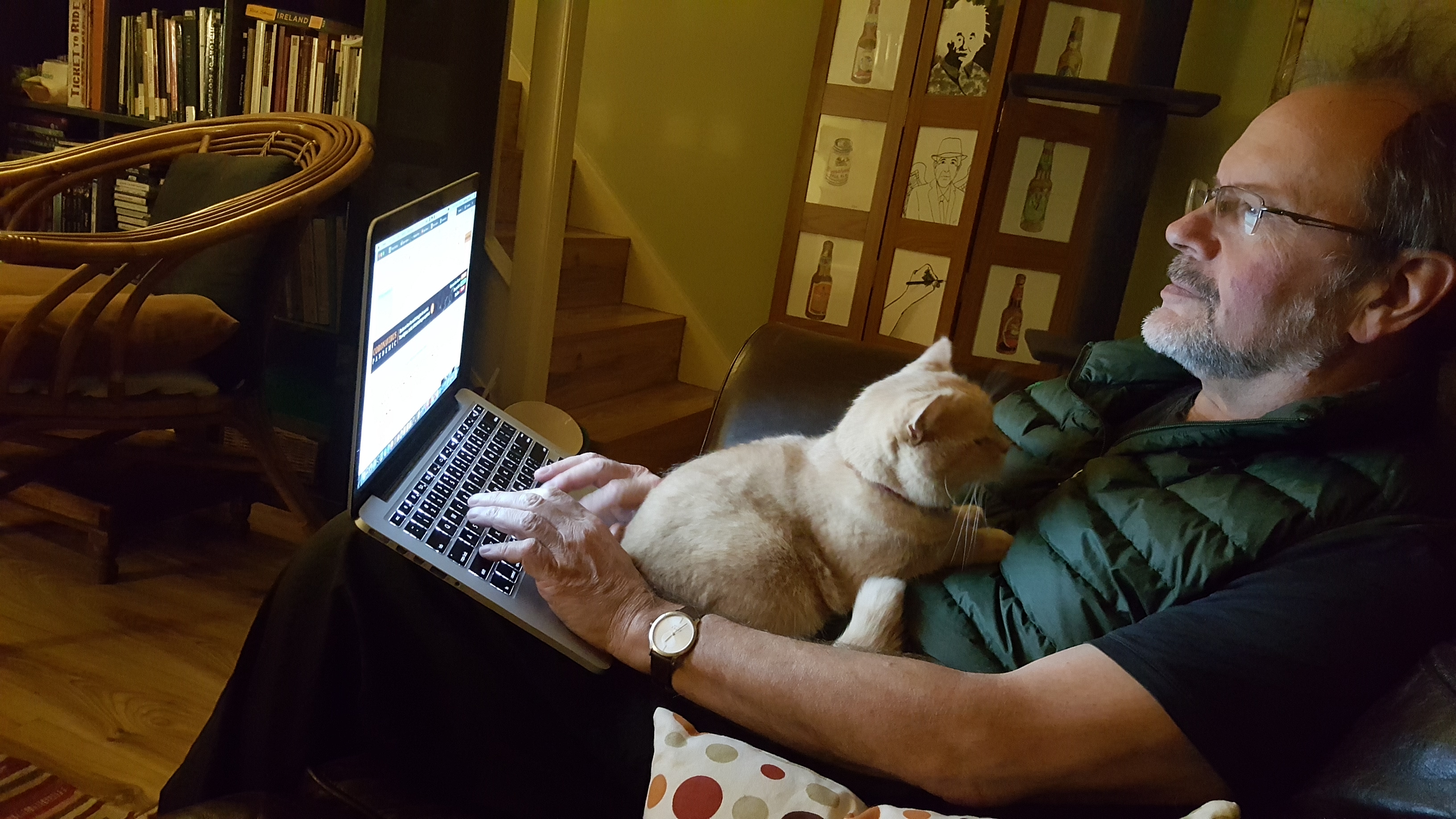
Speaking of major life-changes this fall: in October, Sara’s parents moved back to Moncton for the winter, after a wonderful, but very busy, summer of cooking, canning, and building. I took a very quick, very short trip to Montreal to hug my kids after their own family tragedy: the untimely death of my ex, their mom. Sara and I made our first juice from our first grapes, and filled our pantry with summer’s jellies. Since then my own step-mother, Mary Anderson (Hattum) passed away, along with another good friend in Saskatchewan, John McPhail. Oh yes, and a feral cat we’re calling Theodore seems to have adopted us, on and off….

Things aren’t the same as a year ago in so many ways, some large, some small. I keep having to learn and relearn the lesson that life is beautiful, often fragile, and that the time to tell folks you love and appreciate them is right now.

I feel very fortunate to be alive, and thankful every day for the chance to experience this world in all its confusing glory. Strangely enough, I believe my life has been enriched by my stroke a year ago, and by the struggles that have followed. I appreciate you who have accompanied me through this year (plus a couple of months). As the leaves drop, the Grey Cup finishes (yay SK!) and November tilts toward Advent and Christmas, I hope you find some love and joy in these days as well.

Categories
Uncategorized

Eight-Month Strokeaversary: How’s My Heart?

Several kind folks have messaged me recently asking for a health update, and saying they’ve missed my posts. The fact is: I’ve had a stroke-and-surgery update half-started on my laptop for maybe six weeks! But so much has been happening I couldn’t finish it until now.

In this post, I’ll share some of those events. In a forthcoming post, I’ll focus on more of the details of my actual health update — especially for those who’ve also had (or have loved ones who’ve had) major strokes, or who’ve had PFO Closure surgery, or who may be waiting for news of my hand and leg!

# 1 Heart Surgery in Halifax

A month ago I had a procedure to close the PFO (hole between the upper chambers) in my heart. I was kept awake for the surgery which went well …. but it meant long hours of final grading to finish beforehand, travelling the 2 1/2 hours to Halifax the night before, with Sara as my chauffeur, nurse, and help-mate, the operation itself (more on that in my next post, but a pivotal moment was hearing the surgeon say “I’ve never done that before”!), then trying to follow doctor’s orders (no lifting for a month) to recuperate.

#2 A Book in The Hand

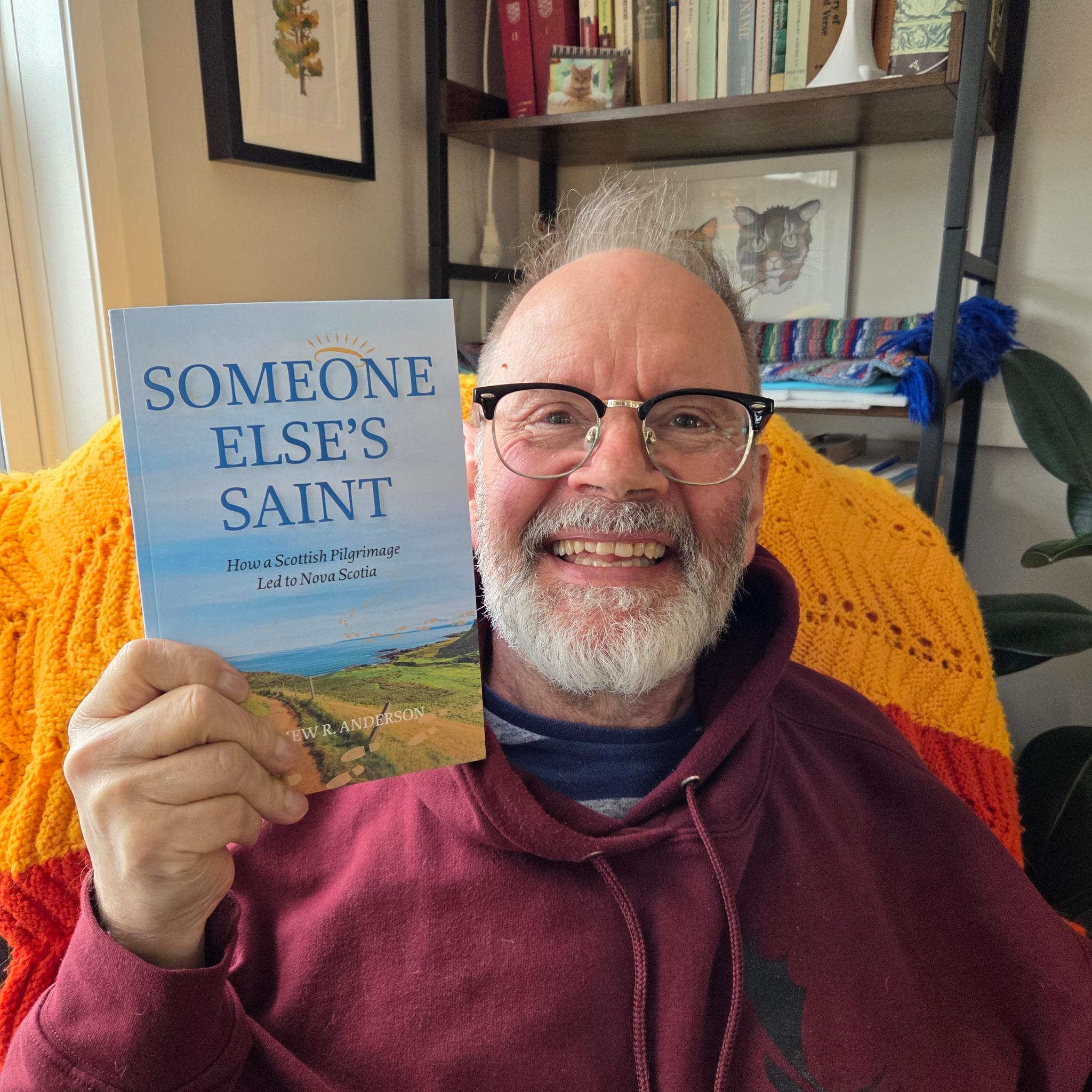
The moment we drove down our driveway on the trip home from the hospital, my – now patched up – heart leaped. Two boxes sitting on the doorstep turned out to contain the first shipment of my latest book, Someone Else’s Saint: How a Scottish Pilgrimage Led to Nova Scotia (Pottersfield Press, an homage to Nova Scotia and to Scotland, and second-place winner of the 2025 Pottersfield Creative Prize for Non-fiction). Sara lugged the boxes in, as ten pounds is my upper limit for lifting while I recuperate. Excitement soon yielded to post-op fatigue…

#3 Throw a Tartan Over It

Just a few days after my return from hospital, I was able to launch Someone Else’s Saint at the wonderful Antigonish Heritage Museum. It was a lovely warm evening, thanks to the talents and scheduling flexibility of friends Barry Mackenzie (colleague from the StFX history department and director of the museum), Lewis MacKinnon (poet and Executive Director of Gaelic Affairs for Nova Scotia), and star musician Mary Beth Carty (Canadian Traditional Singer of the Year 2024). During setup, Barry rapidly produced a variety of tartans, one to cover the cardboard recycling, one for the book table staffed by Sara, and one for the treats baked by museum volunteers. He confided that one of the museum’s life hacks is “just throw a tartan over it.” Even though there were other community events that night, and grade deadlines and convocation to compete with, my (now hole-less) heart melted to see departmental colleagues, community members, and even fellow pilgrims all the way from Halifax come out in support.

pilgrims extraordinaires: Brent King, me, Joann Chapman

#4 Medicine Hat Heartbreak

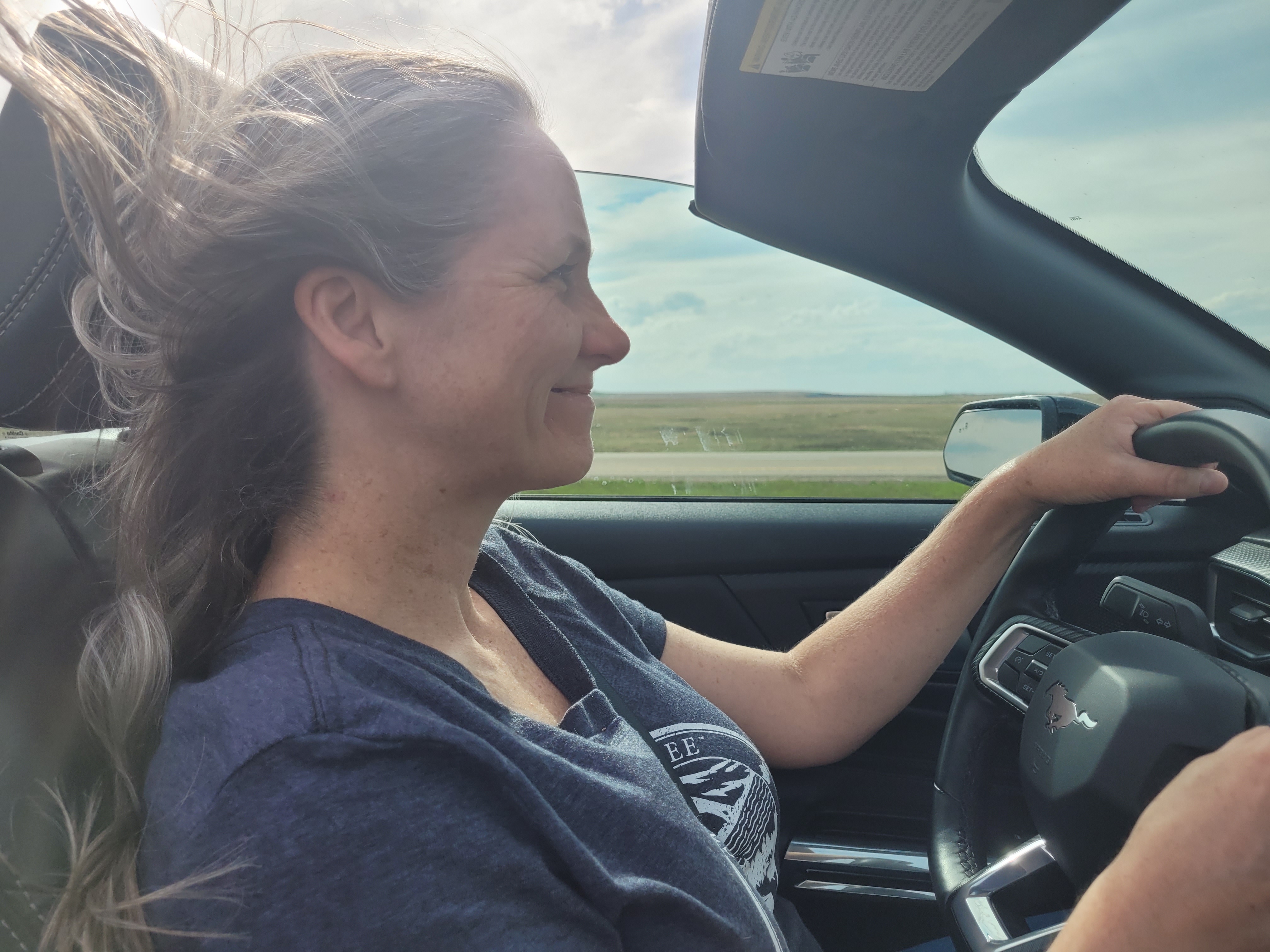
The biggest thing that happened has yet to completely sink in. My always-happy, full-of-life-and-fun, strong as an ox brother in law Vern Enslen had died – a shock to us all, but above all to my sister Kandace in Medicine Hat. As soon as it was confirmed that I could safely fly after surgery, Sara and I booked the next flight to Alberta. There (still somewhat unsteady on my feet) I conducted the largest service the funeral director had seen in years. “By far,” were his words: “It’s a testament to Vern.” Vern, pictured below, was a gregarious and good-hearted extrovert who made friends with everyone – turned out the funeral director was a buddy as well. We spent valuable time with my sister, still in shock, and with other family, including crowds of my cousins Sara had never met. We had booked a “manager’s choice” car rental out of Calgary airport to save money, and were surprised to be handed the keys to a 2024 Mustang convertible. We both had the exact same thought: it would be just like Vern to arrange this from the great beyond, to remind us of the jovial, sport-loving, boisterous tone he would want his friends to take as they celebrated his life well lived. It seemed odd after a funeral, yet somehow fitting, to be cruising back to the airport with the top down. After the accumulated fatigue of grief, unexpected travel, working with my sister to arrange the funeral, and the intense two days of visiting, we returned to Nova Scotia on a red-eye flight that involved no sleep and a LOT of walking–the most I’d done since the stroke. Whewff.

#5 Heart’s Desire

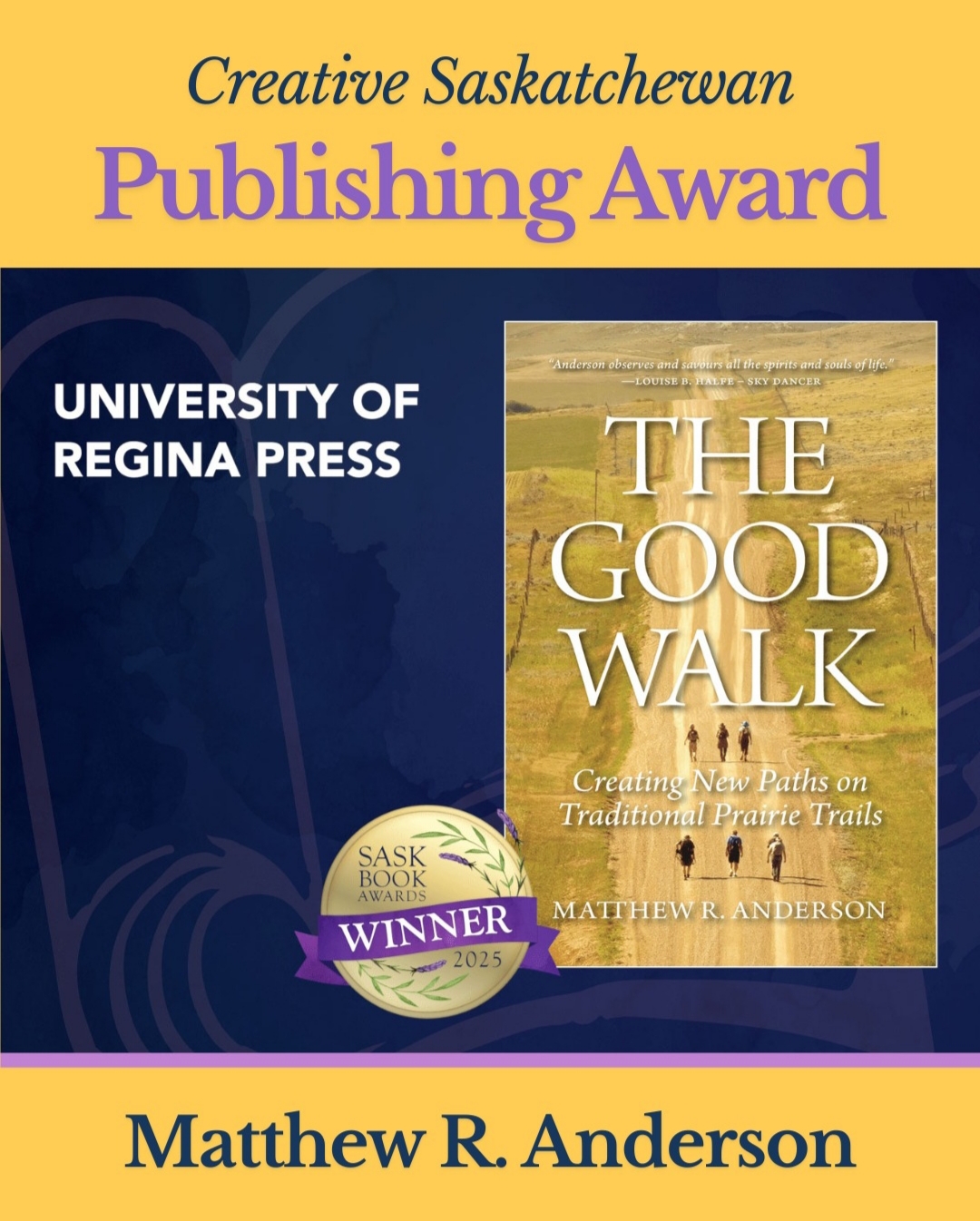
The night of the funeral turned out to also be the night of the Saskatchewan Book Awards gala. Before Vern’s death, I’d been notified that The Good Walk: Creating New Paths on Traditional Prairie Trails was shortlisted. An unimaginable dream come true, for a book so close to my heart — a memoir of my family’s history and our prairie walks, intertwined with the troubled history of Canada’s prairies. But after Vern’s death, the nomination fled to a dusty corner of my mind. Immediately following the funeral, I collapsed into bed at our Medicine Hat hotel, and didn’t even think to check for the winners. Then an email pinged in from my friend and fellow walker Simone Hengen, who was attending the gala in Saskatoon. She sent a photo of what she was seeing on screen at that moment: a Powerpoint showing The Good Walk. At first, I didn’t understand what I was looking at. Then I saw the little gold medallion that said “winner.” University of Regina Press had won the Creative Saskatchewan Publishing Award for my book! It was strange to be jubilant in the midst of loss, but again it felt fitting as I remembered that Kandace and Vern, with his eternal ingenuity and myriad connections, had done so much to outfit me for the long walks across the Prairies recounted in this book.

#6 Faint of Heart

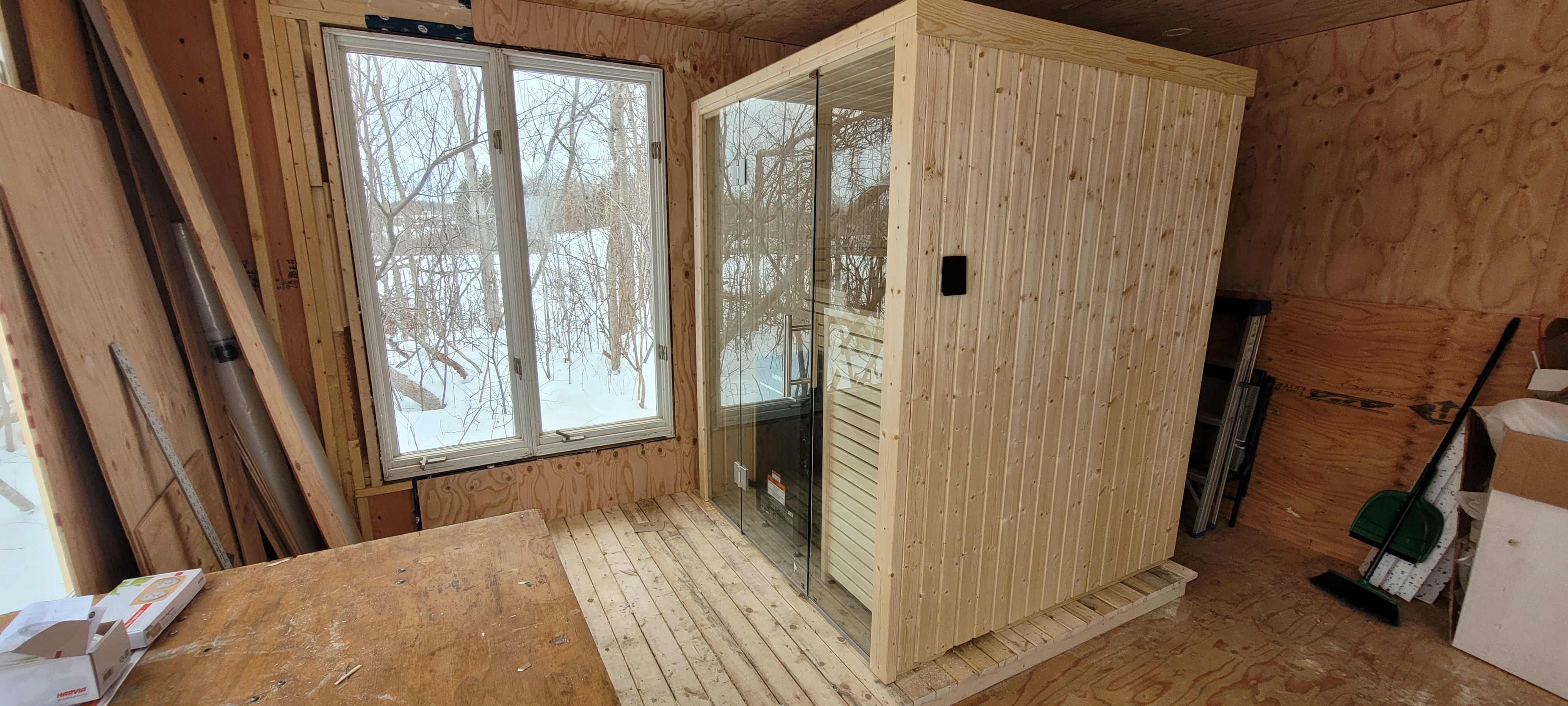
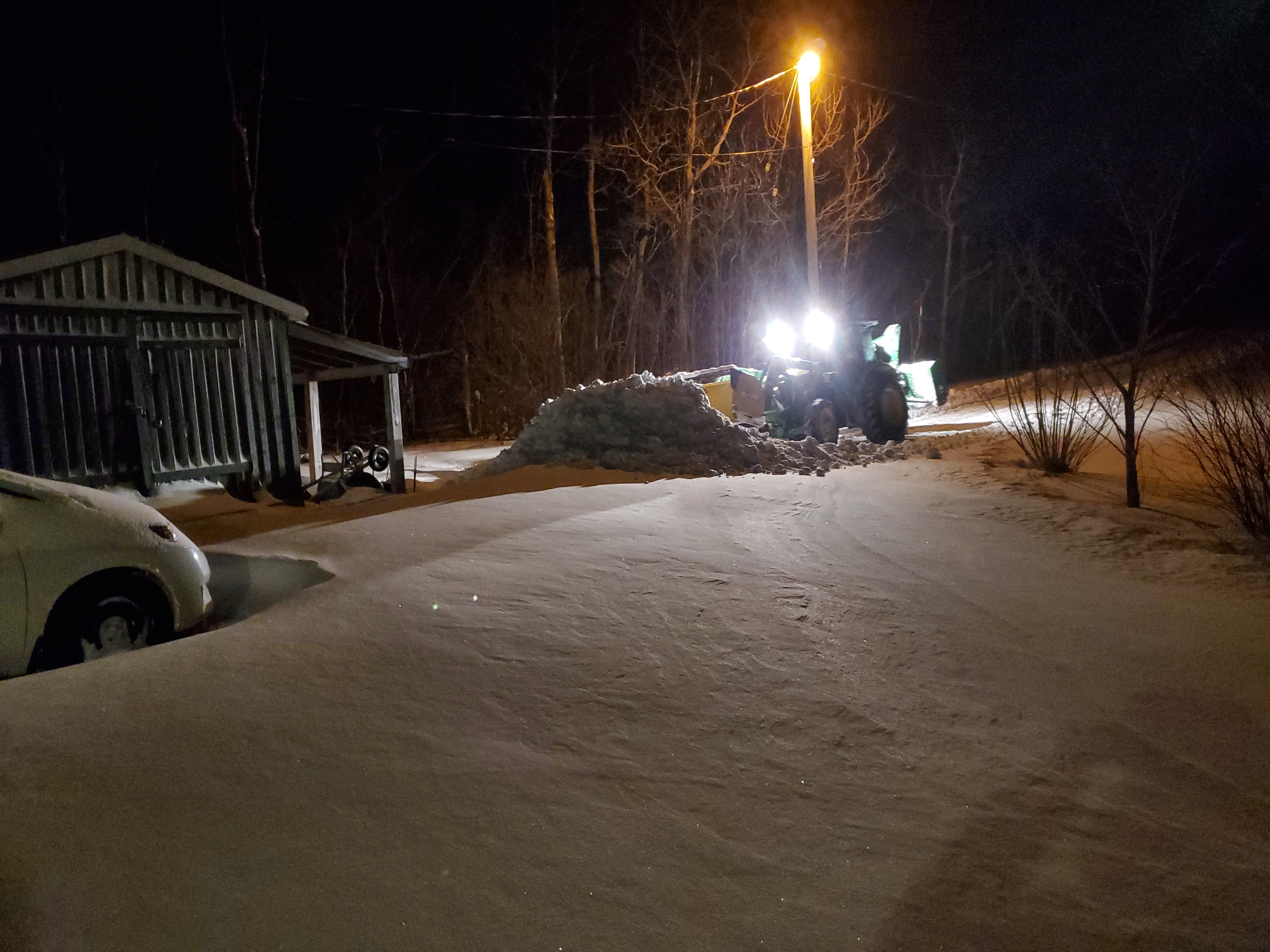
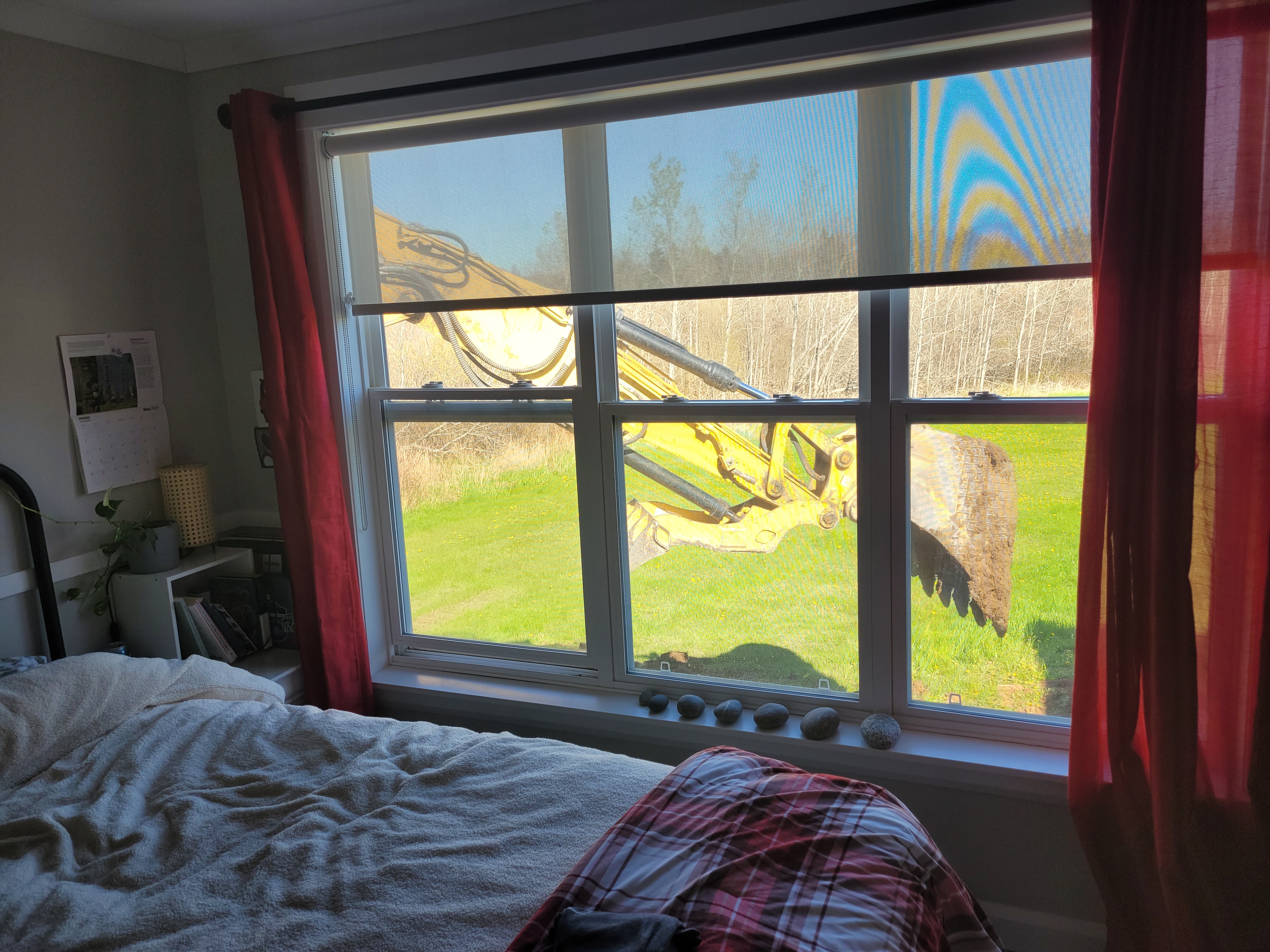
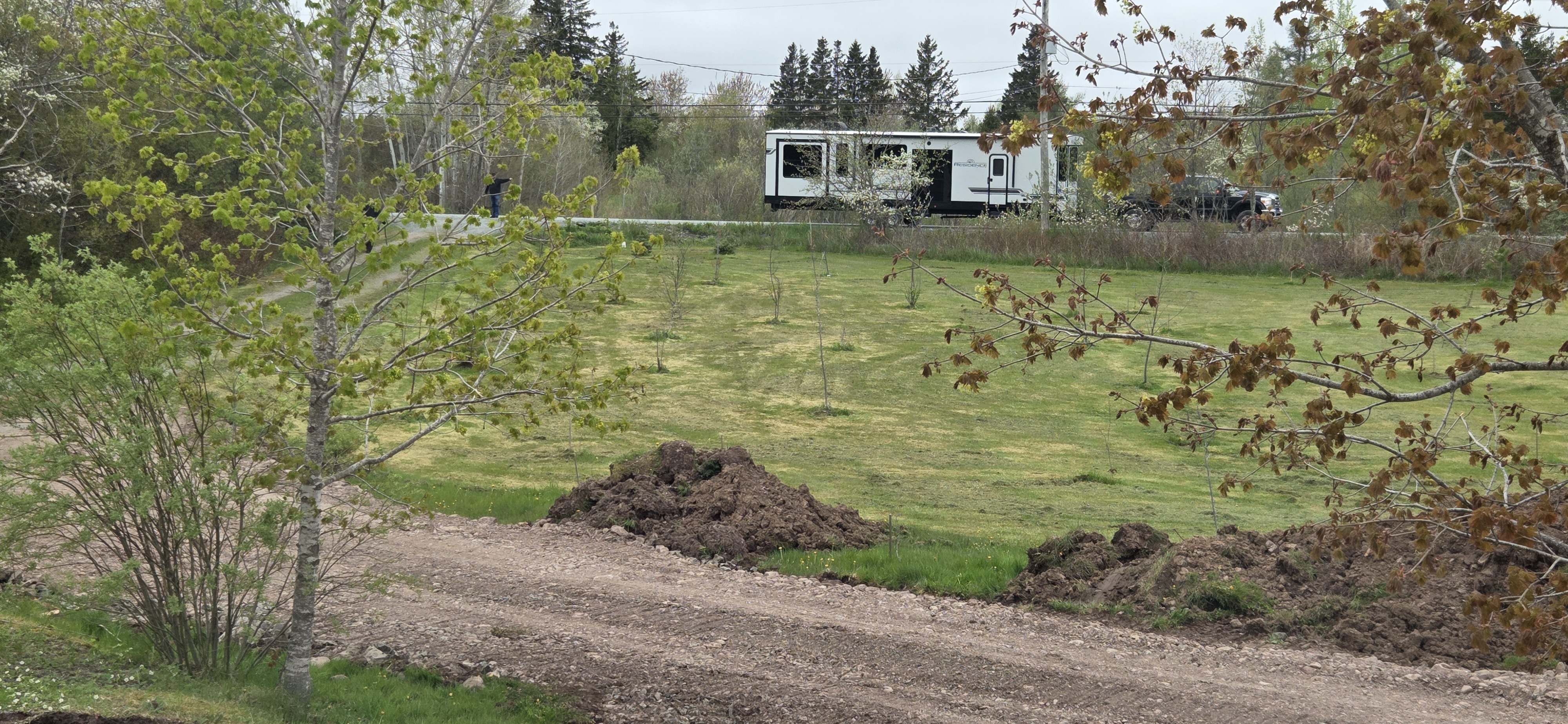
Shortly after we arrived back home, earth-moving equipment showed up to widen our driveway and build a gravel platform for the trailer Sara’s parents Winston and Shirley are going to use as their summer cottage on our property. The platform and driveway were a great success – as an added bonus, they evaded a future problem when they spotted an issue with our septic tank and promptly fixed it. However, the delivery guy from Bouctouche NB didn’t have the gumption to manoeuvre the trailer into place. He was nervous about backing up, and afraid to raise the telephone wires a few inches to clear the air conditioner on top of the unit. In the end he abandoned the huge trailer on the side of the road and went back to New Brunswick, leaving us hoping for the best. Just then, a typical Pomquet neighbour stopped to chat. (No strangers here, only neighbours waiting to happen.) She offered her husband Joe’s tractor and services. The next day, Victoria Day, Joe Rennie showed up and had the unit parked in no time. Sara used our Canadian Tire snow rake duct-taped to a branch clipper to hold up the wires for the trailer to clear. Now, if we can just nab the electrician for hookup, Sara’s parents’ move will be complete…

#7 Heart-Recovery

I want to be sure to mention this: while I’ve posted a lot about my writerly highlights above, life is life. It’s also true that during these last few weeks I got two disheartening manuscript rejections from publishers, and I heard that I’d not received a different book prize for which I’d been shortlisted!

You get the picture. Between surgeries, book prizes, book launches, manuscript rejections, tragic funerals, and major construction we’ve been through quite the roller coaster of events and emotions. Major ups and downs. It feels like a year’s worth of changes have been jammed into a few short weeks.

The surgery and the busy-ness have certainly affected my recovery. More on that very soon in my next post.

Categories
stroke-recovery

Five Month Strokeaversary: “I Got My License!”

“Dad, can I borrow the car tonight? I promise I’ll fill ‘er up.”

After my stroke, I was required by law to take my driver’s tests (written and practical) again, as a “one-armed driver.” I went in to Access Nova Scotia for an oral exam on road rules and safety, a road signs quiz, and a 45-minute road test. My jovial inquisitor was Teresa. At the end of it all, I officially got to keep my driver’s license.

Yayyy!!! I feel SO thankful.

The Driving Exam

It seems fitting that my 90-min driving exam took place almost five months to the day from my stroke back in September. I was supposed to take it a week ago. But I hurt my unaffected right arm last week overworking it (trying to rake snow off our solar panels, I think, or maybe it was that time I carried in all the groceries at once). It took a week for my “driving arm” to recover enough to turn a corner without grimacing.

Was I nervous? Of course! It will be – unbelievably to me – 50 years this June since I passed my first driver’s test in Regina, Saskatchewan (the above grouchy photo was taken a year or two after that time….I’ve since learned to smile!). The very professional and friendly Teresa here in Antigonish was all smiles when we got back to the provincial office. “Look at that,” she said, holding out her clipboard. “I barely wrote a thing. Sometimes I have to fill these sheets! You got just enough points deducted to prove you’re human.” I know one of the two things I got docked for was not signalling when I left a roundabout, but it was because I couldn’t safely take my right hand off the wheel to get all the way over to the turn signal while making that sharp a turnoff.

Appointments, Appointments, Appointments

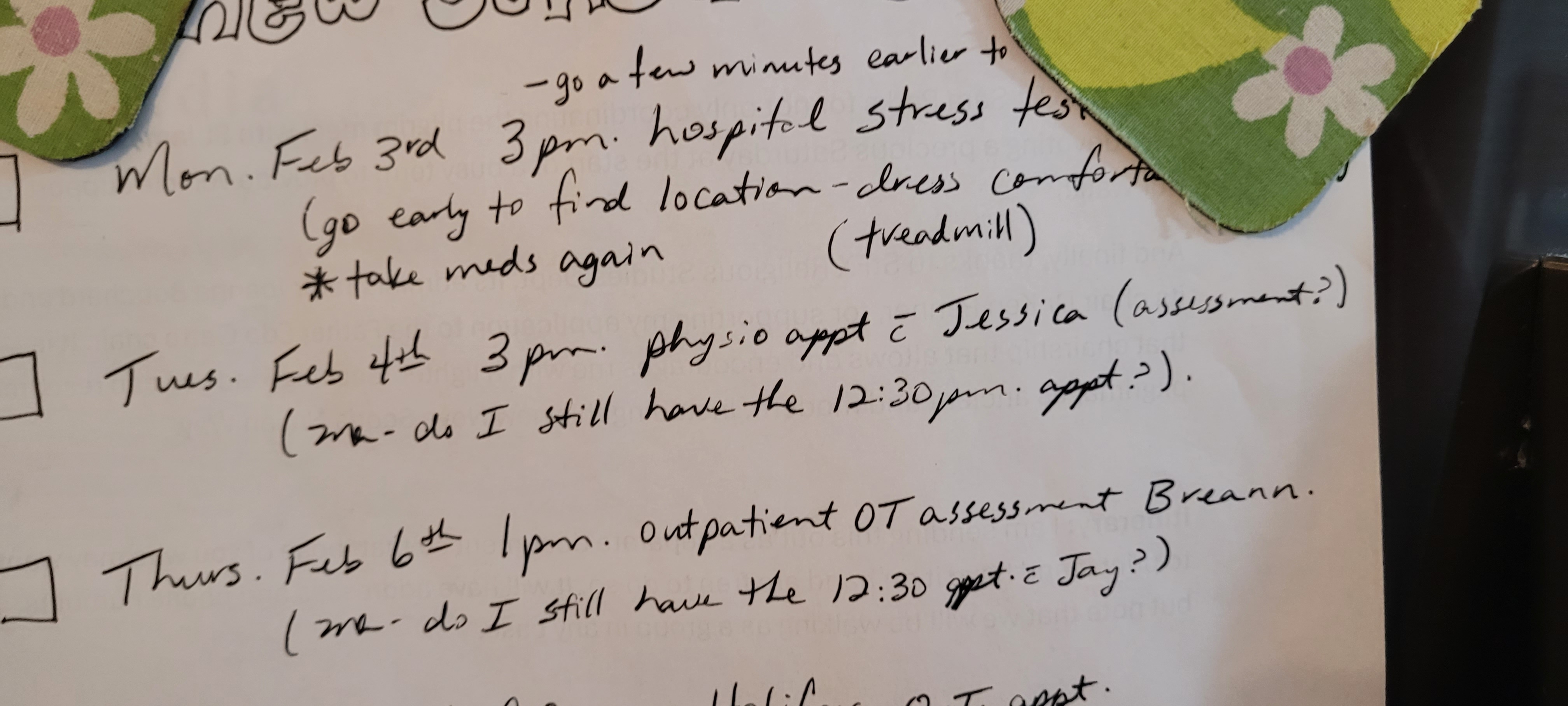
Since Sara and I live in the country, not having a driver’s license would have meant a major life change. These days I’m teaching two days a week at Saint Francis Xavier University, 17 km down the highway. (Last week’s midterm exam for Bible and Film pictured above!) A normal week also means driving in two mornings for the Nova Scotia Cardio rehab program “Hearts in Motion” at the StFX Amelia Saputo Centre gym, where I and a dozen other heart patients get sessions on exercise and diet and 75 minutes on the treadmills, stationary bikes, and (for me) elliptical machines. I usually bump into one or two of my students, which is nice. Twice a week I also head back to the stroke rehab centre at the hospital, now as an outpatient. There I do 30 minutes of physio and 45 minutes of occupational therapy. Then there are all the appointments for blood tests, stress tests, reassessments, and consults, most here, but some coming up in Halifax.

I remember the old folks always complaining about how busy they were with appointments. Preoccupied juggling multiple part-time jobs and kids, I remember thinking: that’s hardly something to keep a body busy. Boy was I was wrong! I’ve needed to post myself a schedule just to keep all my rendezvous’ straight and out of conflict with my teaching times. I’ve also apparently joined that group of people who have to remember to take multiple pills daily, counting them out carefully every evening.

Me and My Big PFO

A big date for me comes up the end of this month in Halifax: my initial cardiac procedure pre-appointment. In case you missed my earlier mention of this: apparently I have a “PFO,” a hole between the upper chambers of the heart. This hole exists in newborns, but in almost all people closes in very early infancy. In a small percentage of us, that hole never closes. A PFO can allow a clot from the leg to pass directly to the brain rather than being shunted safely to the lungs for “processing.”

No one seems to know for sure if this is what happened to me. But it may have been. Something poetic about the fact I have a hole in my heart.

At my pre-appointment they’ll confirm whether I’m a candidate to have that hole closed with an arthroscopic procedure involving magnetized rubber washers. Of course I’d like that procedure asap. I don’t want another stroke (although I’m grateful for the meds that have finally brought my blood pressure down from the mountaintops)! But I know I’m fortunate to be seen so quickly about this. For now, on the doctor’s advice I’m not flying or taking long drives. A trip to Montreal to see the kids, or speaking at Gathering of Pilgrims 2025 in Vancouver as planned, are out.

Refuse the Plateau!

The book “Stronger After Stroke” that was sent to me by Greg and Ingrid Gust says that a good rule for stroke survivors is to refuse to accept the idea of “a plateau” limiting their recovery. So that’s what I’m doing. And amazingly, I have yet to see a plateau. Every single day, I see slight but noticeable improvements. For instance, I typed this sentence using the three fingers of my left hand….not easy, nor graceful, but a start.

I sometimes feel disappointed for still having a pronounced limp when I walk (my arm and leg spasticity, or tightness, becomes much worse when I’m cold). Then Sara reminds me that I’m also walking through snow, and up and down multiple flights of stairs at the gym and the university (holding the railing). So there’s that.

The physios at the hospital filmed me walking. “This isn’t for us,” they said. “This is for you, so you can see how far you’ve come.” Sara came into our living room last week to find me lying on the floor. I’d been trying to squat the way I used to pre-stroke. “Are you okay?” she asked. “I tipped over,” I said, not moving. “Do you need help getting up?” she asked gently. “No.” Sometimes, flat on your back, you just gotta laugh.

My proudest news is that for the first time I can actually make a couple of chords on my guitar… WITHOUT always using my right hand to “arrange” my left fingers. Before Christmas I couldn’t even keep my left hand on the guitar without it sliding off under its own weight. Now, the feeling of very slowly moving my left fingers into an A or D chord (the easiest) is pure joy. A stroke-specialist in Halifax I met with over Zoom said to keep at the guitar daily. That seems to be the key: my daily routines, using my left hand as much as possible, even though it takes so much more time (you’d chuckle to see me spending three minutes trying to fish a spoon out of the cutlery drawer for my tea – do you remember Tim Conway’s SOOOOO-slow routines from the Carol Burnett show?).

Book Launch!

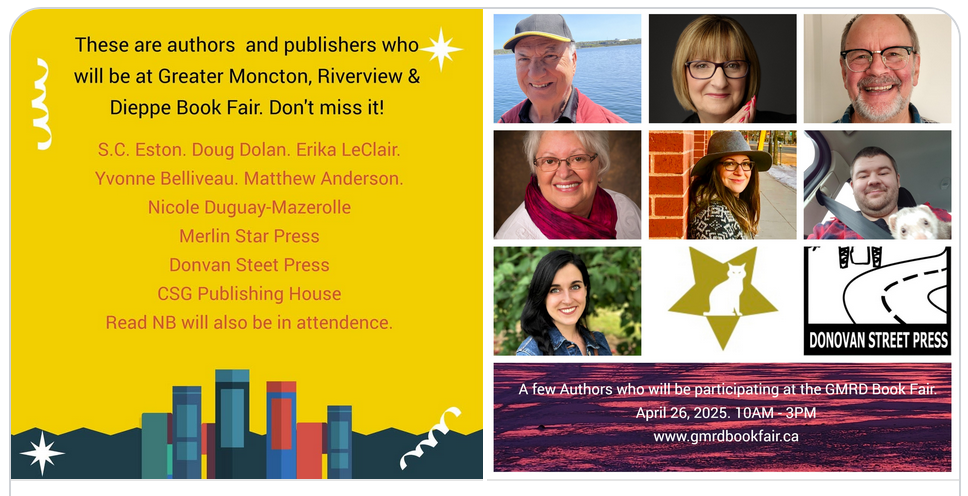
One of the best parts of being at least partly back in the routine is getting back to my writing. With my colleague Barry from the History Department who also happens to run the Antigonish Heritage Museum where I was first invited to give the talk that ended up ballooning into my new book, we’ve set a date for the launch — fittingly at the museum! “Someone Else’s Saint: How a Scottish Pilgrimage Led to Nova Scotia” launches there on Thursday April 24th, at 7 pm. I’ll tell the story of the book and do a reading or two, some of the local walkers will attend (I hope), and fingers are crossed for some fine local music! Two days later, Sat April 26th, I’ll be in New Brunswick for the Greater Moncton Riverview Dieppe Book Fair from 10 am to 3 pm. The book is already getting some nice attention, with a planned CBC Radio (All in a Weekend) interview. It’s only in pre-sales, but it’s already listed as #15 in Amazon Canada’s “hot-sellers” in its category (see below). But please don’t buy it there … pre-order it through your local bookstore instead! 🇨🇦

Taking Time for Warm Stanfields and for Berry Blossoms

Like everyone else, I’m having a hard time not doom-scrolling and feeling anxious these days because of the news. But my stroke recovery books – and my common sense – tell me that what’s best for my condition is to maintain a hopeful and constructive attitude, and allow my self-discipline and anxiety to be tempered by humour and forgiveness (good advice for us all). So I’m going to be lining up some post-stroke, retirement-adjacent therapy. I’ll try to dial down the work and dial up the creative writing a bit more all the time. And even on my lower sodium, fat and sugar regime, there’s some room for the occasional self-indulgence, such as these 100% Quebec-made “Berry Blossoms.”

As you might be able to tell from this photo of the moon rise over our neighbours’ place, it’s been cold here in Pomquet – and the cold affects me more since my stroke. So it’s also been great to discover that the “Stanfields” long johns of my youth is now a full clothing line, made since before Canada was even a country, just down the road in Truro Nova Scotia. I bought myself a sleeping shirt and Sara a tee-shirt for Valentine’s. These days, I think we can all agree with the logo.

If by chance you’re thinking of saying goodbye to Facebook at some point, please consider subscribing to this blog as a way of staying in touch. Thank you for following me along on this pilgrimage through stroke, and may the support you’ve given me return to you in a thousand ways. Courage and health to you, from our home to yours!

Categories
stroke-recovery

Sara Stedy: Week 11 Strokeaversary

This device is called a “Sara Stedy.” It’s a cross between a wheelchair and a strap-in walker. Just after my stroke 11 weeks ago, I couldn’t stand. I was a “two-person transfer.” Two nurses would use a Sara Stedy to get me up from bed so they could wheel me to the toilet. I remember how safe I felt as they carried me.

Bounce Forward

Now I’m stopping to take my own photos of Sara Stedys as I pass them with my walker on the way to the physio gym. This week, trying to find me new challenges, the physios took me to the hospital’s concrete stairwells and I went up and down with supervision. When I’m home for weekends, I often don’t bother with the walker or cane.

There were some more firsts this week – mostly subtle changes. I’m a bit surer on my feet. Using my right hand to place my fingers, my left hand stayed put long enough to make an E and a G chord on my nylon-string guitar. At home, I ventured out by myself for the first time to take some photos. Instead of ignoring my left hand, I now find myself reaching with it to flip a switch or turn on a tap. (Often I can’t do the task … but it’s worth noting that my brain is starting to think I might be able to!) I had my first full acupuncture session with a local specialist. Lori and Lee and my physio team made this “shoulder and arm” week. By the end of it I could lift my left arm in the air without help, while lying on my back. Karen, one of my supportive nurses, surprised me by saying “shake” with her left hand and I (sort of) did it.

I looked back at my journal from right after the first, smaller, stroke. I’m struck by how brief the notes are (probably because Sara was jotting them, exhausted). I notice what they don’t say: how my condition kept deteriorating, how deeply frightened I was that in my downward spiral, I’d soon wake unable to speak, or with a personality change, or in a coma.

In less than two weeks, I’ll be released back into the wild and into the care of my own Sara Stedy. I feel safe with her, too.

I know this doesn’t mean I’m “recovered.” A familiar refrain across stroke memoirs is that one does not go back to one’s “old self.”

“In the first days after the stroke, I had naively imagined that I would bounce back to being the person I had been in a few months. Meyerson’s book [Identity Theft: Rediscovering Ourselves After Stroke by Debra E. Meyerson and Danny Zuckerman] helped me realize that in life one can’t bounce back; one has to bounce forward.”
~Mukul Pandya, Stroke Onward

Reading the journal now, my overwhelming feeling is gratitude. My stroke wasn’t worse. I have a public health care system. I am surrounded with resources: personal, familial, emotional, financial, and community (folks like you) that collaborate to support my recovery.

Human Resources

I’m usually the pilgrim on the move, but for now I’m the stationary destination! Some of this week’s pilgrims included my colleague Gerjan (right, with Carly and their son Theo), who despite his heavy teaching load and precarious position, has visited me several times.

Or Tom Curry (above), the hospital’s music therapist and a local performer. I’m not sure our ward is even his responsibility. But after he heard I asked about music, Tom faithfully drops by. He asks what music I know and like, tests what I can shake the percussion egg to, and keeps encouraging me. “Ain’t No Sunshine”, “Out on the Mira” “Hit the Road, Jack.” He knows them all.

Or John. John is a north star for the entire ward. Unflappable. Always cheerful. Extremely hard-working… Checking by name on every patient, just in case anyone needs help. As Sara was taking me home this weekend, John was dashing past for an emergency, but took the time to call over his shoulder, “Hey, Sara! Can you believe this guy? Look at him go! So proud of you, Matt, so proud of you.” Once John asked if he could do anything for me, and I asked for help with a shower. “Sure, Matt,” he said, and dropped everything to assist. It wasn’t until halfway through the shower that he admitted, “this isn’t normally part of my role.” Above and beyond.

Like Phyllis. Phyllis didn’t want to take a photo. “The School of Nursing doesn’t like it.” She’s an LPN with a sunshiny face who always says hi as though to a dear old friend, lifting the mood of everyone she treats. A month ago she spent her lunch break trimming my toenails. She wasn’t my nurse this week. But she dropped by, surprising me Friday just before my weekend pass. “How are your feet?” she asked, then proceeded to kneel to take a look (my ankles are swelling from the meds). “Oh, the skin is dry! Would you mind if I put some cream on them?”

Would I mind?? What a gift! As she was walking out for her next patient she called out: “I just love feet.” And me? I just love Phyllis.

Then there’s fellow writer, academic, and walker Ken Wilson who’s been faithfully sending newsy emails nearly daily since the moment Sara announced the stroke on social media, saying it would cheer me to hear from “the outside world.” This is despite Ken’s own mad teaching, writing/editing, and grading crunch! A few days after he read last week’s blog about my trouble with zippers, these showed up on our doorstep. Thank you, Ken!

Reaping Past Writing’s Rewards

Finally, it was a week of incredible affirmation in my life as an author and academic. This feels especially gratifying during a period when I’m struggling to type with one hand.

  1. Rubbing Shortlisted Shoulders with Naomi Klein

I found out I didn’t win the Vine $10,000 non-fiction prize for Prophets of Love: the Unlikely Kinship of Leonard Cohen and the Apostle Paul. But the book was one of just three short-listed out of 60, and the winner was Naomi Klein, for Doppelganger. Pretty amazing company!

    It’s not 10 grand, but it’s certainly a prize to be considered in such company, and I will definitely encourage McGill-Queen’s to use the jury’s blurb in their marketing from now on!

    2. Rave Review in Miramichi Reader

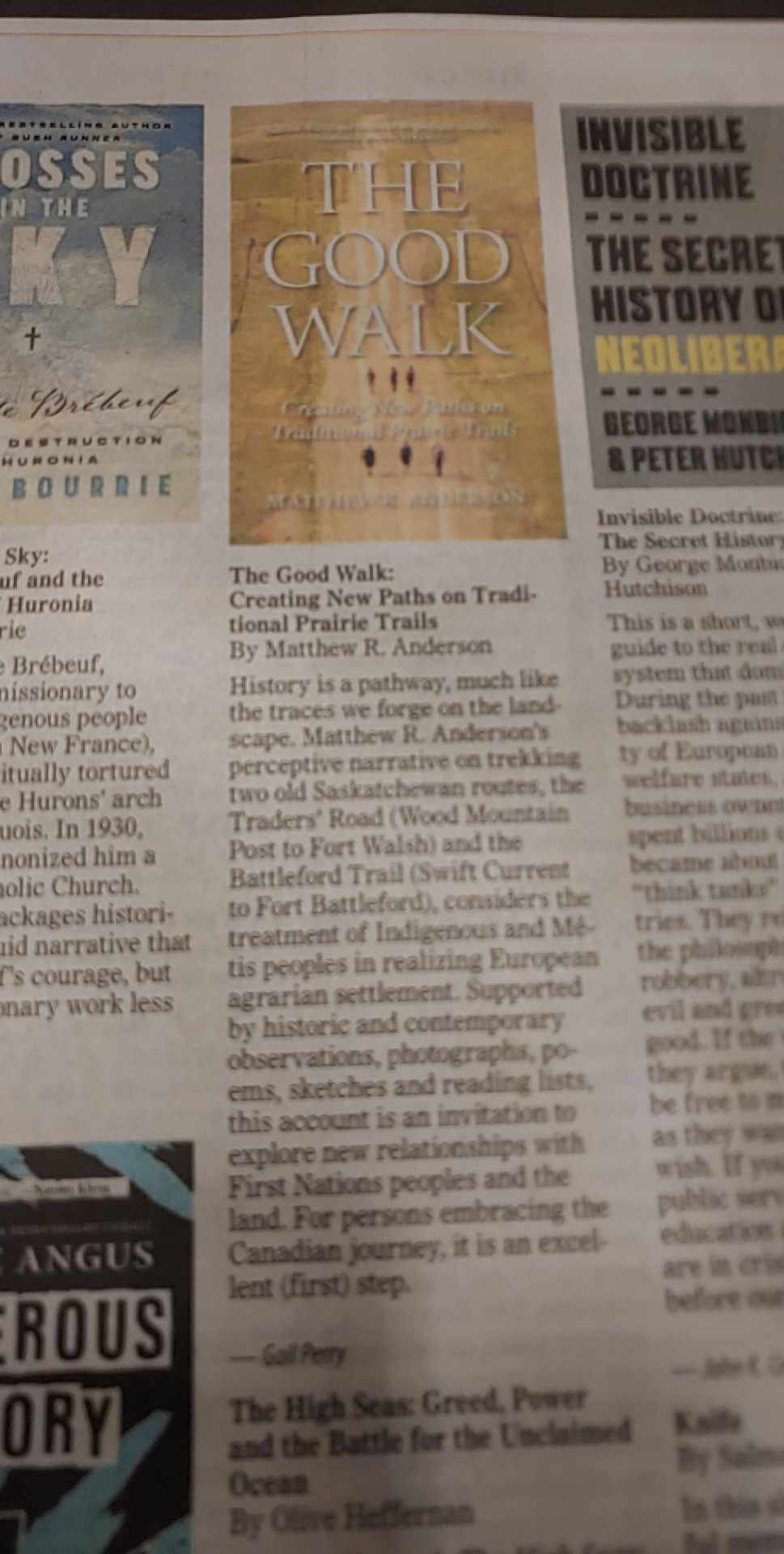
    I was also floored when a Google alert informed me that The Good Walk received a spectacularly positive review by Michel Bryson in The Miramichi Reader.

    3. Winnipeg Free Press Most Notable Books 2024

    As if that wasn’t enough, The Good Walk also made the year-end list in The Winnipeg Free Press’s list of 2024’s most notable non-fiction. What a gift!

    4. The Author Journey Weekly Livestream

    I hesitated to say yes to appear this coming Tuesday with Anne Louise O’Connell on her weekly live videocast, “The Author Journey” to talk about my writing process. My speech still slurs when I’m tired. But Sara said, “that will all just be part of your story.” It’d be great to have you cheering me on there if you’re interested! Tuesday, Dec 10 2024, 4pm Atlantic (3pm Eastern) on their YouTube channel.

    5. Copyedits and Cover Reveal: “Someone Else’s Saint”

    To top off this flurry of reminders that writing done in the past is still at work in the present, Pottersfield Press just sent me the copyedits of Someone Else’s Saint: How a Scottish Pilgrimage Led to Nova Scotia (coming out April 2025). I had submitted it the night I first arrived in the emergency room, following the first (smaller) stroke. Sara teases me that I may be one of a very small number of people on the planet whose first task upon arriving at the hospital by ambulance is to submit a book manuscript.

    I suppose this is as good a time as any for a “cover reveal”!

    For what it’s worth, this is the story of the Nova Scotia Ninian Way pilgrimage that immediately preceded the stroke! Saint Ninian may have a sense of humour.

    Categories
    Uncategorized

    Week 6 Strokeaversary: setbacks & slowdowns

    ;

    How prescient and thoughtful George‘s card was this week! One of the dangers of making daily improvements in my post-stroke recovery is expecting that trend to continue without fault. At the outset, the health care team said there would be days of setback and slowdown. “It’s not a uniform progression,” they warned. “Don’t be discouraged when some days you find you can’t do as much, or your condition even seems to regress.”

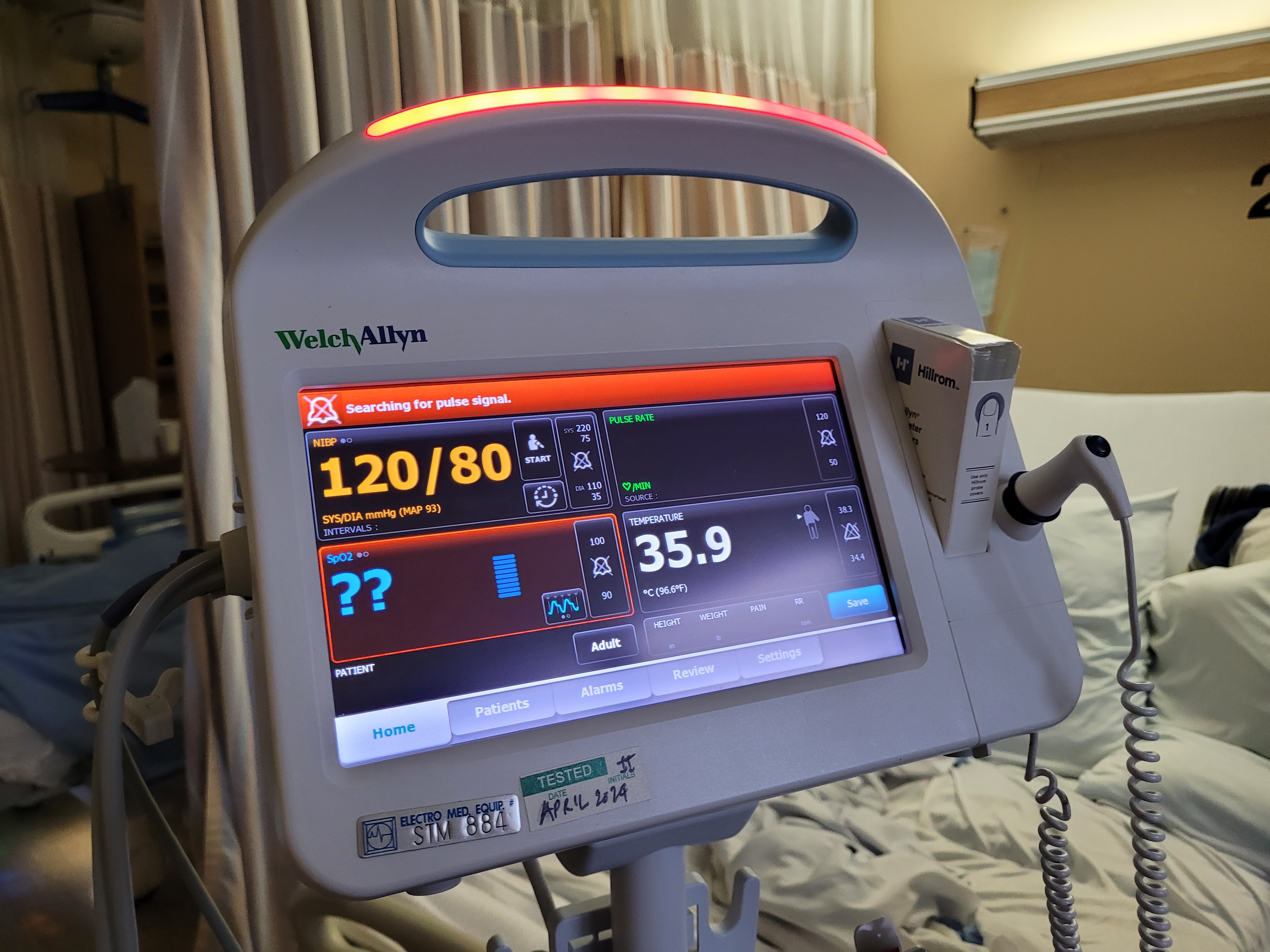
    That’s what happened this last week. “You’re dragging your foot and swinging out with your hip more,” observed Lee as she watched me with the walker Monday. Eventually she said “Just take a break. You must be tired.” My speech slurred perceptibly, especially Sunday through Wednesday, as much as I tried to mindfully keep my “s”s tight. For the first time, there was no progress in my hand – despite Ria’s, Lena’s, and Lori’s best efforts. Between physio sessions I was exhausted. I’d crawl back into bed for naps.

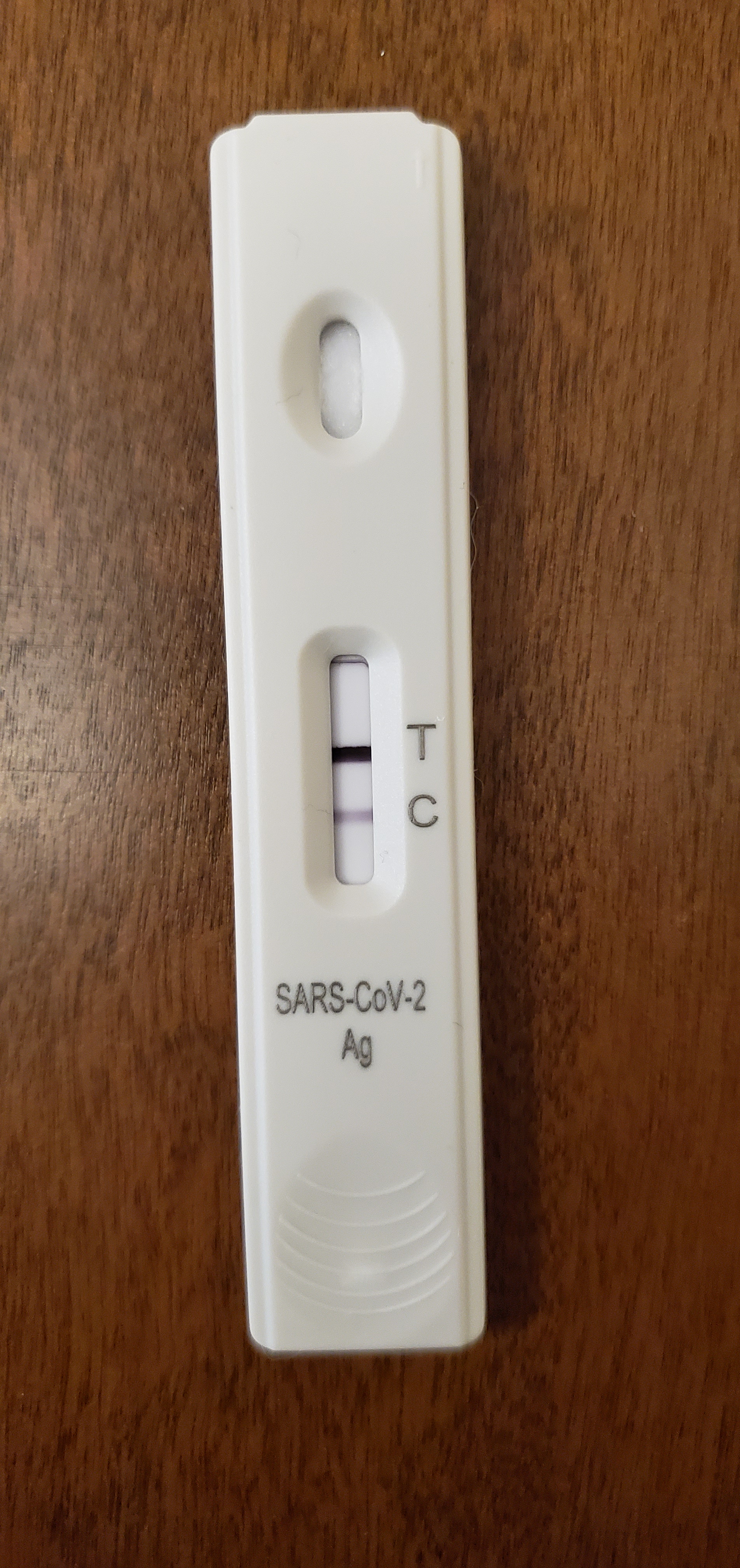
    I asked the staff whether a change I was starting to notice in my taste buds could be stroke related. Some said yes, maybe so. But when Sara picked me up for a supper at home, and heard that I hadn’t been able to taste the maple syrup on my french toast and didn’t enjoy a piece of home-made fudge, she left her N95 respirator on for the car ride home, then pulled out the last covid test from the stash we’d built up (when they were plentifully provided), and said: here, take this.

    I was positive. Sara said, “I knew it.” She still made the Mexican Bean Stew she’d planned, but we ate in separate rooms. When we got back, I told the ward. For 24 hours they didn’t quite seem to know what to do with me and said to “wait for Infectious to get here in the morning.” They administered a test that had to be sent away for analysis. They didn’t bother to protect my room-mate, explaining “he’s already been exposed at this point.” But ironically, just as I started feeling better, the infectious disease control measures locked in full force. By Wed night I was isolated to my part of the room, and staff added gowns, gloves, and face shields to their usual haphazard masks, when they checked my vitals or brought my pills. For the rest of the week members of the physio team who were not themselves sick faithfully led me through my exercises in the few square feet of room where I could still move. Things like showers and fresh bedding were put on hold. For a few days it was just me, my laptop, my book, and the window.

    Sara suggested I take advantage of my isolation to write poetry, a practise I got into in Montreal, England, and Ireland. I was anxious to try this, and a bit anxious about it. The side of my brain damaged by the stroke is the side typically used for imaginative, connective thinking – precisely the kind of conceptualization required to write poetry and fiction. In my isolation room, I worked out a poem about looking out my window and sent it to Sara. “It made me cry,” she wrote back immediately. Knowing I’d been worried, she added, “It’s very much your pre-stroke style. That part of your creativity hasn’t changed.” Encouraged, I wrote the first draft of another poem, about a crow. “Even better,” she responded. “Keep on.”

    By week’s end my slurred speech was closer to normal, my energy was good again and I was making progress every day with my exercises. But hospital protocols require 8 days from first confirmed symptoms, and so they have me on isolation until this Tuesday Oct 29. The physios and doctor suggested that if I could, I should go home for the entire weekend. “You’ll get more physio there than here, at the moment,” Lori told me. Sara, who ALWAYS masks in shared spaces out of concern for vulnerable loved ones, had also become briefly unwell – a “surreal fatigue” she said, and a few coughs and sniffles, although she tested negative. I was six days post-first-symptoms. Sara came and picked me up. I was able to shower both days (shower chair on loan from the Red Cross) and fall asleep in my own bed, where I’ve had my best sleeps in weeks.

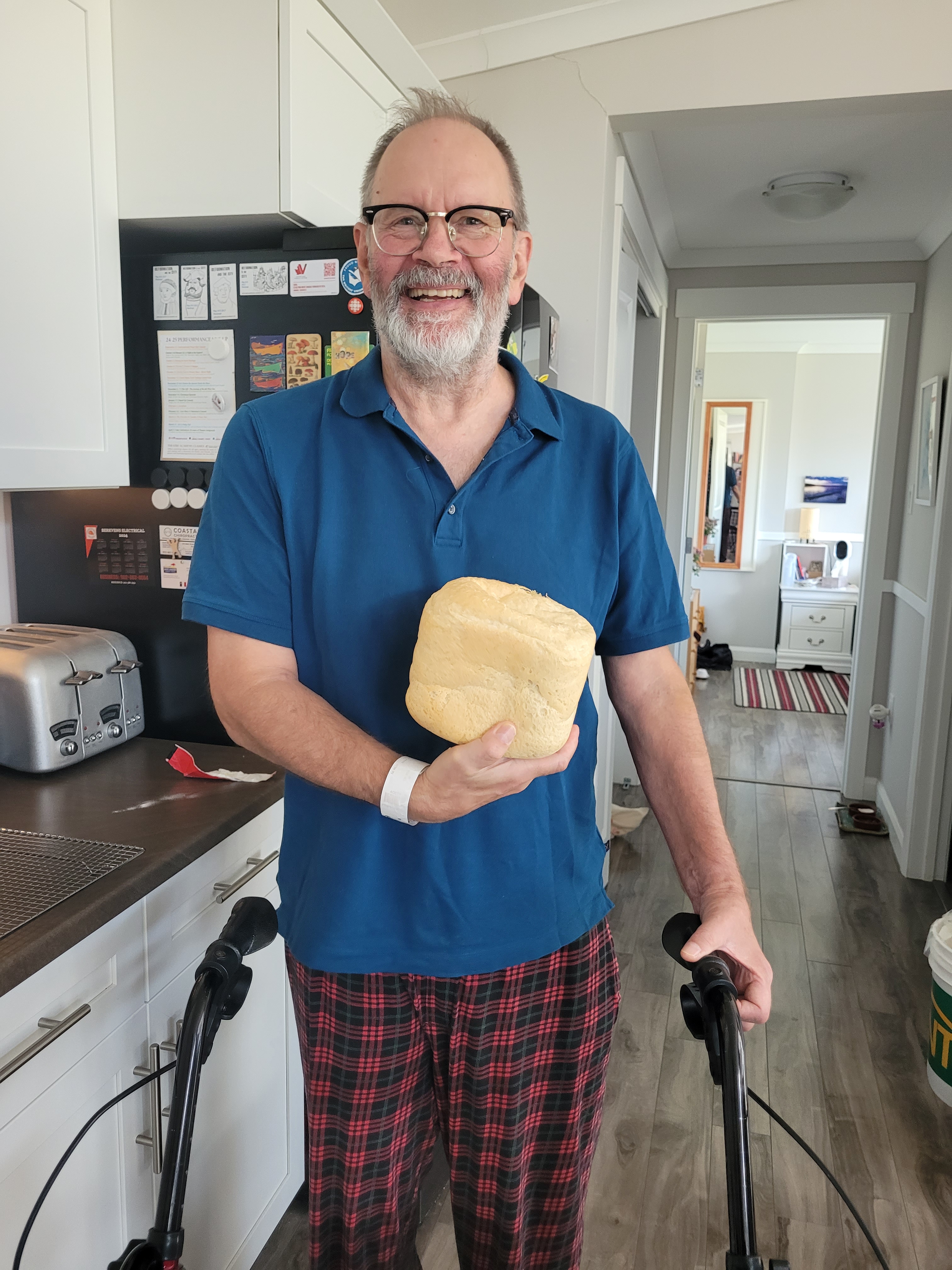
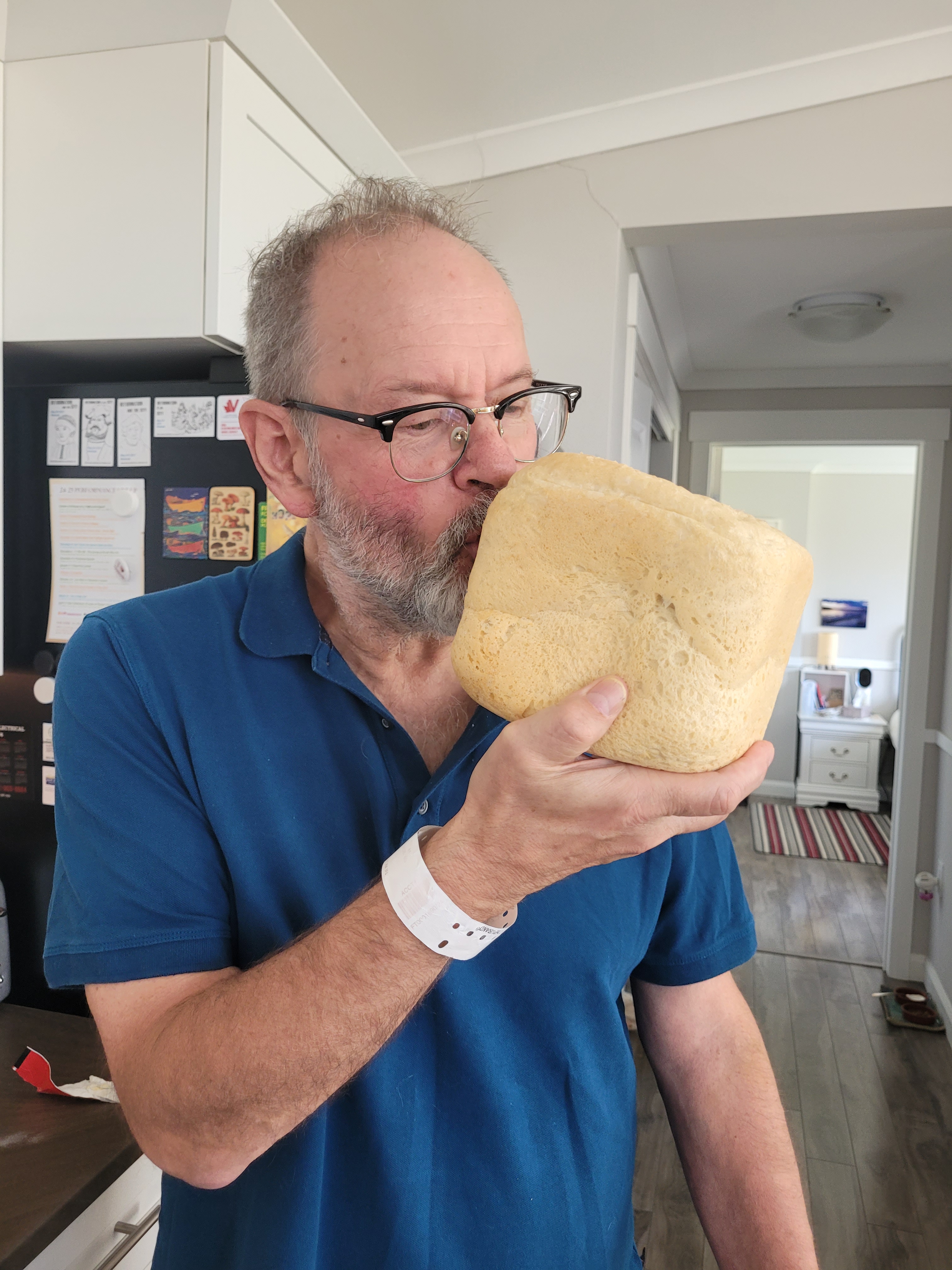
    Sat morning I was able to make bread-machine bread, make coffee and tea, and cook rice (although re-doing the twist tie on the rice with one hand defeated me). Saturday and Sunday I did my leg lifts and toe-points on our deck in the sun, so much better than the thin slice of my room between isolation refuse bins. Tonight (Sun Oct 27) I’ll head back to the hospital and two more days of isolation.

    I can now hold myself up on my left elbow, and bend down to pick up items (with my right hand) that have fallen on the floor. My left hand remains barely responsive. But here at home I’ve used it to squeeze toothpaste and hold a jar while I twist off the lid, so that’s something. I had a very vivid dream this week in which I was going into a musty wing of a large building and turning on the lights, trying to find the thermostats, etc. In my dream I knew that I used to live there and had to make it habitable again. I think the dream was about my brain reactivating (re-inhabiting) my left arm and hand.

    The more I’m learning about strokes, the more fortunate I feel that mine did not take my speech, hearing, or cognition, or in any other way cut me off from my loved ones. Apparently 4 of 5 strokes affect these faculties in some minor or major way. I’m still recognizably my old self – to my own mind, to Sara and my kids, and through this writing, to you. I’ve joined the Heart and Stroke Foundation. I finished Norman Doidge’s brain plasticity book and I’m half-way through “My Stroke of Insight: a brain scientist’s personal journey” by Jill Bolte Taylor. I’m grateful that apparently only my mobility was affected by whatever deadened the 3-cm sphere on my right brain hemisphere. I feel a responsibility to work hard on my recovery because of that relative good fortune.

    This week I’m thankful for the lasagna dropped off for us by the Penners from our Department of Religious Studies at StFX, for the meal coupons given us by our Dean, Erin Morton, for Joanne, our administrator, who thought to send me a ‘grabber’ for those pesky charging cords, for visits from Lewis McKinnon, Robert Kennedy, and Rev. Peter Smith, for the magnificent flowers from my adoptive Finnish family at St Michael’s Church, Montreal, for James McGrath’s gift of a zoom lecture to my class at FX (check out James’ fascinating books here), for tea and a book of poems about walking from our former colleagues at the University of Nottingham, for prayer candles lit at Lutheran Church of the Cross in Victoria, Quebec City, and in so many other places as well, including by the Apostolic Johannite Church (the Gnostics). “Has anyone ever been so love-bombed?” teased my friend and fellow writer Ellie. I don’t know. But I know I feel that support in every part of me every time I try to extend those left-hand fingers. One of these days!

    Last Monday, when I was feeling poorly, Sara took me out to St. Martha’s grotto garden to feel the sun and see the leaves. I felt a bit discouraged just then.

    I played Gabrielle Papillon’s song “Go into the Night” for Sara in that garden, to tell her how absolutely loved and supported I feel by her, and how thankful I am. We both broke down and had a cry as the cars passed at end of shift. It’s a beautiful song. I’ll leave it here for you, too, in closing, in case it speaks to any challenges you’re facing. Not all weeks are easy, stroke or not.