Categories
academic research

A Radically-Reinterpreted New Testament

Last fall my friend Dr Christine Jamieson asked if I might contribute to an upcoming issue she was editing for the Canadian-based journal Critical Theology. I wrote a short piece inviting theologians to consider what implications might arise for their work from recent research in New Testament, early Christian, and early Jewish studies. While academics produce excellent work both in Theological Studies and in Biblical Studies in Canada and around the world, they often don’t talk to each other, as I pointed out. I’m fortunate to be working and teaching as a Gatto Chair of Christian Studies at Saint Francis Xavier University, Nova Scotia. This means I can pursue biblical studies research while attuned (I hope!) to the “engaging church, culture, society” that Critical Theology’s byline promises.
The journal issue came out in November. I was delighted to see my article there, and I wanted to share it. What I didn’t know was that Critical Theology has recently become open access, meaning it’s no longer hidden to everyone except subscribers. Thanks to Novalis Press for making the journal available – coincidentally, Novalis was the publisher for my first book, Pairings: The Bible and Booze.

I also didn’t realize – until I read the issue in full – that this issue of Critical Theology begins with a brilliant, timely, and powerful piece about the importance of theology in the university, written by my Montreal Concordia colleague Richard Bernier at Concordia’s Department of Theological Studies.

You can read Richard’s stirring defense in the open access issue HERE. I’m reproducing my own short article below for your convenience. But I recommend the whole issue to you! And I thank Christine for inviting me to be a part of this worthwhile project.

Good reading!
“The aims of biblical studies to make the [New Testament] texts strange, and theology’s work to make them relevant, are opposed”
“taking care to situate the earliest people and texts within their Jewish contexts and against previously neglected literary and material artifacts, shows us the foun­dations of Christianity in a new light”
“Paul made his travels and did his preaching under an urgent apocalyptic deadline that turned out to be wrong”
“Many of the preoccupations of the historical Jesus and Paul are revealed in recent research as being foreign to our time and place to the point of seeming bizarre”

Categories
Uncategorized

Kahnawà:ke to Montreal Walk, 2019!

Last Saturday, October 26, a group of eleven, mostly Settler Canadians, walked the Seaway between 25-30 km from Kahnawà:ke’s Cultural Centre to Montreal. I’m a Settler scholar from Treaty Four territory, and I planned this walk as a “bodily territorial acknowledgement,” in preparation for our Theology in the City Conference at Concordia this week. We pilgrims were a mixed group – a Buddhist monk, two professors, two undergraduate students, a doctoral student, and a writer! With the knowledge and approval of the Traditional Longhouse of the Mohawk Nation at Kahnawà:ke, we began with a smudge led by Dr Christine Jamieson (Interior Salish – Boothroyd Nation) – Christine teaches Indigenous spirituality in our Dept of Theological Studies. Then we were off! We were blessed by the nicest day of the week: sunny, dry, and warm. We were enthusiastic walkers who made good time, and were back in Montreal by supper.  I’m thankful for the good conversations and quiet moments of beauty and contemplation along the way. Thanks also to the enthusiastic reporters from the Concordian, led by Jad Abukasm, who walked the first leg with us and enjoyed breakfast at our table at the Sunnyside Diner (formerly Friendly’s) in Kahnawà:ke!

(all photos Matthew R. Anderson)

Categories
Uncategorized

Indigeneity at Concordia’s Theological Studies

Have a look at what we’ve been doing in our department at Concordia Montreal’s Theological Studies!


<p><a href=”https://vimeo.com/190139931″>Indigeneity at Theological Studies Concordia</a> from <a href=”https://vimeo.com/user32514305″>Matthew Anderson</a> on <a href=”https://vimeo.com”>Vimeo</a&gt;.</p>

Categories
Uncategorized

Prostate Cancer

IMG_1667

After about a half-hour of conversation with my visitor I get tired and notice I’m thinking about my bed. Not that I’d go to sleep exactly; just lie down awhile and let my mind go blank. “Oh don’t worry,” says the nurse, who calls me later. “That’s normal. Goes with having surgery and general anaesthetic. Your body has gone through a trauma. Every day you’ll get stronger.”
She’s right. I am.
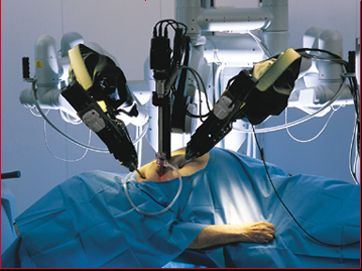
The nurse was helpful, but all quick questions and firm reassurances. This wasn’t the conversation for relating how fascinating I found it that the state-of-the-art Da Vinci surgical robot with which Dr. Anidjar peeled away my prostate almost a week ago uses two joysticks and multiple foot pedals. It’s a little detail, but so reminiscent to me of the earth-moving equipment I worked alongside as a young student on my summer jobs. Back then I was struck by the delicacy of some of my otherwise rough fellow workers as they scraped earth away from an underground pipe, or smoothed a patch of healing concrete. There was something incongruous in how a mechanical arm could look so forbidding and yet reach out so tenderly.
I never got the chance to see the tenderness that moved the Montreal Jewish General Hospital’s much more refined and technical arms – six alien appendages – last Monday. I never witnessed the very skilled, kind and attentive Dr Anidjar work his art (and I believe it is an art). I would have liked to.
Karl Jasper talks about something called ‘limit situations’, times when you become aware of the very finite boundaries to your own power. Cancer is one of those times. According to my friend and colleague Christine Jamieson, Jasper’s point is that powerlessness creates a boundary situation, a moment when if you’re attuned to it, you can become aware of transcendence.
“For now,” says the nurse on the other end of the phone, “rest easy. Your job is to heal.” I’d like to tell her about the summer evening at age 19, when after a few drinks, I boasted to the back-hoe operator I could do his job, and we took a bet on my trying it. I’d tell her how we drove out to the field where I proceeded to shudder and slam the shovel into wounded earth until finally the operator in disgust made me give up and lose my money before causing real damage.
Experience and artistry: I am glad that the Jewish General surgeons had both. Limits and transcendence: I have experienced both this week, and there is more to write on that.

davinci_lyr_r2_c1