Categories
stroke-recovery

Sara Stedy: Week 11 Strokeaversary

This device is called a “Sara Stedy.” It’s a cross between a wheelchair and a strap-in walker. Just after my stroke 11 weeks ago, I couldn’t stand. I was a “two-person transfer.” Two nurses would use a Sara Stedy to get me up from bed so they could wheel me to the toilet. I remember how safe I felt as they carried me.

Bounce Forward

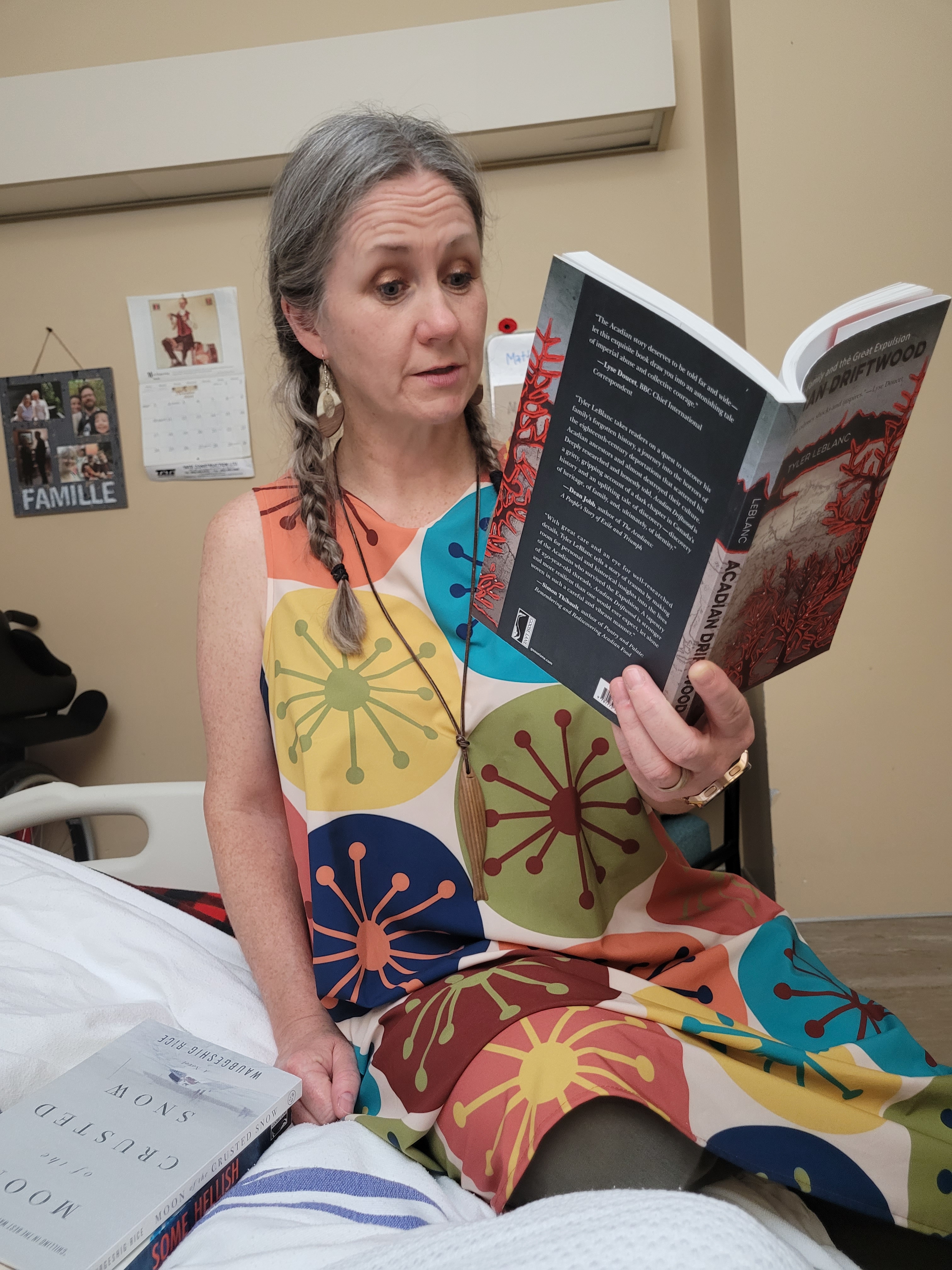
Now I’m stopping to take my own photos of Sara Stedys as I pass them with my walker on the way to the physio gym. This week, trying to find me new challenges, the physios took me to the hospital’s concrete stairwells and I went up and down with supervision. When I’m home for weekends, I often don’t bother with the walker or cane.

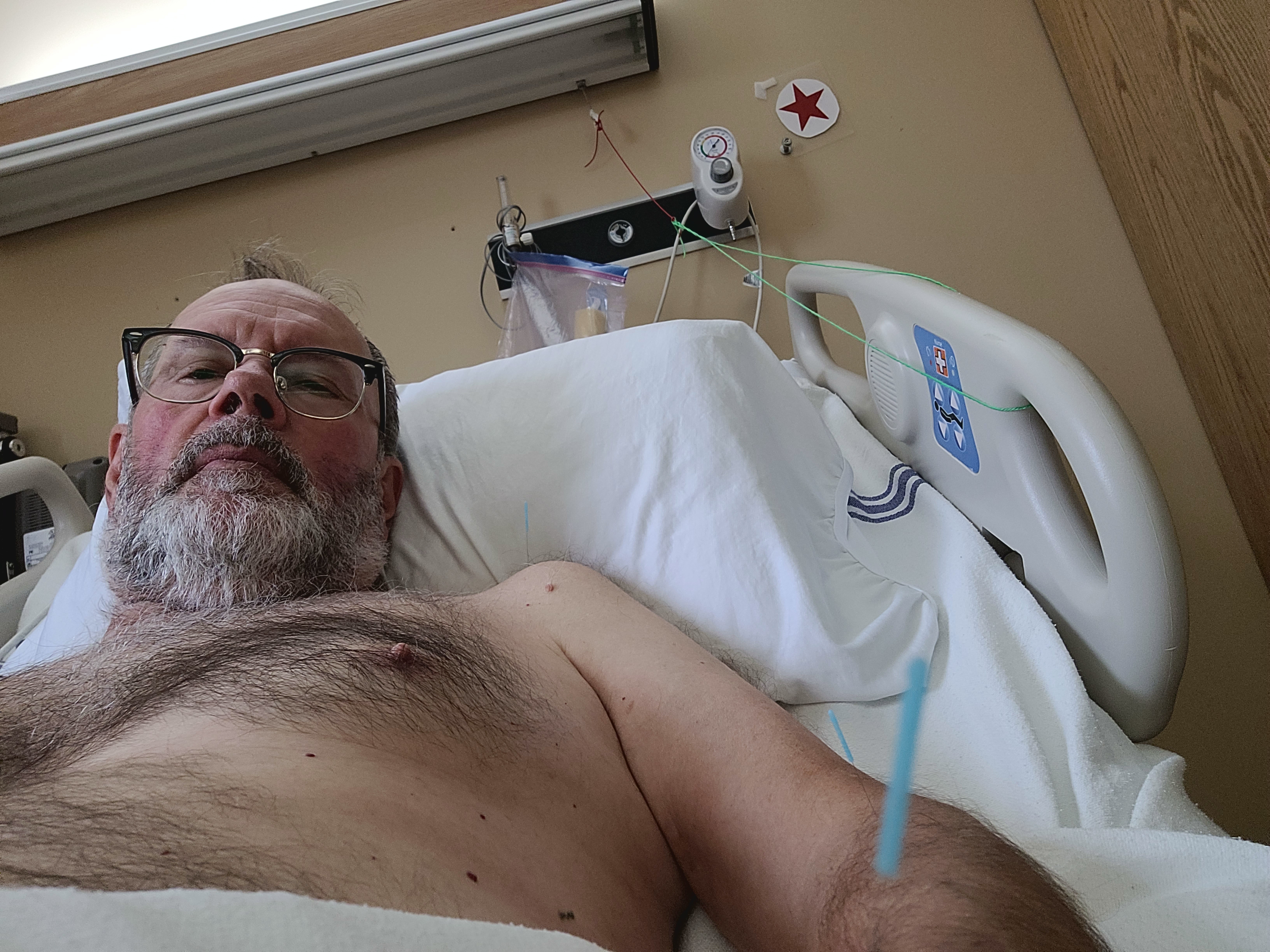
There were some more firsts this week – mostly subtle changes. I’m a bit surer on my feet. Using my right hand to place my fingers, my left hand stayed put long enough to make an E and a G chord on my nylon-string guitar. At home, I ventured out by myself for the first time to take some photos. Instead of ignoring my left hand, I now find myself reaching with it to flip a switch or turn on a tap. (Often I can’t do the task … but it’s worth noting that my brain is starting to think I might be able to!) I had my first full acupuncture session with a local specialist. Lori and Lee and my physio team made this “shoulder and arm” week. By the end of it I could lift my left arm in the air without help, while lying on my back. Karen, one of my supportive nurses, surprised me by saying “shake” with her left hand and I (sort of) did it.

I looked back at my journal from right after the first, smaller, stroke. I’m struck by how brief the notes are (probably because Sara was jotting them, exhausted). I notice what they don’t say: how my condition kept deteriorating, how deeply frightened I was that in my downward spiral, I’d soon wake unable to speak, or with a personality change, or in a coma.

In less than two weeks, I’ll be released back into the wild and into the care of my own Sara Stedy. I feel safe with her, too.

I know this doesn’t mean I’m “recovered.” A familiar refrain across stroke memoirs is that one does not go back to one’s “old self.”

“In the first days after the stroke, I had naively imagined that I would bounce back to being the person I had been in a few months. Meyerson’s book [Identity Theft: Rediscovering Ourselves After Stroke by Debra E. Meyerson and Danny Zuckerman] helped me realize that in life one can’t bounce back; one has to bounce forward.”

~Mukul Pandya, Stroke Onward

Reading the journal now, my overwhelming feeling is gratitude. My stroke wasn’t worse. I have a public health care system. I am surrounded with resources: personal, familial, emotional, financial, and community (folks like you) that collaborate to support my recovery.

Human Resources

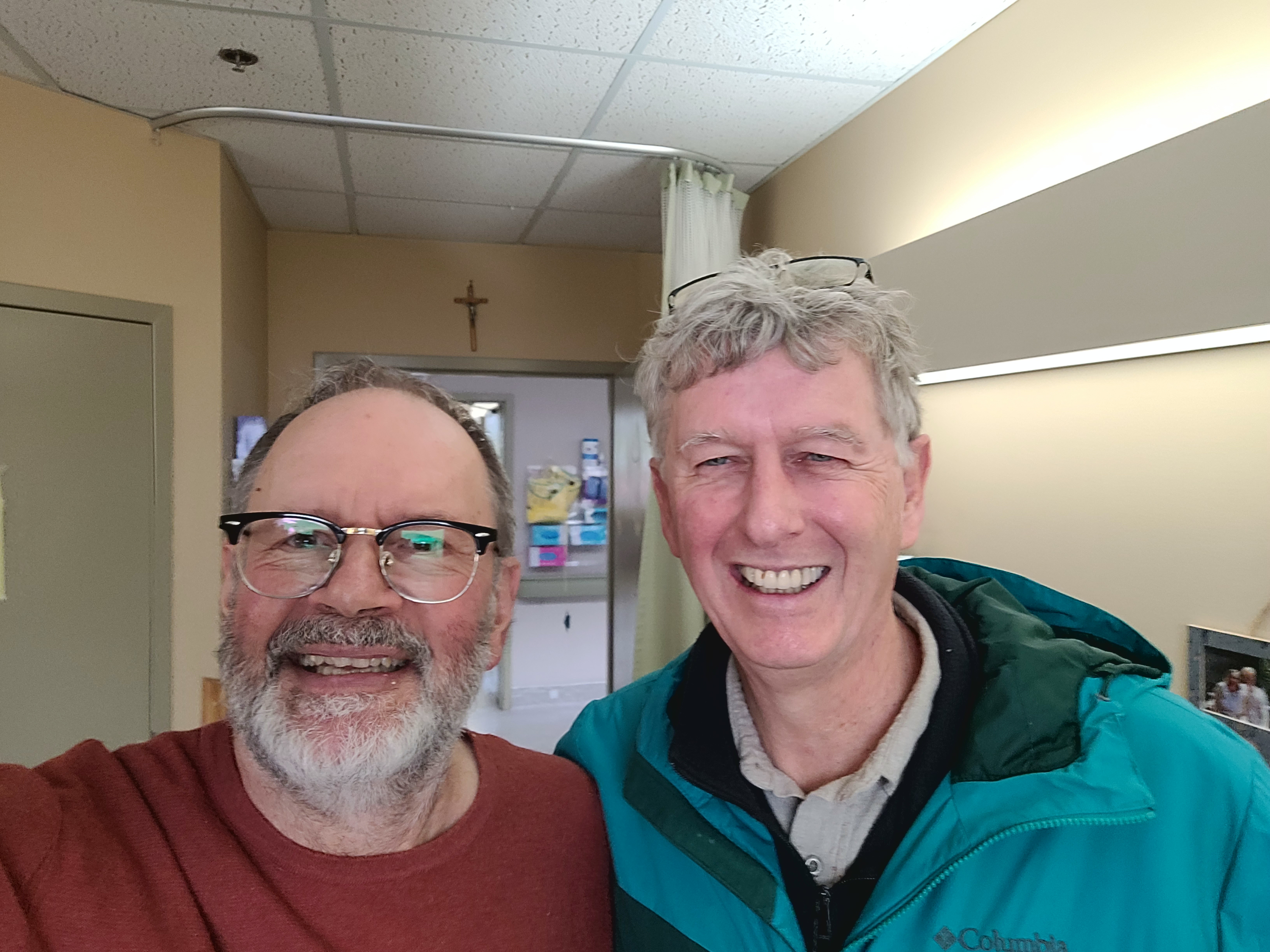
I’m usually the pilgrim on the move, but for now I’m the stationary destination! Some of this week’s pilgrims included my colleague Gerjan (right, with Carly and their son Theo), who despite his heavy teaching load and precarious position, has visited me several times.

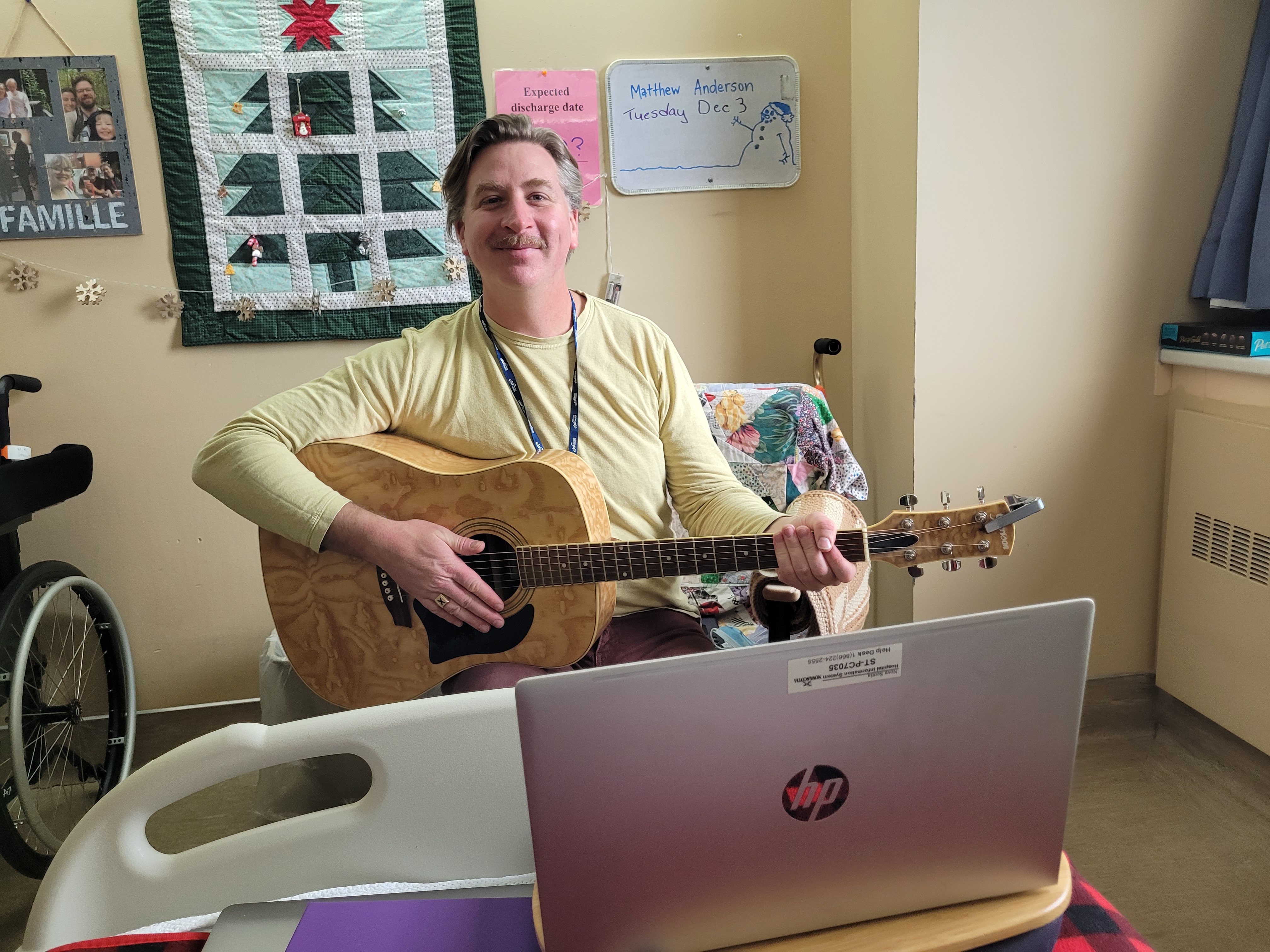
Or Tom Curry (above), the hospital’s music therapist and a local performer. I’m not sure our ward is even his responsibility. But after he heard I asked about music, Tom faithfully drops by. He asks what music I know and like, tests what I can shake the percussion egg to, and keeps encouraging me. “Ain’t No Sunshine”, “Out on the Mira” “Hit the Road, Jack.” He knows them all.

Or John. John is a north star for the entire ward. Unflappable. Always cheerful. Extremely hard-working… Checking by name on every patient, just in case anyone needs help. As Sara was taking me home this weekend, John was dashing past for an emergency, but took the time to call over his shoulder, “Hey, Sara! Can you believe this guy? Look at him go! So proud of you, Matt, so proud of you.” Once John asked if he could do anything for me, and I asked for help with a shower. “Sure, Matt,” he said, and dropped everything to assist. It wasn’t until halfway through the shower that he admitted, “this isn’t normally part of my role.” Above and beyond.

Like Phyllis. Phyllis didn’t want to take a photo. “The School of Nursing doesn’t like it.” She’s an LPN with a sunshiny face who always says hi as though to a dear old friend, lifting the mood of everyone she treats. A month ago she spent her lunch break trimming my toenails. She wasn’t my nurse this week. But she dropped by, surprising me Friday just before my weekend pass. “How are your feet?” she asked, then proceeded to kneel to take a look (my ankles are swelling from the meds). “Oh, the skin is dry! Would you mind if I put some cream on them?”

Would I mind?? What a gift! As she was walking out for her next patient she called out: “I just love feet.” And me? I just love Phyllis.

Then there’s fellow writer, academic, and walker Ken Wilson who’s been faithfully sending newsy emails nearly daily since the moment Sara announced the stroke on social media, saying it would cheer me to hear from “the outside world.” This is despite Ken’s own mad teaching, writing/editing, and grading crunch! A few days after he read last week’s blog about my trouble with zippers, these showed up on our doorstep. Thank you, Ken!

Reaping Past Writing’s Rewards

Finally, it was a week of incredible affirmation in my life as an author and academic. This feels especially gratifying during a period when I’m struggling to type with one hand.

  1. Rubbing Shortlisted Shoulders with Naomi Klein

I found out I didn’t win the Vine $10,000 non-fiction prize for Prophets of Love: the Unlikely Kinship of Leonard Cohen and the Apostle Paul. But the book was one of just three short-listed out of 60, and the winner was Naomi Klein, for Doppelganger. Pretty amazing company!

    It’s not 10 grand, but it’s certainly a prize to be considered in such company, and I will definitely encourage McGill-Queen’s to use the jury’s blurb in their marketing from now on!

    2. Rave Review in Miramichi Reader

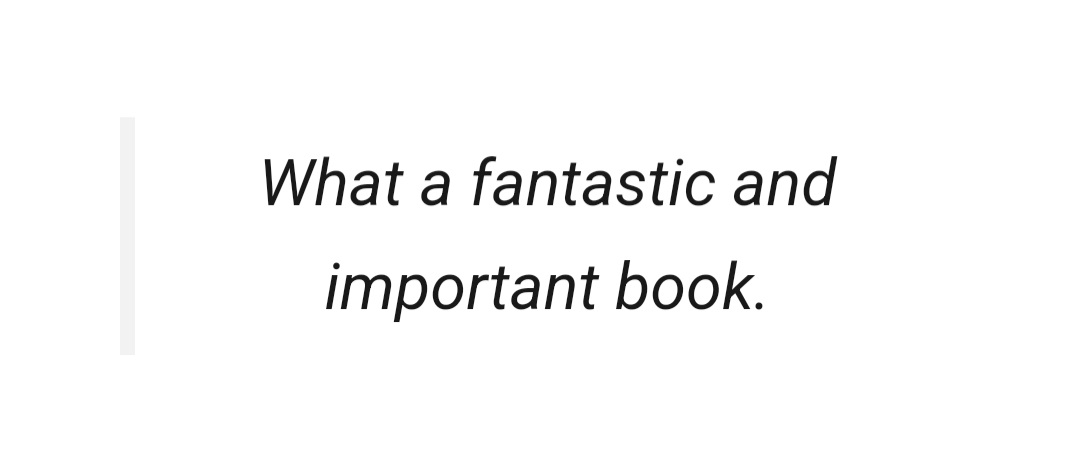
    I was also floored when a Google alert informed me that The Good Walk received a spectacularly positive review by Michel Bryson in The Miramichi Reader.

    3. Winnipeg Free Press Most Notable Books 2024

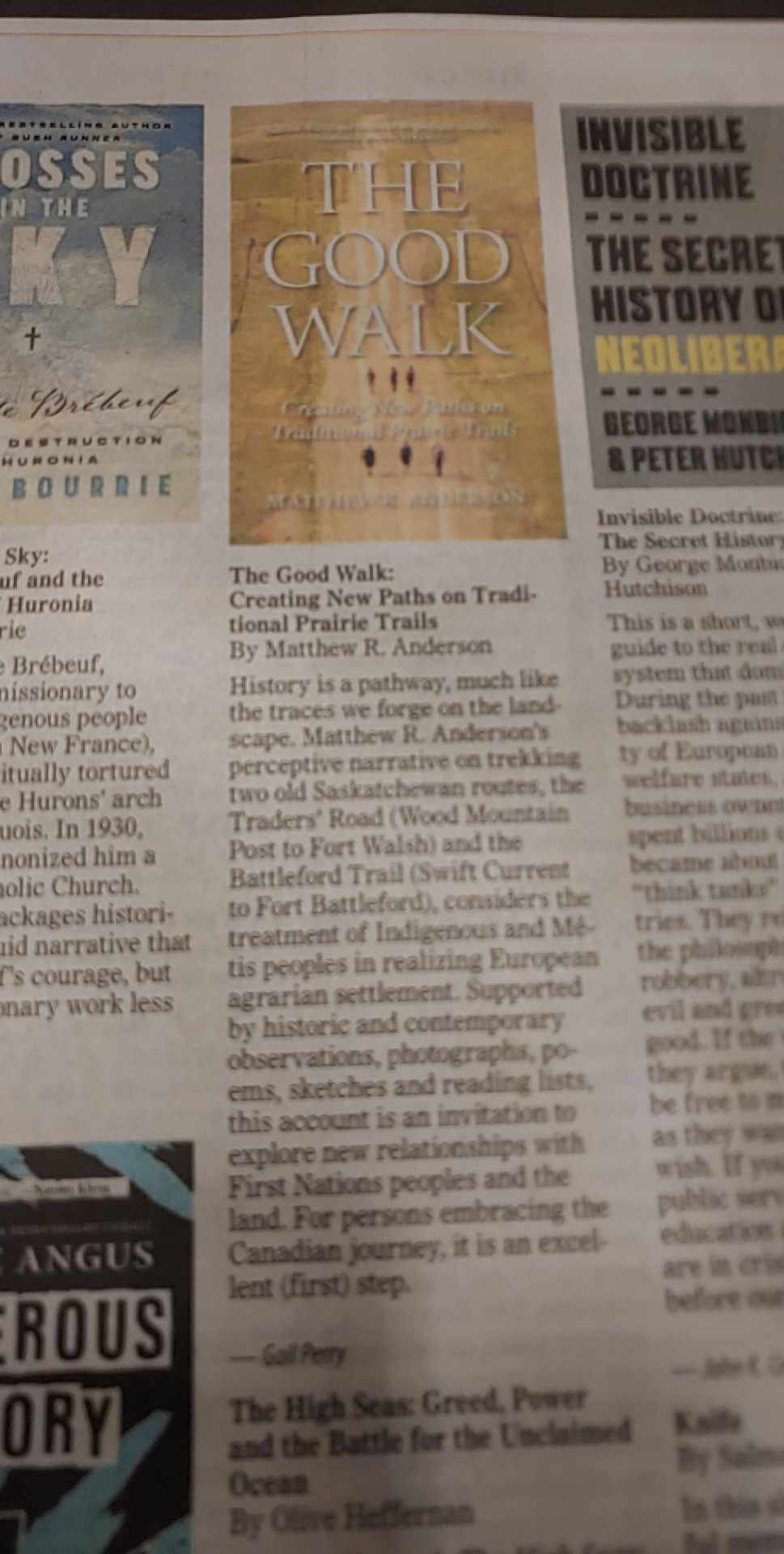
    As if that wasn’t enough, The Good Walk also made the year-end list in The Winnipeg Free Press’s list of 2024’s most notable non-fiction. What a gift!

    4. The Author Journey Weekly Livestream

    I hesitated to say yes to appear this coming Tuesday with Anne Louise O’Connell on her weekly live videocast, “The Author Journey” to talk about my writing process. My speech still slurs when I’m tired. But Sara said, “that will all just be part of your story.” It’d be great to have you cheering me on there if you’re interested! Tuesday, Dec 10 2024, 4pm Atlantic (3pm Eastern) on their YouTube channel.

    5. Copyedits and Cover Reveal: “Someone Else’s Saint”

    To top off this flurry of reminders that writing done in the past is still at work in the present, Pottersfield Press just sent me the copyedits of Someone Else’s Saint: How a Scottish Pilgrimage Led to Nova Scotia (coming out April 2025). I had submitted it the night I first arrived in the emergency room, following the first (smaller) stroke. Sara teases me that I may be one of a very small number of people on the planet whose first task upon arriving at the hospital by ambulance is to submit a book manuscript.

    I suppose this is as good a time as any for a “cover reveal”!

    For what it’s worth, this is the story of the Nova Scotia Ninian Way pilgrimage that immediately preceded the stroke! Saint Ninian may have a sense of humour.

    Categories
    Uncategorized

    Strokeaversary week 10: Handcamp Antigonish

    Here’s a slice of hospital life from Nova Scotia:

    Three elderly men, two with walkers, are standing in the hallway outside my room. “I was going to go home,” one says, “but all my neighbours are here.”

    The second man, Jack, pulls out a photo developer’s envelope he carries everywhere. “Jack was attacked by a bear,” the third explains, pointing.

    “Got photos?”
    “Yeah, there’s five of ’em.”
    “Five photos?”
    “No, five bears!”

    Jack hitches his pants before he regales them with the story: “I was working in the yard. Didn’t see him. He knocked me over the woodpile.” The second man takes the photo. Peers at the bear, then at Jack. “Prob’ly lookin’ for work,” he pronounces.

    A visitor walks by, muttering to herself: “How many Donald MacDonalds are there in this hospital?”

    Another visitor is about to walk into the room opposite when a passing orderly points to the “Contagion Precaution” sign requiring mask and gown. The woman dutifully dons a paper gown, calling out to someone deep in the room: “Donald, you’re on quarantine? You musta’ been a bad boy!”

    I’ve been fortunate to hear from some of you who’ve also spent long periods in hospital. Many of your experiences were similar to mine: the frustrations of wheelchairs and bedpans placed out of reach, the fatigue and the ennui of having to strategize everything from blankets to bowel movements in ways the able-bodied don’t have to think about. The way that occasionally, new nurses who don’t know me ignore me, standing there with pen in hand to sign myself out for the weekend, and speak right past me to Sara as if I’m incapable of my own decision-making.

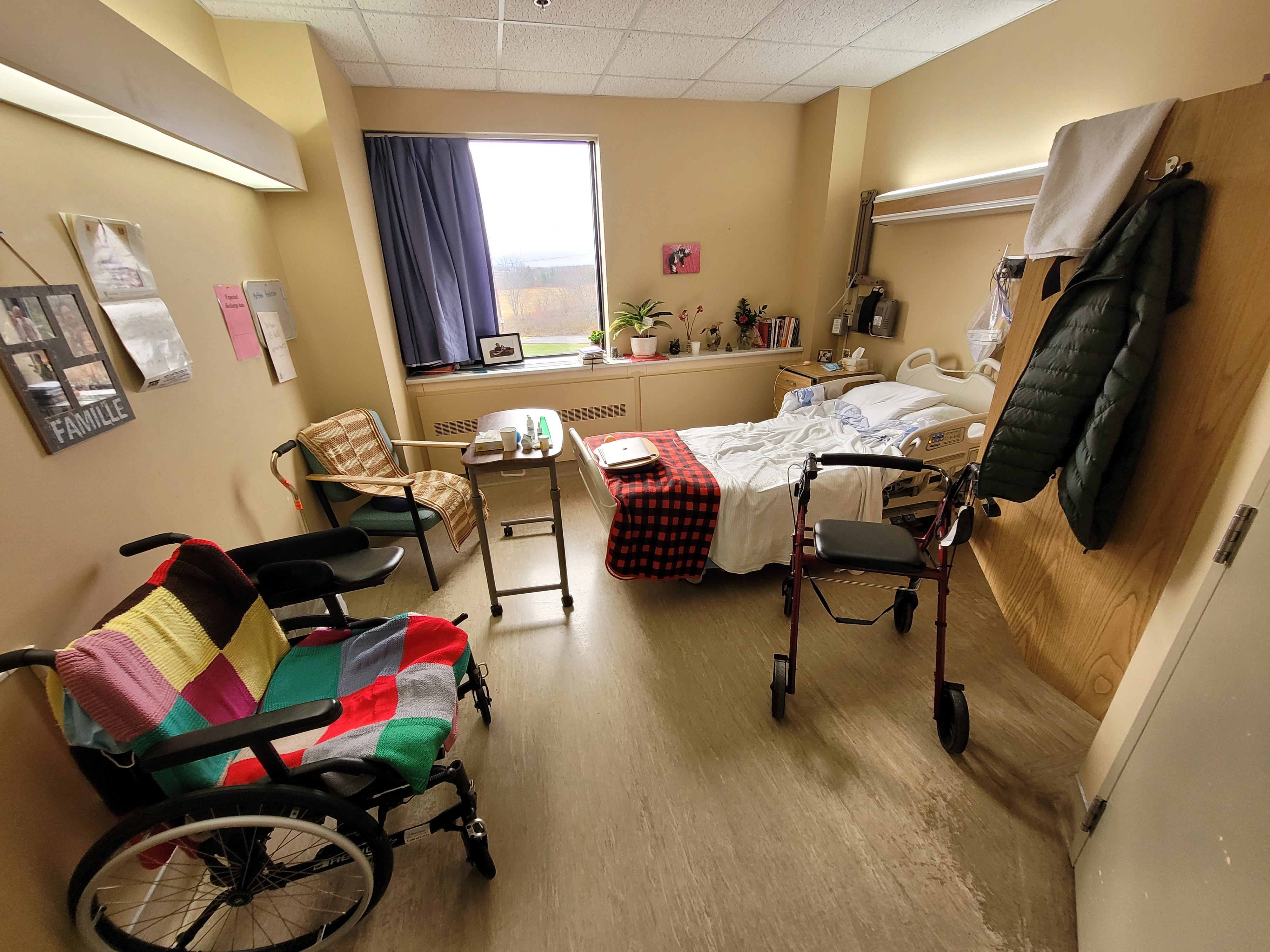
    But there are also unique positives to being hospitalized in rural Nova Scotia. Overhearing the bear story, or Sara texting me to say she saw a bobcat at the end of our driveway on her way home one night, after her usual routine of tucking me in. What a gift to have her fussing around my room straightening things, reading to me, or sitting working alongside. (I am back into writing my Jerome project, part of my work as Gatto Chair at StFX. More than once, Sara and I have slipped and called my room, “the office”!) The atmosphere at St. Martha’s Regional Hospital is relaxed and humane; there are no set visiting hours–Sara is free to come whenever she can, stay as long as she likes, and to decorate my room with plants, lights, quilts, and art on the walls. Once last week four nurses came in just to see my room and breathe deeply. “It’s beautiful in here,” one remarked, “it’s the most relaxing room in the hospital!” I said only one word in response:

    “Sara.”

    Another distinction is delicious local food. I order from a small menu that includes a tasty seafood chowder that would cost quite a bit in a restaurant. You can have fresh poached haddock, or roast turkey with mashed potatoes, gravy, and cranberry sauce on demand. There’s excellent lemon meringue pie in the volunteer-run cafe. If you forget your wallet as I did one evening, they’ll just give you the item and tell you to pay it forward.

    The portions do tend to be geriatrically small. Combined with the lack of snacks, butter, or oil (I’m on a cardiac diet), very few breads and pastas, and no glass of wine with dinner, I’ve lost 20 pounds since my hospitalization. All good – the weight loss puts me where I should have been anyway. But I wish it hadn’t taken a stroke!

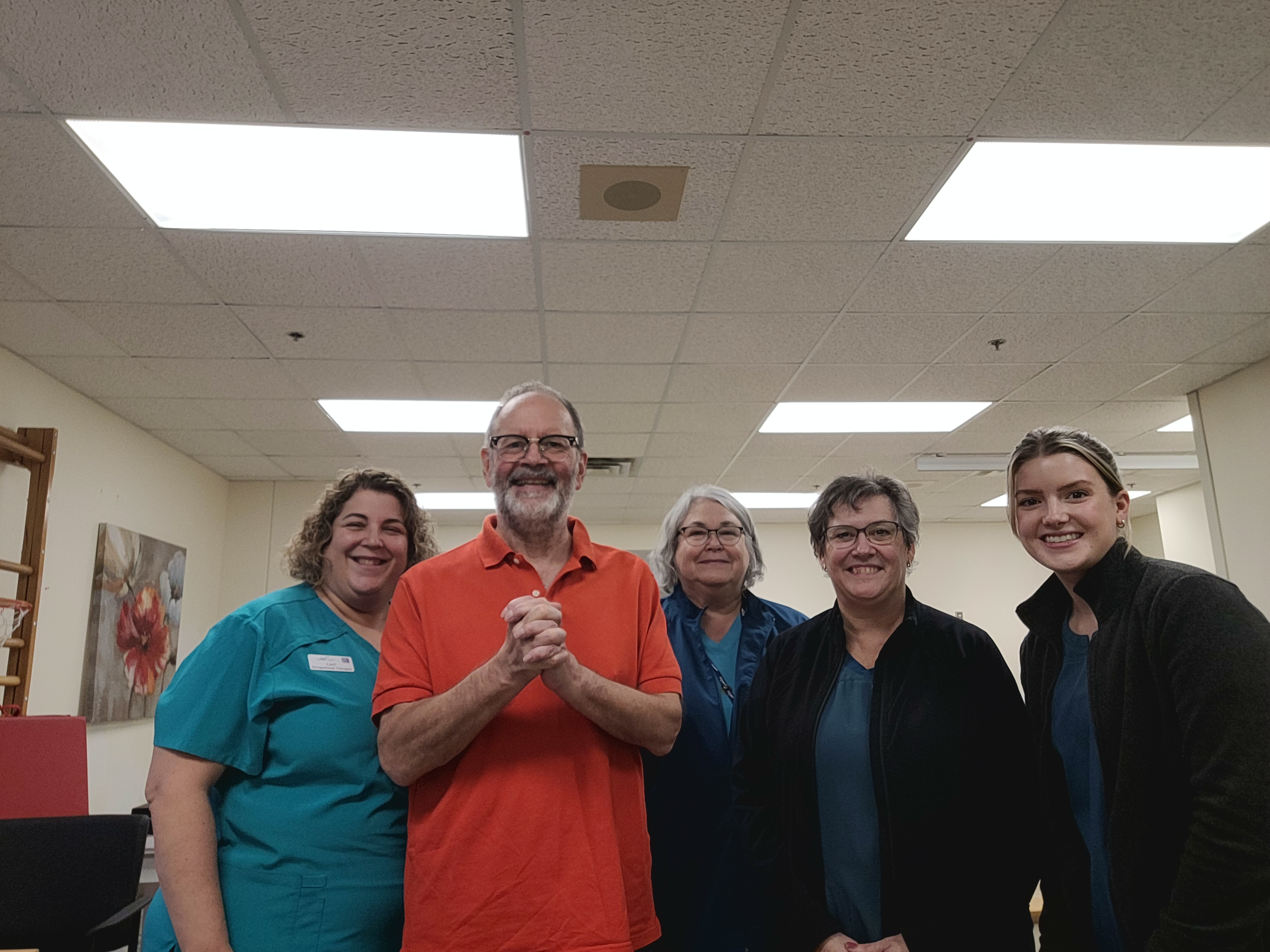
    Big news this week: I’m not moving. The Halifax rehab centre only takes Haligonians. When they learned I wasn’t eligible for “Hand Camp,” my incredible team here (Lori, Lina, Lee, and Ria, above) swung into action. Lori produced a binder labelled “Matt’s Handcamp” and teased me, “it’s going to be hard work from here on in.” My binder has daily check-mark columns for the next three weeks, with slots for shoulder, arm, and hand therapy, physio on my leg, “magic mirror” visualization (fooling the brain with a mirror image), and other homework.

    Lee has started me on the “big” exercise bike and treadmill. She’s doing gentle acupuncture on my left arm. I’m supposed to take weekends off, but weekdays until discharge are dedicated to more intensive therapy, whenever they can get me in.

    Lori has been researching some new OT techniques out of Japan that involve massaging and “slapping” the hand tendons alternatively to shake them out of cramps. (The hand has been seizing up a lot.) My new music therapist dropped by for the first time, getting me to tap a pen with my affected hand while he played the blues. Thanks to my friend Nadine from Montreal (herself a music therapist), for suggesting ways to use familiar music to improve my walking speed and gait!

    Improvements: I can now lift my arm into the air while lying on my back and touch my right hip with my left hand (I should be good at that – it’s a disco move!) I can “curl” a one-pound barbell and raise a washcloth up to my face or under my arm, using my left hand. But I have no strength yet to scrub. I can move a cloth around a counter more freely – wiping cupboards is clearly in my future. I managed to pick up a marker and draw lines with my left hand on a sheet. Sometimes I can pick up and drop wooden blocks, although straightening my fingers afterwards continues to be difficult. Like a baby bird on its first solo flight, I’ve ventured out on my first walks down the hall without cane or walker. Sara and I danced a real two-step, and she’s doing less lifting to keep my left hand in the air. I took my first standing shower at the hospital, holding the support bar for the first time with my left hand.

    Last week I had another left-side dream. I was in a large underground garage where an old muscle car, a 1970s Barracuda, had been left behind piles of boxes, old mattresses, and junk. In my dream I was putting oil into the rusted engine and trying to clear a path to drive it out. Speaking of which: not saying anyone did this, but IF a person had tried to drive their automatic transmission car just around their yard last weekend using their unaffected right hand and leg, it may have worked out perfectly! For myself, it looks like I will have to take a drivers’ test before I’ll be allowed on the roads, which makes sense.

    This week is the 9th anniversary of Sara and I meeting, so she picked me up from the “office” after work one night this week and we went out to eat for the first time in months, with a Gabrieau’s gift certificate from our departmental colleagues! I was also blessed with delightful visitors: Phillip Kennedy, a fellow walker along the Annapolis Valley, Tonya Fraser, who gave me some hand-picked Labrador Tea and a stone from the local beach, Leona English, another walker and a professor emeritus at StFX, and Andrea Terry, who in addition to leaving me several blueberry-themed gifts, reminded me that it was exactly one year ago that we had so much fun co-curating Philip Szporer’s and Marlene Millar’s art show “1001 Lights”! Many thanks also this week to my friend Dr Meredith Warren in Sheffield, UK, for providing a lecture for “my” class on “The Ancient Hellenistic Novels.”

    Speaking of small-town advantages, those who come to visit have to pay to park at the hospital. The whopping sum for a full day or any part thereof is … a twonie. (The first time we realised this, we laughed out loud, comparing it to big city parking costs.) While I was a little disappointed at first not to be going to Halifax for fancy therapy, I feel incredibly fortunate to be right here in Antigonish, where an entire talented physio team has taken me on as a project, and where I can focus on my recovery (and my StFX research) from such a warm and hospitable room. I am sure that much of this good fortune comes from the prayers, meditations, thoughts, and intentions so many of you are keeping up for me. Thank you!

    P.S. I was surprised and very, very thankful to get the news this week that Prophets of Love: the Unlikely Kinship of Leonard Cohen and the Apostle Paul is one of three non-fiction works short-listed for the 2024 Vine Canadian Jewish Book Awards! What a gift to my spirit to receiving an honour for past writing at a time when I’m typing with one hand!

    Categories
    Uncategorized

    A Room of One’s Own: strokeaversary week 9

    I remember walking from Melrose Scotland, to Holy Island, England, in 2013. After some extremely hot and tiring days, the path took me up a 300-metre ascent to a rocky outcrop. (There was also the small matter of a pasture with bulls, which can happen when you have the “Right of Responsible Access” to pastureland–but that’s another story.) At the top I stopped to catch my breath. Turning to see the view, I realised that there on the distant horizon two valleys over, I could make out the ruins of the Roman fort where I’d stopped on my first morning of pilgrimage, two days before.

    That’s how this week feels. The pilgrimage through my stroke is hardly over. But this week I’m seeing how far I’ve come. The parallel bars (below) that not so long ago represented the greatest distance I could possibly shuffle are now where I try balancing while standing on my left leg without support. I have more strength in that leg every day. Without use of my left hand and arm to steady myself, my balance is off. But the distance? No problem.

    Although the physios aren’t recommending I do this at home, Lee is making me practise climbing stairs one per foot, like you probably walk them, instead of like a toddler does. This week she had me kicking a soccer ball back and forth with her (I had to hold on to a railing for support, but my left leg did quite well.) For the first time since my stroke I did up the button on a pair of jeans on my own. And I might only be able to “bench press” a featherweight aluminum cane. But the simple fact my left arm can even hang on is a major win. And for the first time this week, I could sometimes push my arm straight ahead on a table. “Cheers” is getting closer!

    I’m thankful that the newly-conscripted neurons in my brain that agreed to take over the management of my arm and hand are beginning to sort out their new roles. But I have to be patient: I was so anxious to force my wrist to flex in my room that my hand swelled up like a balloon. I suffered painful cramps until it recovered. Sara suggested, since I am so eager to use all my time working on recovery, that I do it in other ways than “extreme boot camp” (as she put it) and instead take some time each day to be consciously grateful to my brain and my awakening left side. It’s great advice, so I’ve added that to my routine.

    Lee, who works mainly with my legs, says she’s amazed at my progress. She hasn’t seen this video of me bringing my own tea to the couch at home on my “weekend pass” today, without cane or walker. I’m not sure what she’d think!

    When I was watching this video and bemoaning the lack of fluidity in my step Sara reminded me that just six weeks ago it required two people to hoist me out of bed and get me to the washroom. Looking back brings perspective.

    There’s no news yet about “Handcamp”…. they’re waiting on word of whether I’m eligible. But I’m booked in Halifax at the end of the month for a preliminary cardio assessment, a first step to the procedure to close the hole in my heart that may have let a clot pass to the brain.

    Having a room to myself is making a world of difference. The previous week, with little rest day or night, I was looking “increasingly frazzled and worn,” in the words of one nurse. Now I sleep well most nights. During the day there’s peace, so I can read, listen to CBC, write (working on some poetry), or do my physio. I also feel more comfortable video-chatting with the kids, and I attended my own class by Zoom this week when Elizabeth Castelli graciously came to talk to them about early Christian ascetic women patrons. Now Sara can even bring her meal and share the whole evening, as her schedule allows. From a place of stress, my hospital room has become an oasis for healing.

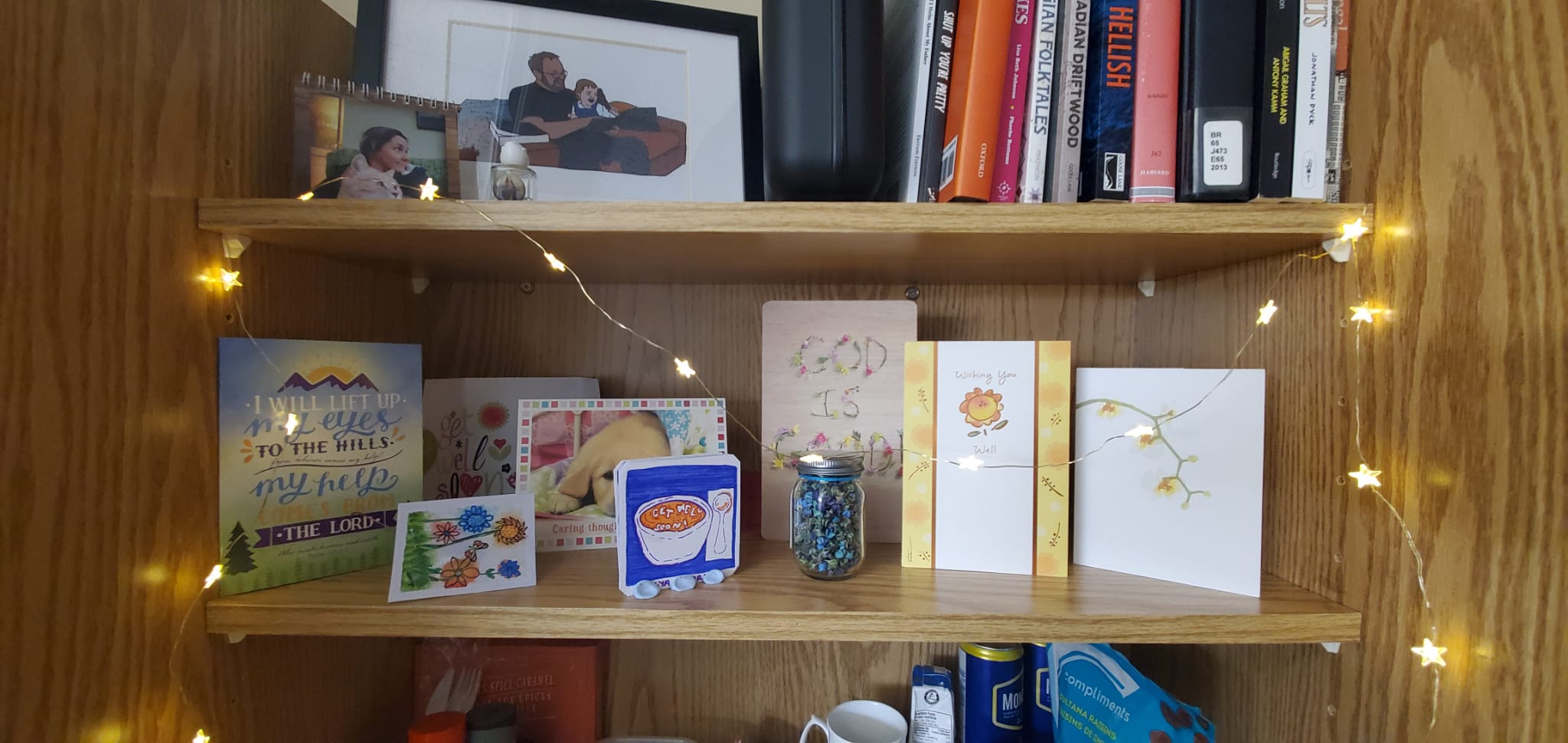
    I’m thankful to the physio team – Lori, Lee, Ria, Lina, and Abby – who are so patient with me day after day. They were the ones who pushed for a room where I would get the rest my brain needs to recover. The staff know that my dogged motivation comes from being supported by so many of you. One of the orderlies looked at my shelf of cards and said “well, aren’t YOU well-loved!” That comment gave me a physical rush of warmth and comfort.

    Several of you recommended recently that I read Daniel Levitin’s just-published “I Heard There Was a Secret Chord: Music as Medicine.” Coincidentally, Levitin and I had an email exchange last spring, when he asked me something about Prophets of Love: The Unlikely Kinship of Leonard Cohen and the Apostle Paul. We exchanged books by mail. So I’m reading Secret Chord now, and feeling the recuperative power of music every day (see below). I should tell Levitin I’ve had a stroke, and how applicable his research is for me.

    That healing power of music is definitely helping release some of the frozenness of my left side. I’ll sign off this week’s update with the clip below, more evidence of how far I’ve travelled with this stroke. I love to dance… and in my own room, now I can. Or better, we can. If you know me, you know this has GOT to be good for my recovery!

    [Click here for my podcast about that walk from Melrose, Scotland, to Holy Island.]