Categories
Uncategorized

SOUTH BRANCH SCRIBBLER

This prairie boy remembers feeling on top of the world when he got called a “Montreal Creative” by Nantali Indongo on CBC Radio One Montreal in 2012:

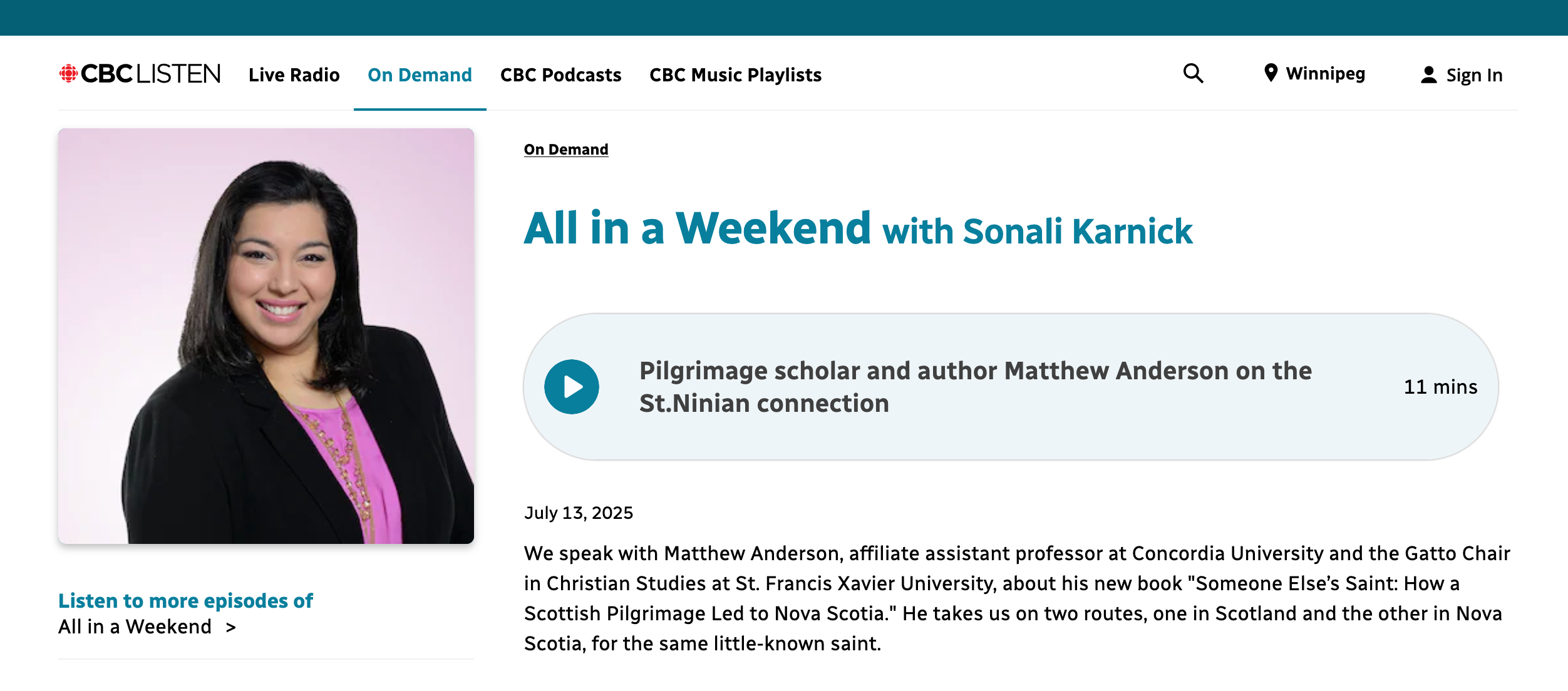
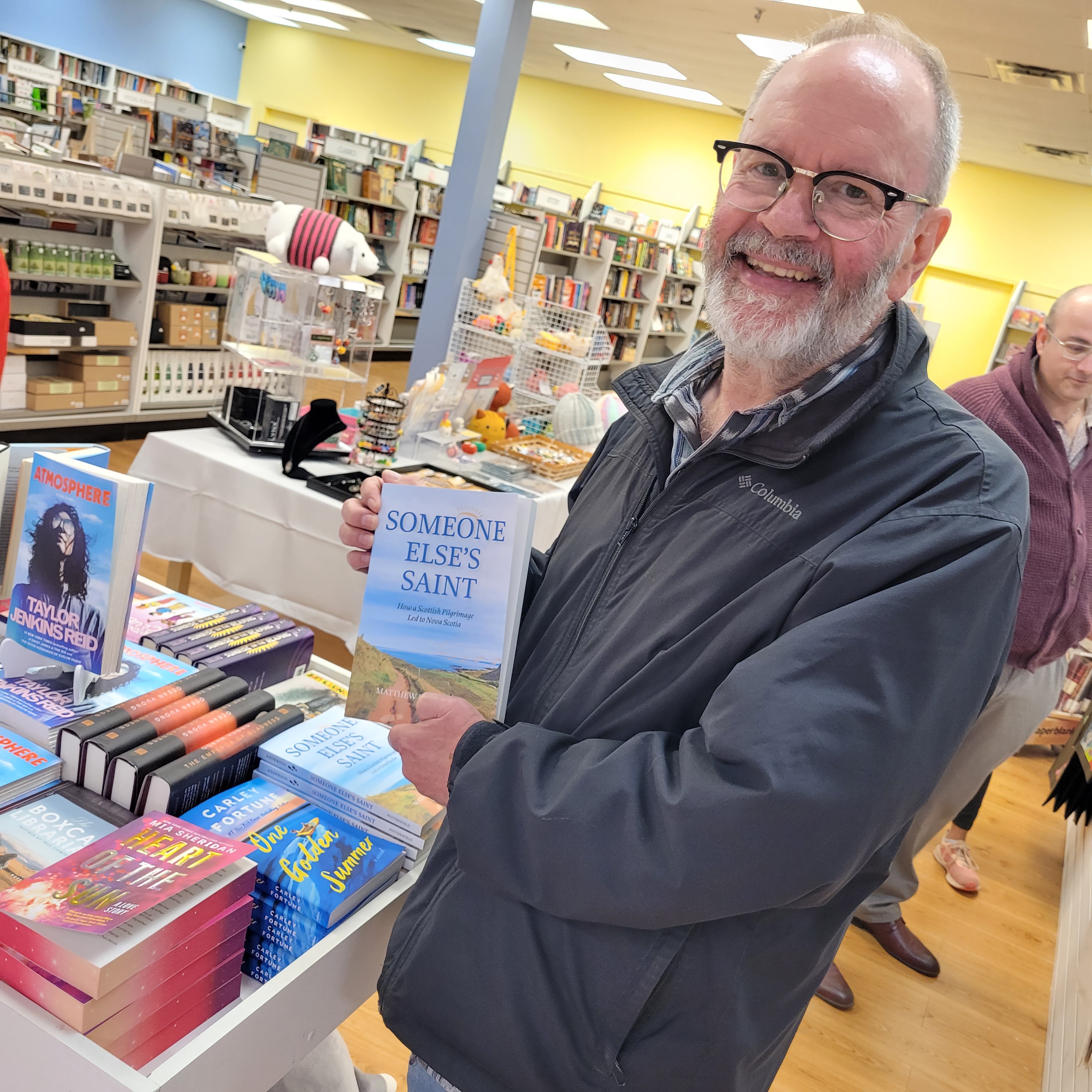
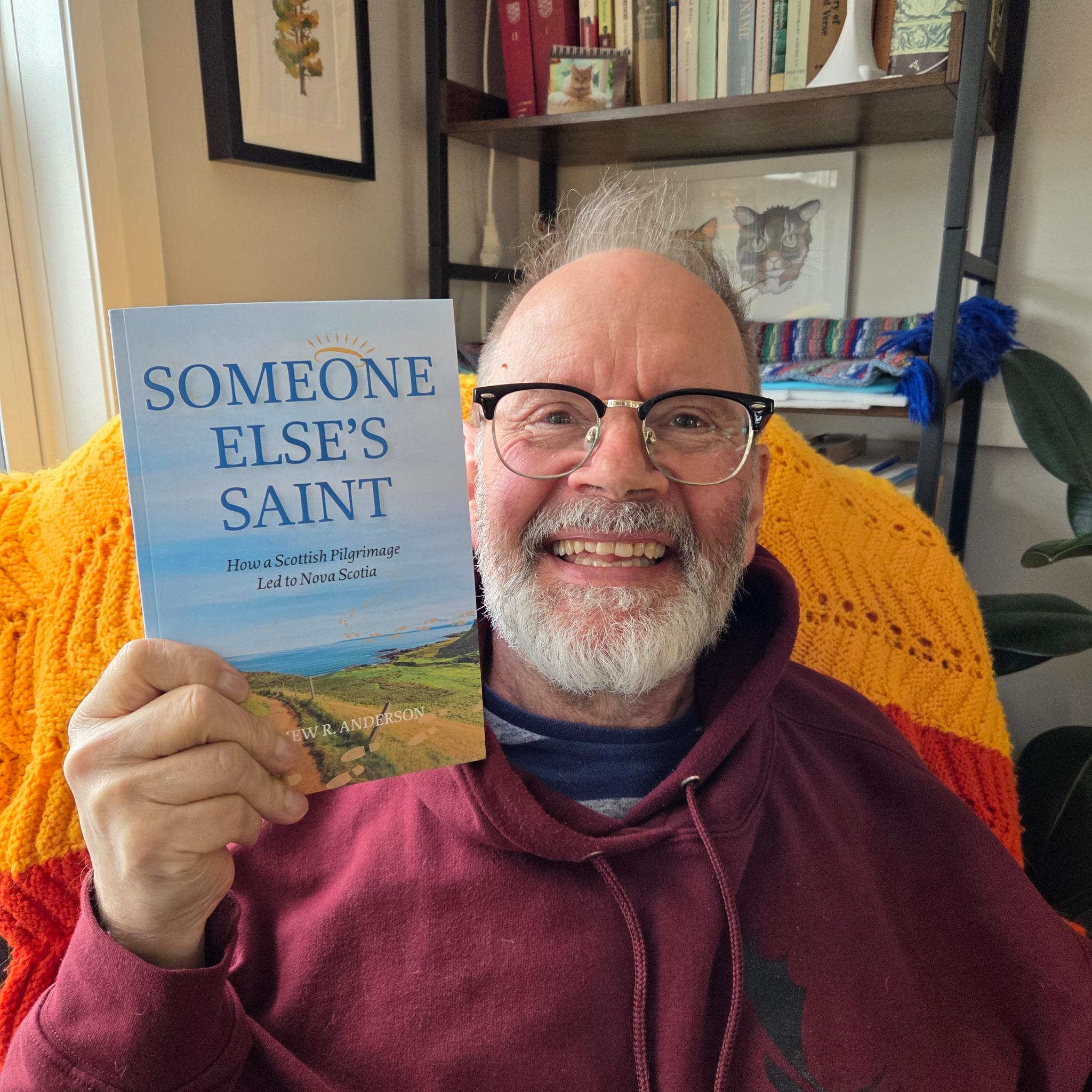
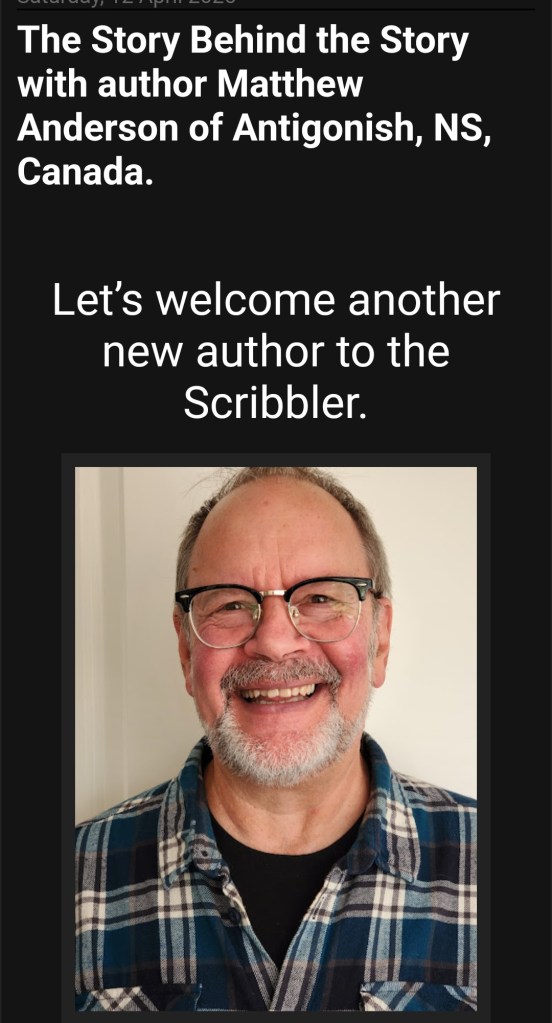
But I have to admit being “author Matthew Anderson of Antigonish, Nova Scotia” feels pretty great in 2025. That’s my moniker in this “Story Behind the Story” interview for the South Branch Scribbler. Interviewer Allan Hudson is a New Brunswick writer and promoter of writing, and The South Branch Scribbler is his blog. He reached out to talk about the backstory of Someone Else’s Saint: How a Scottish Pilgrimage Led to Nova Scotia, published this coming week.

If you live near Moncton NB, I’ll be joining Allan at the 3rd Annual Greater Moncton Riverview Dieppe Book Fair, April 26 2025.
Riverview Lion’s Centre 10am to 3pm.

If you live near Antigonish, the official launch of Someone Else’s Saint will be at the Antigonish Heritage Museum on May 1 2025 at 7pm, where I’ll be upstaged by the glorious Mary Beth Carty and blessed in Gaelic (at least I hope it’s a blessing – my Gaelic isn’t too good yet) by Lewis MacKinnon.

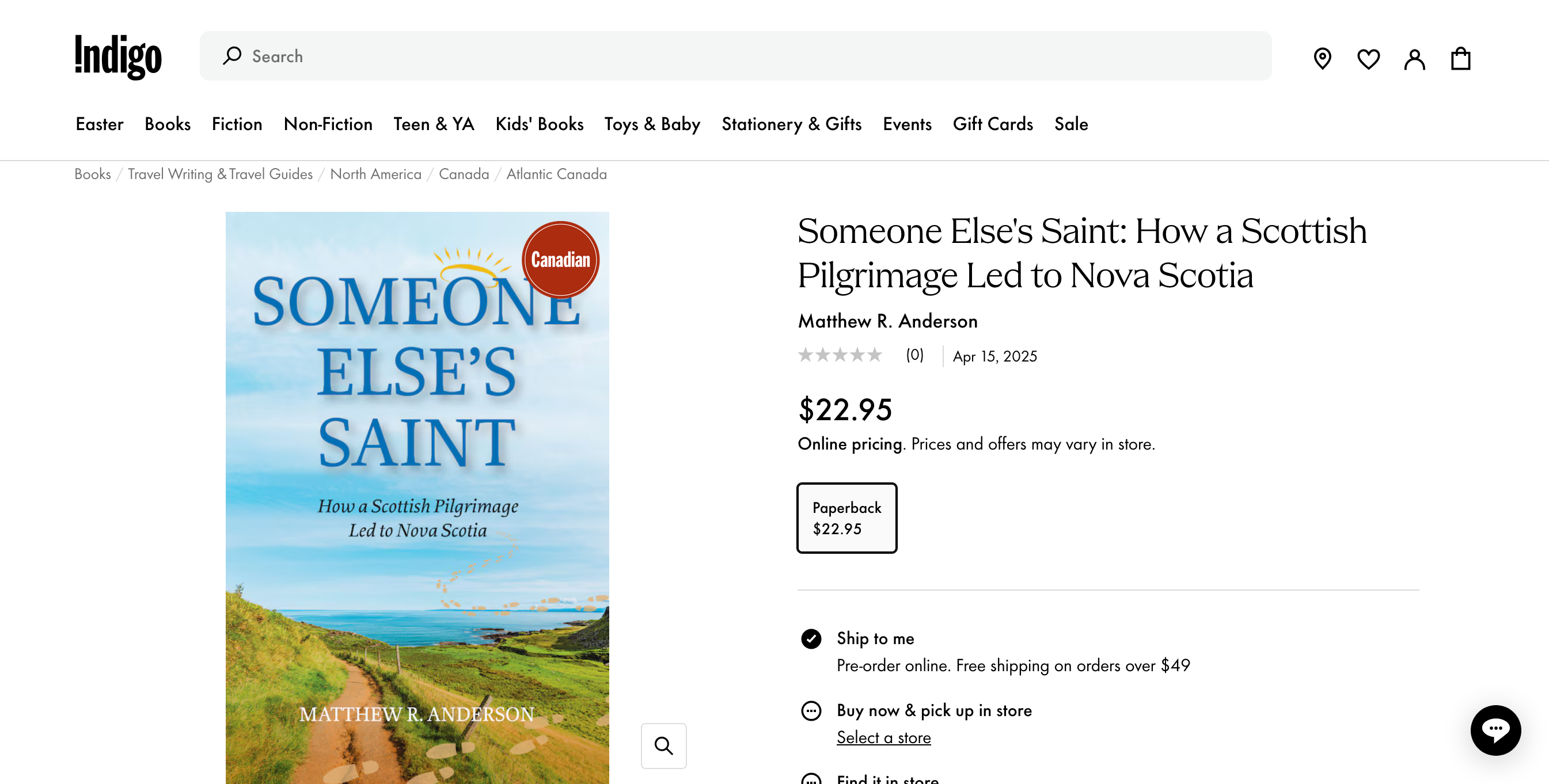
If you live further afield, Someone Else’s Saint is available from Indigo, or by request at those two symbols that the world is still a good and just place: your independent bookseller or your public library.

Categories
stroke-recovery

Six-Month Strokeaversary: Signs of Spring

Wow. Hard to believe it’s been six months since a shudder ran down my left arm and I found myself unable to speak for a couple seconds and Sara called an ambulance and ran for the aspirin.

And…the TIA and major stroke and everything that followed.

When I was wheeled into St Martha’s Regional hospital on a stretcher last September I had no idea it would be home for three months. Autumn was just beginning.

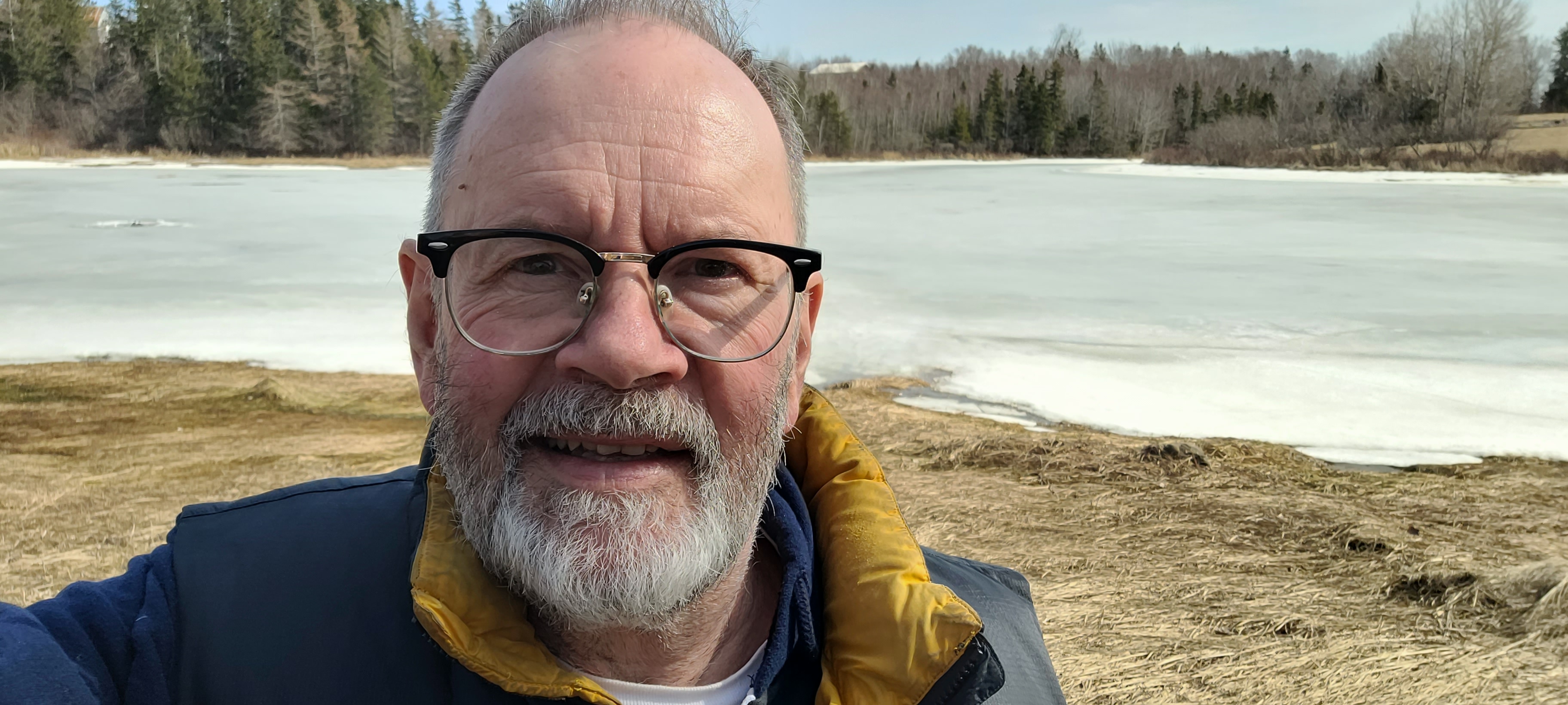
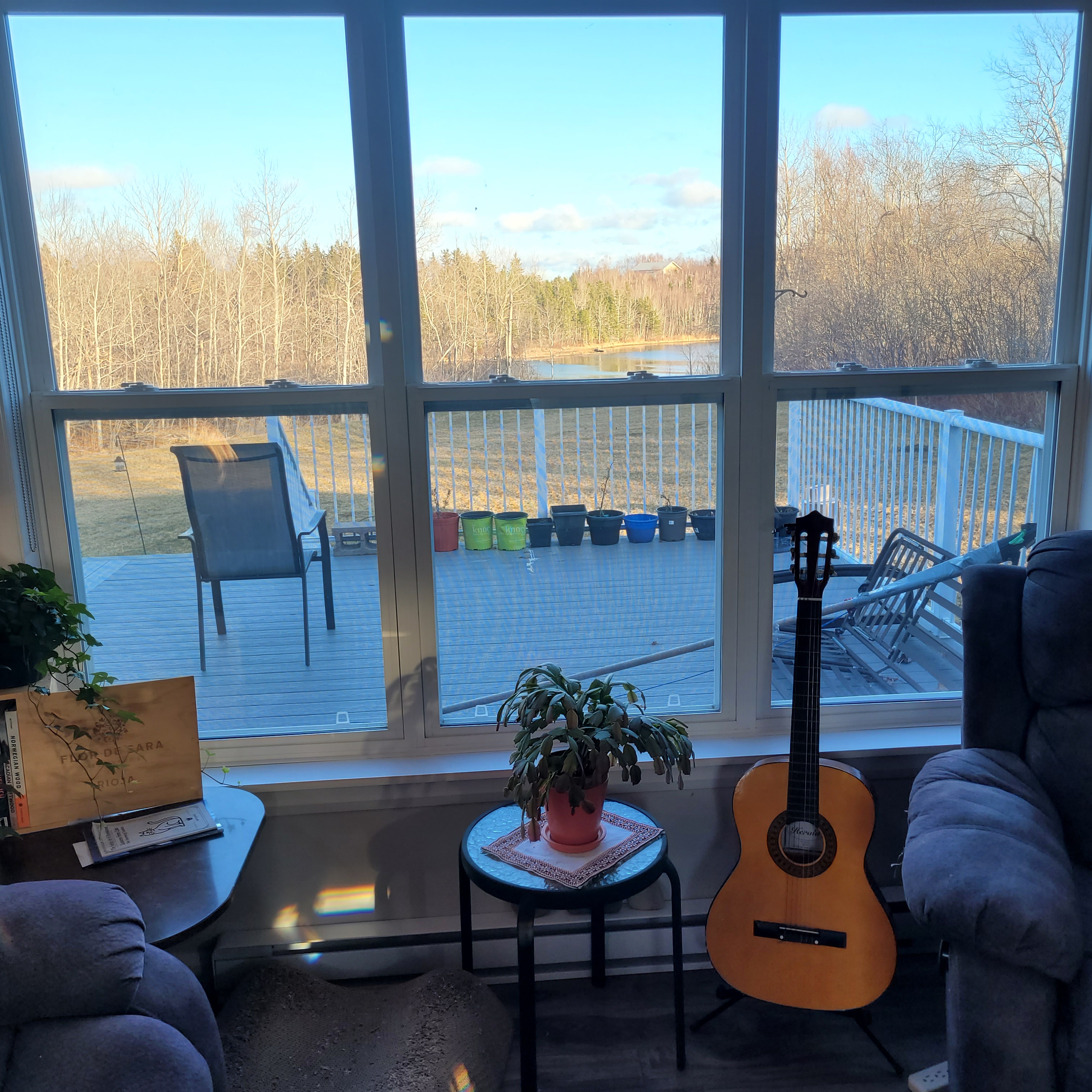
Now here we are at the spring equinox, six months later. The day before spring, the ice came off our little inlet, and those annoying fake ladybugs are waking up all around the house.

The solar panels we had installed last fall are finally free of snow and making power (I check them compulsively).

The seedlings we planted last year have survived.

All signs of spring. Another sign: I’ll have to learn how to tie my shoes again, since pull-on winter boot season is nearly over.

Here’s what else is happening…

My Heart Procedure

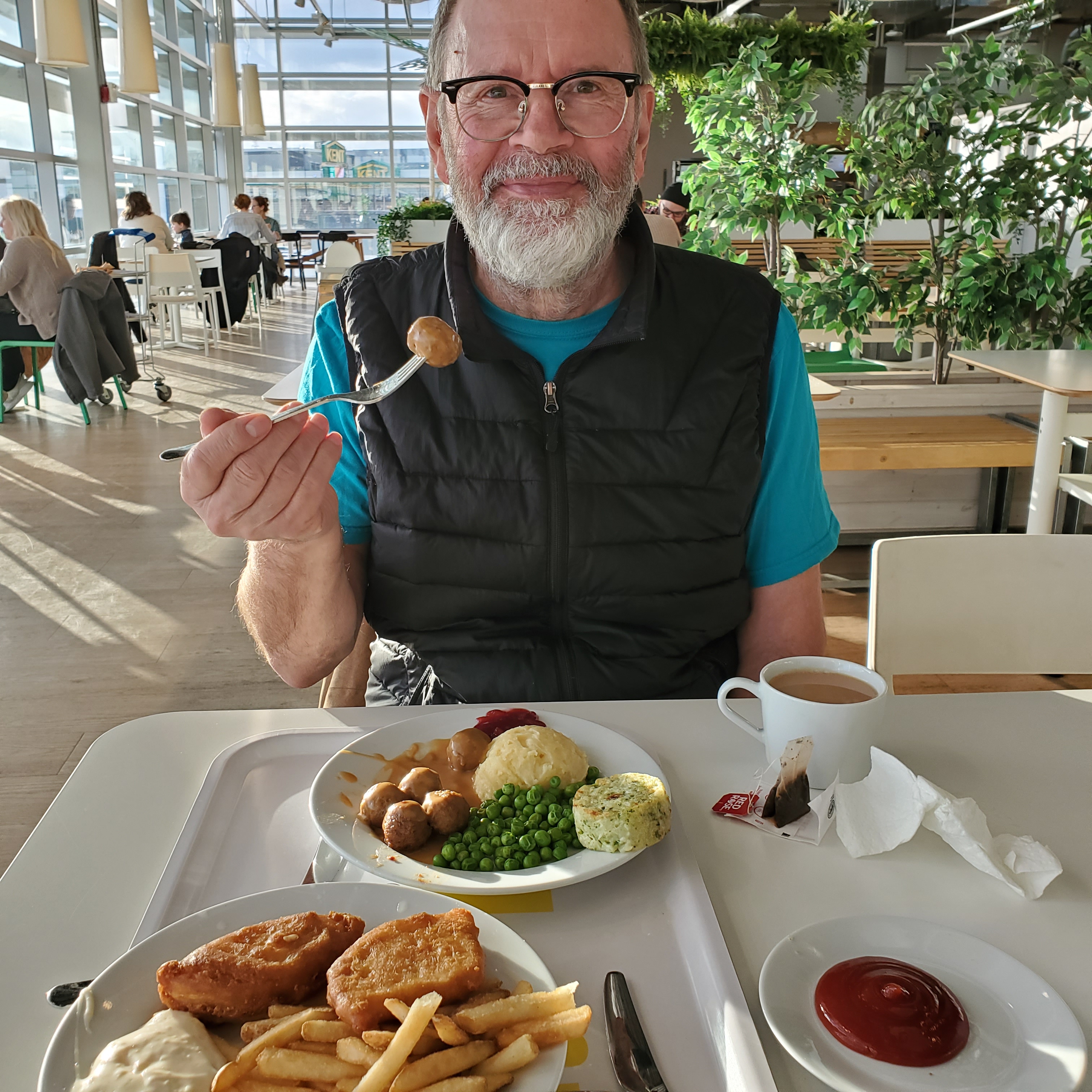
I had a pre-op appointment in Halifax last month, and Sara and I used our rare visit to the big city to have a date at IKEA (how romantic!). We then bought a car-load of groceries we can’t get in Antigonish at the surprisingly-well-stocked hole-in-the-wall that is Big Ray Convenience and Asian Store in Dartmouth.

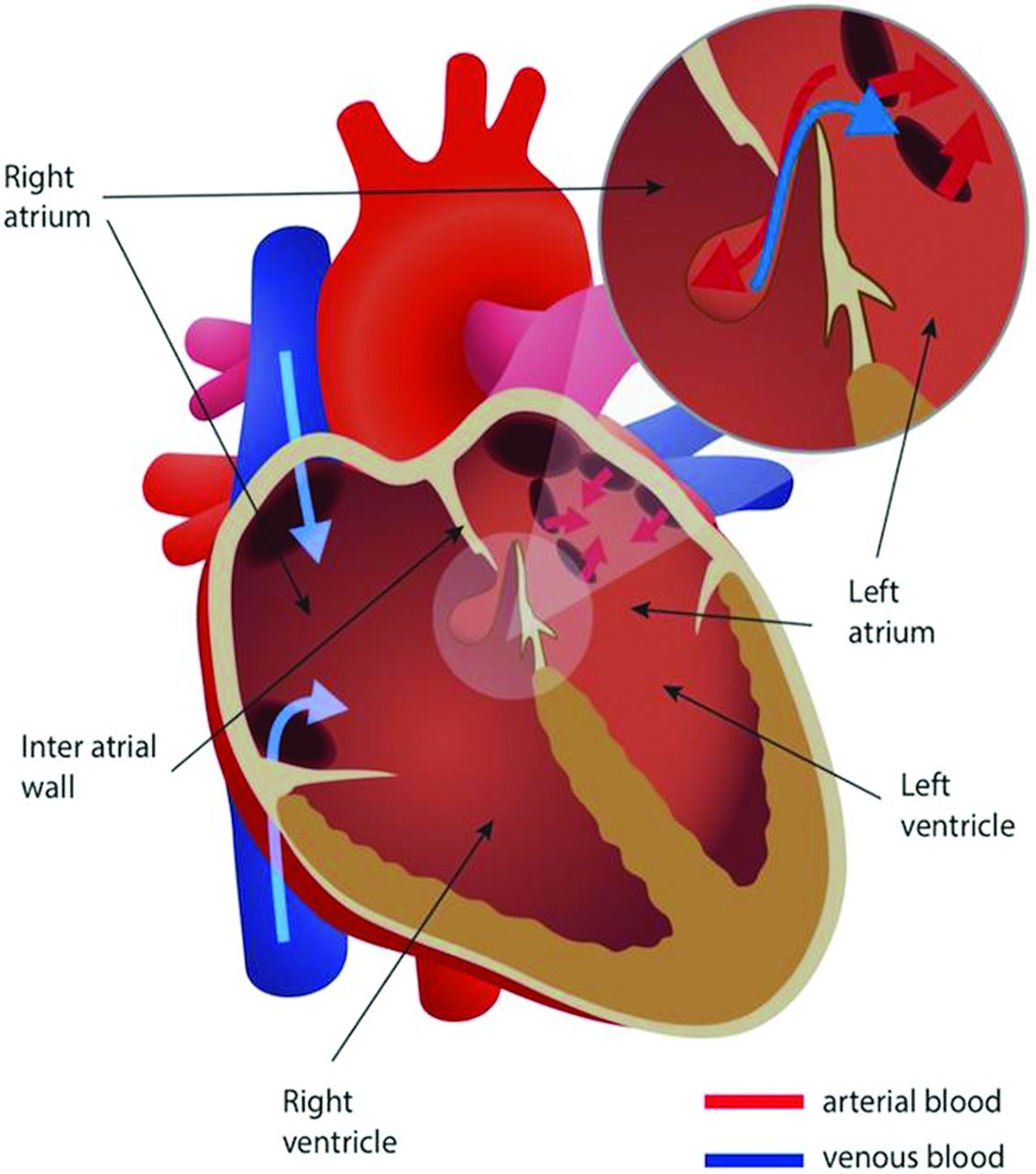
During the appointment the surgeon teased us about being professors and grading him – but we said he already got an A+ just for taking me on. The procedure to close my PFO (Patent Foramen Ovale) will take place in a few weeks, in April. It involves inserting a soft metal “umbrella” into my heart through a tube inserted in my groin. (Really looking forward.) Once in place, it expands to close the hole in between the upper chambers of my heart (for explanation see here). Of course I’m nervous. But I’m thankful it’s considered a low-risk procedure, with recovery times of only a couple of days in most cases, and well worth it for the significant reduction in future stroke risk.

Bad Timing for the Someone Else’s Saint Party

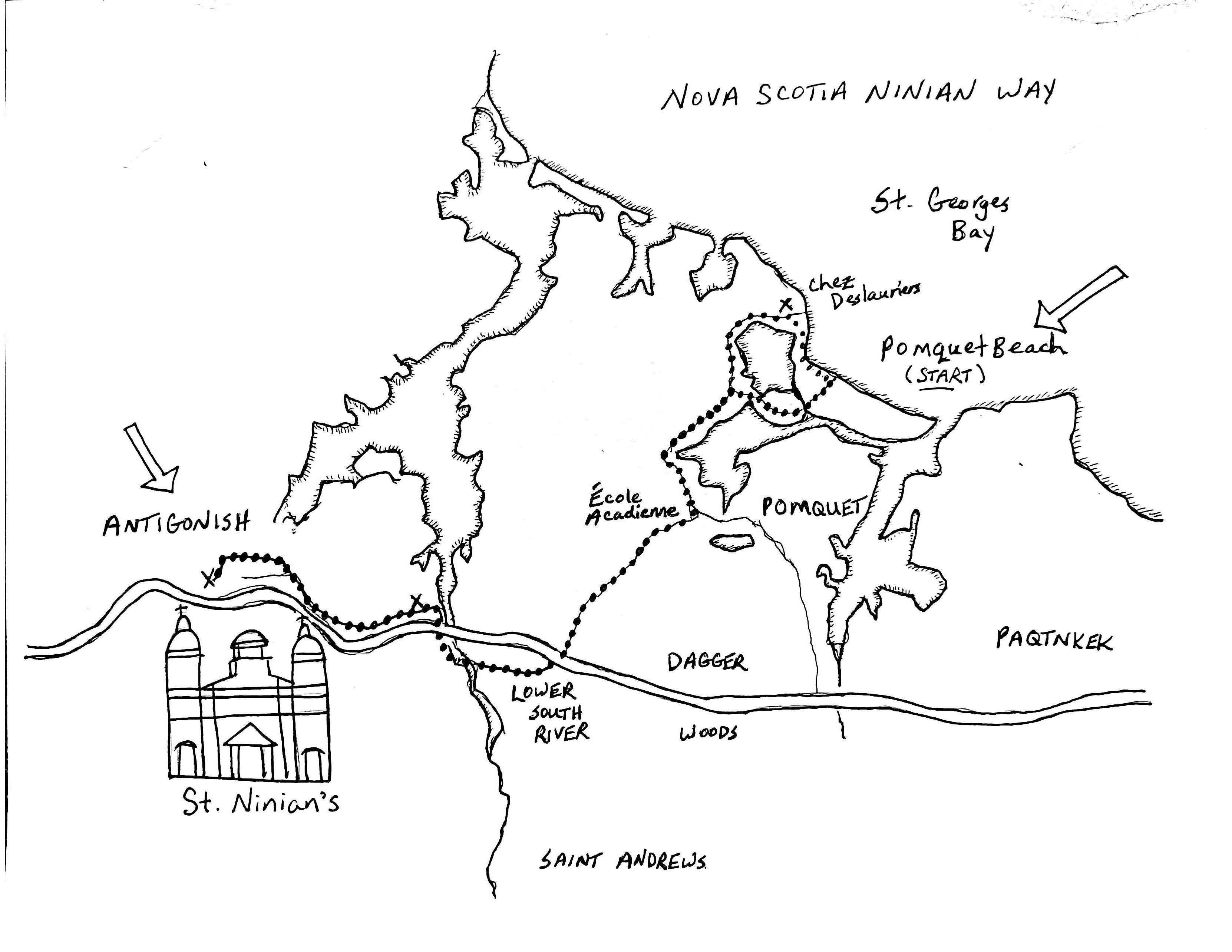
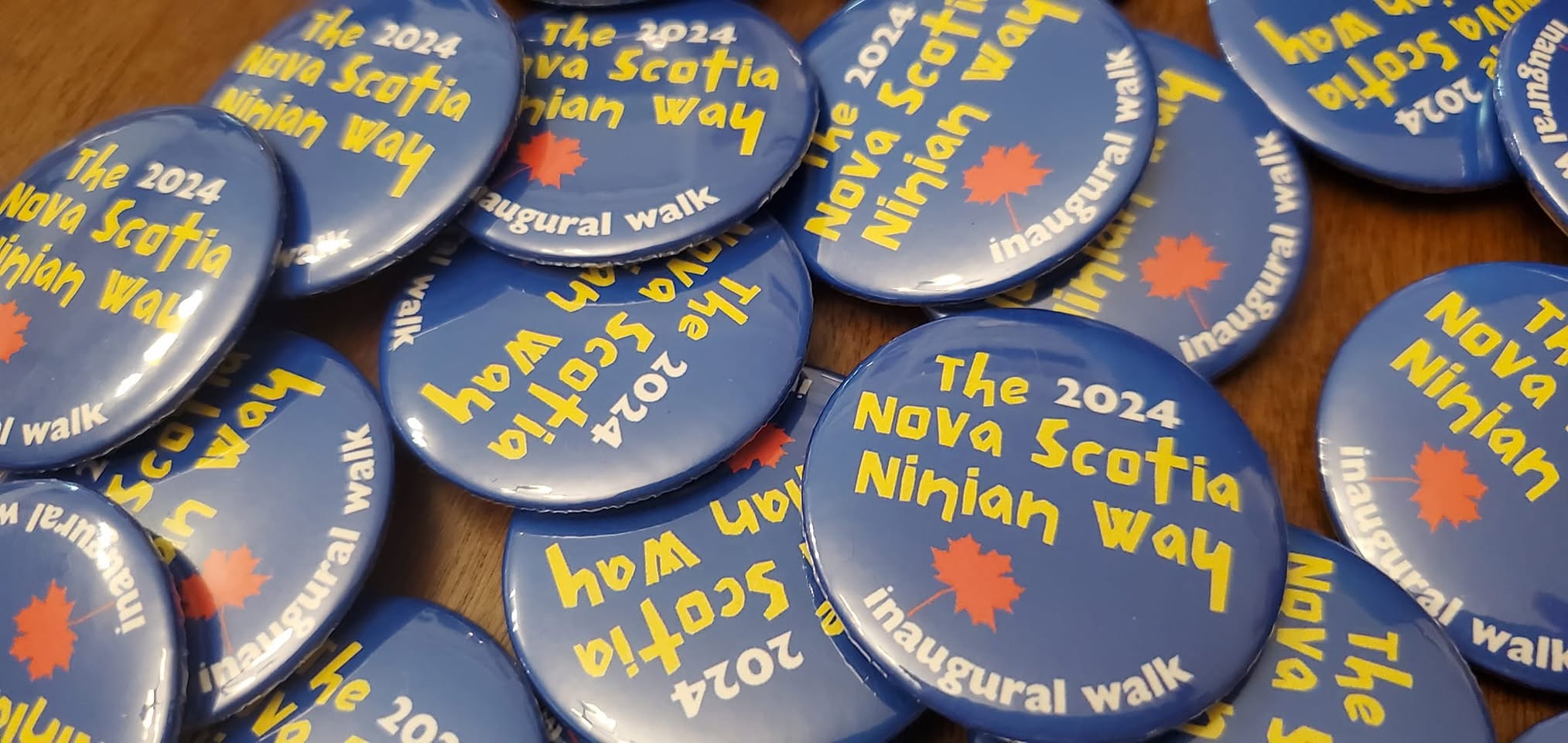
Someone Else’s Saint: How A Scottish Pilgrimage Led to Nova Scotia is coming out within the month (mid-April). It won the Pottersfield Prize for Non-Fiction last year before it was published, and the prize was publication! It’s about walking the Whithorn Way in Scotland only to find a strong connection to its saint (Ninian) right here in Antigonish, then inaugurating a new Ninian Way in Nova Scotia. I’d already arranged for a launch at the wonderful Antigonish Heritage Museum. To my delight, 2024 Canadian Traditional Musician of the Year Mary-Beth Carty had agreed to play a couple songs during the evening! But when I got the notice from the hospital about my procedure, of course it turned out to be the day before the launch. Drat. So keep your eyes peeled for an announcement once I find a rescheduled date! Fingers crossed it will still work for Mary-Beth Carty!

Flu and Field Trip

This last month I caught the flu. It really knocked back my energy … and my stroke progress. Fortunately, Sara quarantined in the other end of the house and sanitized like a surgeon and didn’t catch it, and nursed me back to health over the week or so when I was most affected. I recovered in time to lead our team-taught StFX Religious Studies class “Intro to World Religions” on a field trip to Saint Ninian Cathedral, where Father Danny MacLennan seemed delighted to welcome a gaggle of young people, and even took some brave souls down to the crypt “where the bishops are buried.”

Hearts in Motion

Twice a week I drive to town, park at a handicapped spot on campus, and spend an hour at the gym with about ten others, as part of a public health program called “Hearts in Motion.”. The others are there post heart attack or heart surgery, mostly: as far as I can tell, I’m the only stroke survivor (I’m the only participant with partial paralysis…trying to do the “windmill” warm ups with my left arm). I didn’t know what to expect starting out, but going to the gym has been great for me. The first weeks I couldn’t even get on the elliptical machine, much less use it. Now it’s my favourite. I can actually hold the moving hand grips, and release the left one and grasp it again mid-step (sometimes). The program’s physio suggested I try the rowing machine. I was doubtful – I’ve never liked that device. But he was right: the pairing of my left and right arms that’s necessary for “pulling back” the rope and handle seems to be very good for training my affected left arm to stretch and reach. There are only four more sessions, so I may have to get a membership for spring and summer just to keep up on the machines. I’m still incapable of running, even very slowly, on a treadmill. I’d trip and fall. But I’m more and more tempted to try, just briefly…

Left Leg and Foot

I’m fortunate that the Physio and Occupational Therapist outpatient departments at St Martha’s hospital are still keeping me on. They say they keep seeing progress, and tell me I’m unusual (I think in a good way?). At my most recent strength and flexibility test, the physio told me that I’ve recovered close to normal strength in my left leg. “But I still have quite a limp,” I told her. “You can see that.” “That’s your brain,” she replied. “At some point it may get back to automatically lifting your foot and adjusting your gait. But there’s no way of knowing when that might happen…” I’m hoping this is like a pilgrimage path in Scotland that I was on with Ken Wilson and Christine Ramsay. Our guide at the time told us: “Use is the cure.” The other evening some great music came on and Sara and I had a quick dance. At the end of it she was laughing: “that felt like before your stroke,” she said. “You were leading like the old Matthew!” Ahhh….that’s what I’m aiming at.

Left Arm and Hand

My use of my left hand continues to improve….but very, very slowly, from my perspective. My guitar chording continues to get better: now I can play E,D,A, and G with minimal help from my right hand. But it’s slow, and my strength in pressing down the strings sometimes lacks. I gave up entirely on trying to type with it. I’ll have to get back to that.

Janna, my wonderful therapy aid at St. Martha’s, makes me attempt to move clothespins from a steel wire as a strength exercise for my left hand. But what I enjoy most is playing catch with her! I’ve gotten to the point where on a good day I can catch a gently tossed tennis ball with my left hand, against my stomach, several times, and often succeed in tossing it back, although sometimes my hand won’t let the ball go.

The issue with my hand is what is called “tension” or “spasticity.” My fingers will be loose until I squeeze something (say, toothpaste). Then, instead of loosening again, my fingers stay curled – locked! Sometimes the best technique is to ignore the hand briefly, until the fingers relax again on their own. It’s a bit like trying to fool your own brain. The spasticity seems to be diminishing. But it’s a slow process.

Poetry and 2025 Saskatchewan Book Awards

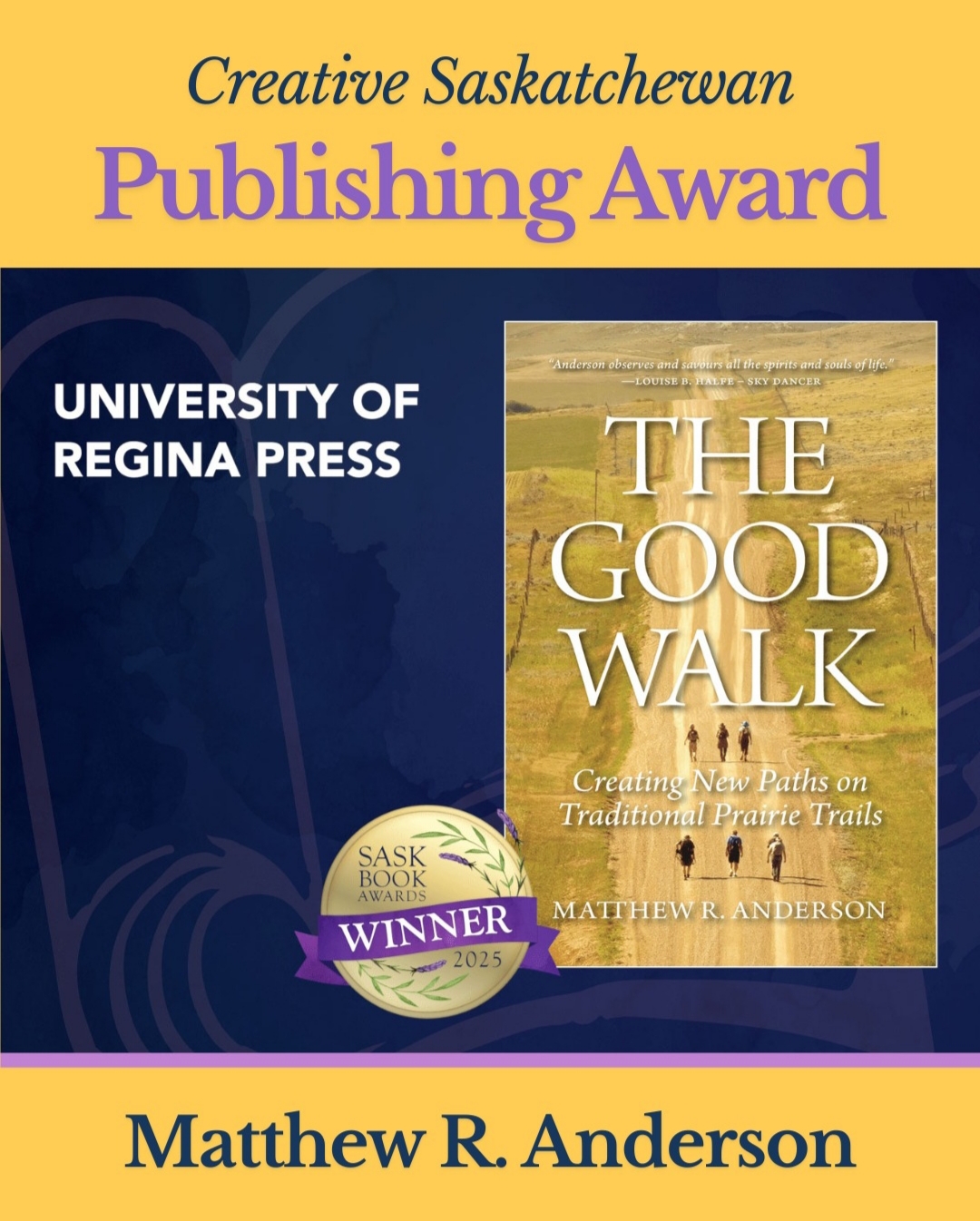
My first submission of my “stroke poetry collection” went nowhere, so I’ll be editing the poetry and trying again. But yesterday I got great news that really lifted my spirits! My memoir The Good Walk: Creating New Paths on Traditional Prairie Trails is shortlisted in the “Publishing” category for the 2025 Saskatchewan Book Awards! On May 9 there will be a fancy awards ceremony in Regina, with the lieutenant governor in attendance. For now my cardiac doctor is telling me no travel. But I can’t wait for May! I’m trying to get my brother Mark, who lives there, to go in my place JUUUUUUUUUUUUUUST in case there is an award to accept.

The End of Term Approaches

All of the hospital staff seemed shocked that I planned to go back to work upon discharge. I don’t regret going back to teaching so soon. But now that the term is winding down I’m realising just how much energy it’s taking for me to go to town four days a week for teaching and physio (and, of course, I’ll stop by the grocery store or Canadian Tire often as well). The OT consultant from Halifax couldn’t believe my weekly schedule. “Of course you’re not getting through all your home exercises,” she said. “When would you do them?” Her main advice to me was to take it easier, especially after I developed frozen shoulder in my right arm last month. Sara declared the dishwasher (reaching down to load and reaching up to put dishes away) off limits and slapped a hefty 100-dollar fine on any disobedience!!! (I only made that mistake once.)

So taking it easy is part of my plan for spring. I’ll take inspiration from the Christmas cactus Sara bought me last fall for the hospital. It budded at Christmas. But in the end, no flowers materialised. Only now, after the equinox, at home, are the blooms coming.

I pray that in your life and mine, there will be delicate beauty developing in its own time this spring. In a world where small, powerful men seem so determined to distract us from their greed and incompetence by emphasizing division, brutality, and ugliness, may we be like this Christmas cactus: blooming boldly, especially where and when it is least expected, and most appreciated.

Categories
Uncategorized

In the Bleak Midwinter of my Stroke

Matthew Anderson, Pomquet NS

excerpt…

“Like many others, I love the hymn In the Bleak Midwinter. I always have. But as someone who walked to school through Saskatchewan’s -40 mornings, shovelled out cars in Montreal’s worst snowstorms, and now checks that the generator is ready when a Nova Scotia blizzard threatens, I’ve always felt that for Canadians, the timing of this favourite hymn is a little off.”

This is how my piece in the most recent Canada Lutheran (Jan/Feb 2025) begins. Since many folks I know and who follow this blog aren’t Lutheran, and won’t receive the wonderful ELCIC (Canadian Lutheran) magazine, I’m showing that piece here. Enjoy!

Categories
stroke-recovery

Five Month Strokeaversary: “I Got My License!”

“Dad, can I borrow the car tonight? I promise I’ll fill ‘er up.”

After my stroke, I was required by law to take my driver’s tests (written and practical) again, as a “one-armed driver.” I went in to Access Nova Scotia for an oral exam on road rules and safety, a road signs quiz, and a 45-minute road test. My jovial inquisitor was Teresa. At the end of it all, I officially got to keep my driver’s license.

Yayyy!!! I feel SO thankful.

The Driving Exam

It seems fitting that my 90-min driving exam took place almost five months to the day from my stroke back in September. I was supposed to take it a week ago. But I hurt my unaffected right arm last week overworking it (trying to rake snow off our solar panels, I think, or maybe it was that time I carried in all the groceries at once). It took a week for my “driving arm” to recover enough to turn a corner without grimacing.

Was I nervous? Of course! It will be – unbelievably to me – 50 years this June since I passed my first driver’s test in Regina, Saskatchewan (the above grouchy photo was taken a year or two after that time….I’ve since learned to smile!). The very professional and friendly Teresa here in Antigonish was all smiles when we got back to the provincial office. “Look at that,” she said, holding out her clipboard. “I barely wrote a thing. Sometimes I have to fill these sheets! You got just enough points deducted to prove you’re human.” I know one of the two things I got docked for was not signalling when I left a roundabout, but it was because I couldn’t safely take my right hand off the wheel to get all the way over to the turn signal while making that sharp a turnoff.

Appointments, Appointments, Appointments

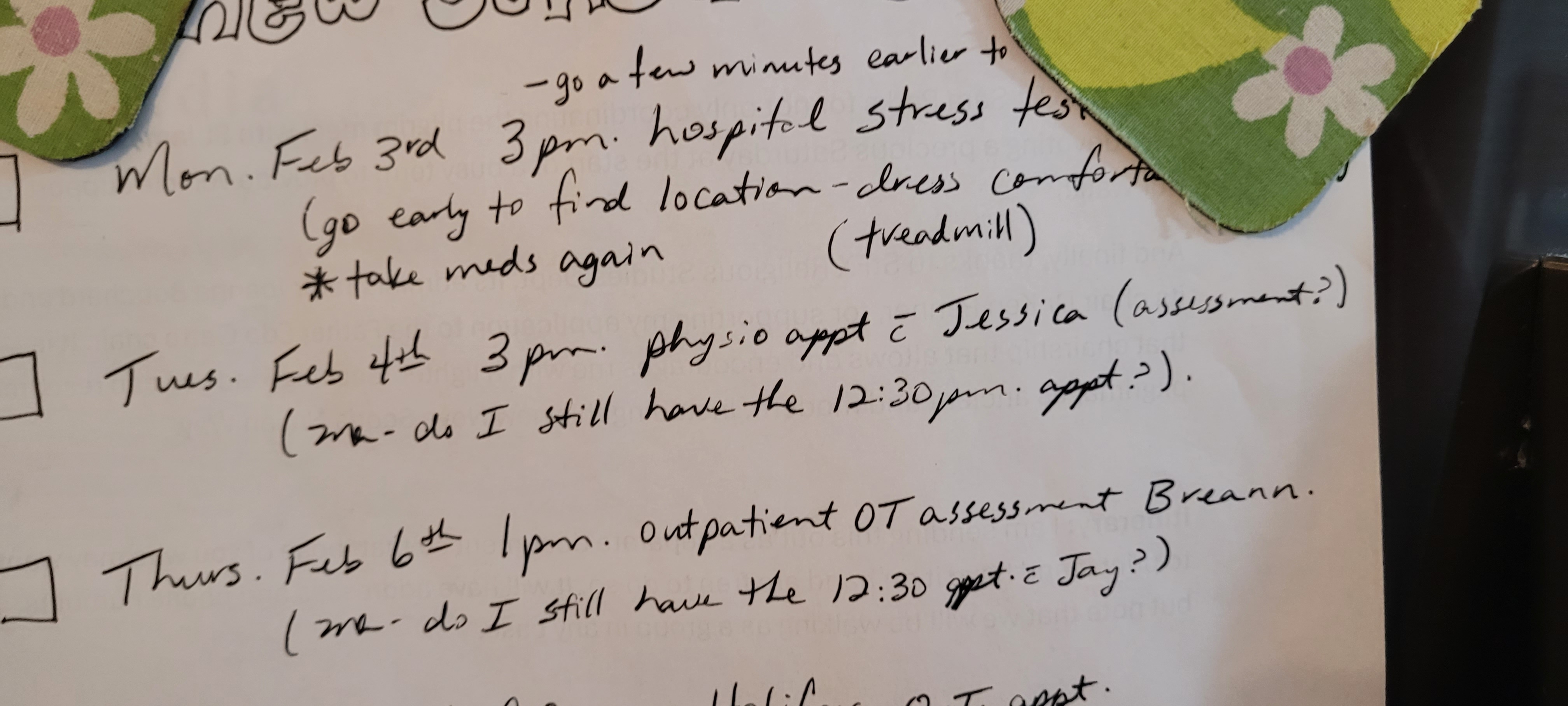
Since Sara and I live in the country, not having a driver’s license would have meant a major life change. These days I’m teaching two days a week at Saint Francis Xavier University, 17 km down the highway. (Last week’s midterm exam for Bible and Film pictured above!) A normal week also means driving in two mornings for the Nova Scotia Cardio rehab program “Hearts in Motion” at the StFX Amelia Saputo Centre gym, where I and a dozen other heart patients get sessions on exercise and diet and 75 minutes on the treadmills, stationary bikes, and (for me) elliptical machines. I usually bump into one or two of my students, which is nice. Twice a week I also head back to the stroke rehab centre at the hospital, now as an outpatient. There I do 30 minutes of physio and 45 minutes of occupational therapy. Then there are all the appointments for blood tests, stress tests, reassessments, and consults, most here, but some coming up in Halifax.

I remember the old folks always complaining about how busy they were with appointments. Preoccupied juggling multiple part-time jobs and kids, I remember thinking: that’s hardly something to keep a body busy. Boy was I was wrong! I’ve needed to post myself a schedule just to keep all my rendezvous’ straight and out of conflict with my teaching times. I’ve also apparently joined that group of people who have to remember to take multiple pills daily, counting them out carefully every evening.

Me and My Big PFO

A big date for me comes up the end of this month in Halifax: my initial cardiac procedure pre-appointment. In case you missed my earlier mention of this: apparently I have a “PFO,” a hole between the upper chambers of the heart. This hole exists in newborns, but in almost all people closes in very early infancy. In a small percentage of us, that hole never closes. A PFO can allow a clot from the leg to pass directly to the brain rather than being shunted safely to the lungs for “processing.”

No one seems to know for sure if this is what happened to me. But it may have been. Something poetic about the fact I have a hole in my heart.

At my pre-appointment they’ll confirm whether I’m a candidate to have that hole closed with an arthroscopic procedure involving magnetized rubber washers. Of course I’d like that procedure asap. I don’t want another stroke (although I’m grateful for the meds that have finally brought my blood pressure down from the mountaintops)! But I know I’m fortunate to be seen so quickly about this. For now, on the doctor’s advice I’m not flying or taking long drives. A trip to Montreal to see the kids, or speaking at Gathering of Pilgrims 2025 in Vancouver as planned, are out.

Refuse the Plateau!

The book “Stronger After Stroke” that was sent to me by Greg and Ingrid Gust says that a good rule for stroke survivors is to refuse to accept the idea of “a plateau” limiting their recovery. So that’s what I’m doing. And amazingly, I have yet to see a plateau. Every single day, I see slight but noticeable improvements. For instance, I typed this sentence using the three fingers of my left hand….not easy, nor graceful, but a start.

I sometimes feel disappointed for still having a pronounced limp when I walk (my arm and leg spasticity, or tightness, becomes much worse when I’m cold). Then Sara reminds me that I’m also walking through snow, and up and down multiple flights of stairs at the gym and the university (holding the railing). So there’s that.

The physios at the hospital filmed me walking. “This isn’t for us,” they said. “This is for you, so you can see how far you’ve come.” Sara came into our living room last week to find me lying on the floor. I’d been trying to squat the way I used to pre-stroke. “Are you okay?” she asked. “I tipped over,” I said, not moving. “Do you need help getting up?” she asked gently. “No.” Sometimes, flat on your back, you just gotta laugh.

My proudest news is that for the first time I can actually make a couple of chords on my guitar… WITHOUT always using my right hand to “arrange” my left fingers. Before Christmas I couldn’t even keep my left hand on the guitar without it sliding off under its own weight. Now, the feeling of very slowly moving my left fingers into an A or D chord (the easiest) is pure joy. A stroke-specialist in Halifax I met with over Zoom said to keep at the guitar daily. That seems to be the key: my daily routines, using my left hand as much as possible, even though it takes so much more time (you’d chuckle to see me spending three minutes trying to fish a spoon out of the cutlery drawer for my tea – do you remember Tim Conway’s SOOOOO-slow routines from the Carol Burnett show?).

Book Launch!

One of the best parts of being at least partly back in the routine is getting back to my writing. With my colleague Barry from the History Department who also happens to run the Antigonish Heritage Museum where I was first invited to give the talk that ended up ballooning into my new book, we’ve set a date for the launch — fittingly at the museum! “Someone Else’s Saint: How a Scottish Pilgrimage Led to Nova Scotia” launches there on Thursday April 24th, at 7 pm. I’ll tell the story of the book and do a reading or two, some of the local walkers will attend (I hope), and fingers are crossed for some fine local music! Two days later, Sat April 26th, I’ll be in New Brunswick for the Greater Moncton Riverview Dieppe Book Fair from 10 am to 3 pm. The book is already getting some nice attention, with a planned CBC Radio (All in a Weekend) interview. It’s only in pre-sales, but it’s already listed as #15 in Amazon Canada’s “hot-sellers” in its category (see below). But please don’t buy it there … pre-order it through your local bookstore instead! 🇨🇦

Taking Time for Warm Stanfields and for Berry Blossoms

Like everyone else, I’m having a hard time not doom-scrolling and feeling anxious these days because of the news. But my stroke recovery books – and my common sense – tell me that what’s best for my condition is to maintain a hopeful and constructive attitude, and allow my self-discipline and anxiety to be tempered by humour and forgiveness (good advice for us all). So I’m going to be lining up some post-stroke, retirement-adjacent therapy. I’ll try to dial down the work and dial up the creative writing a bit more all the time. And even on my lower sodium, fat and sugar regime, there’s some room for the occasional self-indulgence, such as these 100% Quebec-made “Berry Blossoms.”

As you might be able to tell from this photo of the moon rise over our neighbours’ place, it’s been cold here in Pomquet – and the cold affects me more since my stroke. So it’s also been great to discover that the “Stanfields” long johns of my youth is now a full clothing line, made since before Canada was even a country, just down the road in Truro Nova Scotia. I bought myself a sleeping shirt and Sara a tee-shirt for Valentine’s. These days, I think we can all agree with the logo.

If by chance you’re thinking of saying goodbye to Facebook at some point, please consider subscribing to this blog as a way of staying in touch. Thank you for following me along on this pilgrimage through stroke, and may the support you’ve given me return to you in a thousand ways. Courage and health to you, from our home to yours!

Categories
stroke-recovery

4-month Strokeaversary: Back to the Future

Back to Work

As I got out of the passenger seat with my backpack, and teetered through the snowstorm, slightly off balance, to teach my first class in over four months at Saint Francis Xavier University, Sara rolled down the window and looked proudly yet worriedly on. I went a few steps, then stopped and glanced back. “It’s like being in grade one!” I shouted. She laughed. “That’s what I was thinking!”

That first class, and those in weeks since, have gone well, all things considered, four months after a major stroke. I have over 50 lovely students for RELS 210 Bible and Film. I do find I have to stop speaking sometimes to swallow and to catch my breath, problems I never had before. And I’m exhausted at the end of the 75 minutes. When I go to leave the amphitheatre through the doors located at the top/back, I need to look for which side has a handrail to the right. But I find I can stand for almost the whole lecture. Kudos to the current chair of our department, Dr. Robert Kennedy, for suggesting that for the first part of term at least, I do half of my teaching online to save energy.

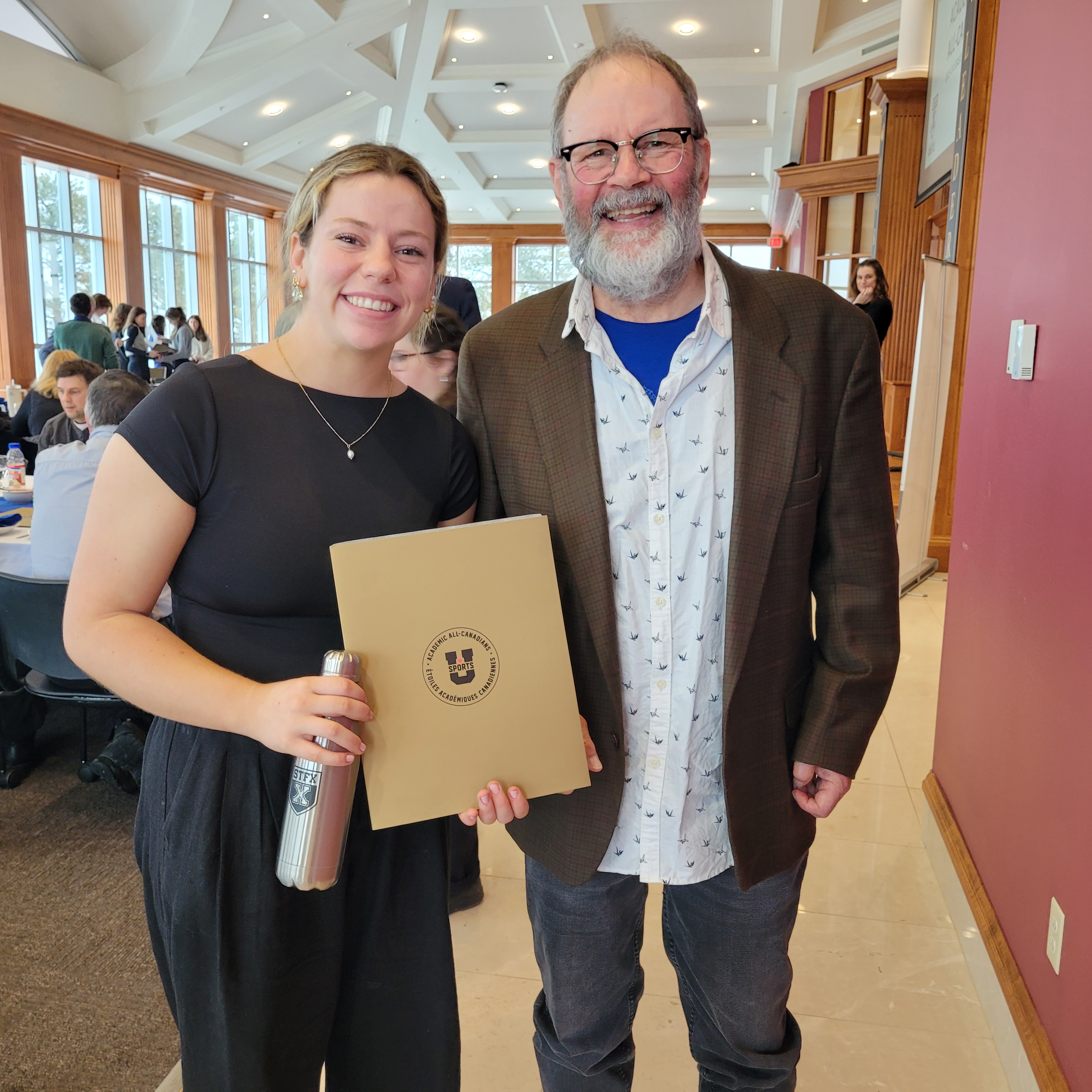
I was privileged last week to be invited by Katie Murphy, a member of StFX’s rugby team who’s been in several of my classes, to attend the Academic All-Canadian Awards breakfast as her one guest. Each Academic All-Canadian is a student athlete who maintains an average over 80% while excelling at their sport. They get to invite one favourite prof to the breakfast. Sara had the honour of being invited too, by another scholar-athlete, Myro Zastavnyy, who plays soccer. He got the highest mark in her New Testament class last term. All went fine, but a trip back and forth to a buffet table with breakfast in hand presents challenges I’ve never had to deal with before. Katie was a great help. She quipped, “once a server, always a server,” as she carried her own breakfast and some of mine back to our table.

Back to Mobility

Recently, I took my first solo drive in four months. As the kind clerk from the Nova Scotia Motor Vehicle Division assured me: “since your medical has come in all clear, there’s no reason you can’t drive right now. Just be sure to take the test again.” I have to retake both my written and road tests before the end of February, or my license will be suspended.

Off I went. It felt great – and a little scary – to be back motoring out in the big wild world all on my own like that. My first independent excursion since September. I took advantage of my first solo trip to head all the way to town to buy a pair of pull-on winter boots. I can now do up zippers fairly consistently (thanks to my friend Ken Wilson‘s gift of zipper pulls). But tying shoes? I managed to do one lace for Sara’s father’s 90th in Moncton. But it took me over five minutes, tired me right out, and even then it was loose. Pull-on boots for now.

I love two things about the photo of my prayer below from Winston Parks’s big birthday. One is that the Mayor of Moncton, Dawn Arnold, is behind me. Sara has admired her for decades, and tagged her in the facebook invitation. It was a privilege to have her there. The other is that two different members of my family, my son Daniel and my sister-in-law Barbara, when they saw the photo on the right, instantly celebrated the fact that I was holding my remarks in my left hand.

Back to the Hospital (as an outpatient)

Twice a week I drive myself to St. Martha’s Hospital. There I spend a half-hour under Jay’s watchful eye: walking on my heels, walking backwards, side-stepping, and doing high leg-lift marching that reminds me of what we used to do in high-school sports practise.

I still don’t have the left-foot strength to walk consistently on my toes, nor is my “normal” gait that smooth. But I’m getting better every week. After physio, my new Rehabilitation Assistant, Janna, takes over and guides me through 45 minutes of hand and finger exercises. I’m VERY fortunate to still be receiving this level of care! (Please, for my sake and yours, never vote for a party that has designs to privatise healthcare any more than some provinces already are!)

Back Home

This weekend, for the first time, I ventured across our driveway to spent an hour “working out” (I use that term gently) in our crowded insulated shed. Before Christmas, my brother and sister-in-law cleared space and set up the recumbent bicycle and the treadmill (from Sara’s parents’ recent move to an apartment) for me. It was great to listen to a podcast and just get my legs going. There have been both mice and a resident squirrel inside that space in the last year. We cleaned it thoroughly last summer and employed many mouse-proofing tactics, but while I pedalled I kept my eye out just in case.

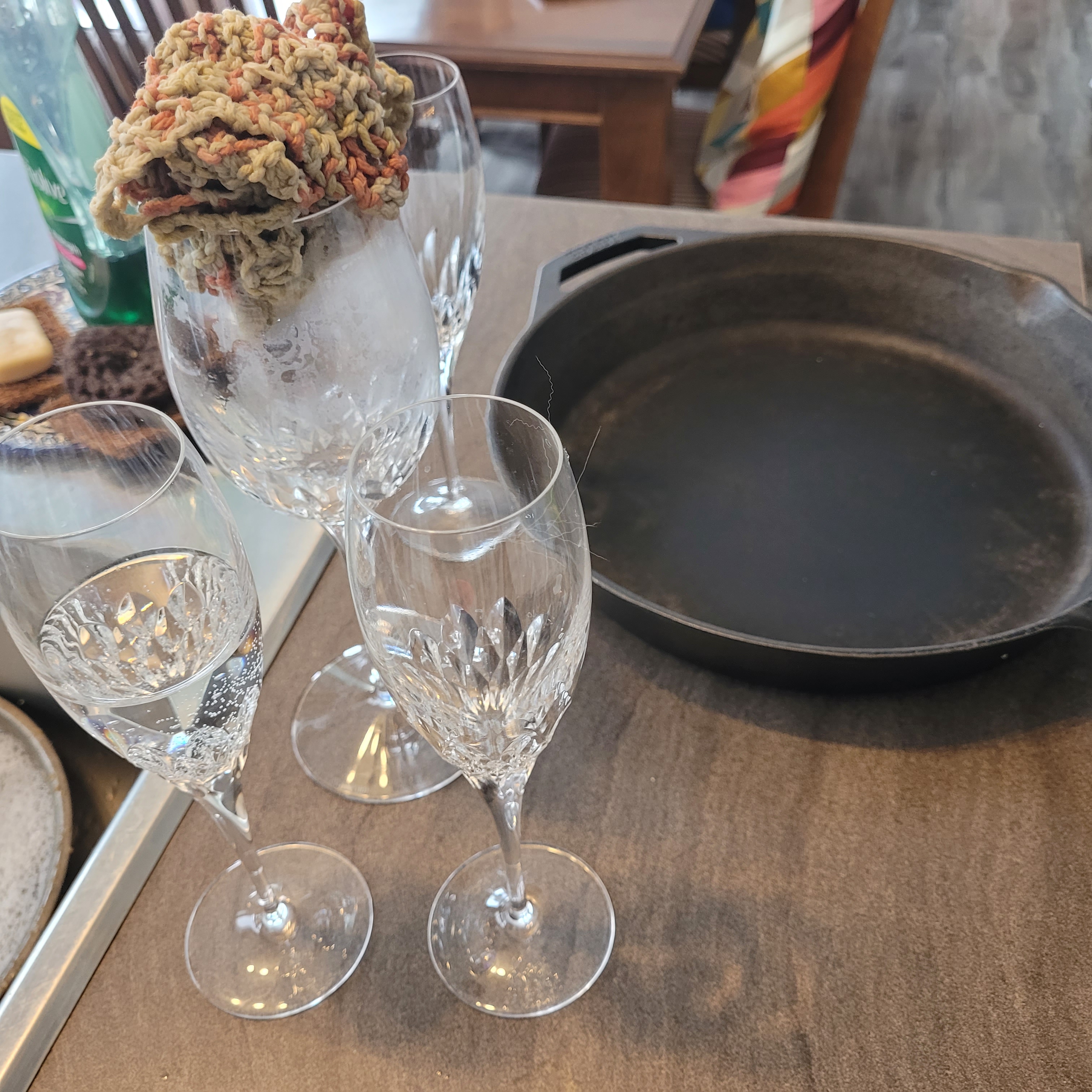
I have a full home physio routine which includes wrist exercises, doing leg lifts and arm raises, and giving my left hand the “TENS” treatment of low-level electrical current at least 30 minutes a day. I can now sometimes pick up pennies off a table with my left hand and drop them into a pill bottle, arm extended. Although I still have to use my right hand to guide my left, I can now make clearer chords on my guitar. You should see me wipe a counter! It’s a messy business. A big part of my home-work is using my left hand as much as possible to do daily tasks. I think it’s funny that as spastic as I am, Sara still trusts me to wash the crystal (and so close to the cast iron).

In some ways, it’s my expectations that are now changing. Rather than being surprised (and overjoyed) simply to be able to move my arm and hand again at all, these days more and more I find myself reaching for something, say a bar of soap, with my left hand without thinking. Then I’m surprised (and slightly disappointed) when my arm won’t extend that far, or my arm won’t straighten or fingers won’t open enough to grab it. My left hand looks and acts rather like one of those arcade claw machines, like in the movie Toy Story.

On my new low-sodium regime, I allow myself to buy these salted veggie-stix on one condition: I’m only allowed to eat them with my left hand!

I can finally, sometimes, extend my arm straight forward in a “cheers” motion. But I would never be able to hold a heavy pint of German beer in that position! I’m lifting a three pound weight for bicep curls and doing tricep work with a stretch band. Laughably light loads, but a start!

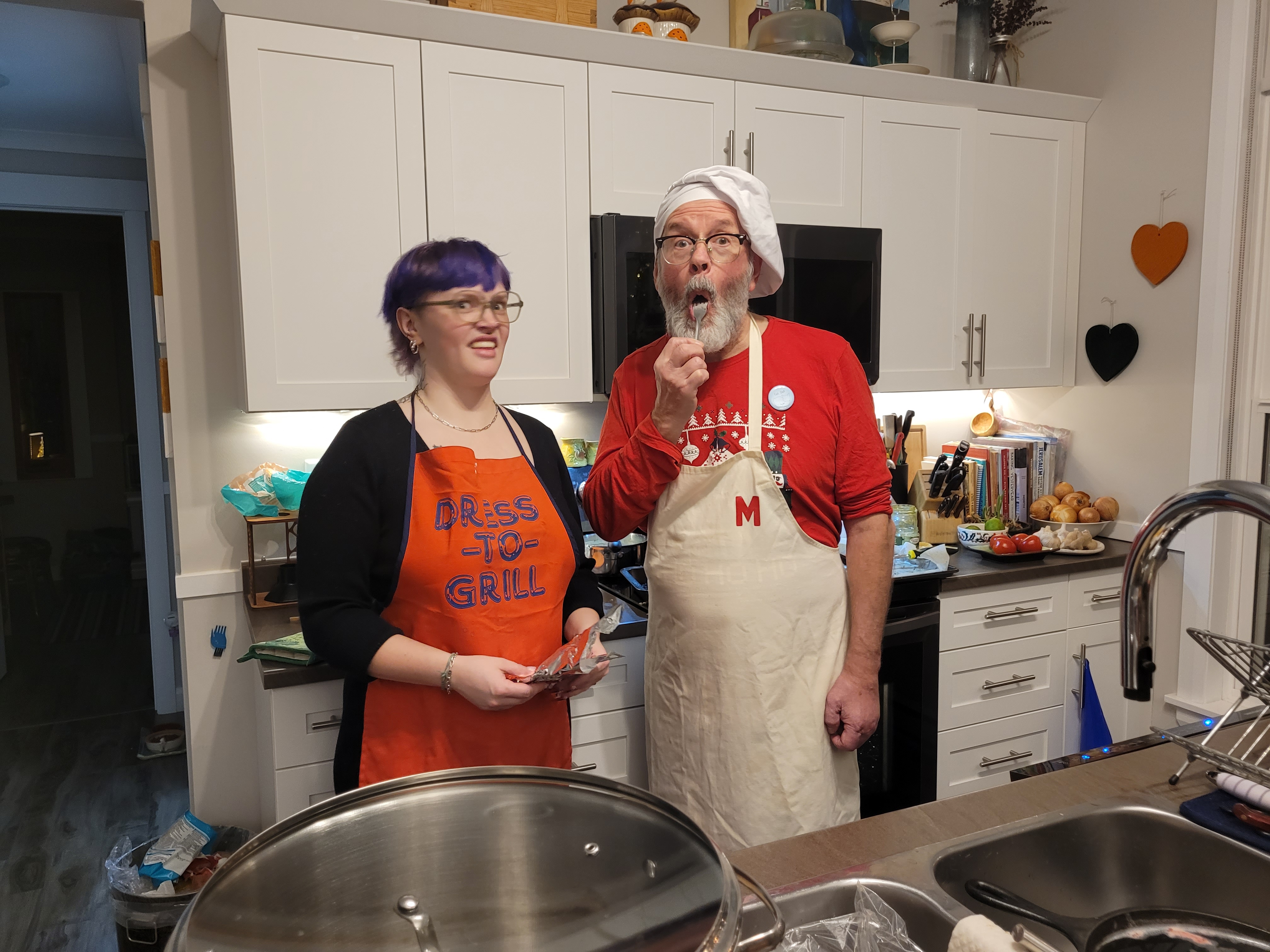
And now that I’m home, I’m noticing some more subtle stroke effects. My eyesight isn’t quite as good as before the stroke. My taste buds continue to be “off” especially around sugars and bread products (that might be the COVID I caught in hospital). And my hearing is slightly, but noticeably, worse…not so much in terms of volume, but when trying to distinguish “t”s, “d”s and the like. I keep reminding myself of how fortunate I am, and how much more damage the stroke might have done. I can use both arms for a hug. That’s worth a lot! And cooking can be the most fun home therapy of all (photo below from my youngest – Gabe’s – visit with us over Christmas, which was a joy). I’m glad that Sara didn’t mind that all my (few) presents for her were from the hospital gift shop!

Back to Writing

All fall in the hospital, it was hard to concentrate on my research project on Jerome with my fatigue, frequent interruptions, and (most welcome!) intensive rehab regime. It was Sara’s suggestion that I use some of my isolation time to get back into writing smaller things, like poetry. I came up with a small collection, which I’m submitting to a provincial competition this week. I can’t share it here (since it must be “unpublished work”), but please keep your fingers crossed for me.

I also turned around the copy-edited proofs for Someone Elses’ Saint: How a Scottish Pilgrimage Led to Nova Scotia, due out in Spring 2025.

My big question mark is typing. If I can figure out a less sensitive keyboard for practise, I’d like to try typing while including my curly-fingered left hand, just to keep those left muscle memories alive. That’s on the to-do list. I sometimes use dictation, but that isn’t the way I am most comfortable composing and the results end up different!

Back to Gratitude

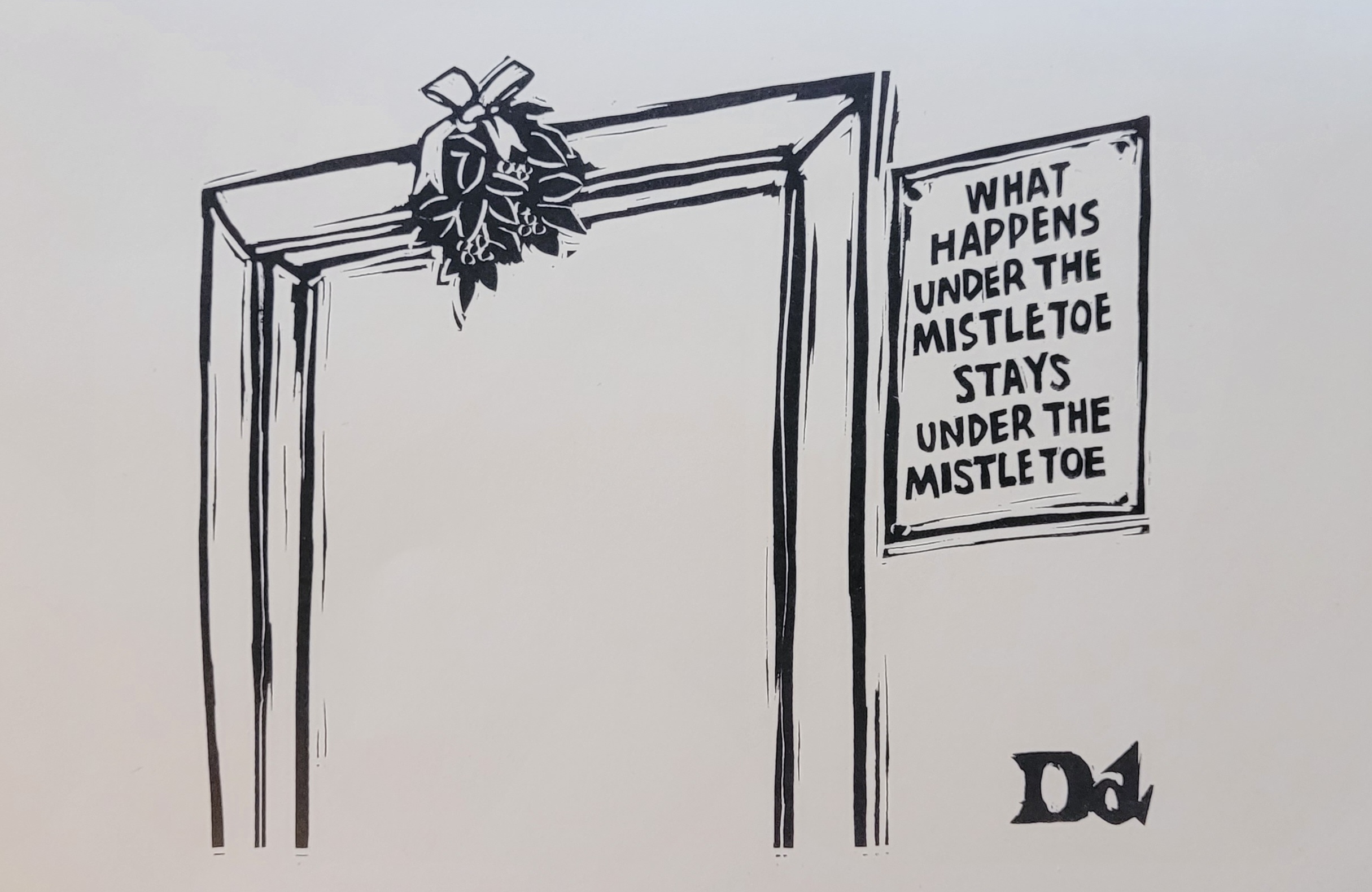
I’m still SO humbled for the ways I was supported all through my time in hospital by so many of you. Thank you! I get rushes of gratitude when I see the cards or when someone contacts me to check on how I’m doing. The postal strike gave us a kind of unexpected blessing, in that here we are in January and I’m still getting cards that were hibernating during the strike. Special recent thanks to Nadine and Phil for the so-very thoughtful box of individually wrapped and labelled goodies, and to George Greenia, who made it an Advent discipline last fall to mail us a steady stream of fun little cards of support, only to have them stack up with Canada Post and arrive all at once this week! Those of you who know George know that in addition to his kind heart he has a cheeky sense of humour. I’ll leave you with one of his mailings as an example!

I was also touched when our friend Amanda texted Sara the week after I got home, to ask, “When is Matthew’s weekly stroke report coming out? Mom and I look forward to it every Sunday.” What a miracle, to write one’s experiences and hopes into the ether, and have them land in the hearts of others.

Categories
stroke-recovery

Week 13 Strokeaversary: Honourable Discharge

Patience, patience, patient … now hurry up and go!

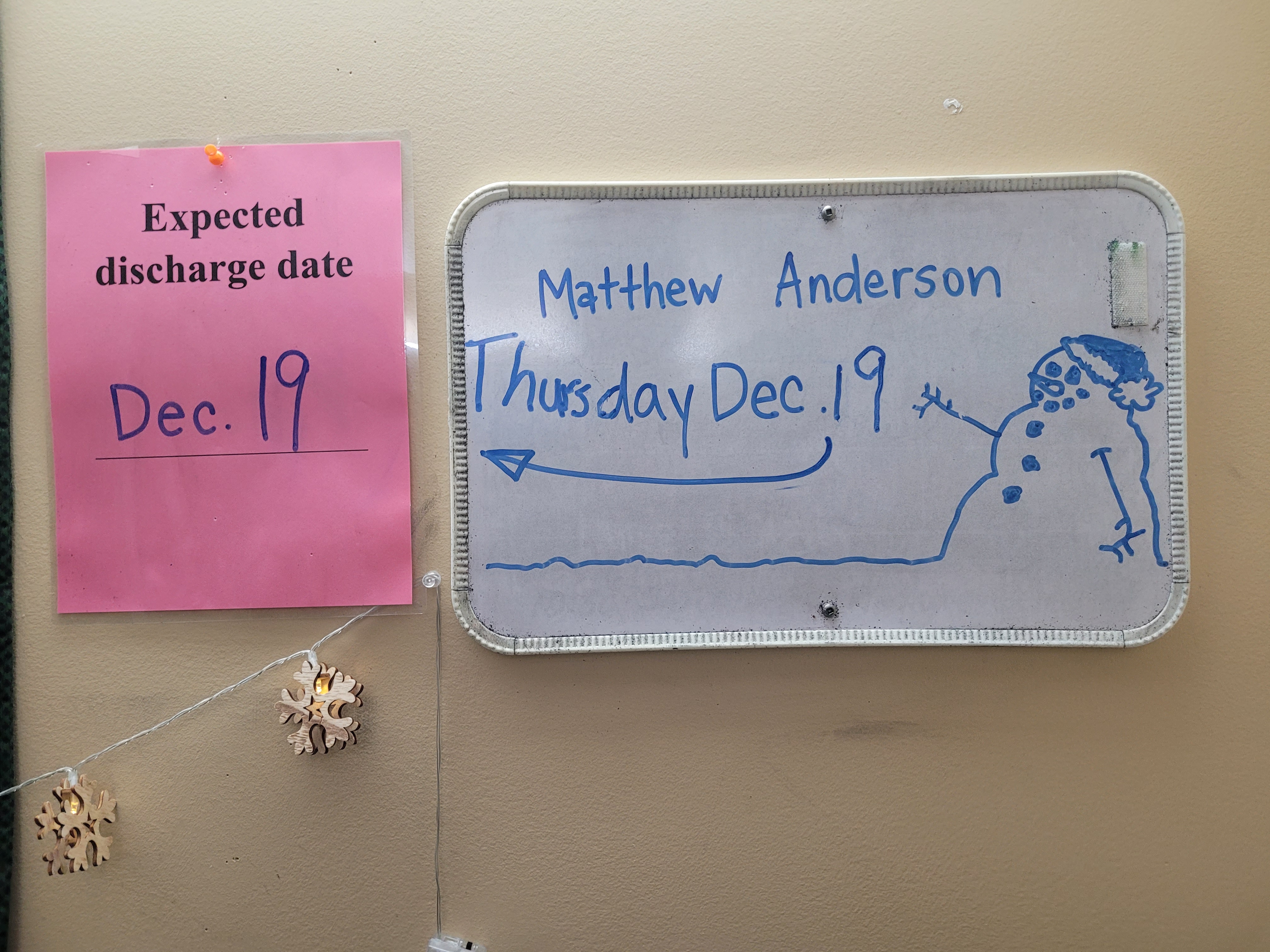
After 13.5 long weeks in the stroke unit at St Martha’s Regional hospital, my discharge yesterday seemed to happen all at once.

My overall progress has been overseen by the kind and professional Dr. Mary Gorman, Lead Physician. But this week’s physician on ward was the equally empathetic and soft-spoken Dr. Aaron Bates. In the morning, he stopped by to discuss last-minute tweaks to my meds.

He passed on a warm greeting to Sara, we shook hands, and he left.

Then, in quick succession:

a/ Thursday’s nurse, whom I know less well, immediately appeared to fill out discharge forms. She insisted on asking a long list of prescribed final check questions like: “what year is this?” and “Where are we right now?” despite the fact we’d been chatting in some depth about about provincial and federal healthcare politics only moments before.

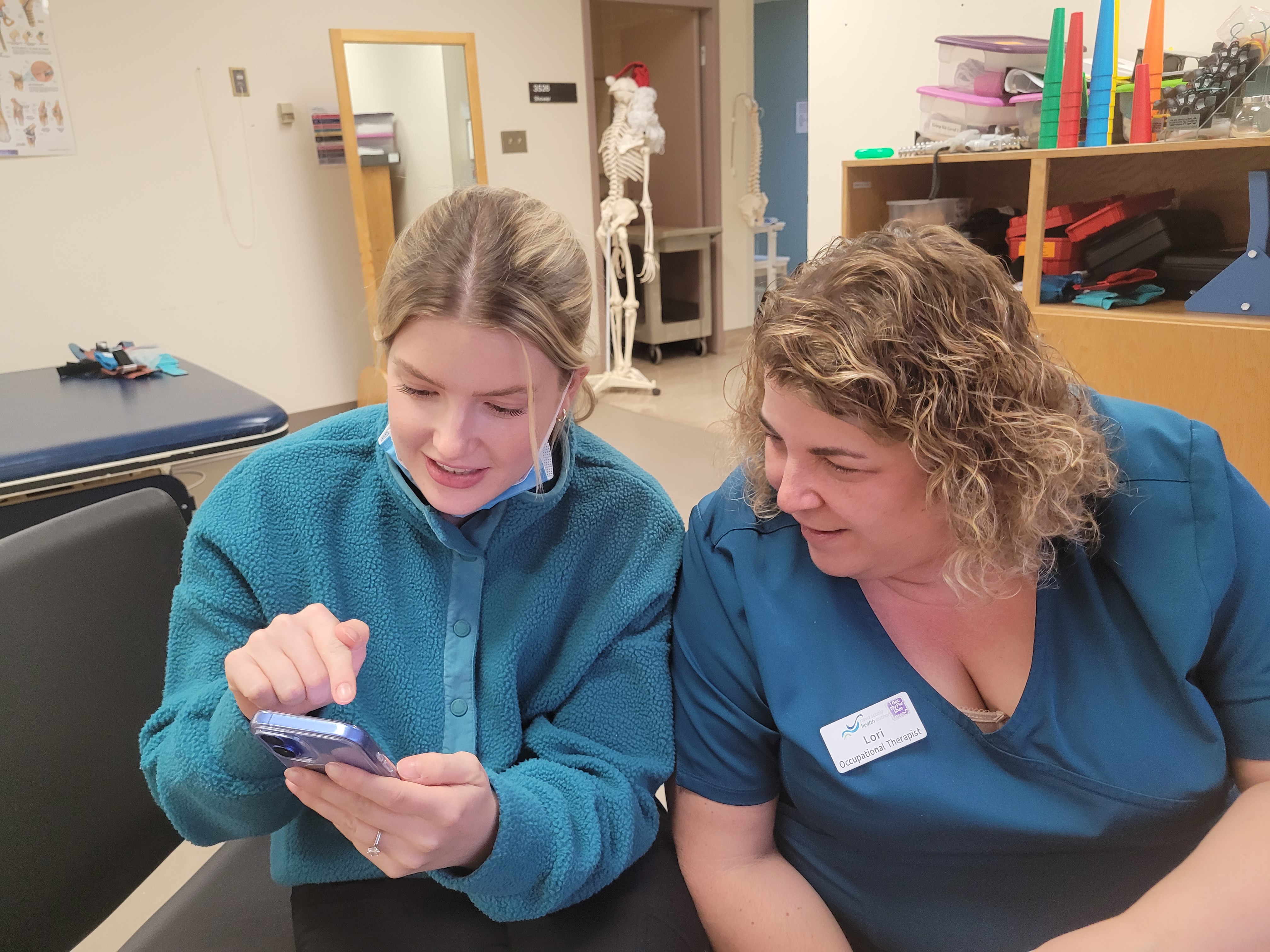
b/ Physios Lee and Lena, and occupational therapists Lori and Ria (below) entered as if on cue with a barrage of January out-patient schedules, transit options (a mobility bus for 8 dollars a trip), prescriptions for equipment (a bar for the shower, a walker, and an electric shock device), and homework. (As well as for final hugs.)

c/ The hospital pharmacist sat down with me for a long consult and prescription check. We ditched the diuretic (for swollen ankles) in favour of a tweak in blood pressure meds. I’ll be on “baby aspirin” for the rest of my life.

d/ Like clockwork, “Ed” –an 80-year old more recent stroke survivor with a dry sense of humour– was wheeled over to inspect his future private room. (I’m glad he’ll be able to start getting the rest he’ll need to recover.)

e/ The cleaning staff started lurking around my doorway with mops and rags, asking if I was done packing up. (I clearly wasn’t!)

f/ One-handed speed-packing! I wonder if I’m the only patient at St Martha’s to have stripped their own bed on discharge? Sara was detained trying to get her final grades in by the deadline. So, motivated by the sidelong looks of the cleaning team, I went into one-handed high gear. All the hard work Sara put into making my room the most serene and comfortable place in the hospital was unravelled in minutes. Framed photos of our family and cats, Christmas quilts, twinkly lights, plants, a knitted prayer blanket, extension cords, spices, local teas and honey, books, earphones, a huge Christmas wreath, all my wonderful get-well cards … everything got stuffed into big blue IKEA bags for shlepping to the car. Sara was en route, but I didn’t wait. Everything got wheeled on my walker to the lounge. The cleaners descended like a flock of sanitizing vultures.

Processing…

“The goal of healing is not a papering-over of changes in an effort to preserve or present things as normal. It is to acknowledge and wear your new life – warts, wisdom, and all – with courage.” ~Catherine Woodiwiss

By the time I caught my breath, Sara and I were speeding toward Pomquet. Home! Once over the threshold (she didn’t carry me), she declared, “no more weekend passes — this time you get to stay!” We sat and reminisced about how she ran for aspirin way back on the night of September 16 when I mentioned the funny feeling in my arm. We marvelled at how far away that feels now. We were in the same chairs as back in September, but so much had changed. I guess a person might have predicted what happened next, but I was caught by surprise. I broke down completely and wept. Big, heaving, messy sobs.

Both Sara and I have been 100% focussed on “getting through” and staying positive for each other. We haven’t had a moment to process. The reality is that a major stroke destroyed part of my brain in September. The reality is that I now have a decreased range of mobility and an increased sense of mortality. The reality is that, between a pandemic, and a slow and frankly, sneaky privatization of public services for profit, our healthcare system is weakened. If I’d had a family doctor instead of a pharmacist, whose ability to adjust my blood pressure drugs when it was soaring out of control the last couple of years was extremely limited, things might have been different. The pharmacist urged me to go to emergency if my blood pressure hit 165, but because it happened frequently and I felt okay, I didn’t. I felt I didn’t want to take resources from people in a “real emergency.”

The emotional/grief work of processing the life changes resulting from the stroke is still largely to come. For my part, once I hit bottom and got over the terror of the initial 48 hours when more and more of me was disappearing, there was no time to fret. I understood that all my energy had to go to the things that would bring about maximum recovery. I knew I had to:

a/ work as diligently and proactively as possible with the physio and OT team during the crucial early post-stroke period

b/ do everything I could to present myself to nurses, doctors, physios, and other staff as someone to speak to, not about (the latter is distressingly common). As soon as I could, I got out of my Johnny shirt and jammies, and began getting dressed “normally”. Sara instinctively sensed this concern too, and brought a collection of books to my room first thing. Just like at home.

As those of you who’ve been in hospital for any length of time know, staying focussed and advocating for one’s needs becomes its own full-time job in a hospital. Even a good one like St Martha’s.

Another thing I did was to memorize and remember the names of all the staff who worked with me. This was not only important for point b above, and for my mental discipline — it was in search of the increased health and wellbeing that comes from forming relationships and connection.

Carers

Safety is not the absence of threat … it is the presence of connection.” ~Gabor Maté

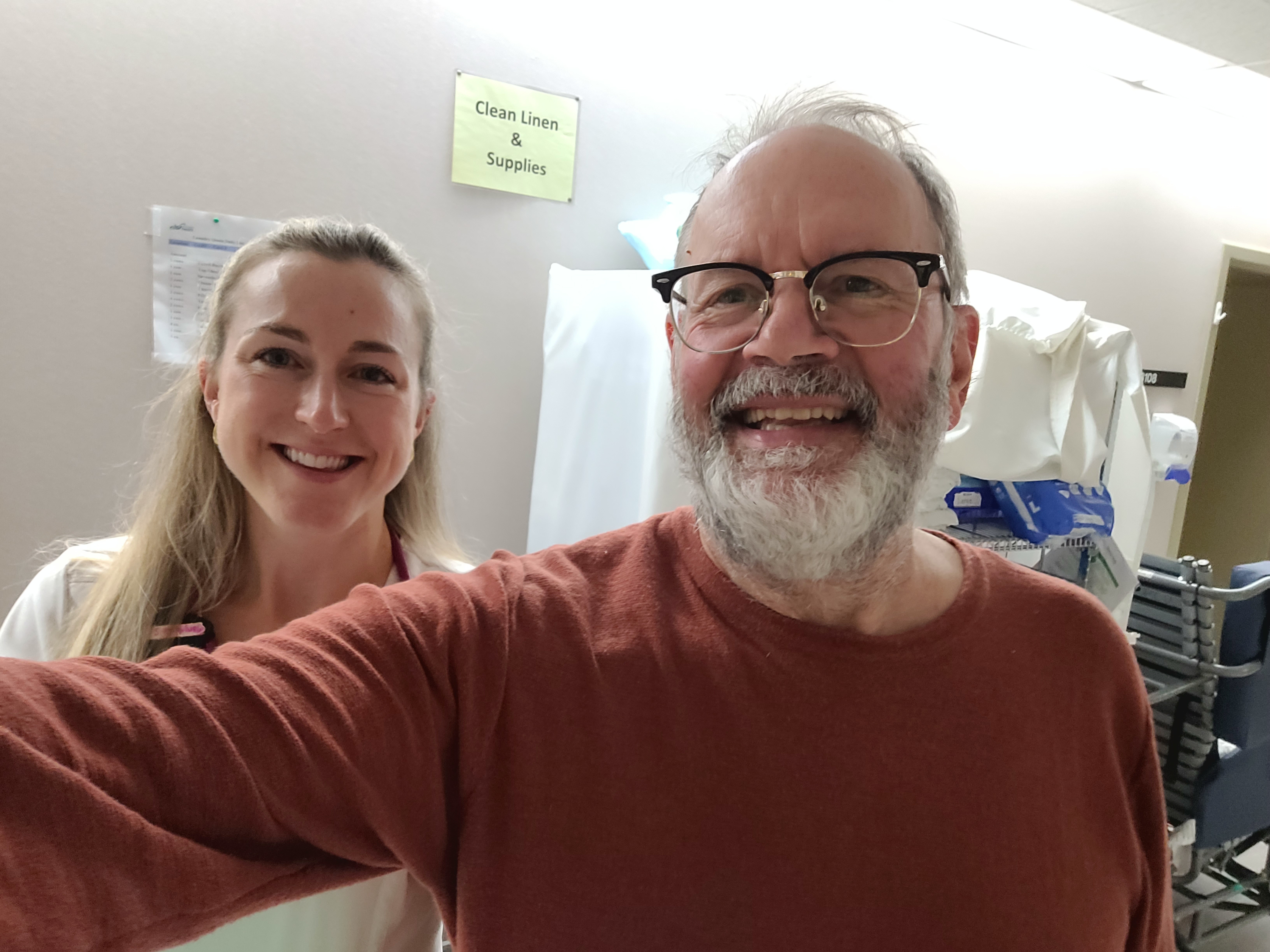
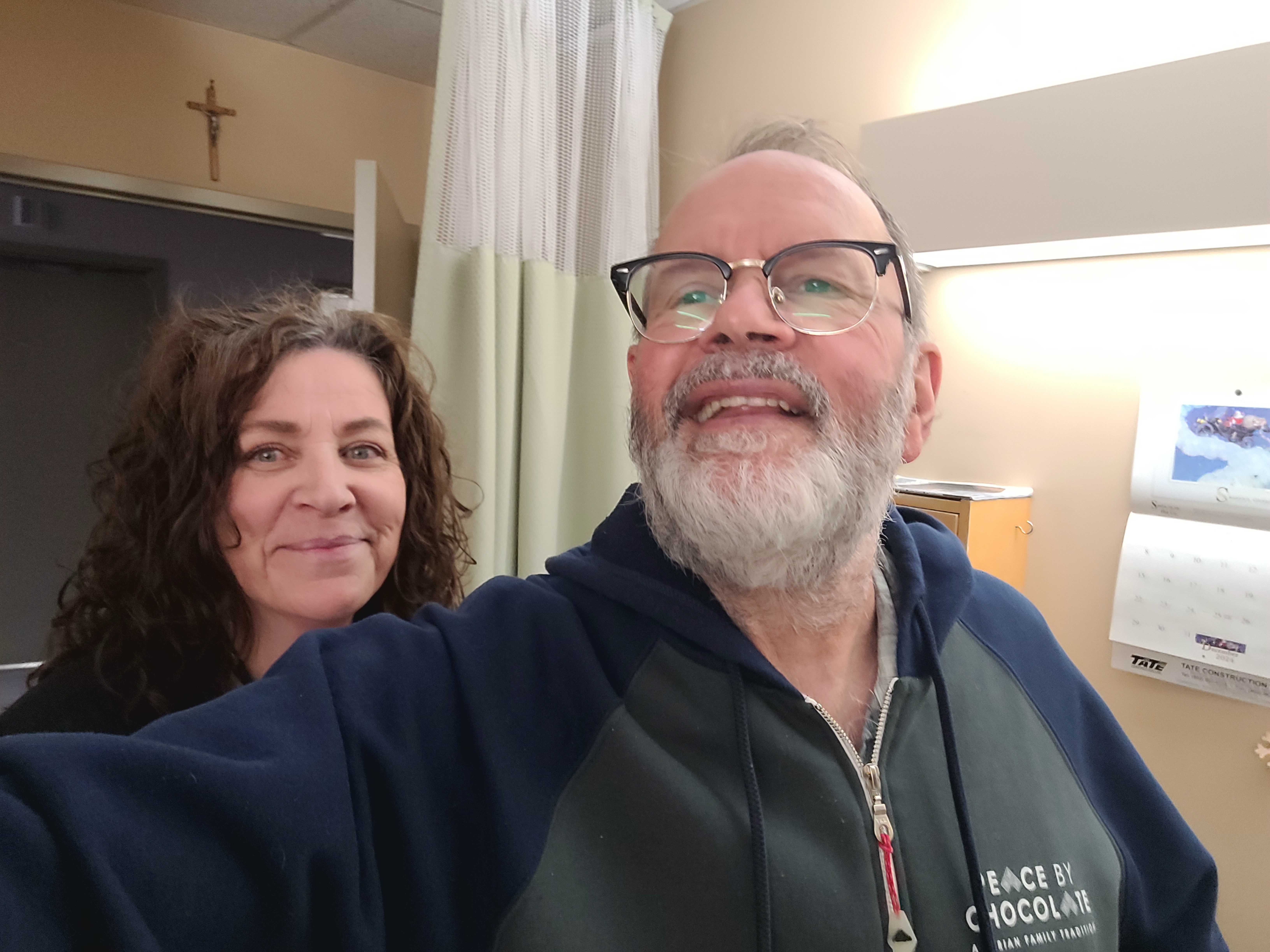
It worked. I soon came to feel like part of a wonderful team. Many of them are pictured below, but many others I’ll have to remember only in my heart, not my camera. The staff goodbyes actually went on for a few days. I presented each of my four physios with an acrostic poem of their name. There may or may not have been some tears. I gave the nursing and physio teams boxes of handsome ball-point pens. (Sara’s brilliant idea; good pens are coveted currency for hospital staff!)

I lost track of how many nurses and aides stopped by in my last two days in hospital to wish me well. Each of these folks became special to me. I learned to identify their voices at a distance, even tell who they were from the sound of their footsteps in the hall (as I’ve learned to walk again I’ve been paying a lot of attention to gait and stride).

Old Friends

“encourage one another and build up each other, as indeed you are doing.” ~Paul, in 1 Thessalonians 5:11

Through this journey, I have never felt alone. I’ve been encouraged and built up by all of your cards, letters, emails, flowers, prayers, candles, gifts, and visits.

Just a couple of days before discharge, my very last visitors were LCBI high school friend Brenda and her husband Alan. They drove up from their Nova Scotia farm to wish me well. What a pleasure it was to catch up! They were early Santas, leaving a gift bag of exquisite dried flowers, honey, craft beer, and more, all from their own Meander Farm and Brewery (a must-see on any visit to NS). What’s more, they ALSO brought Norwegian Christmas treats of lefse and krumkake (tastes of my childhood) from their neighbour and friend Deb, another LCBI friend and classmate who ended up in Nova Scotia. Wow!

Family

Siblings: children of the same parents, each of whom is perfectly normal until they get together.” ~Sam Levenson

As if that wasn’t enough good fortune, my brother Mark and sister-in-law Barbara flew out from Regina, Saskatchewan for the whole week prior to my transition. Their goal was to take some of the ferrying, appointment-ing, cooking, and visiting load off of Sara during her end-of-term exams and grading crunch. They also rolled up their sleeves and took on the chores I’d intended for the fall and either half-finished or never got to. They helped me with some preparatory tasks, like getting a handicapped parking tag, picking up a shower seat from the Red Cross, and helping put non-slip stickers in the bathtub. I was completely spoiled. I’m fortunate to have siblings I so enjoy spending time with (even when they’re not cleaning air exchange filters and organizing the garage).

It takes a village

“Individually, we are one drop. Together, we are an ocean.” ~Ryunosuke Satoro

So: after 14 weeks in hospital, I’m posting this blog from home! I don’t know if I will continue stroke-update blog posts (at least not weekly). I’ll ease back into to blogging about pilgrimage, decolonization, or writing. But my personal strokeaversaries will go on. For example, this week the biggest change I’ve noticed is that without thinking, I find myself reaching out with my left hand to do things more and more. Even when it’s slow, I’m flipping more light switches with my left hand, and opening more doors, trying to avoid the pitfalls of “learned non-use.” Today a first was managing to undo my seat belt with my left hand. This practice of reflecting weekly so I could share updates with loved ones has been good for seeing the big picture and celebrating each success. My friends Greg and Ingrid Gust just sent me the book Stronger after Stroke: Your Roadmap to Recovery. I take hope from this line: “stroke survivors can continue to make progress years, even decades, after their stroke.”

In coming weeks I’ll remember what the physio Lee said to me: “it was good working with you. You’re a survivor.” Or Makenna, yesterday, who held me up that first day as my leg stopped working, and wiped my bum when I couldn’t: “You never stopped trying, and that made all the difference. Some folks give up. You never gave up.” What Lee and Makenna may NOT know is that I had so many of you praying, lighting candles, meditating, walking, and sending me thoughts and cards reinforcing that message: “don’t give up. You can do it” that I really felt that all my efforts simply floated atop a river of love and support.

“I’ll be home for Christmas”

“Christmas reminds us to be grateful for the gift of life and to express our gratitude through acts of kindness…” ~Deepak Chopra

So: thank you. I’m home for Christmas. Here with Sara and Sweet Pea. My youngest, Gabe, will arrive Christmas Eve. We’ll all go make a festive dinner for Sara’s family. There wasn’t time for many presents this year. Nobody minds. We know how fortunate we are.

I’ll keep working toward recovery, bouncing forward toward whatever my new normal turns out to be. If I haven’t had the chance to thank you personally, please know what a tangible difference you’ve made to my recovery. There’s a lot of emphasis these days on individual effort, “bootstraps,” and success – my recovery is a reminder that instead, what’s really important is cooperation and relationality. Each of us can do incredible things only when we’re rich with relational support.

From Pomquet, Mi’kmaki, Merry Christmas — or whatever reminder of light in the face of winter, love in the face of hatred, and salvation in the face of impossible odds that you and yours may celebrate.

Categories
stroke-recovery

Sara Stedy: Week 11 Strokeaversary

This device is called a “Sara Stedy.” It’s a cross between a wheelchair and a strap-in walker. Just after my stroke 11 weeks ago, I couldn’t stand. I was a “two-person transfer.” Two nurses would use a Sara Stedy to get me up from bed so they could wheel me to the toilet. I remember how safe I felt as they carried me.

Bounce Forward

Now I’m stopping to take my own photos of Sara Stedys as I pass them with my walker on the way to the physio gym. This week, trying to find me new challenges, the physios took me to the hospital’s concrete stairwells and I went up and down with supervision. When I’m home for weekends, I often don’t bother with the walker or cane.

There were some more firsts this week – mostly subtle changes. I’m a bit surer on my feet. Using my right hand to place my fingers, my left hand stayed put long enough to make an E and a G chord on my nylon-string guitar. At home, I ventured out by myself for the first time to take some photos. Instead of ignoring my left hand, I now find myself reaching with it to flip a switch or turn on a tap. (Often I can’t do the task … but it’s worth noting that my brain is starting to think I might be able to!) I had my first full acupuncture session with a local specialist. Lori and Lee and my physio team made this “shoulder and arm” week. By the end of it I could lift my left arm in the air without help, while lying on my back. Karen, one of my supportive nurses, surprised me by saying “shake” with her left hand and I (sort of) did it.

I looked back at my journal from right after the first, smaller, stroke. I’m struck by how brief the notes are (probably because Sara was jotting them, exhausted). I notice what they don’t say: how my condition kept deteriorating, how deeply frightened I was that in my downward spiral, I’d soon wake unable to speak, or with a personality change, or in a coma.

In less than two weeks, I’ll be released back into the wild and into the care of my own Sara Stedy. I feel safe with her, too.

I know this doesn’t mean I’m “recovered.” A familiar refrain across stroke memoirs is that one does not go back to one’s “old self.”

“In the first days after the stroke, I had naively imagined that I would bounce back to being the person I had been in a few months. Meyerson’s book [Identity Theft: Rediscovering Ourselves After Stroke by Debra E. Meyerson and Danny Zuckerman] helped me realize that in life one can’t bounce back; one has to bounce forward.”

~Mukul Pandya, Stroke Onward

Reading the journal now, my overwhelming feeling is gratitude. My stroke wasn’t worse. I have a public health care system. I am surrounded with resources: personal, familial, emotional, financial, and community (folks like you) that collaborate to support my recovery.

Human Resources

I’m usually the pilgrim on the move, but for now I’m the stationary destination! Some of this week’s pilgrims included my colleague Gerjan (right, with Carly and their son Theo), who despite his heavy teaching load and precarious position, has visited me several times.

Or Tom Curry (above), the hospital’s music therapist and a local performer. I’m not sure our ward is even his responsibility. But after he heard I asked about music, Tom faithfully drops by. He asks what music I know and like, tests what I can shake the percussion egg to, and keeps encouraging me. “Ain’t No Sunshine”, “Out on the Mira” “Hit the Road, Jack.” He knows them all.

Or John. John is a north star for the entire ward. Unflappable. Always cheerful. Extremely hard-working… Checking by name on every patient, just in case anyone needs help. As Sara was taking me home this weekend, John was dashing past for an emergency, but took the time to call over his shoulder, “Hey, Sara! Can you believe this guy? Look at him go! So proud of you, Matt, so proud of you.” Once John asked if he could do anything for me, and I asked for help with a shower. “Sure, Matt,” he said, and dropped everything to assist. It wasn’t until halfway through the shower that he admitted, “this isn’t normally part of my role.” Above and beyond.

Like Phyllis. Phyllis didn’t want to take a photo. “The School of Nursing doesn’t like it.” She’s an LPN with a sunshiny face who always says hi as though to a dear old friend, lifting the mood of everyone she treats. A month ago she spent her lunch break trimming my toenails. She wasn’t my nurse this week. But she dropped by, surprising me Friday just before my weekend pass. “How are your feet?” she asked, then proceeded to kneel to take a look (my ankles are swelling from the meds). “Oh, the skin is dry! Would you mind if I put some cream on them?”

Would I mind?? What a gift! As she was walking out for her next patient she called out: “I just love feet.” And me? I just love Phyllis.

Then there’s fellow writer, academic, and walker Ken Wilson who’s been faithfully sending newsy emails nearly daily since the moment Sara announced the stroke on social media, saying it would cheer me to hear from “the outside world.” This is despite Ken’s own mad teaching, writing/editing, and grading crunch! A few days after he read last week’s blog about my trouble with zippers, these showed up on our doorstep. Thank you, Ken!

Reaping Past Writing’s Rewards

Finally, it was a week of incredible affirmation in my life as an author and academic. This feels especially gratifying during a period when I’m struggling to type with one hand.

  1. Rubbing Shortlisted Shoulders with Naomi Klein

I found out I didn’t win the Vine $10,000 non-fiction prize for Prophets of Love: the Unlikely Kinship of Leonard Cohen and the Apostle Paul. But the book was one of just three short-listed out of 60, and the winner was Naomi Klein, for Doppelganger. Pretty amazing company!

    It’s not 10 grand, but it’s certainly a prize to be considered in such company, and I will definitely encourage McGill-Queen’s to use the jury’s blurb in their marketing from now on!

    2. Rave Review in Miramichi Reader

    I was also floored when a Google alert informed me that The Good Walk received a spectacularly positive review by Michel Bryson in The Miramichi Reader.

    3. Winnipeg Free Press Most Notable Books 2024

    As if that wasn’t enough, The Good Walk also made the year-end list in The Winnipeg Free Press’s list of 2024’s most notable non-fiction. What a gift!

    4. The Author Journey Weekly Livestream

    I hesitated to say yes to appear this coming Tuesday with Anne Louise O’Connell on her weekly live videocast, “The Author Journey” to talk about my writing process. My speech still slurs when I’m tired. But Sara said, “that will all just be part of your story.” It’d be great to have you cheering me on there if you’re interested! Tuesday, Dec 10 2024, 4pm Atlantic (3pm Eastern) on their YouTube channel.

    5. Copyedits and Cover Reveal: “Someone Else’s Saint”

    To top off this flurry of reminders that writing done in the past is still at work in the present, Pottersfield Press just sent me the copyedits of Someone Else’s Saint: How a Scottish Pilgrimage Led to Nova Scotia (coming out April 2025). I had submitted it the night I first arrived in the emergency room, following the first (smaller) stroke. Sara teases me that I may be one of a very small number of people on the planet whose first task upon arriving at the hospital by ambulance is to submit a book manuscript.

    I suppose this is as good a time as any for a “cover reveal”!

    For what it’s worth, this is the story of the Nova Scotia Ninian Way pilgrimage that immediately preceded the stroke! Saint Ninian may have a sense of humour.

    Categories
    stroke-recovery

    Walking & Chewing Gum: Strokeaversary Week 10

    This week Lori and Lee from my physio team have been keeping an eye on my left hand. It’s going on two weeks that it’s been swollen. (I promise that’s unrelated to using it to peel and grate 3 cups of carrots for my first carrot cake since the stroke.) With the swelling comes cramping of my wrist & fingers at night. “I want you to try wearing this to sleep,” Lori said, pulling out a brace that looks like a plush toy octopus. “If it hurts, take it off.”

    The brace actually helps.

    Reflecting on the cramping coalesced some thoughts about my left side. This stroke has caused me to observe my own body as an outsider, to put it mildly.

    Here’s what I’ve noticed: at first when I started being able to almost imperceptibly budge my hand, those left-side movements required massive exertion. After we got over crying with relief that my brain connected to that hand at all, Sara and I laughed that just to wiggle my thumb a millimeter made me sweat and turn red. I had to tense my whole core like I was doing sit ups, bend all the fingers of my right hand in support, and even curl my toes. My tongue stuck out like a focused toddler. It seemed that every muscle in my body was involved in those first miraculous thumb movements!

    I now think that’s because they all were.

    Now that my left side has limbered up considerably, this “sympathetic movement” is still common. If I lift my left arm up, my right toe unconsciously lifts in sync.

    Other mystifying aspects of my recovery seem to support this. Why did the ice bath they gave my left hand hurt so badly when my right hand could frolic like a happy Scandinavian amongst the cubes? Why, when I go to use my unaffected hand, does my left hand go into spasm? Why does it take my whole body to shake that egg in music therapy? (See below.) And why, when I yawn, does my left arm sometimes rise from my side like some unbidden ghost?

    I’m calling it the “walking and chewing gum” problem. I think the reason everything moves is because, when it comes to creating action on the left side of my body, my brain is shouting at every neuron in the house. My rearranged “command centres” don’t yet know (and maybe the newly-conscripted neurons don’t know either) which of them is now responsible for, say, my third finger. So every neuron gets every order to move and they can’t all do everything at once.

    Getting well, then, is not as simple as just strengthening my arm, hand, and leg. It means training a new command chain. I want the extraneous twitches to drop away. I don’t want neighbouring neurons and their muscles to jump to attention every time I scratch an itch. Increased use can also harden those apprentice neurons to things like cold ice baths!

    Of course, I know that in the end, I’m fortunate my left side is moving at all! The fact that on Friday Lee had me breaking down the micro-movements in climbing stairs tells me a/ I can climb stairs, and b/ I’m at an “improving” rather than just “doing” stage thanks to brain plasticity.

    Firsts!

    Speaking of which, here are some of this week’s “firsts”:

    1/ a belt. I can wear a belt again, mostly because I can fasten it for the first time since my stroke. Not pretty, but it gets done. Works best with pants slightly too large, which is easier these days. (No glass of wine with dinner in the hospital!)

    2/ a wax manicure. Ria helped me dip my hand in molten wax. Then she wrapped it in a plastic bag and then a towel. Afterwards we all agreed that even if it didn’t heal anything, it still felt pretty darned good!

    3/ zippers. After attaching a twist tie and paper clip to my winter coat I can do it up, most of the time. I never before realized that those little fabric extensions on zippers are an accessibility feature.

    4/ first solo excursion. Sara was teaching Wednesday evening, but I really wanted to hear the “Women of the Antigonish Movement,” lecture by Prof. Robin Neustaeter and StFX student Sophie Gallant. So I put on my coat, signed myself out, took the elevator down to the entrance, got security to call me a cab, and off I went to the Antigonish Heritage Museum. I was momentarily stymied when the cab driver never got out to help me with my walker. But I managed to hoist it into the back of the van and back out again all on my own–another first! (No tip for this driver.) Sara came after class to drive me home. She packed the walker, and didn’t even ask for a tip.

    5/ that carrot cake. It turned out perfectly, and Sara miraculously made cream cheese icing, with no cream cheese in the house! The physios and nurses got most of it, as a small token of thanks.

    6/ “driving” test! This week I also took an initial driving test. Well, it wasn’t really driving, but a little plastic accelerator and brake pedal in the physio room, designed to check my reaction time. There were also some sequential logic tests on paper and an “identify the traffic signs” quiz. I passed them all without problem. This means I’m now recommended to retake the provincial driver’s exam as a one-handed driver.

    7/ most importantly: for the first time this week, I can consistently raise my left index finger, and spread my left-hand fingers so I can pick up and let go some objects. I can also swing my left arm into the air and hold it there (see below). In the long arc of my recovery these are massive developments. Yet I actually used my fingers a few times before even realising it, maybe because I’ve been “visualizing” doing it all week!

    Home for the weekend.

    I’m also finding it somewhat easier to manoeuvre around the yard with a cane. This weekend, we planted garlic. Or rather, Sara did, under my “Green Acres” style tutelage. But I did manage to shovel a little earth, mostly just to try. A gaggle of marauding Guinea Fowls watched us. They started visiting recently, and Sara’s in love and wants to adopt them or get some of our own.

    Surprise visitor.

    One visitor this week was local artist and activist Sara avMaat. She had just launched her latest ‘zine project, Rat Tales, at the StFX Art Gallery. It’s a tale of two “philosophically minded” mine-sweeping rats named Wesley and Trevor, based on real-life African giant pouched rats who do this work. Since I missed the launch, Sara dropped off a signed copy! I used her previous comic, Hope Unleashed, as a textbook when I taught “Religions and The Environmental Crisis.”

    Back to the “office.”

    The fact that Sara and I sometimes slip up and say that I go “back to work” or even “back to the hotel” after a weekend pass is a sure sign of how at home, productive, and rested I feel in my private hospital room. Sweet Pea seems to have internalized my schedule too. Today when it was time to go back she let us know she wanted me to stay….

    There are so many interesting carers at St. Martha’s I’d love to tell you about all of them. Today, Dionne comes to mind. Dionne is a thoughtful, experienced, and smart LPN who has lived in Greece and Germany – prompting us to converse about German pastries and Greek spanikopita and olives. Thursday evening she dropped by the room and said: “I need to write some kind of inspirational verse on the white board. What have you got?” I said, “Never ask a writer a question like that,” to which she replied, “That’s exactly why I’m asking you.”

    When Sara dropped by after class, she quipped, “How about: ‘Well, at least you’re not dead’?” and Dionne laughed. Eventually I came up with something to share. I never paid much attention to it after that until Friday afternoon, as I was preparing to come home for the weekend. Then, one of the elderly patients was shuffling by my room with her walker. She exclaimed, “oh, look at that!” and then read the saying out loud. I’ll end with it here, since it encapsulates how I feel about all your support:

    “Many hands make light work – and many hearts make good healing”

    Please keep praying, meditating, and raising thoughts, especially for my hand and my shoulder … and my neurons … as I go into the final stretch of my hospital stay: I’ve been told my discharge is scheduled for December 18th! Sweet Pea will be pleased.

    Categories
    Uncategorized

    Strokeaversary week 10: Handcamp Antigonish

    Here’s a slice of hospital life from Nova Scotia:

    Three elderly men, two with walkers, are standing in the hallway outside my room. “I was going to go home,” one says, “but all my neighbours are here.”

    The second man, Jack, pulls out a photo developer’s envelope he carries everywhere. “Jack was attacked by a bear,” the third explains, pointing.

    “Got photos?”
    “Yeah, there’s five of ’em.”
    “Five photos?”
    “No, five bears!”

    Jack hitches his pants before he regales them with the story: “I was working in the yard. Didn’t see him. He knocked me over the woodpile.” The second man takes the photo. Peers at the bear, then at Jack. “Prob’ly lookin’ for work,” he pronounces.

    A visitor walks by, muttering to herself: “How many Donald MacDonalds are there in this hospital?”

    Another visitor is about to walk into the room opposite when a passing orderly points to the “Contagion Precaution” sign requiring mask and gown. The woman dutifully dons a paper gown, calling out to someone deep in the room: “Donald, you’re on quarantine? You musta’ been a bad boy!”

    I’ve been fortunate to hear from some of you who’ve also spent long periods in hospital. Many of your experiences were similar to mine: the frustrations of wheelchairs and bedpans placed out of reach, the fatigue and the ennui of having to strategize everything from blankets to bowel movements in ways the able-bodied don’t have to think about. The way that occasionally, new nurses who don’t know me ignore me, standing there with pen in hand to sign myself out for the weekend, and speak right past me to Sara as if I’m incapable of my own decision-making.

    But there are also unique positives to being hospitalized in rural Nova Scotia. Overhearing the bear story, or Sara texting me to say she saw a bobcat at the end of our driveway on her way home one night, after her usual routine of tucking me in. What a gift to have her fussing around my room straightening things, reading to me, or sitting working alongside. (I am back into writing my Jerome project, part of my work as Gatto Chair at StFX. More than once, Sara and I have slipped and called my room, “the office”!) The atmosphere at St. Martha’s Regional Hospital is relaxed and humane; there are no set visiting hours–Sara is free to come whenever she can, stay as long as she likes, and to decorate my room with plants, lights, quilts, and art on the walls. Once last week four nurses came in just to see my room and breathe deeply. “It’s beautiful in here,” one remarked, “it’s the most relaxing room in the hospital!” I said only one word in response:

    “Sara.”

    Another distinction is delicious local food. I order from a small menu that includes a tasty seafood chowder that would cost quite a bit in a restaurant. You can have fresh poached haddock, or roast turkey with mashed potatoes, gravy, and cranberry sauce on demand. There’s excellent lemon meringue pie in the volunteer-run cafe. If you forget your wallet as I did one evening, they’ll just give you the item and tell you to pay it forward.

    The portions do tend to be geriatrically small. Combined with the lack of snacks, butter, or oil (I’m on a cardiac diet), very few breads and pastas, and no glass of wine with dinner, I’ve lost 20 pounds since my hospitalization. All good – the weight loss puts me where I should have been anyway. But I wish it hadn’t taken a stroke!

    Big news this week: I’m not moving. The Halifax rehab centre only takes Haligonians. When they learned I wasn’t eligible for “Hand Camp,” my incredible team here (Lori, Lina, Lee, and Ria, above) swung into action. Lori produced a binder labelled “Matt’s Handcamp” and teased me, “it’s going to be hard work from here on in.” My binder has daily check-mark columns for the next three weeks, with slots for shoulder, arm, and hand therapy, physio on my leg, “magic mirror” visualization (fooling the brain with a mirror image), and other homework.

    Lee has started me on the “big” exercise bike and treadmill. She’s doing gentle acupuncture on my left arm. I’m supposed to take weekends off, but weekdays until discharge are dedicated to more intensive therapy, whenever they can get me in.

    Lori has been researching some new OT techniques out of Japan that involve massaging and “slapping” the hand tendons alternatively to shake them out of cramps. (The hand has been seizing up a lot.) My new music therapist dropped by for the first time, getting me to tap a pen with my affected hand while he played the blues. Thanks to my friend Nadine from Montreal (herself a music therapist), for suggesting ways to use familiar music to improve my walking speed and gait!

    Improvements: I can now lift my arm into the air while lying on my back and touch my right hip with my left hand (I should be good at that – it’s a disco move!) I can “curl” a one-pound barbell and raise a washcloth up to my face or under my arm, using my left hand. But I have no strength yet to scrub. I can move a cloth around a counter more freely – wiping cupboards is clearly in my future. I managed to pick up a marker and draw lines with my left hand on a sheet. Sometimes I can pick up and drop wooden blocks, although straightening my fingers afterwards continues to be difficult. Like a baby bird on its first solo flight, I’ve ventured out on my first walks down the hall without cane or walker. Sara and I danced a real two-step, and she’s doing less lifting to keep my left hand in the air. I took my first standing shower at the hospital, holding the support bar for the first time with my left hand.

    Last week I had another left-side dream. I was in a large underground garage where an old muscle car, a 1970s Barracuda, had been left behind piles of boxes, old mattresses, and junk. In my dream I was putting oil into the rusted engine and trying to clear a path to drive it out. Speaking of which: not saying anyone did this, but IF a person had tried to drive their automatic transmission car just around their yard last weekend using their unaffected right hand and leg, it may have worked out perfectly! For myself, it looks like I will have to take a drivers’ test before I’ll be allowed on the roads, which makes sense.

    This week is the 9th anniversary of Sara and I meeting, so she picked me up from the “office” after work one night this week and we went out to eat for the first time in months, with a Gabrieau’s gift certificate from our departmental colleagues! I was also blessed with delightful visitors: Phillip Kennedy, a fellow walker along the Annapolis Valley, Tonya Fraser, who gave me some hand-picked Labrador Tea and a stone from the local beach, Leona English, another walker and a professor emeritus at StFX, and Andrea Terry, who in addition to leaving me several blueberry-themed gifts, reminded me that it was exactly one year ago that we had so much fun co-curating Philip Szporer’s and Marlene Millar’s art show “1001 Lights”! Many thanks also this week to my friend Dr Meredith Warren in Sheffield, UK, for providing a lecture for “my” class on “The Ancient Hellenistic Novels.”

    Speaking of small-town advantages, those who come to visit have to pay to park at the hospital. The whopping sum for a full day or any part thereof is … a twonie. (The first time we realised this, we laughed out loud, comparing it to big city parking costs.) While I was a little disappointed at first not to be going to Halifax for fancy therapy, I feel incredibly fortunate to be right here in Antigonish, where an entire talented physio team has taken me on as a project, and where I can focus on my recovery (and my StFX research) from such a warm and hospitable room. I am sure that much of this good fortune comes from the prayers, meditations, thoughts, and intentions so many of you are keeping up for me. Thank you!

    P.S. I was surprised and very, very thankful to get the news this week that Prophets of Love: the Unlikely Kinship of Leonard Cohen and the Apostle Paul is one of three non-fiction works short-listed for the 2024 Vine Canadian Jewish Book Awards! What a gift to my spirit to receiving an honour for past writing at a time when I’m typing with one hand!

    Categories
    Uncategorized

    A Room of One’s Own: strokeaversary week 9

    I remember walking from Melrose Scotland, to Holy Island, England, in 2013. After some extremely hot and tiring days, the path took me up a 300-metre ascent to a rocky outcrop. (There was also the small matter of a pasture with bulls, which can happen when you have the “Right of Responsible Access” to pastureland–but that’s another story.) At the top I stopped to catch my breath. Turning to see the view, I realised that there on the distant horizon two valleys over, I could make out the ruins of the Roman fort where I’d stopped on my first morning of pilgrimage, two days before.

    That’s how this week feels. The pilgrimage through my stroke is hardly over. But this week I’m seeing how far I’ve come. The parallel bars (below) that not so long ago represented the greatest distance I could possibly shuffle are now where I try balancing while standing on my left leg without support. I have more strength in that leg every day. Without use of my left hand and arm to steady myself, my balance is off. But the distance? No problem.

    Although the physios aren’t recommending I do this at home, Lee is making me practise climbing stairs one per foot, like you probably walk them, instead of like a toddler does. This week she had me kicking a soccer ball back and forth with her (I had to hold on to a railing for support, but my left leg did quite well.) For the first time since my stroke I did up the button on a pair of jeans on my own. And I might only be able to “bench press” a featherweight aluminum cane. But the simple fact my left arm can even hang on is a major win. And for the first time this week, I could sometimes push my arm straight ahead on a table. “Cheers” is getting closer!

    I’m thankful that the newly-conscripted neurons in my brain that agreed to take over the management of my arm and hand are beginning to sort out their new roles. But I have to be patient: I was so anxious to force my wrist to flex in my room that my hand swelled up like a balloon. I suffered painful cramps until it recovered. Sara suggested, since I am so eager to use all my time working on recovery, that I do it in other ways than “extreme boot camp” (as she put it) and instead take some time each day to be consciously grateful to my brain and my awakening left side. It’s great advice, so I’ve added that to my routine.

    Lee, who works mainly with my legs, says she’s amazed at my progress. She hasn’t seen this video of me bringing my own tea to the couch at home on my “weekend pass” today, without cane or walker. I’m not sure what she’d think!

    When I was watching this video and bemoaning the lack of fluidity in my step Sara reminded me that just six weeks ago it required two people to hoist me out of bed and get me to the washroom. Looking back brings perspective.

    There’s no news yet about “Handcamp”…. they’re waiting on word of whether I’m eligible. But I’m booked in Halifax at the end of the month for a preliminary cardio assessment, a first step to the procedure to close the hole in my heart that may have let a clot pass to the brain.

    Having a room to myself is making a world of difference. The previous week, with little rest day or night, I was looking “increasingly frazzled and worn,” in the words of one nurse. Now I sleep well most nights. During the day there’s peace, so I can read, listen to CBC, write (working on some poetry), or do my physio. I also feel more comfortable video-chatting with the kids, and I attended my own class by Zoom this week when Elizabeth Castelli graciously came to talk to them about early Christian ascetic women patrons. Now Sara can even bring her meal and share the whole evening, as her schedule allows. From a place of stress, my hospital room has become an oasis for healing.

    I’m thankful to the physio team – Lori, Lee, Ria, Lina, and Abby – who are so patient with me day after day. They were the ones who pushed for a room where I would get the rest my brain needs to recover. The staff know that my dogged motivation comes from being supported by so many of you. One of the orderlies looked at my shelf of cards and said “well, aren’t YOU well-loved!” That comment gave me a physical rush of warmth and comfort.

    Several of you recommended recently that I read Daniel Levitin’s just-published “I Heard There Was a Secret Chord: Music as Medicine.” Coincidentally, Levitin and I had an email exchange last spring, when he asked me something about Prophets of Love: The Unlikely Kinship of Leonard Cohen and the Apostle Paul. We exchanged books by mail. So I’m reading Secret Chord now, and feeling the recuperative power of music every day (see below). I should tell Levitin I’ve had a stroke, and how applicable his research is for me.

    That healing power of music is definitely helping release some of the frozenness of my left side. I’ll sign off this week’s update with the clip below, more evidence of how far I’ve travelled with this stroke. I love to dance… and in my own room, now I can. Or better, we can. If you know me, you know this has GOT to be good for my recovery!

    [Click here for my podcast about that walk from Melrose, Scotland, to Holy Island.]