Categories
Uncategorized

London with the Girls

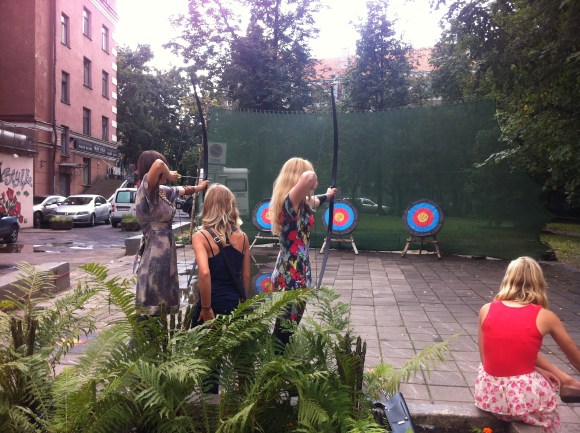
To walk the sidewalks with two fifteen year old girls, my daughter and her friend, is to see a London I hadn’t experienced: endlessly interesting in its outdoor life, spread out, shimmering hot, bustling and attractive, a city through sunglasses, an endlessly sunny asphalt summer of tube stops and clothes-shopping, gelato and south Asian hawkers selling tee-shirts saying “keep calm and carry on and mind the zombies”.  The girls look older than they are. They fit in well, even better than I thought they would. “I could live here,” says my daughter, looking around as if appraising an apartment. “It would be easy”. I realize I’m taking what she says seriously.


London has become cosmopolitan. With their blond hair and leggings the two girls could be British Poles out after work, or French shoppers, or the North American tourists we are. Famished, we stop at a restaurant in Soho. I’m feeling poor and was thinking something simple and therefore cheap. Once we’re seated I have a good view of the two chefs behind the counter of the open kitchen, joking with their sous-chefs as they hack at lobsters or lay out oysters, their casual chic and the line-up that gathers on the sidewalk both guarantees the bill won’t be what I had hoped. “How about fish and chips?” I ask the girls. The waiter, a dark-eyed, powerfully-chested Brazilian in fitted white dress shirt and black pants, is hanging by our table, chatting them up while I peruse the menu. I have a brother who moved to Calgary, he tells them. Your country is paradise. He kept phoning to tell me in the first few months to tell me that. Then winter arrived, he came home to Brazil. Canadians are wonderful, the waiter concludes, spreading his arms wide as if welcoming us in. The weather, not so much. There is a warm glow surrounding the girls that extends somehow to me. Londoners think they are sisters, perhaps fraternal twins. I catch passers-by smiling at me, the dad, hovering behind or more often forging ahead, wrinkled brow, studying the map on a streetcorner, finding our way through the city where there are no parallel ways and the names change by whim.


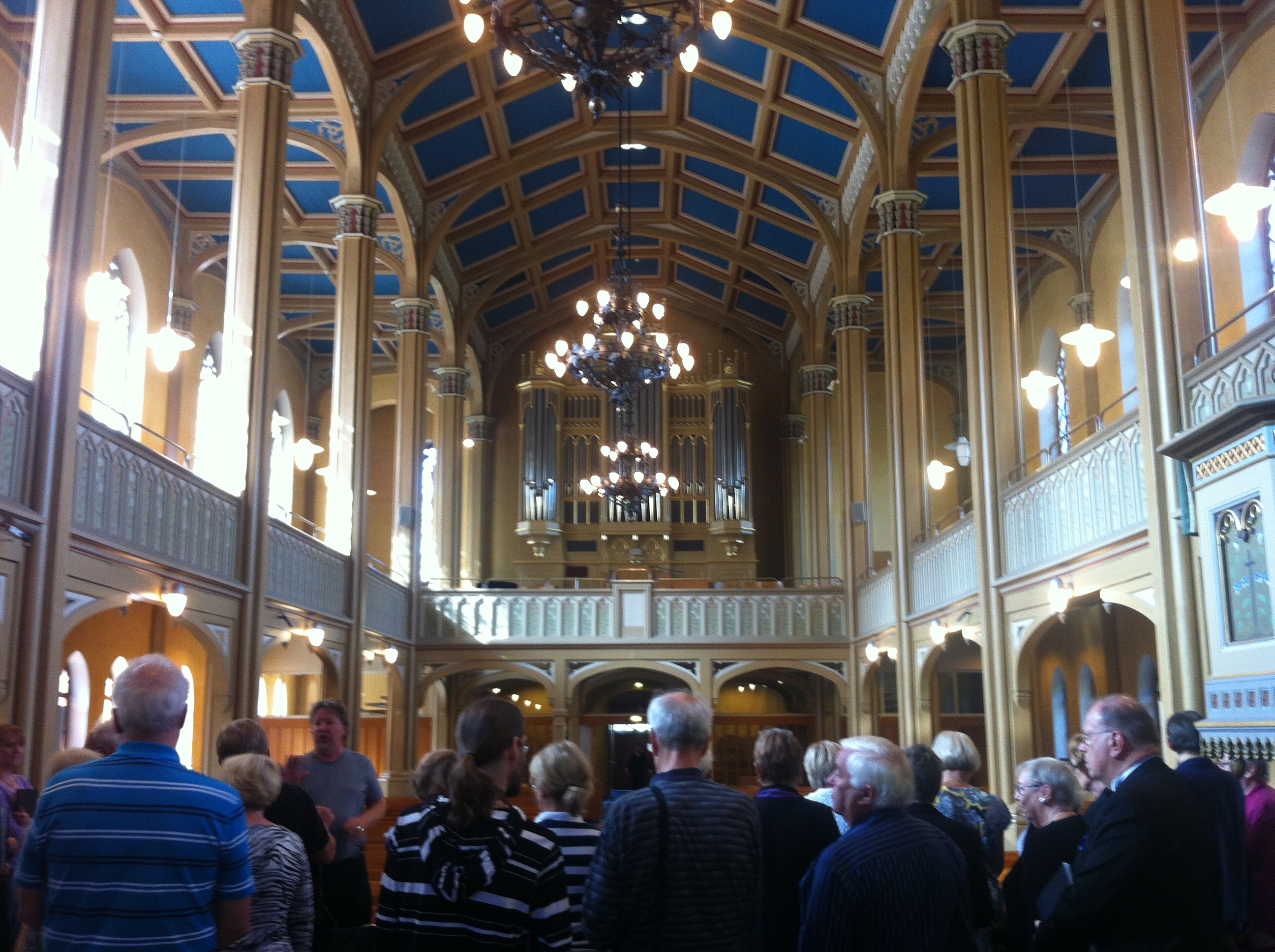
We go to St Paul’s Cathedral. On entering the narthex I feel myself relax; I’m on familiar ground. But after a few minutes admiring Christopher Wren’s dome, I’m already annoyed at the awkward theology and evangelicalism of the Dean’s comments on the iPhone guide we’ve been provided. He sounds like a tour guide who’s being surreptitious in trying to get a few words in about faith. A full flow of tourists shuffle by as I listen and look. I’m poked in the back. The girls, sitting behind me, have negotiated the full menu of the device and are ready to go. I realise I’d prefer to see the living congregation. Maybe Quebec has made me more Catholic; I miss the banks of candles and the side altars of Notre Dame Paris, and look in vain on the edges of the huge space for a black-albed sexton or a deacon or anyone churchy with whom to identify. The girls fidget. We join the crowds again, and finally, in the sparkling gold and blue mosaics of birds, high above the quire, I feel something of whatever it was I was looking for.


Then, in the crypt, there is another bonus: a memorial to William Blake. I wonder what fantastical images he might have produced, looking at us now, with our cameras, lined up at the gift shop, calling out to each other in every language under the sun. Making sacred the commonplace is a mystic’s art, but all it takes is a lack of attention, it seems, to make the sacred commonplace.


We exit the church into more of the brilliant sunlight the Londoners are calling “a summer to remember”.  A man in a shirt and tie, jacket in hand, slows slightly to step off the sidewalk around us. He catches my eye and smiles. “Brilliant isn’t it?” he says and I don’t know if he’s talking about the day or being a dad walking the streets with two such teenage girls.Image

Categories
Uncategorized

The birthing of a pilgrimage

Allen ponderingThis hostel is accredited, begins the promotional blurb for Meso Gård , and recommended by the National Pilgrim Centre. It has met the same requirements, and holds the same standard, as the pilgrim accommodation along Camino de Santiago. But a Spanish pilgrim who comes to Norway will find themselves, not in a bunk room in barren and dusty Castrojeriz, but in a typical sod-roofed, log-cabin style Norwegian hostel in the Rennesbund district along the St-Olaf’s Way, where a river rushes by, birds are singing, mountain flowers bloom around you and everything is green. Meso is a world away from a Spanish albergue. And the differences aren’t just in the lack of Rioja and dust (the first to better deal with the second).

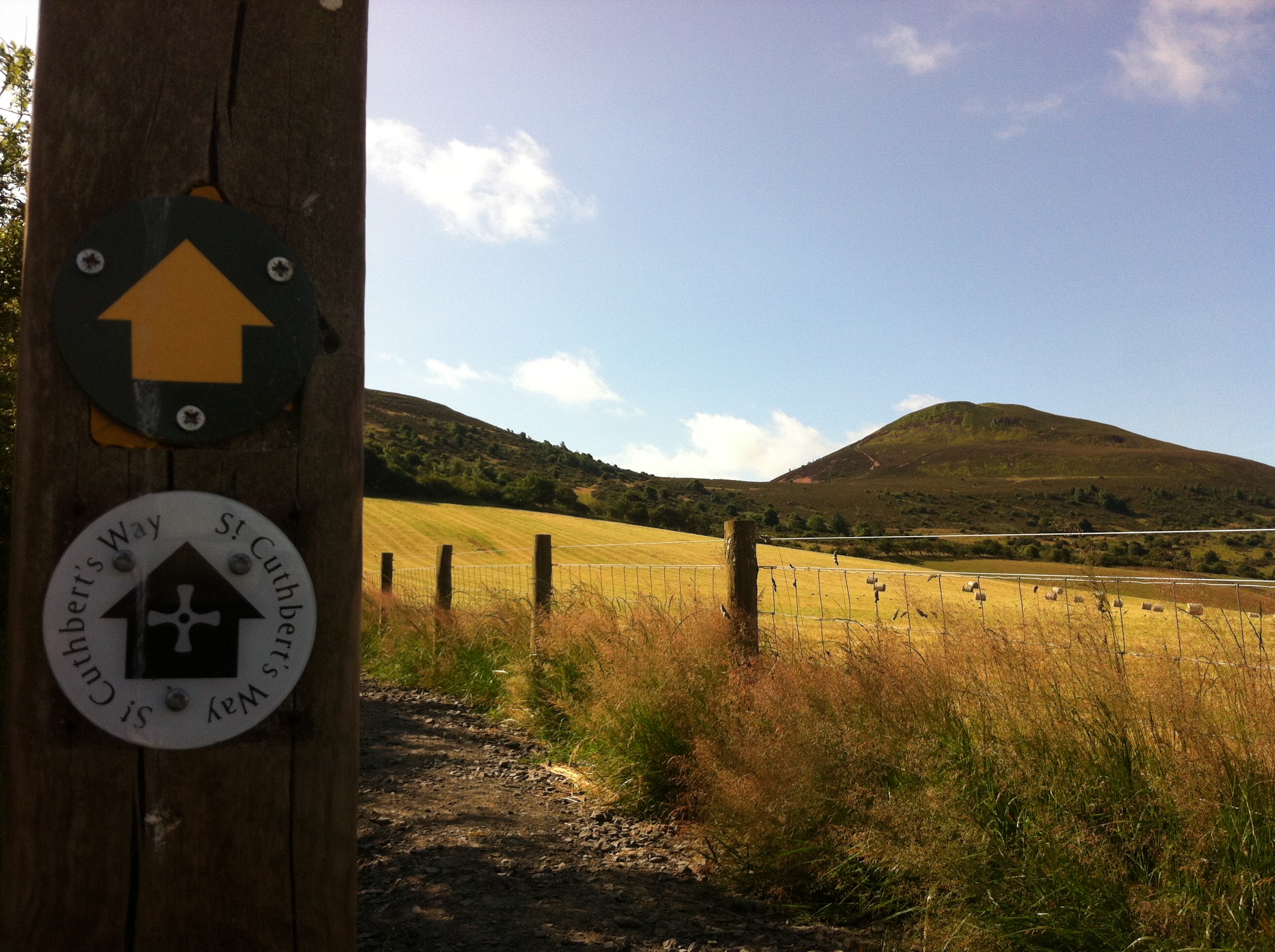
Those who planned the St-Olav Weg have tried to make it familiar. The elements are as standardized as the boarding procedure at airports. There is a passport, obtained from an official pilgrim centre and sized appropriately for tucking into a backpack, local business stamps validating one’s walk along the trail, trail markers along paths and roads and paint slashes on rocks to guide the way, ‘pilgrim meals’ offered at some local restaurants, and several revitalized ancient routes (traceable on a smart-phone app) toward a cathedral city celebrating a medieval saint.

Yet the similarities between the two pilgrimage routes are overshadowed by differences as high as Norway’s mountains. The mountains, in fact, may be the most obvious initial difference, at least from the Camino Frances part of the Spanish trail. It’s been less than two weeks since I walked with five other Canadians from Dovre, in the Dovrefjell district of Norway, 250 or so kilometres to Trondheim. As far as I know, we were the first group of Canadians ever to walk this way as pilgrims. Unlike my experiences on the crowded Camino Frances, there were very few others we met. Those we did echoed our experience of a satisfying but extremely tough walk through conditions more like the high Rockies than the Meseta. In part because of an unusually late, cold and wet spring, we forded swollen mountain streams, jumped from hillock to hillock through kilometres of bog, and in sections of the trail found ourselves going days without seeing other human beings, much less a store to purchase supplies. We fell down, we froze, we saw incredible beauty, one of our group broke her ankle among the endless tree roots. It may be ancient, but it was not an urban walk. Café con leche? Forget it, unless you have a thermos, some farm experience and can catch one of the abundant sheep or goats.

Because it is still early in the redevelopment of the St-Olaf Way, one of the most fascinating parts of the walk, for me, was how we met those still trying to put their mark on how the trail will develop. I felt like we were there at the beginnings of something important. We met chapel builders who want to make sure there will be a spiritual component to the walk, officials who seek the ‘new spirituality’, walkers interested primarily in ecology and environment, and others who are developing their businesses in hopes of increasing numbers of high-tech backpackers showing up at their doorsteps.

All of which raises some interesting questions. What gives a particular pilgrimage its unique character? Is there such a thing as a more or less authentic pilgrimage? It seems to me that the inevitable conflict of values in this birthing of a European pilgrimage route is useful, because it helps bring about something that, however it borrows from the past, is new. As my friend Allen Jorgenson noted, the role of land, and of landscape, is more important than some of us have realized. Maybe we should be talking about pilgrimscapes, and how the outer journey influences the shape of the inner one.

Whatever the medieval St-Olaf route once was, there is now a struggle for its modern identity. It is definitely not the Camino. What it will be remains to be seen.
Alpine shelter

Categories
Uncategorized

The Hidden Pilgrim

sunset in Budsjord
Our first night in the mountains of central Norway, we found ourselves in the absolutely idyllic Budsjord Gard, a small farm converted into a pilgrim and traveler centre. Centre is too grand a word: one of the buildings is a former horse stable where five beds are lined up in the five stalls. The night we stayed there our eldest traveling companion was put up in one of the former granges, where even short people have to stoop to go in the door, there are holes in the walls (a temperature problem on a very cold June night) and there is a nearly-foot wide gap between the entrance and top stone stair, a hole through which it would be a 2 meter fall to the ground below. The common bathroom is a renovated interior in an old building entered through a hobbit-sized door, where a bedrock piece of granite sticks up through part of the floor in front of the wash basin. Several of the buildings have the overgrown turf roofs typical of old Norwegian farm out-buildings. I absolutely loved the place.

Add to the charm of the scenery a wide-eyed young Norwegian woman who with breathless sweetness told us that it was her first day on the job and we were her first pilgrims, and a one-armed and grizzled German pilgrim who arrived mid-way through out meal, asked for food and lodging and told us, wiping the sweat from his brow with his stump as he ate his supper that he was a former marathon runner and on the St-Olaf way was averaging 25 miles a day through the mountains. Especially impressive given that the range is traversed with swollen spring streams. Between the German’s lively and intelligent face and the almost unbelievable open-eyed innocence of the hostess it was all I could do to wait until the poor man had eaten to pull out my camera and ask them both for interviews.

I asked all the usual questions of the German pilgrim. Despite his obvious intensity and the wonderful character evident in his face, I was a bit disappointed with what I got: a listing of distances, mostly. I put away the camera.

Later, I bumped into the German outside the washroom. He motioned to me. “Listen,” he said to me in his half-English, half-German. “I didn’t say this inside. But I have another reason for going on this pilgrimage. I am walking 500 km to find out if God exists.” What I was thinking was: why does this always happen? But I fought the urge to go get my equipment. Not entirely happy, I just stayed put and listened. “34 years ago,” he said, “there was a young man – me – who had an accident and was – how do you say it – not with it, with life I mean. Out of life for three days. I was between death and life, and somehow I came back to life. Now I want to know why. Now I walk to find out if there is a God and if God brought me back as an accident, or for some reason.” “Do you want to tell me that on camera?” I ask him. “No.” he says, “But I want you to know.”

Categories
Uncategorized

At Norwegian Customs

When it’s my turn at the customs booth the uniformed official in the booth asks why I’m visiting Norway. “The Saint-Olaf trail,” I say. Then, when her face registers nothing, I add: “I’m going to walk on the St-Olaf way from Dovre to Trondheim.” I’m careful to pronounce the “h” in Trondheim as a “y”, the way I’ve heard it done. “So you’ll be coming back to Oslo?” she asks. She’s not looking at me, making a point of it, flipping through the pages, checking where I’ve been on this passport. “No, flying out from Trondheim.” I get to say that “y” twice, a secret pleasure. “When do you leave the country?” This still looking at my passport as if it contains some secret unknown to me but that she has to discover.
She’s about my age, I realize, or only very slightly older, in her mid 50s, maybe. I think I see in her face the same kind of lines I know from my childhood among the Scandinavian settlers in the Canadian west where I grew up. But maybe that’s the romantic part of me, stretching to make some connection in this land whose people and language seems so foreign to me, even though half my genes come from this soil. “In 13 days” I answer. I wonder if there’s a problem. Then, because my default is always to try to make contact, even when I shouldn’t, I add: “I hope, at least. Depends on how it goes on the Way.” She reaches for her stamp without any indication that she’s even heard what I’ve said. Then, as she pushes the official imprint of Norway down onto the paper, she looks up and, almost unbelievably, smiles, a big broad smile. “So you’re a pilgrim?” she asks. Despite my attempts to introduce just that subject, I’m caught off guard. “I guess so,” I answer awkwardly. “Enjoy your time in Norway. Have a good trip.” She hands me back the passport, the words “Canada” on the top, facing me. Then when she looks up at me, I hesitate in place, wondering if there’s more of this conversation to come, until I realize she’s actually looking through me to the person behind me. “Next,” she calls out.

Categories
Uncategorized

Another birth Day

When set against the gift of life he gave me it’s a small complaint, but my surgeon forgot to mention I’d end up with two belly buttons. Today on my birthday I lift my shirt and look again in the bathroom mirror at my new stomach, replete with its six wounds, the most obvious the big one that dimples right above my old bellybutton. It was here where the robot, guided by the surgeon, Dr. Anidjar, pulled my prostate in a little cloth sack out of my body, and with it, I hope, all of the cancer. A re-birth of sorts, its evidence a hole from the mechanical umbilical cord.

I am unimaginably fortunate. Dr. Anidjar called me at home to tell me the news. The biopsy on the removed gland had come back from the lab. Rather than the localized tumours that the MRIs and the initial biopsies indicated, final tests showed there had been cancer on both sides. But when the medical staff tested the margins of the prostate, they showed no cancer. The surgeon’s conclusion: the cancer was spreading, but it never breached the gland. They got it. In that moment he sounded happier than, oddly enough, I felt. As I stammered out some kind of response he said ‘Don’t thank me. Thank Doug.’

“Doug” is my urologist. He is also, coincidentally, my ex-father-in-law, normally the last person – other than your actual ex – you want poking about your private parts. Yet he was the one to urge me, despite my reluctance, to have a second biopsy. The day I stood in his office digesting the bad news of my results Doug (Dr. Morehouse) stood up, came around from his desk and hugged me. As we awkwardly embraced I experienced so many competing discomforts there was no way to keep them straight: the realization that for a surgeon to hug you after a cancer report is probably a very bad thing, remembering happier hugs in happier times at their family cottage, trying to absorb the fact that he had just used the word “survivability”, or wondering how my ex father-in-law meant it when he told me that if I wasn’t going to be smart enough for my own sake to have surgery, I should for the sake of his grand-daughter.

To Dr. Anidjar on the phone, I said: “I’m thankful to you both.”

The reason I am unimaginably fortunate is only my lack of imagination when it came to cancer. This is not normally a problem for me, but a certain numbness set in two years ago and never really went away. I hadn’t imagined – or allowed myself to imagine – that the cancer had, as they say, “gotten free”. Free for what? So far, at every major step of this process, I’ve assumed the best possible outcome. And so far, at every major step, I’ve been wrong. When my PSA was high, I just assumed I had an enlarged prostate. True, but there was cancer. Then when I had my second biopsy I dreamed the tumors would have shrunk or disappeared, because of the typical lassitude of prostate cancer, and from my change of diet and positive attitude. None of those hurt me, but my cancer didn’t care. It had spread anyway. So when I was waiting to hear the oncology report on the removed tissue, the best I could manage was a kind of emptiness. Not visualizing good results. Just not visualizing anything.

Then the news, the “envelope is clear”. When I put down the phone, and before I began the round of phone calls and emails and texts that took the next couple of hours, I was in a state of shock. Was, I say. Still am.

It’s taken me the last two years just to begin coming to terms with having cancer. I’ve finally been able to say the word about myself without either imagining I’m a character in a short story or keeping one eye on the person I’m talking to, to check their reaction and therefore guess at what mine should be. I was far from coming to own the word, but I was beginning to adjust.

Cancer has been, in its own weird way, a liberation. For the first time in my adult life, I felt free to tell people I didn’t want to do certain things, good responsible things, for the sole reason that I didn’t care to. I gave different excuses, but sometimes I was just making them up. Underneath all of them was the feeling that maybe I don’t have much time. I’ve spent money more freely, traveled at every opportunity, let emails slip by and commitments sometimes go unanswered. Cancer allows you to be more honestly selfish. I’ve been frenetic at times, slightly depressed at others. I’ve begun to say, at least to myself: ‘I have more important things to do’. In these last few weeks since the surgery I’ve experienced being helpless, and having to be taken care of, which is not easy. We all handle embarrassment in different ways.

I guess I’m a cancer survivor. I know there are other people who get worse news from their doctors. I don’t know why it is this way for me, now: why my slide into this particular tragedy seems to have stopped here. I don’t trust the news, of course. Part of me fears the disease is just biding its time, waiting to come back if I should forget it and become arrogant about life and longevity. It’s a kind of superstition, I know, and it tempers my thankfulness. But it’s what feels most natural today. So on my birthday I lift my shirt and look in the mirror at my second belly button and think about rebirth. I wonder sometimes if symbolic things happen to me or if I’m just one of those people who tends to see the symbolic in everything that happens.

Categories
Uncategorized

Good Boy

catheter in garbage

Fair warning: this is a blog post about masculinity, aging, self-perception, fear and catheters. It may get uncomfortable. It has been, and still is, for me.
On the day of my one week post-op appointment, when finally I found my way to the radiology clinic there was an elderly woman blocking me. She was standing in a space that was almost but not quite at the reception desk and almost but not quite in the hall. As people squeezed by – ‘C wing, no, you have to access that by the first floor, you can take the blue elevators but not the ones there, you have to go up one floor, straight ahead, then to the left’ – she was turning her head, very slowly, from one direction to the other, a branch caught in a fast-flowing stream. I sympathized. I couldn’t move that quickly myself. “Ma’am? Do you need help?” a nurses’ aid stopped. Another woman slowed, kind eyes on the woman as if she wanted to help, but didn’t know what to do. People started backing up behind us. “I need the…. the…what’s it called again?” the elderly woman said.
Behind the counter, the clerk, standing, had one hand on her hip. She kept looking up, then down at something in front of her, and then up again: “Ma’am, this is the radiology clinic.” Then, more loudly: “Radiology.” Some of the dozens of people slumped in chairs were watching, but most seemed lost in their own thoughts. There are lots of bright and cheery spaces in the Jewish General. Not radiology.
The nurses’ aid reached out and tried to take the elderly woman’s elbow, but after a step or two she shook it off. For a moment then they just remained in place, looking at each other: “Ma’am,” said the nurses’ aid, not unkindly but quite loudly, as if the woman’s problem was deafness instead of confusion. “This is a hospital. Why are you in the hospital? Can you tell me?”
“Sir?” A line of sight had opened. The clerk had forgotten the woman and was looking at me. “You have an appointment?”
I suspect I was a disappointment to the radiology staff. As I lay on my back for the x-rays that would check my plumbing an overly tentative resident, a senior radiologist who swooped in at the last minute and a nurse who actually seemed to be the only one who really knew what was going on poured dyed fluid into a cup connected to a clear plastic tube connected to my bladder. Then the three of them held the funnel high in the air, looking to me for all the world like auto mechanics jointly topping up my oil. Except that I could really feel it when my reservoir was too full. It was the ‘having to go to the washroom so bad you won’t make it’ desperate kind of urgency that, although catheterized in any case and forcing my stomach and legs to stillness, made my feet kick back and forth against the hospital metal. “Tell your surgeon we didn’t get much into you,” said the radiologist, leaving. I could only see his back, “and will somebody get some towels in here?”
When that trial was over I was limping through the labyrinth again, to the surgeon’s office. Despite the fact that lots of people in this world, and I know, lots of people, have had catheters removed, nobody warned me. It certainly was one of the most bracingly gasping few seconds I’ve ever undergone. As the deflated bulb is being pulled down the urethra and out of the body (you thought I was going to say penis, and it would be true, but I’m saving that word), there is a sensation that beggars description. It starts with pain but doesn’t end there.
Being unstapled was easy by comparison. My various abdominal wounds were liberated of foreign metal quickly and without bother, the steel bits clinking as they were dropped into some unseen metal garbage. Perhaps it was that ease that made me overconfident, thinking nothing much more was about to happen.
I shouldn’t complain. If I thought removing a catheter was bad, at least I wasn’t awake when they put it in. And I’m hardly unique. Men in nursing homes routinely have catheters changed. For me, the sharp but quick pain marked a major step back to normal. Or at least, mostly normal.
I hope.
One of my very earliest memories is of a euphemism for urinating properly: it was “good boy”. It must have arisen during the first months of being diaper-free. ‘Did you do good boy?’ my mother would ask my younger brother and me (I suppose I’m conflating these dim memories with photos when I imagine her in a bee-hive hairdo, although it was the 1960s). Maybe she thought the word “pee” was too rough, and “urinate” too technical for our toddler tongues. Maybe it was what we, learning language, naturally enough called a successful visit to the washroom, repeating a mother’s words back to her. I don’t know. However it happened, calling the control of where you point your penis ‘good boy’ probably says a lot about where a male is headed in life.
I remembered that expression when the surgeon sent me home with the words “your only real job for today is to rest and to make sure your bladder is working. Your big job for today is to pee.”
It’s not so much that I’m afraid of being a bad boy. It’s that I’m afraid of losing what it means to be a man. In the dimness of the radiology clinic, thinking about the elderly woman, I realized that I was in some subtle way telling myself that I wasn’t like all these other people. I’m younger. I’m healthier. I’m more aware, more thoughtful, more driven. It was a lie, of course, otherwise why was I there? And the purpose of the lie was to spare myself from fear, the usual post-operative fear that, with a catheter being taken out and a prostate removed, a urethra reconstructed and most – but not all – of my nerves spared, maybe I will never be fully myself again. Whatever exactly “myself” means, a half-century after first being told I was a good boy.

Categories
Uncategorized

Prostate Cancer

IMG_1667

After about a half-hour of conversation with my visitor I get tired and notice I’m thinking about my bed. Not that I’d go to sleep exactly; just lie down awhile and let my mind go blank. “Oh don’t worry,” says the nurse, who calls me later. “That’s normal. Goes with having surgery and general anaesthetic. Your body has gone through a trauma. Every day you’ll get stronger.”
She’s right. I am.
The nurse was helpful, but all quick questions and firm reassurances. This wasn’t the conversation for relating how fascinating I found it that the state-of-the-art Da Vinci surgical robot with which Dr. Anidjar peeled away my prostate almost a week ago uses two joysticks and multiple foot pedals. It’s a little detail, but so reminiscent to me of the earth-moving equipment I worked alongside as a young student on my summer jobs. Back then I was struck by the delicacy of some of my otherwise rough fellow workers as they scraped earth away from an underground pipe, or smoothed a patch of healing concrete. There was something incongruous in how a mechanical arm could look so forbidding and yet reach out so tenderly.
I never got the chance to see the tenderness that moved the Montreal Jewish General Hospital’s much more refined and technical arms – six alien appendages – last Monday. I never witnessed the very skilled, kind and attentive Dr Anidjar work his art (and I believe it is an art). I would have liked to.
Karl Jasper talks about something called ‘limit situations’, times when you become aware of the very finite boundaries to your own power. Cancer is one of those times. According to my friend and colleague Christine Jamieson, Jasper’s point is that powerlessness creates a boundary situation, a moment when if you’re attuned to it, you can become aware of transcendence.
“For now,” says the nurse on the other end of the phone, “rest easy. Your job is to heal.” I’d like to tell her about the summer evening at age 19, when after a few drinks, I boasted to the back-hoe operator I could do his job, and we took a bet on my trying it. I’d tell her how we drove out to the field where I proceeded to shudder and slam the shovel into wounded earth until finally the operator in disgust made me give up and lose my money before causing real damage.
Experience and artistry: I am glad that the Jewish General surgeons had both. Limits and transcendence: I have experienced both this week, and there is more to write on that.

davinci_lyr_r2_c1

Categories
Uncategorized

Dreaming of Pilgrims

escapees
It’s wonderful to know artists. Some time ago I woke up after a dream in which I had watched a woman in a medieval scriptorum ‘break open’ a Celtic Gospel manuscript and draw medieval figures leaving the manuscript even as modern pilgrims came in to explore. As we were preparing for our Pilgrimage Conference at Concordia (May 3-4) I told two artist friends: Janice Poltrick Donato and Cindy Walker. Janice drew my dream! And I wrote a poem to the escapees. What a fun way to prepare for an academic conference! (Janice and Cindy will be unveiling the full artistic creation and working on it at the conference in reaction to the academic papers – we’re calling the process peregraffiti)

To the escapees from the Lindisfarne manuscript:

When you stepped through the wall it must have surprised you
to see…..
Well, to see nothing at first,
just space,
blank front and behind, if blankness has direction.
Your eyes scratching for purchase,
anything…
here no richly knotted, woven gold, no winding serpents swallowing tails,
no clever labyrinths of animal overlaying cross,
no tight little fecund world,
Just horizon.

It must have been a shock.
After all, most escapes automatically come with dreams:
I don’t know,
rich tapestries lining a foreign street, a feast heavy with laughter,
kisses stolen,
a light-dappled meadow honeyed by bird-calls.
Something, at least.

Poor you. You got nothing.

Or rather, you got space –
line-free, free-lining, free-wheeling space,
the pilgrim’s only promise: space to walk:
stories unfurling like steps
stretching ahead.

13Ap27_Mtl_ (18)

Categories
Uncategorized

Prairie Spring

IMG_1589

Maybe it’s because it’s so hard-won. Spring on the prairies is a celebration, or perhaps better, the hush before the celebration. When I stepped out of the car I could hear a meadowlark somewhere, and almost nothing else, except the wind rustling winter’s bones. There is something both calming and sobering about a landscape where human beings have so little say. Ronald Wright, in his book “A Short History of Progress” tells us that however we pride ourselves in our technological prowess, nature always wins. On one of the first days of spring on the Canadian prairies, it’s easy to see his point.

IMG_1584

Categories
Uncategorized

Women Behaving Badly

K0081_003357_0055_P1040107

I just read that the third in what has become The Hangover movie franchise comes out soon. Will it be another crazy-night-out-with-disastrous-consequences narrative like the first two? Maybe not, since this one is touted as the series closer.
But the pattern is familiar enough to us. ‘Boys behaving badly’ is a familiar trope. The stories we tell ourselves are of men as grown boys with only the thinnest veneer of self-control and respectability. Scratch that suit, add alcohol and a night at the strip club and presto! Beneath every nice 30-plus male grins a farting, leering, over-sexed frat boy who can, after all, hardly be held responsible for his actions.
‘Twas always so, we think.
Or was it? I’ve been reading ancient authors like Philo for a chapter I’m co-writing on ancient debates on circumcision, and there’s an interesting pattern in the sources. In the ancient world, it appears, the sexual sides were the opposite of today.
Instead of women being the clear-minded goddesses who hold the keys to sex and must fend off the advances of men who always ‘want it’, in the ancient world the roles were reversed. Men – calm, cool, rational men – had the task of keeping the vacillating, sexually-charged, hot-headed women at bay. Instead of ‘boys behaving badly’, it was women who were considered more likely to listen to their privates than their brains (or their hearts, since that’s where thoughts were sometimes believed to originate by the ancients). I’m not writing this to prove any particular point about men or women; only that what we sometimes think of as ‘natural’ is more cultural and learned than we think. And I enjoyed The Hangover.  I’m not quite sure what an ancient version of that movie would look like. But one thing’s for sure: if the ideal first-century male woke up after a crazy night in Vegas, he’d remember everything.