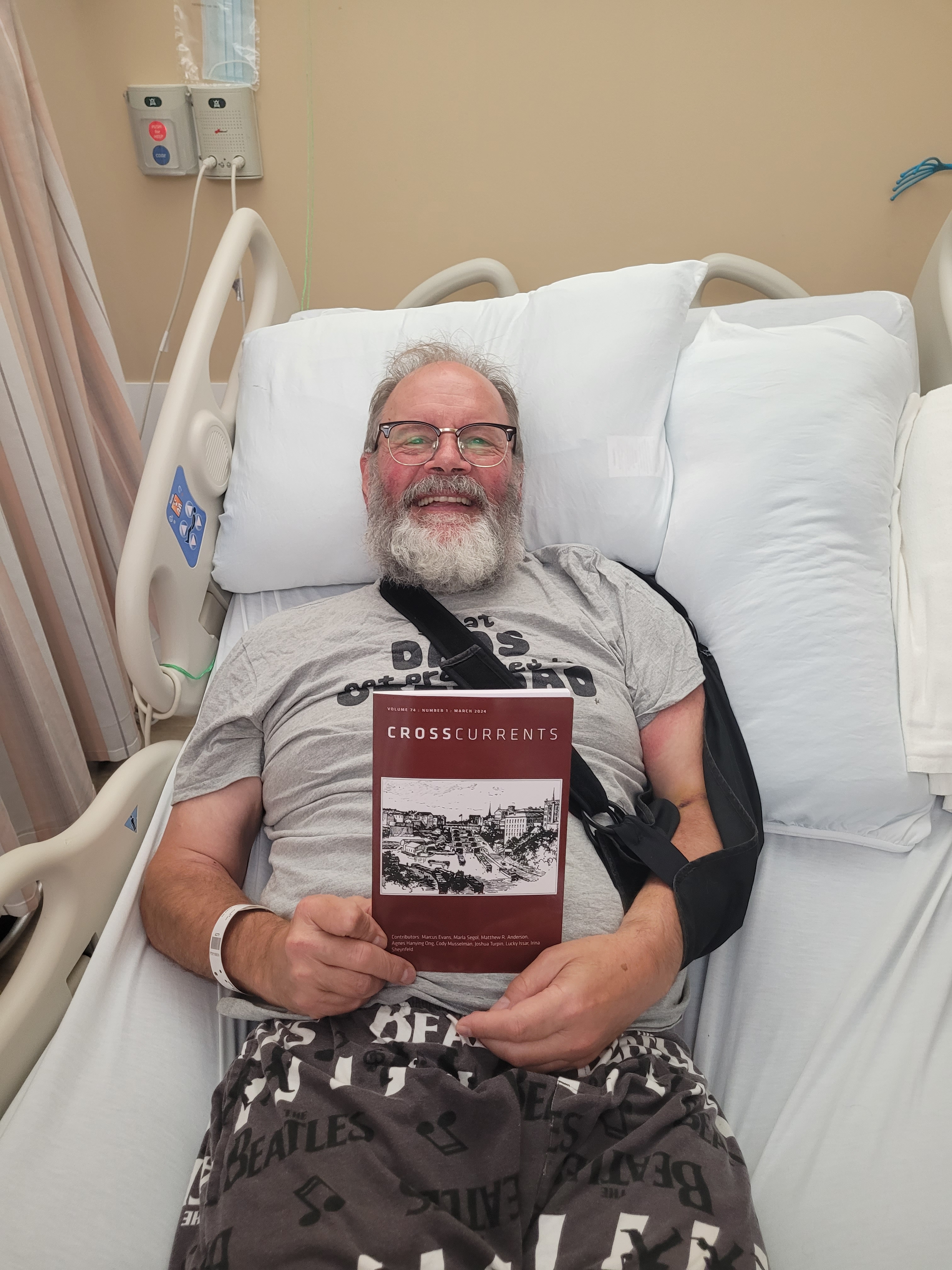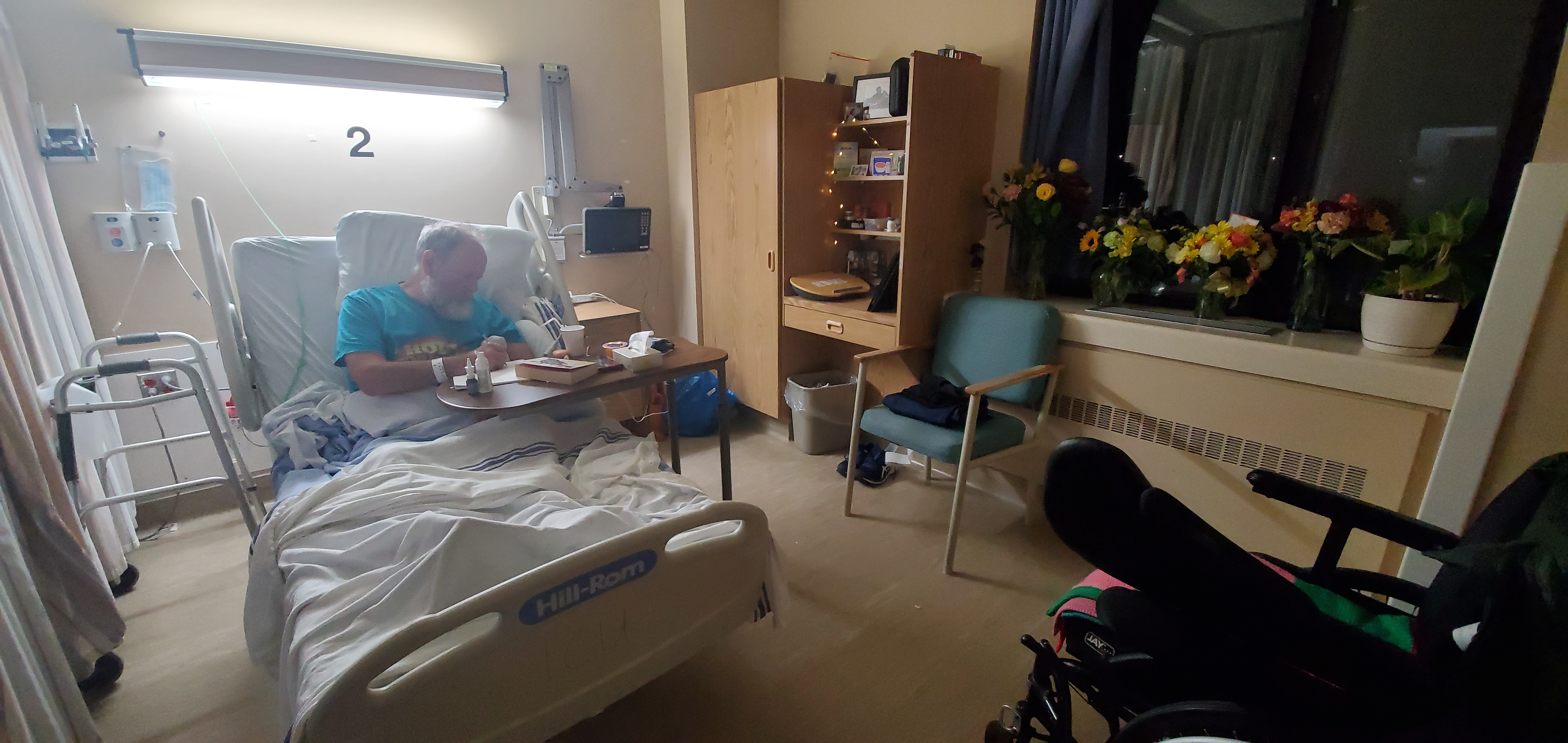
I’m reading a book that my physiotherapist Lee loaned me: The Brain That Changes Itself by Norman Doidge. The crucial message about brain plasticity seems to be “use it or lose it.” It dawned on me that in some ways, unlike my left leg, I wasn’t even trying to use my left arm outside of physio because, well, it doesn’t work. So this week I determined to use it somehow, however ineffectually. One day, I held a banana in my left hand and gripped it just long enough to peel it. I forced myself to NOT use my right hand, but instead to hoist the banana with my heavy, resistant left arm, bob my head until I could steal a bite, dropping it back into my lap after each effort. I looked like a toddler. Like a toddler, I have only spastic reflexes, and no fine motor control on the left side. Put cheerios in front of me and 99 of 100 will end up on the floor. But I ate three bananas that way this week.
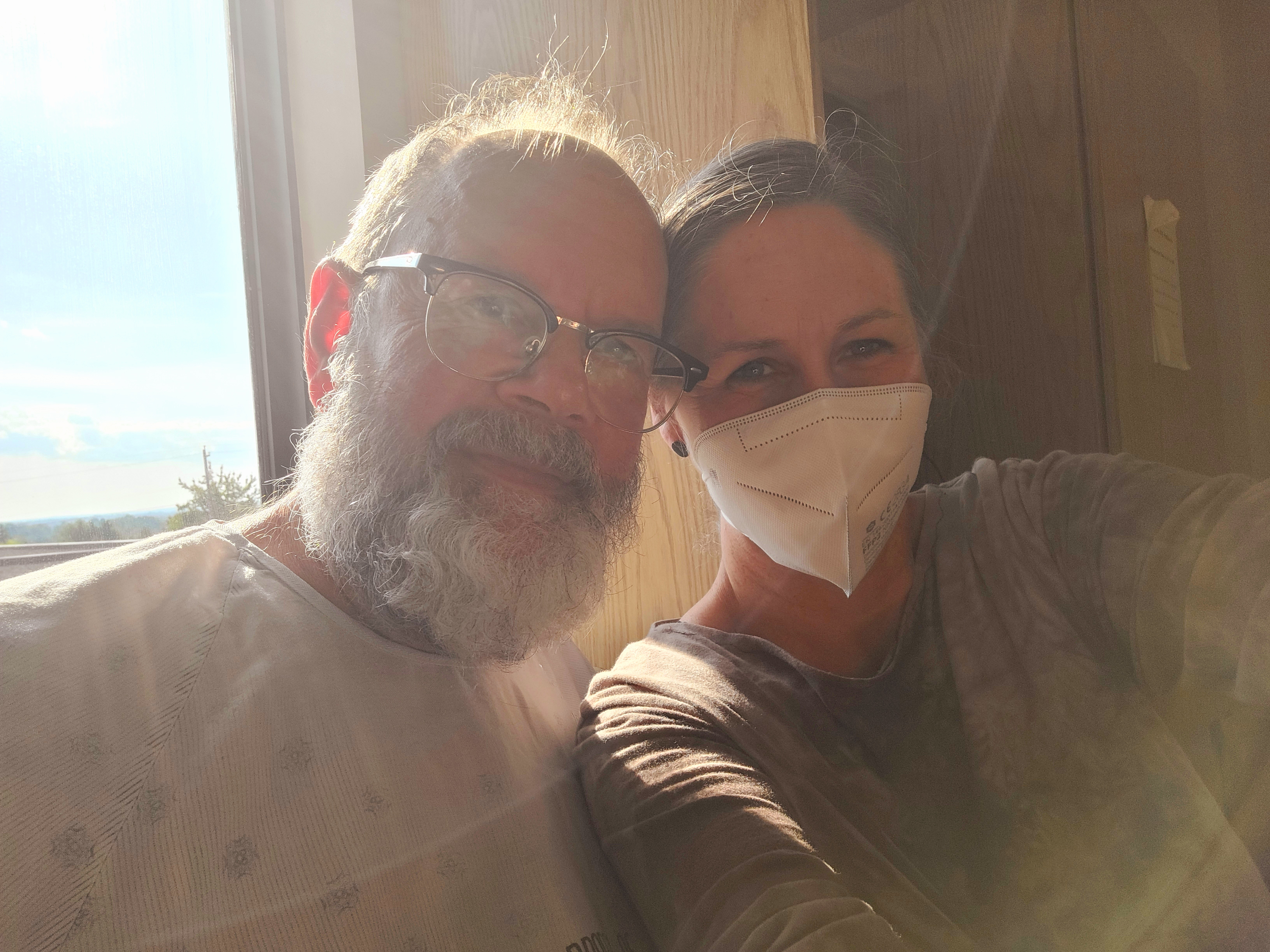
Someone asked how soon I might be back to typing with both hands. I don’t like to think about it much, but the truth is that it’s possible it will take years. It’s possible I’ll never type with my left hand, or be able to hold down the strings on the fret and play guitar, ever again. I don’t believe that. I think I will, and it’ll be sooner. But there are no guarantees. I’m not writing this asking for reassurance: I’ve been overwhelmed by the support I’m getting! And I’m making incredible progress. The head of the physio team told me while she wouldn’t wish a stroke on anyone, she’s delighted to work with me. “We’ve never had a patient like you,” she confided. (Mind you, her business is encouragement.)
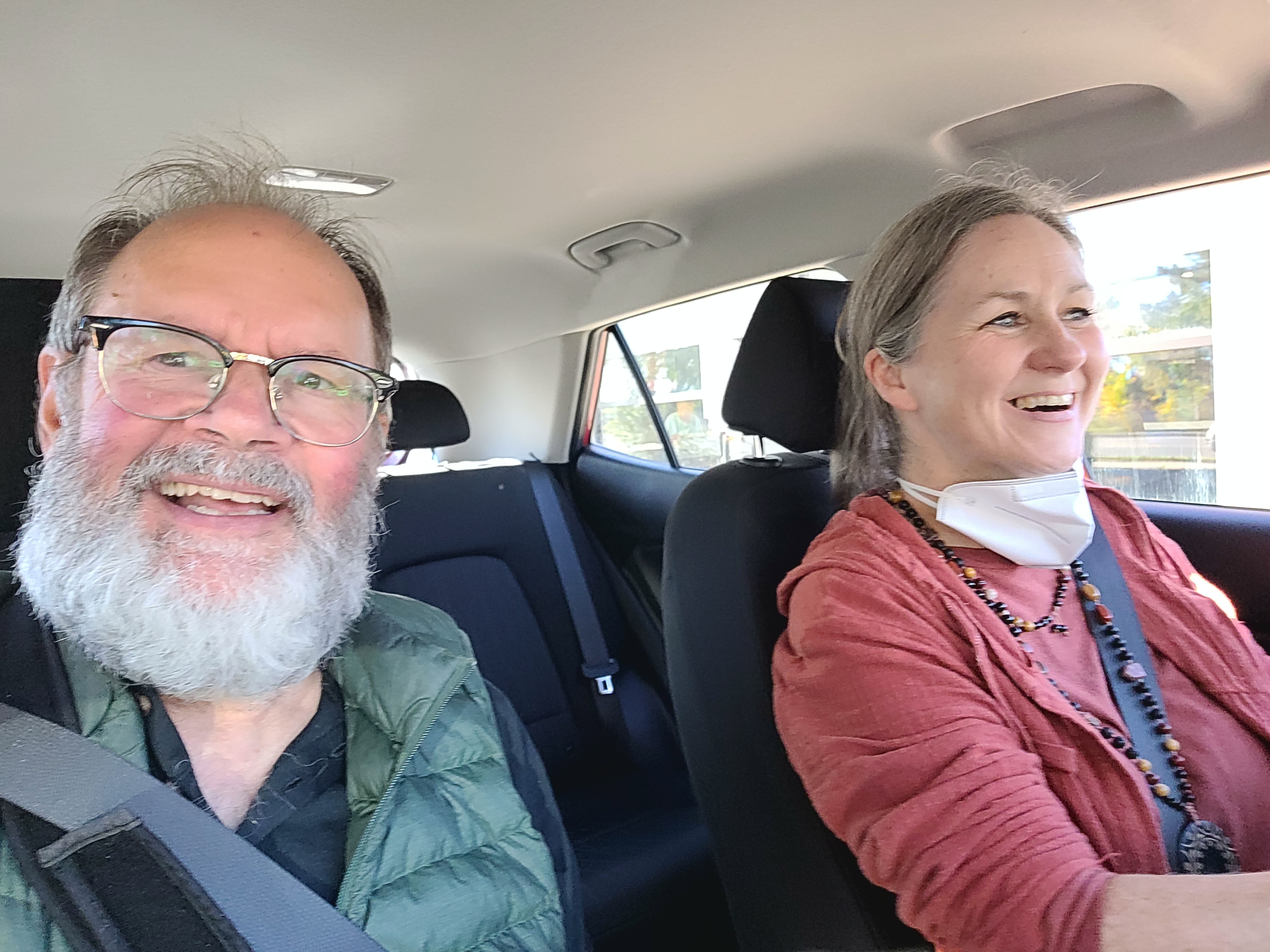
My leg improves a little bit each day. By week’s end I actually went up the practise stairs slowly one foot per stair, like I normally would have. They’re trying me out with a cane: I walked from my room to the physio gym and back with just the cane, and around a slalom course. But they (and I) prefer the roller walker. In part this is because it exercises my left hand while I grip the handle. Now when Sara gets me out on a day pass for a few hours, I can walk all the way out of the hospital and to the parking lot with just the walker, no wheelchair needed. Each time I’m home (which was almost daily this week during university Reading Week), Sara puts on a record and we have very careful dance therapy sessions! Lee had me pointing my foot like a dancer, and walking heel-toe as on a tightrope (holding the parallel bar). That was fun.
In the absence of equivalent progress with my hand, I’ve been told to use my imagination. Apparently, the science says that carefully imagining lifting your index finger again and again digs the same new neural pathways as actually moving that finger. Doing reps of carefully imagined hand movements is crucial to neural plasticity and “counts” as restorative exercise (it certainly feels like it). Fortunately, as many of you know, I’m blessed with a strong imagination. So if you come into the hospital and see me with my eyes closed, a strained expression on my face, I might be imagining wringing out a dishcloth. Or eating an ice cream cone in my left hand.
It’s working. Friday, for the first time, I flexed my fingers outward a centimeter or so, trying to push a cylinder. I can push my fingers downward in sequence from thumb to little finger, not just in my imagination. New neural pathways are forming. I’m sure of it.
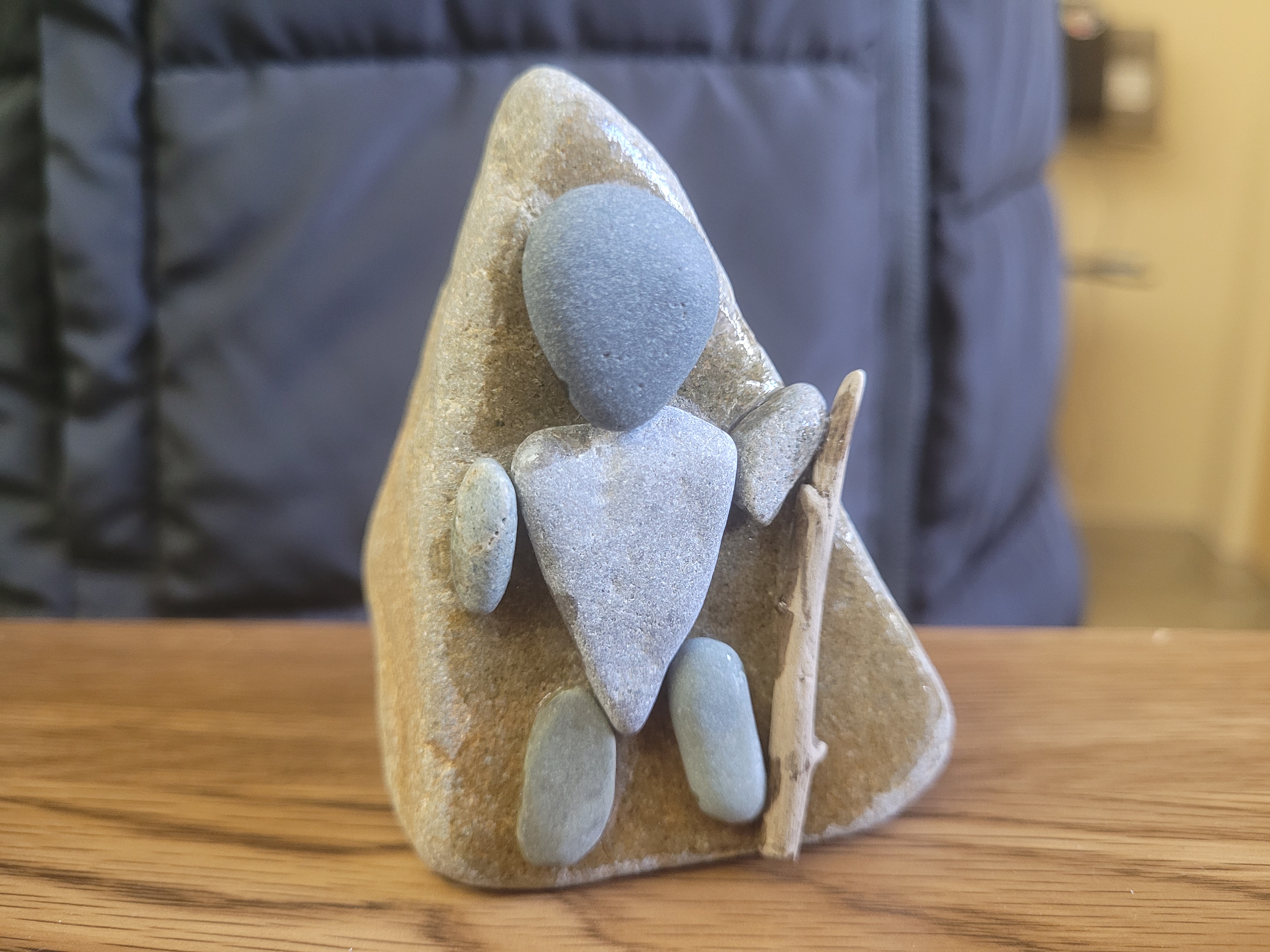
My pilgrimage friend Shawna Lucas dropped by for a visit. She left me a pilgrim rock she created from local beach stones.
Fellow StFX walker Leona English stopped by with dahlias from her garden.

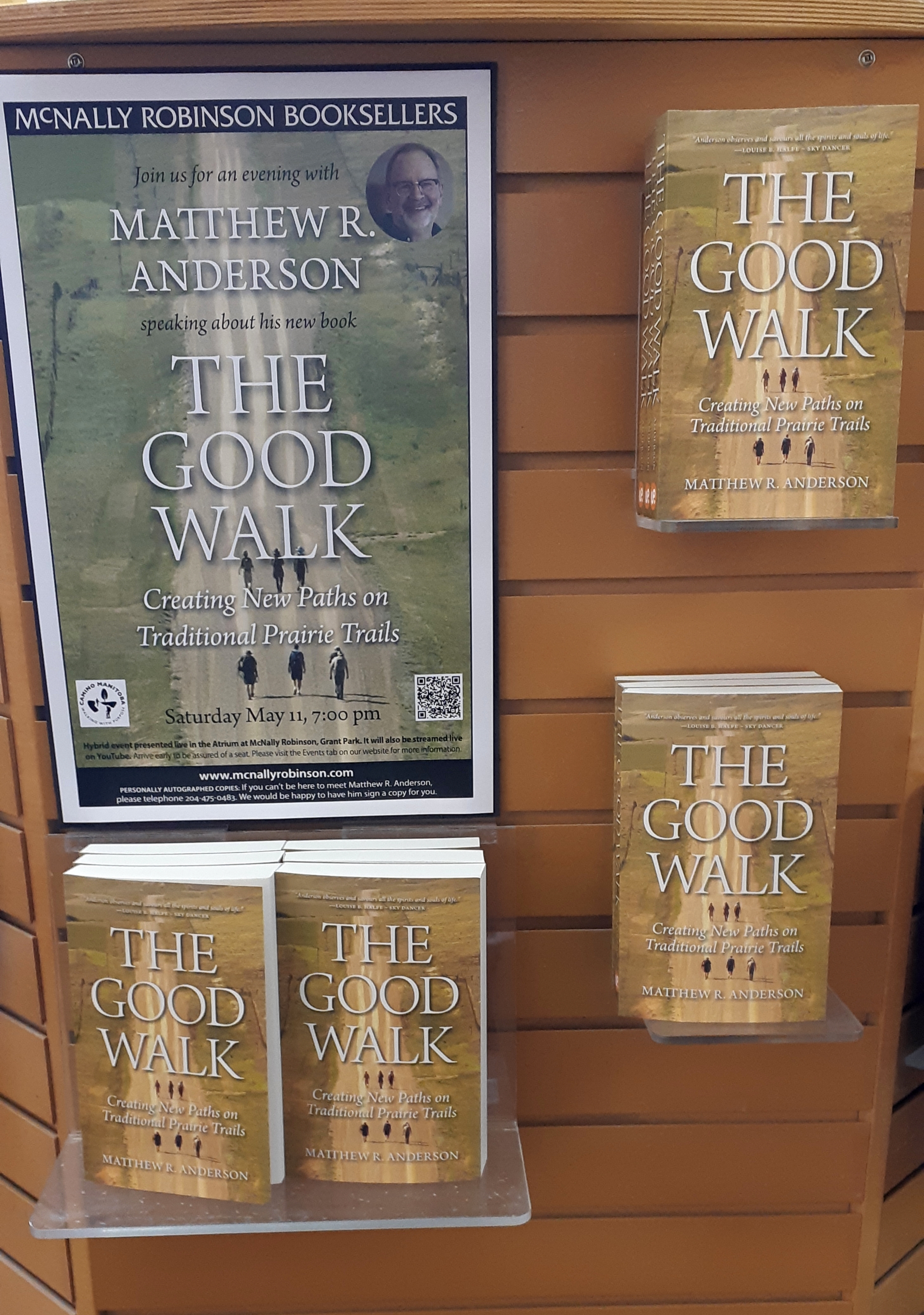
University of Regina Press, who published The Good Walk, sent a beautiful bouquet with equally lovely words of support.

My friends David and Margaret Hundeby Hunter sent a cozy handmade prayer shawl as a hug over the miles.

Scholar friends Shayna Sheinfeld and Meredith Warren thoughtfully sent Sara a week of delicious meal kits.


This last Thursday Heidi Campbell sent me a photo of her brand-new Master of Education degree from the University of Regina, along with this message: “I’d like to dedicate this to you and your recovery. You were the first person I knew who ever did an advanced degree (you were doing it when I was your babysitter). Thank you for showing me that parents can do anything!”

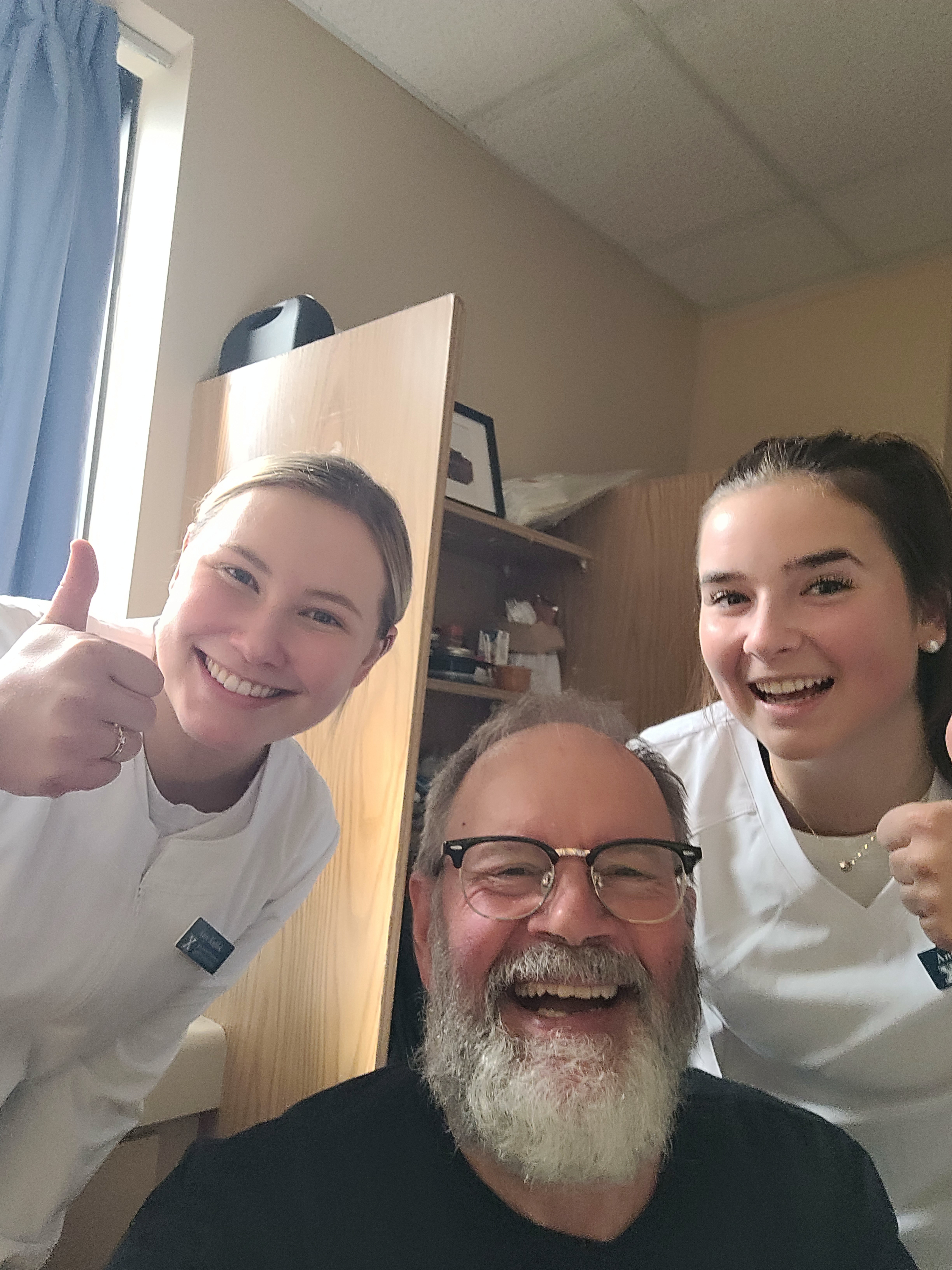
I deeply appreciate these and the messages of support, prayers, and solidarity from friends across Canada and as far afield as Malta, Brazil, Ireland, Norway, and Virginia. I think of all this when physio Ria tells me for the fifth time to twist my wrist, and all my heaving and grunting barely twitches it.
Sometimes, at 4 in the morning when I wake wondering what will happen to me, and if I’ll ever fully recover, I meditate myself back to sleep with the words “breathe in support, breathe out hope.” So: thank you. Every day, a little more support, a little more hope, a little more progress. All these little days are adding up.