Categories
Uncategorized

“Der Pilger (The Pilgrim)” reviews The Good Walk

Gotta love those Germans…
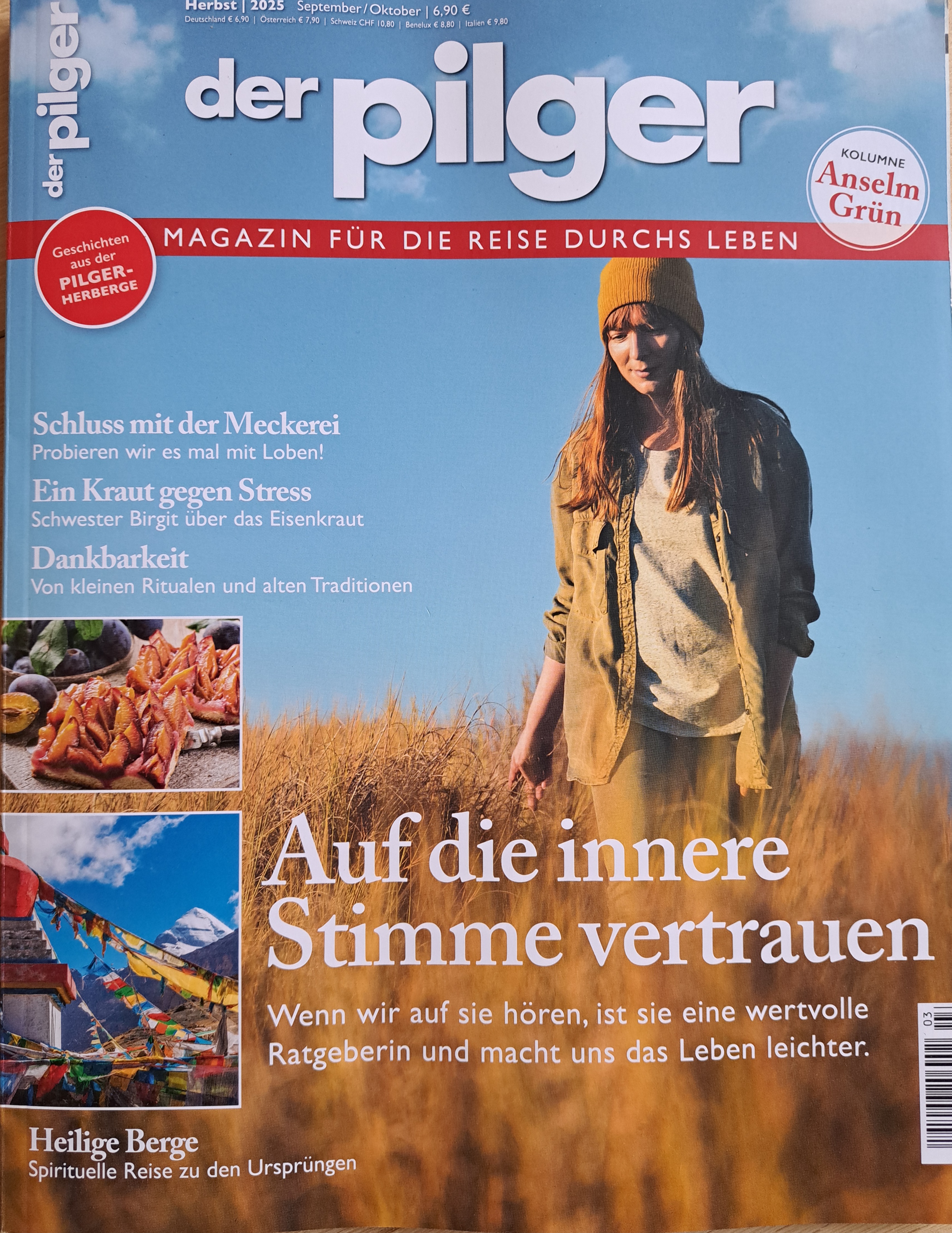
When my friend Traugott Roser contacted me to let me know he’d written a review of The Good Walk, for the magazine Der Pilger (The Pilgrim), I was overjoyed!

My hopelessly naive generalizations about Germans include that…

All Germans are fit and athletic and they LOVE walking and pilgrimages. So they’ll eat up The Good Walk. The book that really ignited the contemporary rise of the Camino was Hape Kerkeling’s fun and incredibly popular I’m Off Then: Losing and Finding Myself on the Camino de Santiago, first published in German and a sensation there.,

All Germans idealize the North American “West” and North American landscapes. Germany is a crowded country that has lost so much of its own “wildness” but still maintains a strong national mythology of origins around it. And yet …

All Germans are aware of and sensitive to Indigenous sovereignty and concerns, and …

All Germans love to read, and as a bonus, as truly civilized people are multilingual and can often read English books like mine, unlike most anglophones and folks like me, who struggle with anything more than simple tourist directions auf deutsch

SO. After all these expectations, how did the review turn out?

Thanks to Google translate, you can read on for yourself….

The Review

p. 43 New Pilgrim Perspectives:

A devout Muslim embarks on the Way of St. James, and a Canadian professor and long-time pilgrim follows the trail of spiritual wandering in the vastness of the Midwest. Two inspiring book recommendations from Protestant pastor and passionate pilgrim Traugott Roser.

The Search for a Lost Home (Die Suche nach einem verlorenen Zuhause)

“Matthew Anderson, Professor of New Testament at Concordia University in Montreal, is an experienced pilgrim who has also led his Canadian students through Spain, France, England, and Norway and has made a name for himself as a documentary filmmaker on pilgrimage. After many trips to Europe, he wonders whether pilgrimage is also possible in North America and what pilgrimage might mean there. In his new book, “The Good Walk – Creating New Paths on Traditional Prairie Trails,” he tells a compelling story of humanity’s age-old paths through the prairie of the Middle West. It is an account of a painful yet healing search for home: “Pilgrimage together with others—in the broadest sense understood as spiritually motivated hiking—is a way of searching for a lost home.” Anderson is a descendant of settlers who farmed…

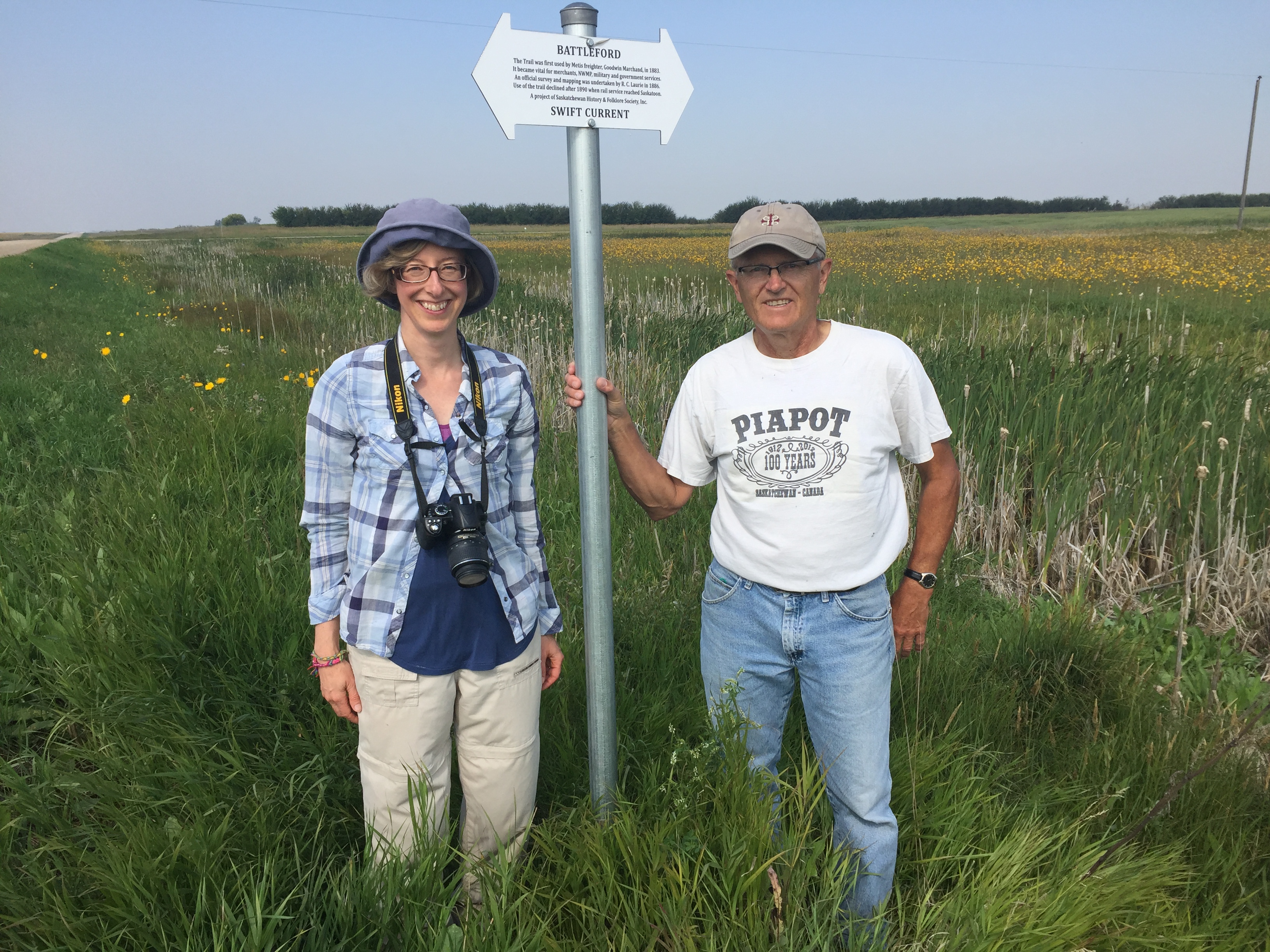
(P. 45) and built small towns on the supposedly deserted plains of Saskatchewan (see photo above), and [the region once called] the Northwest Territories. Since 2015, Anderson and his wife Sara have been traveling the trails once used by traders, settler treks, and the Northwest Mounted Police, a paramilitary force commissioned by the Canadian government. But Anderson not only gets close to the story of his own family, descendants of white European immigrants, but also of the people who lived there before and were deprived of their land through sham treaties, displacement, and targeted extermination.

Pilgrimage: intercultural and interfaith

Anderson is accompanied on his journey by various companions, including Don Bolen, the Catholic Archbishop of the Diocese of Regina. Descendants of the First Nations, the Lakota, the Nakota, and the Nehyawak (Cree) accompany them or host them, as do descendants of settlers and the Métis, descendants of European-Indigenous marriages, who historically mediated between cultures as fur traders and are now considered an independent nation.

Anderson sees his hikes through the vast landscapes as pilgrimages to places whose history has been partly forgotten, partly erased. This also changes the landscape and its perception itself: through narratives and archaeological evidence, places of living memory emerge.

The places create new relationships and deepen old ones. In this way, the pilgrims come into contact with the spiritual world, [sometimes] with the elders and wise men of the Indigenous peoples, [sometimes] with their own family history, and [always] with nature. Through Christian and Indigenous rituals, the pilgrimage becomes an intercultural and religiously unifying experience. At the same time, it is a painful journey that ties in with the tradition of penitential pilgrimage: The extermination of the North American bison took place in the vastness of the prairie. This deprived the Indigenous people of their livelihood, and thousands starved to death while faced with the government’s deliberate inaction. It is equally painful when the pilgrims encounter survivors from the church-run boarding schools (of both Catholics and Protestants):

On behalf of state authorities, children were taken from their families and  Nations and placed in Christian schools. Only in recent years did the public learn of the graves of thousands of nameless children who did not survive the ordeal.

Reward for Physical and Mental Effort

The paths across the prairie demand physical and mental effort from the pilgrims, but they also reward them: through community, forgiveness, and understanding. Matthew Anderson ultimately even succeeds in finding peace for his deceased parents and for his sister, who died very young. The pilgrim’s path is a good path, and with the project Anderson describes, a new, very unique pilgrimage tradition begins in Canada.

I couldn’t put either book down; it was precisely the different perspectives of both authors that inspired me to consider my own pilgrimage

I couldn’t put either book down; it was precisely the different perspectives of both authors that inspired me to consider my own pilgrimage on the Way of St. James in a new and more profound way: as a consciously religious experience, as a path to encounter God, and as a path to reconciliation.”

Dr. Roser’s Own Pilgrim Book

I wouldn’t be much of a friend, if at this point I didn’t mention that Traugott has published his own pilgrim book. It’s in German, titled Hola! bei Kilometer 410: Mit Allen Sinnen auf dem Jakobsweg (Hola! At kilometre 410 with all senses on the Camino de Santiago).

I wonder if a rather free, but still good, translation might be: “Hola! Fully aware and alive at kilometre 410 of the Camino de Santiago.” It’d be great to see this valuable book out for the English-language reader as well! (By the way, the other book he reviewed with mine in the above article sounds fascinating).

Traugott does all kinds of interesting teaching and research, including (like me) teaching Bible and Film classes. He is also an ethicist who teaches about ethics in healthcare and palliative care.

Thanks, Traugott, for the great review. Buen Camino! Looking forward to walking with you some day soon!

Categories
Uncategorized

Walking the Land: a Canada 150 post

Heritage Saskatchewan sponsored film-maker Kristin Catherwood, who made this short film for the Canada 150 year. It features me and Hugh Henry, talking about the importance of the Swift Current – Battleford Trail, the 350 km trek we finished in August 2017. Thanks Kristin!

Categories
Uncategorized

Impact Statement – the SC-Battleford Trail Walk

IMG_3164
photo courtesy Connie Sykes

(the following is the impact statement that I wrote for the SK History and Folklore Society, who requested it to forward to their funding agencies. Those of you who have followed the walk in some way may find it worthwhile)


The Swift Current – Battlefords Trail walk certainly affected me personally. In addition I was witness to a number of ways in which it had an impact on communities and individuals we encountered. Firstly, although the historical connection between the Métis community and the Trail is well known, I believe that the linking of our first day’s walk with the Métis celebration in Swift Current solidified that connection. I was touched by the accompanying Red River cart and the members of the Métis community who walked the first steps of the Trail with us. Another community – or set of communities – that now have a greater knowledge of the Trail are the Hutterite colonies that we passed through. Our very positive interactions, especially with the Swift Current Colony meant that the members of the Colony learned something of the history of the Trail that passes through their land. We got the fresh cinnamon buns – they got a history lesson, and some local human geography! Thanks to our Trek organizer and guide Hugh Henry for laying the groundwork here, as he did in every other way.

Hutterite women offering iced tea

When we met individual farmers as we walked, the reaction, almost without fail, was the same: interest in what we were doing, and most often, some positive but nostalgic comment about the Trail, almost as if it was a thing that had belonged to a past (perhaps their parents or grandparents’ generation) that they were surprised might still be considered important, but very quickly agreed should be important. In other cases, farmers who hosted us joined the walk briefly, for a day or part of a day, and told us of their own family histories and how they intersected with the histories of the Trail. In most cases their recollections were of the important early settlement history. In a very natural way, those of us who were walkers were able to include the First Nations and Métis aspects of the Trail’s history without in any way belittling the important personal and family histories they were recounting, bringing (I hope) the first steps toward some kind of integration of those histories. In a few cases local farmers joined us in the daily smudges led by one of our Métis walkers, Richard Kotowich.

An important result of such a marathon effort as this trek – and one of my reasons for walking personally – is to reinforce in the public mind, quietly and with respect for landowners, the idea that there do exist, on private land, trails of public importance, which need to be preserved and to which the public should have some limited rights of access. There is no fear, in Saskatchewan, of hordes of trekkers taking to the Battleford Trail! At the same time, the Trail is part of the commonwealth of history, and importantly, for three very different communities: the First Nations, the Métis, and the Settler. I have great respect for the occasional farmer or rancher who decides not to break some of the land that still bears the marks of the carts, for the public good. Our walk was, in a very small way, a call to such civic-mindedness.

IMG_3247

We did not plan it this way, but our walk through the Biggar and Battlefords regions coincided with some breaking news about the trial process in the manslaughter charge connected to the death of Coulton Boushie. Whether it was in our minds, or in the air, it did feel as if the tensions increased, both when we stayed on the Mosquito First Nation, and when we passed by farms in the area, many of which were plastered with “No Trespassing” signs we had not seen further south. Perhaps our stay on the Mosquito FN helped those who were there realize that there are many Settlers who are trying to reach out and to learn from them; I hope so. Perhaps, at the same time, the fact that a group that was primarily of Euro-Canadian background sought to be guests on the Reserve helped some of the non-Indigenous folks we encountered in that area realize that the two solitudes can perhaps be bridged by folks of good-will on both sides. The matter, of course, is more complex than a single group of walkers might influence, but I hope that we were, if nothing else, a living sign of what the very first steps in seeking reconciliation might look like.

Finally, the Trail walk was important to me personally. When I grew up in the Swift Current and Simmie regions of the south-west corner of Saskatchewan, we learned about the “Indians”, as we called them then. If we thought of them at all, it was as important people who no longer lived anywhere close to us. No one – including me – ever seemed to wonder why the First Nations no longer ranged over those areas. I only learned much later, as an adult, that many, including Big Bear’s Plains Cree, sought Treaty lands exactly where I grew up, but were pushed north, often starving and in poor clothing, during the winter, by the policies of the Dominion government and the railroad. Walking this Battleford Trail, generally in comfort with more than enough food and a good tent or occasionally a hotel room, we were walking the Trail that they once walked, starving, not much more than a century and a quarter ago.

IMG_9926

Thanks to Hugh Henry, Harold Steppuhn, Ken Wilson and local farmers, the trek taught me the geography of the land where I was raised. I learned about the “Eagle Hills”, the “Bear Hills” and the “Bad Hills”, about NWMP outposts and glacial moraines and ancient inland seas, about soil formations and water drainage, about poplar trees and prairie grasses. Such learnings, added to my first visits to communities like Sanctuary, Greenan and Herschel, and made in the company of other pilgrims who became like family, made it a very rich three weeks. I blogged about the Trail and had hundreds of reads of my blog posts, both in Canada and internationally. Thanks to the Saskatchewan Historical and Folklore Society, and especially to my friend and co-walker Hugh Henry, for making this walk possible.

IMG_3181

Categories
Uncategorized

Before Even Starting to Walk – a Surprise!

culture camp poster 2.1 -reduced size

Madonna Hamel, a friend of mine and an artist from Val Marie, sent me this poster. The rich Métis culture and heritage of the northern Great Plains will be marked, in a small way, on August 3, 2017 as a group of us begin our walk from Swift Current to Fort Battleford. The Battleford Trail is important to Métis history, and so also to the history (and the present-day) of all Canadians. More on that coming up! In the meantime, I’m looking forward to learning more from this vital community!

Categories
Uncategorized

Coming up in August!

In August we’re walking an incredibly important trail from Swift Current to Fort Battleford – a trail used by First Nations, Métis overland freighters, and Colonel Otter’s Canadian militia. Big Bear, after signing Treaty Four, came overland near here. We need to remember our important historical paths, and in the spirit of the TRC, to point out to non-Indigenous peoples how Canadian history has been shaped and formed by the removal of the First Peoples from the land. Are you interested in walking or helping sponsor a walker? You can!