Categories
academic research media and publications stroke-recovery Uncategorized

Strokeaversary: Sweet Pea

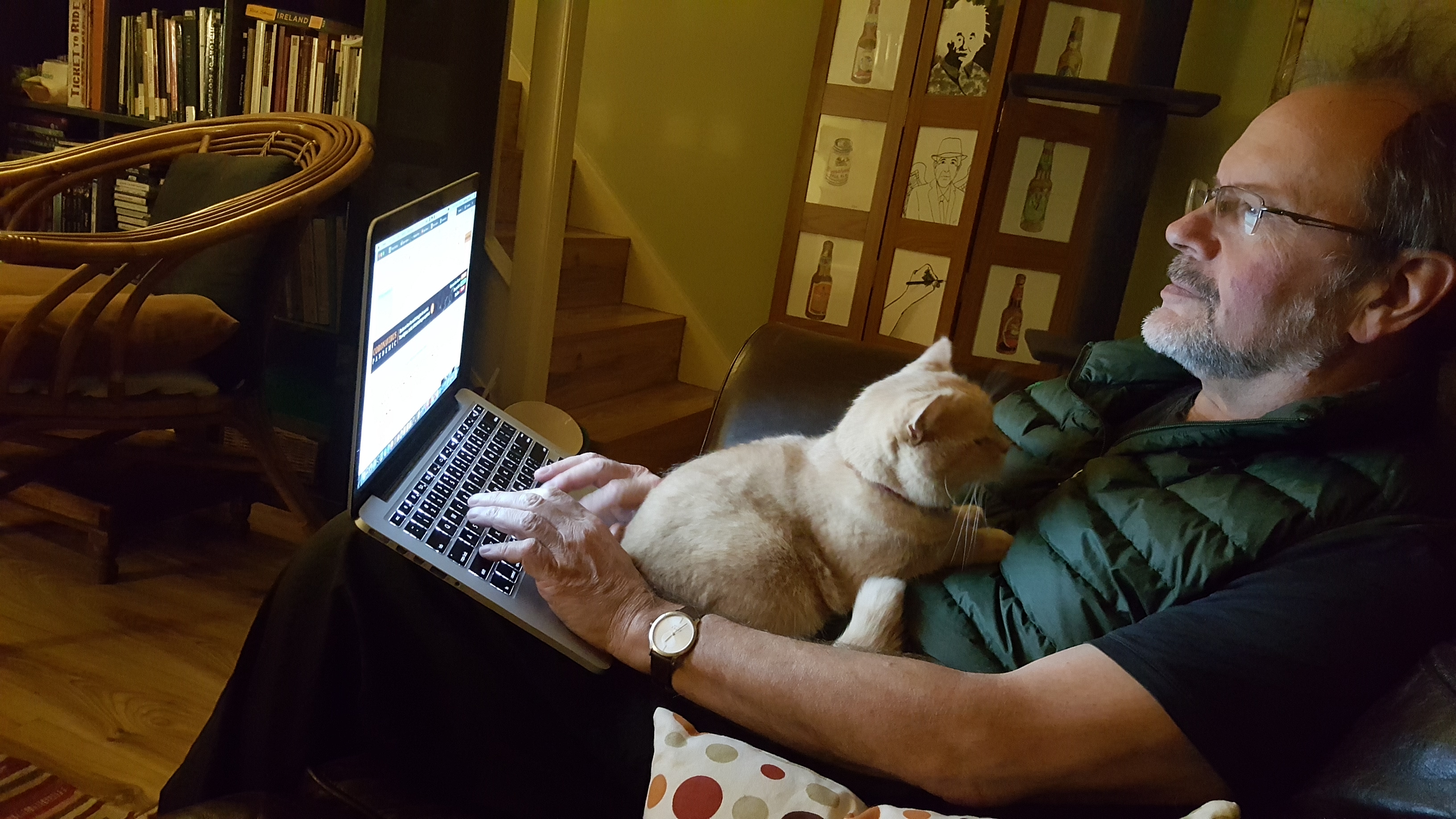
Our beloved 14 year old Sweet Pea just died. I’d had my most recent Botox shots to my left calf and arrived from the long back and forth drive to Halifax to find our elderly lady sprawled awkwardly on the bedroom floor by her food dish. When she saw me she stood to walk but kept falling sideways. I picked her up. Her head jerked in spasms every time I tried to get her to eat or drink, even her favourite tuna snack. She seemed to be experiencing terrible dizziness. Sara rushed home.We arranged an emergency vet, spent hours holding her, and only late that evening, after blood tests and consults, accepted the fact there was nothing we could do to help her. The vet believed Sweet Pea, who has been noticeably frailer recently, may have had a brain tumour (many from her semi-feral colony in Montreal had died from cancerous tumours) and that it had reached her optic nerves.
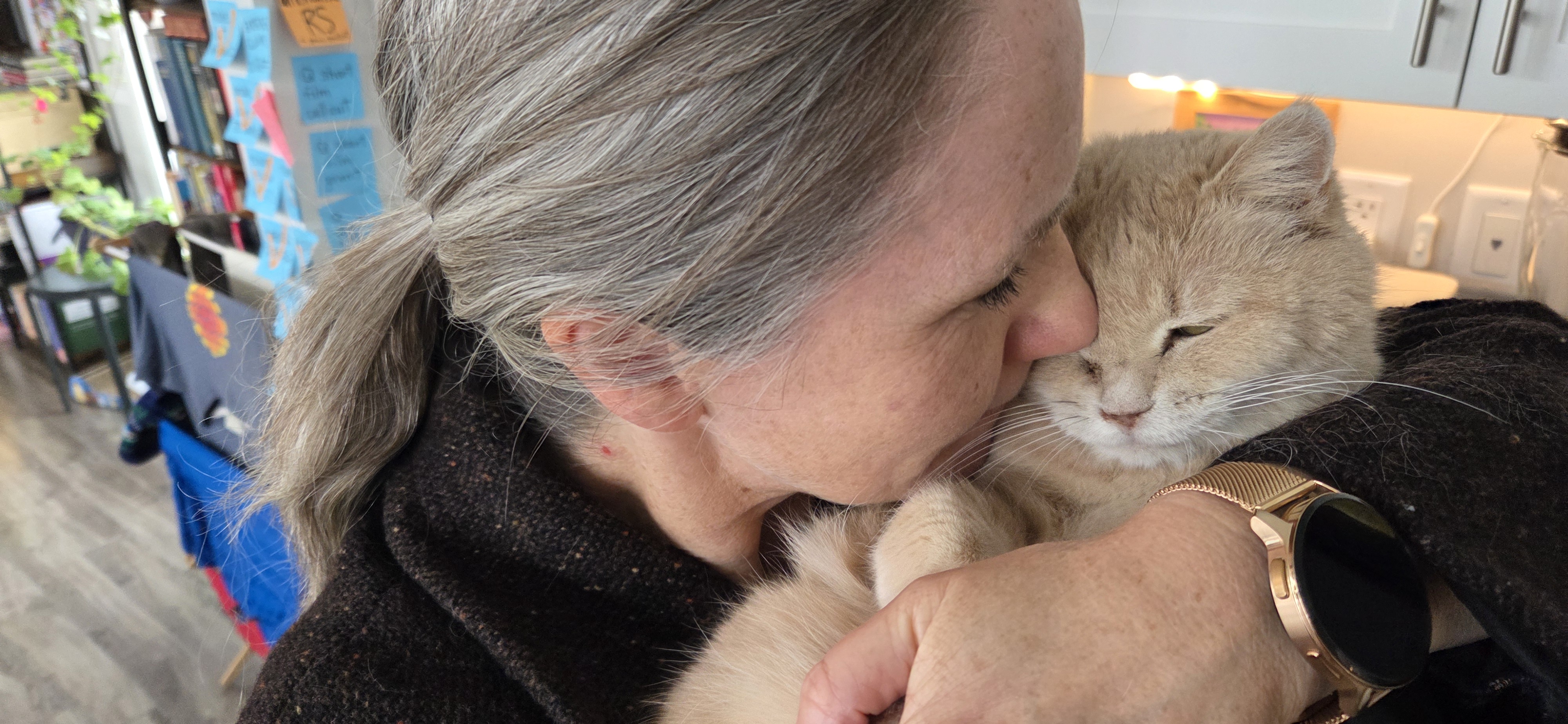
There’ve been lots of tears since. The day after she died, a letter arrived for Sara from a Montreal cat adopter who just lost her own kitty. She had sent some left-over anti-nausea meds to Sara (they’re expensive and were needed for every long car trip).

When Sara opened the letter, it simply said “Hope these help Sweet Pea in her travels.” “I hope so too,” Sara sobbed, and a fresh round of tears for us both followed.

Sweet Pea

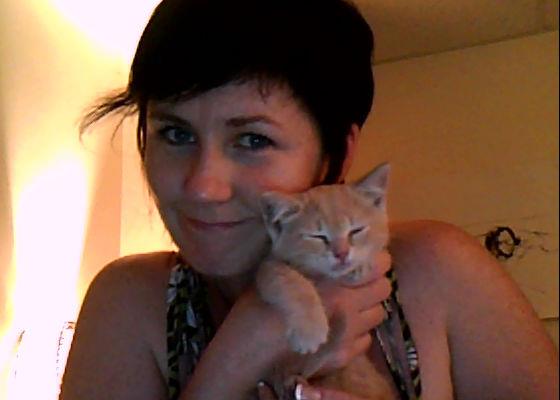
Grief is natural. It’s not to be rushed. Sweet Pea was Sara’s first adoptee. Somehow, despite being the runt, she was the last of the brood to survive and to still be with us. She travelled with Sara back and forth across the Atlantic. When we moved to Dublin we crossed the Irish Sea by ferry – just for her. She was such a trooper. She was annoyingly anal about her schedule, perfectly indignant when food was late, completely trusting of strangers, very patient under duress, a true companion, and very, very smart. She loved being lightly vacuumed.
Also in the mail the day after her passing was an author’s copy of “Touchstone,” the United Church of Canada’s theological journal. The issue title? “Death.” I’d forgotten that I’d written an article on “Death and Mortality From a Biblical Perspective” for them. And here it was.

Given that Sweet Pea’s condition at first looked to me a bit like a stroke, and that journal article, I’ve been thinking about death, aging, frailty, grief, relationships, and all of our shared weaknesses these last few days.

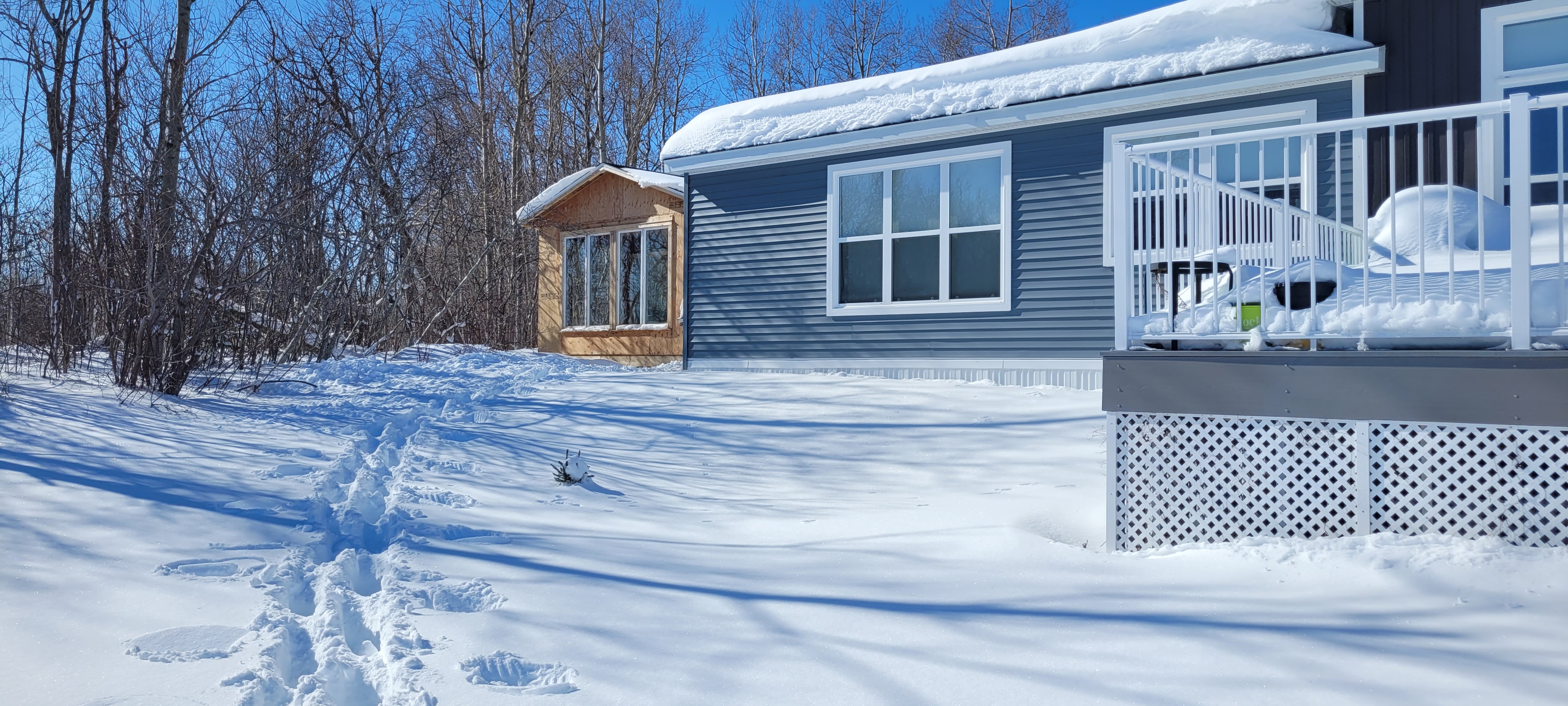
Snow

During our winter break, Sara and I were at the Atlantic Lutheran Leader’s Retreat. Bishop Carla Blakley and the Eastern Synod staff asked how my recovery is going. I told them what I’m telling you: I can’t believe how supported I’ve been. I’m still so appreciative of the support of Sara, of the medical teams in Antigonish and Halifax, and of many of you, as I fight my way back from my stroke. It’s a communion of all kinds of “saints,” and I’ve been blessed by it.

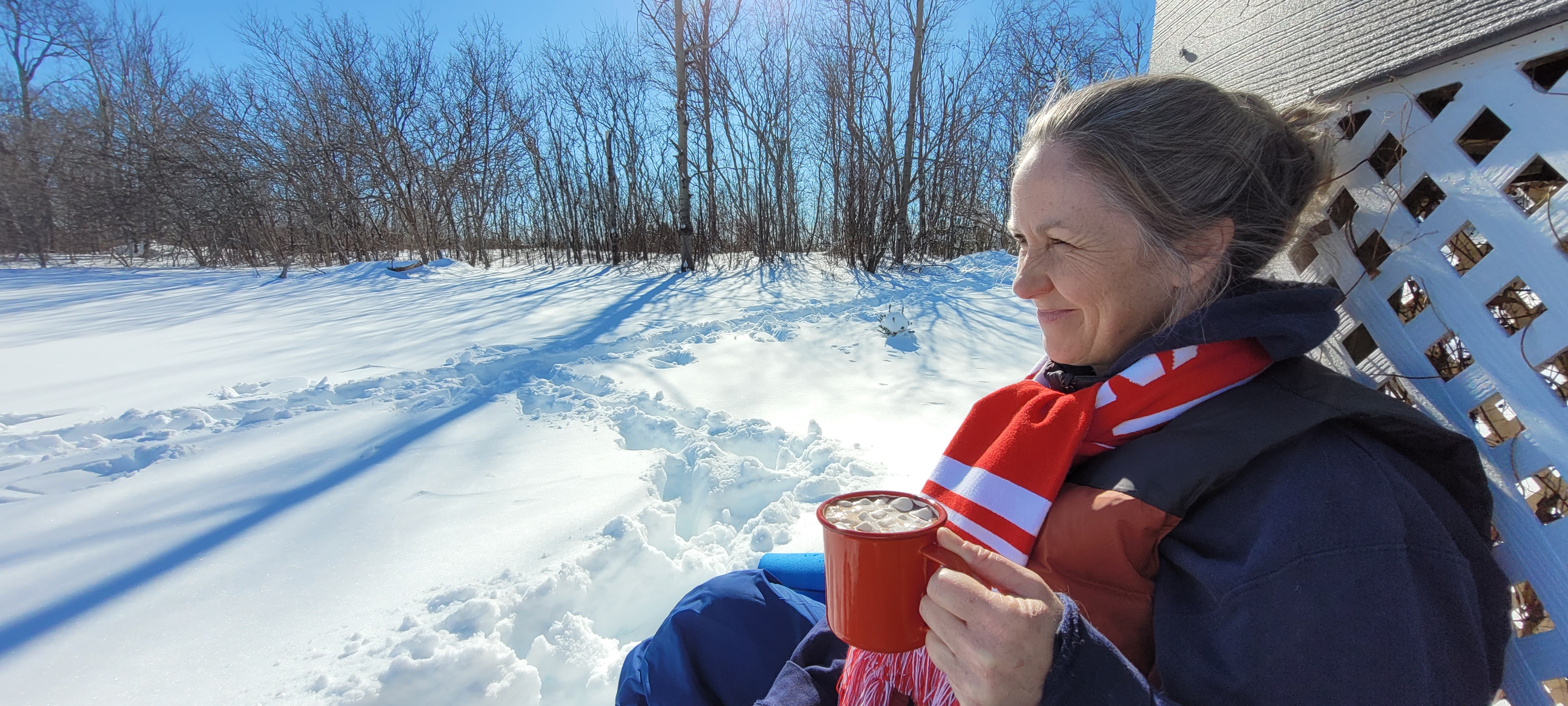
I continue to measure my progress by small victories. For the first time since the stroke I can now straighten my fingers enough to put on just about any gloves (you’d be surprised how hard that’s been). After one of our seemingly endless snowstorms I backed up the car and realised I wasn’t using the camera but doing it the old-fashioned way: steering with my left hand, and looking over my shoulder with my (good) right hand behind the passenger seat. Like everyone else in Nova Scotia I’ve done a LOT of shovelling lately, using both hands. On one sunny day last week last week Sara and I had a hot chocolate date in the snow. I’m able to sit down and get back up from those more difficult places much more easily. My typing is faster and my guitar playing just slightly smoother every week.
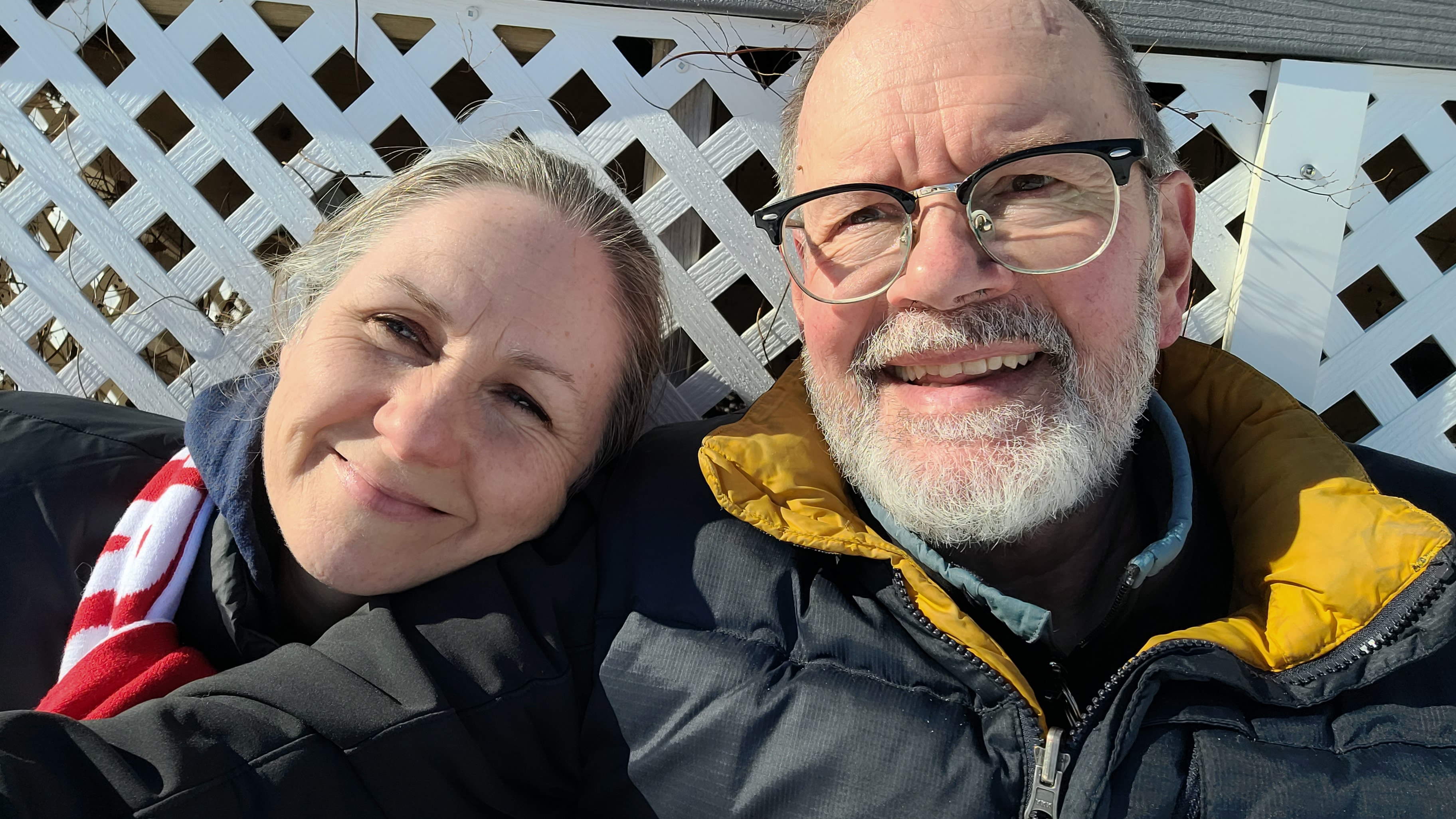
Although I walked 1.5 km recently, my left foot was dragging by the end – a hard thing for someone who identified as a “walker” for so many years. But I’m able to dress myself, put on a belt, and dry off after a shower with both hands now. I can even tie a knot again, if there’s no rush and it doesn’t have to be too tight. In so many ways I feel like a toddler who’s had to learn how to move through the world.

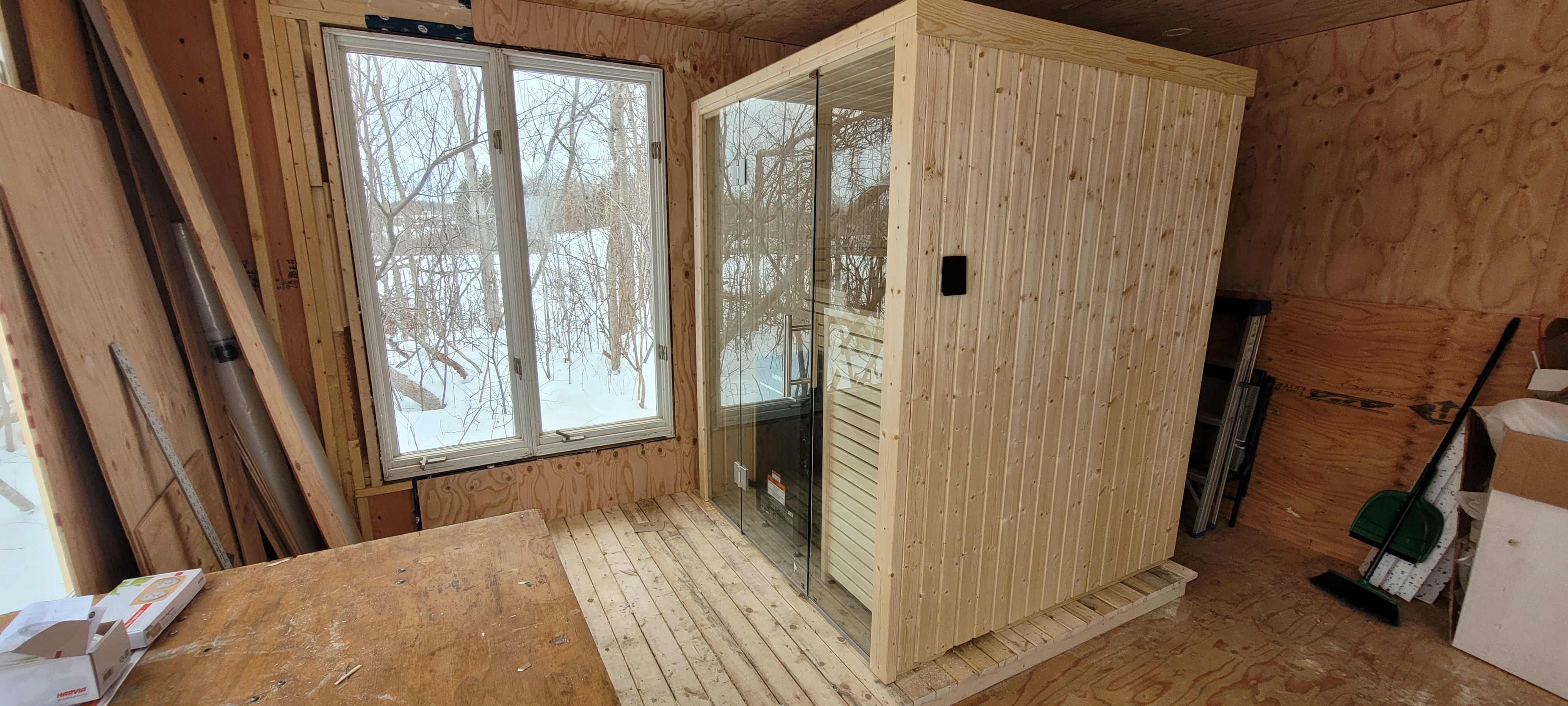
Sauna

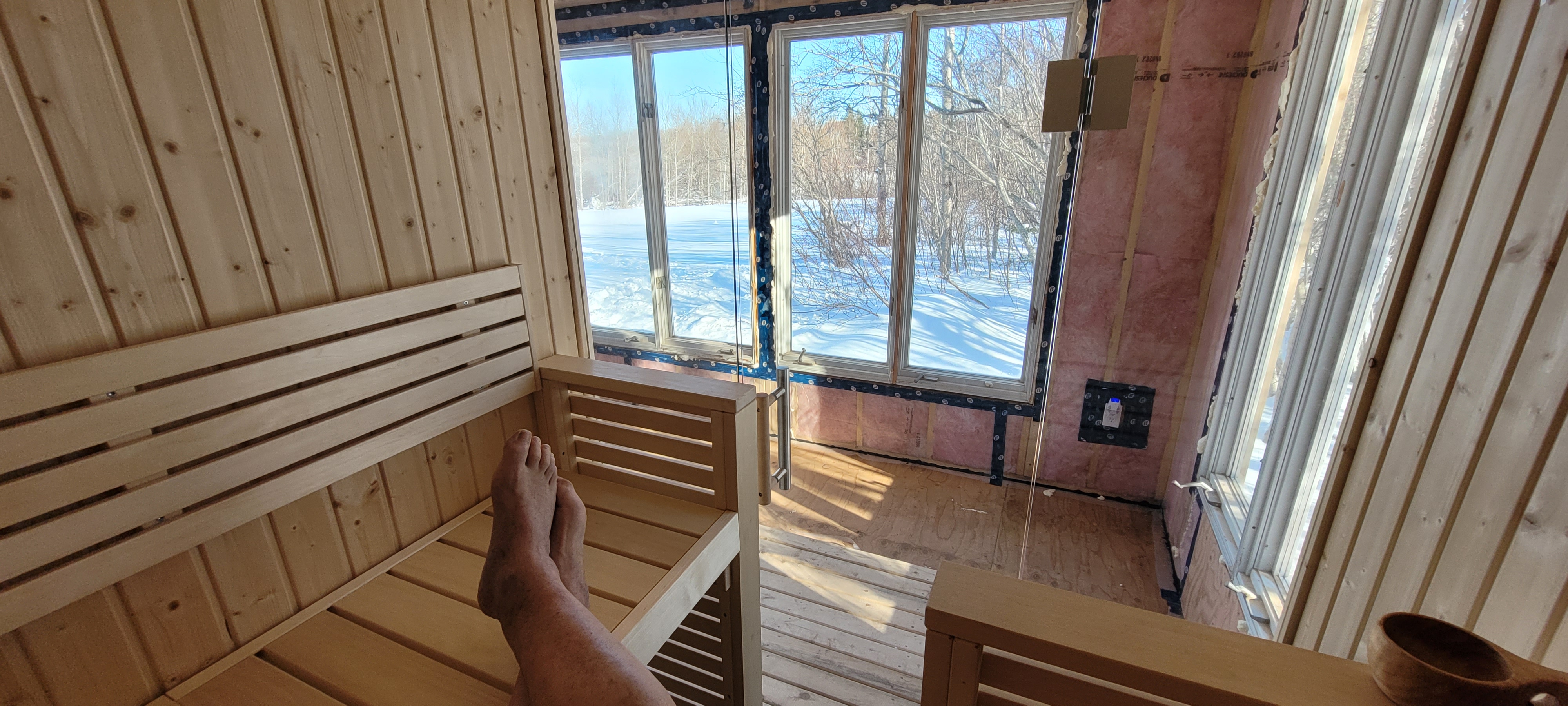
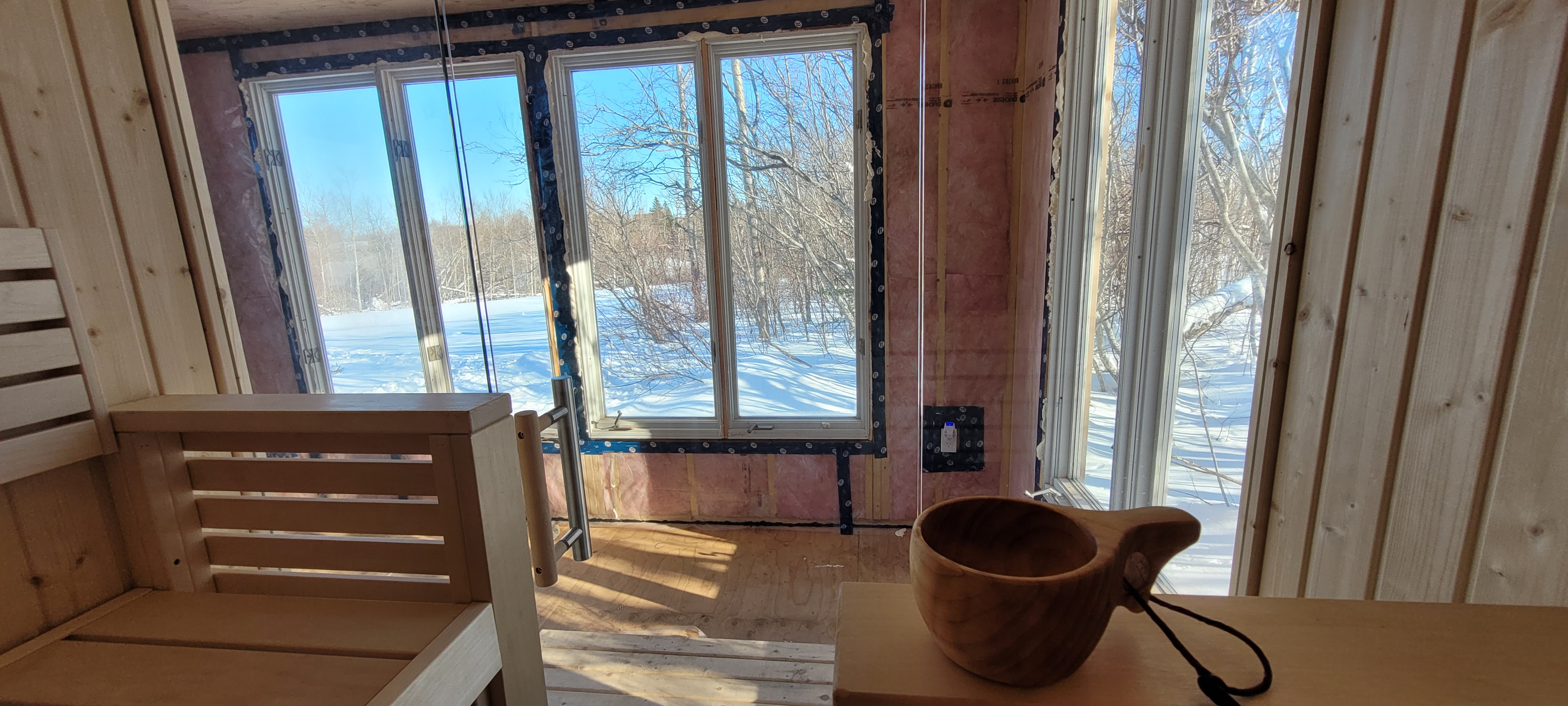
As I mentioned in a recent blog-post, when I had a brief but serious cancer scare not long ago, I decided life is short, and I’d buy a Finnish sauna kit. Ever since my wonderful years with the Finns of Montreal’s St Michael’s church, saunas have been in my blood – and my dreams. I know it’s an incredible privilege to have retirement savings, and to spend some of them on such a luxury. But when I get cold my entire left side seizes up, making walking difficult. And the sauna sure makes my left side – AND the rest of me – feel good!
Serendipity

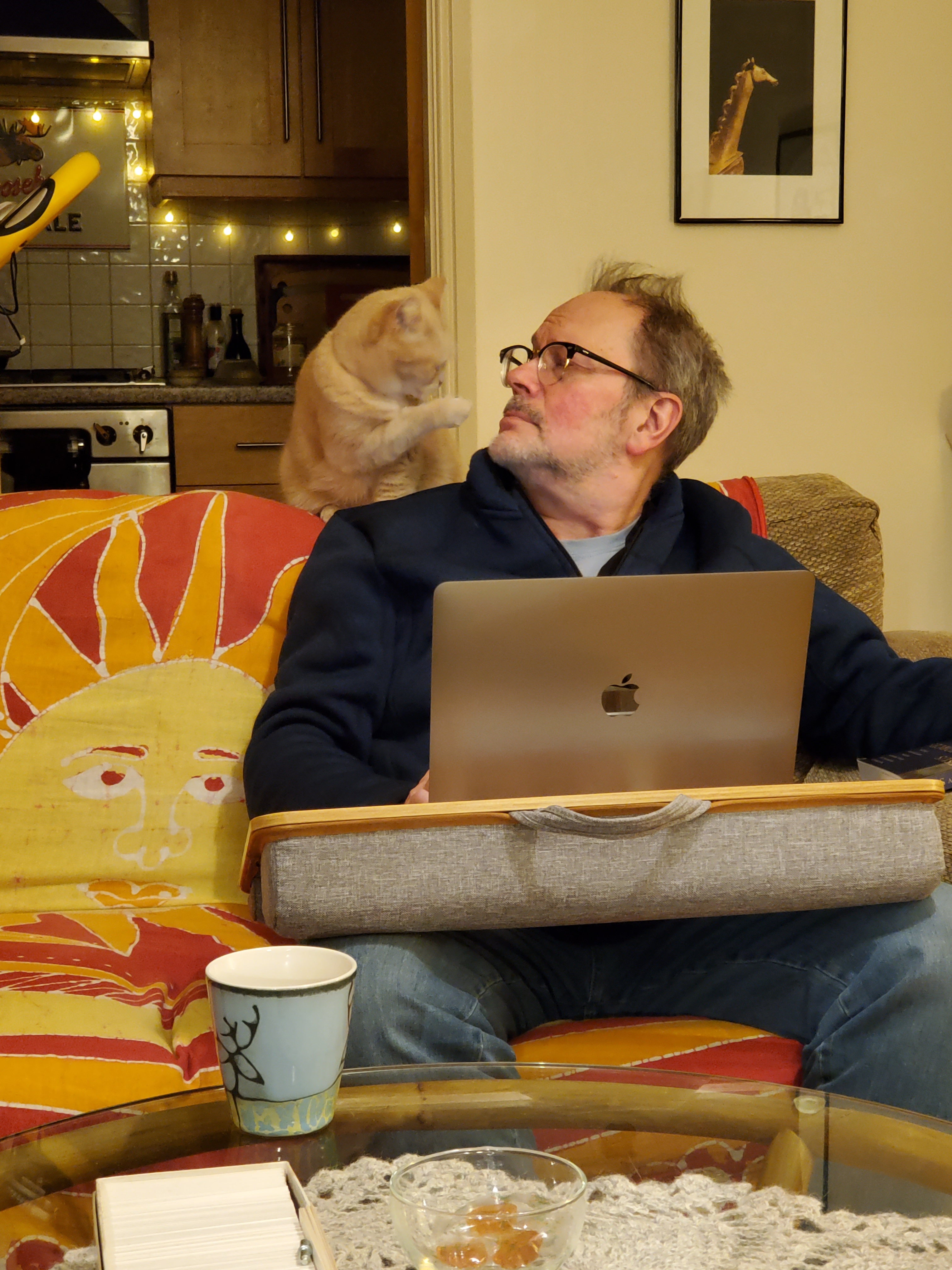
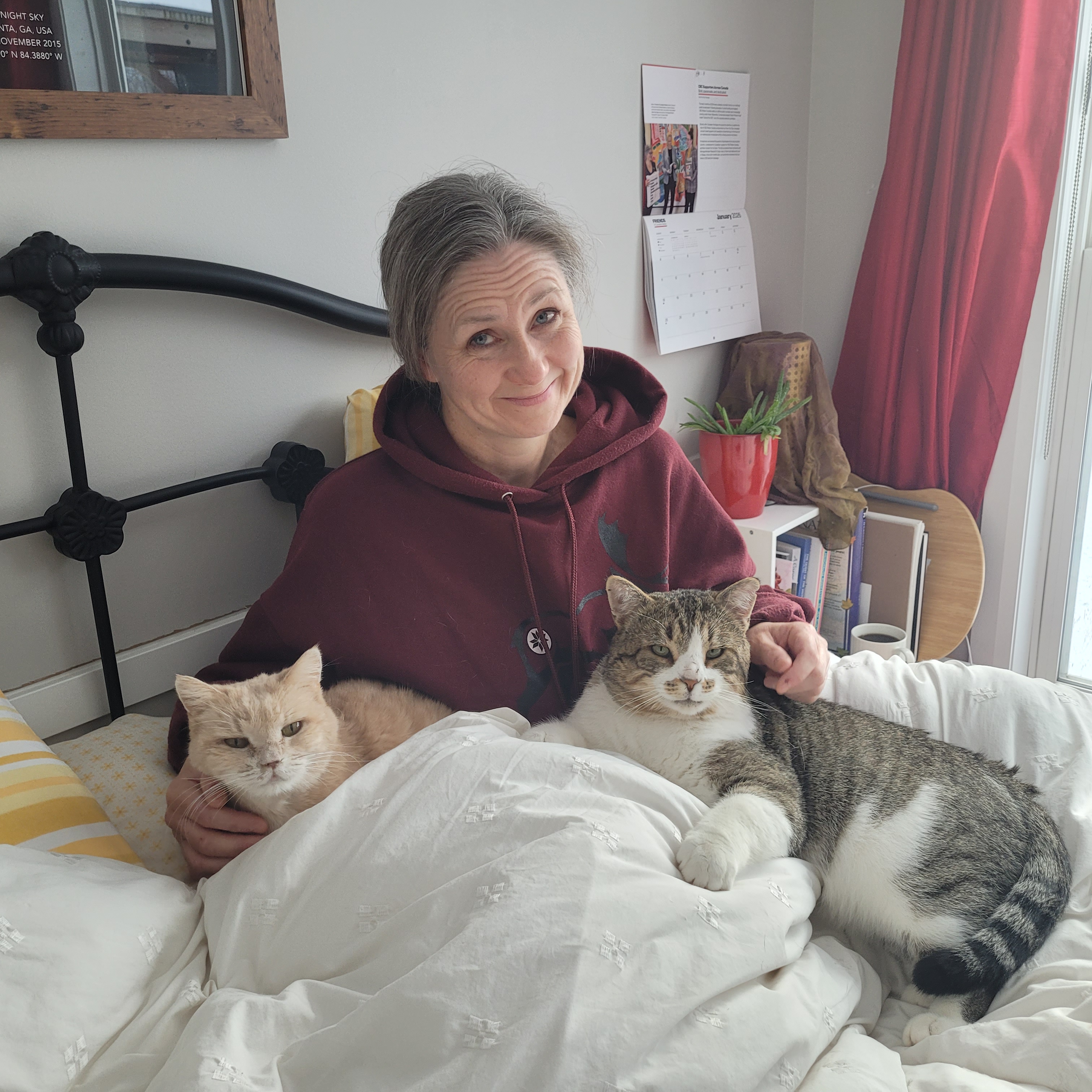
We were thinking Sweet Pea would be our last cat. But then, as I’ve mentioned on this blog, a big feral male showed up near our door in the coldest and snowiest of days last winter. He wouldn’t go near humans, but we’d wake up sometimes after VERY cold nights to find him on a chair on our deck, in the snow. He’d been terribly injured in one front paw somehow, and was un-neutered. Eventually, Sara managed to trap him. But when she opened the cage on his return from the vet, instead of springing away as expected, he turned and came into the house! Theodore is an 18-pound tabby. He’s incredibly affectionate and intelligent, even though (unlike Sweet Pea), he’s scared of any humans but us so far.

Back in his wild days, Sara named him Theodore. Both Sara and I have taught Greek. But until Sweet Pea’s passing just now, somehow we didn’t remember that Theodore also means “gift of God.”
Categories
Uncategorized

Walk Past

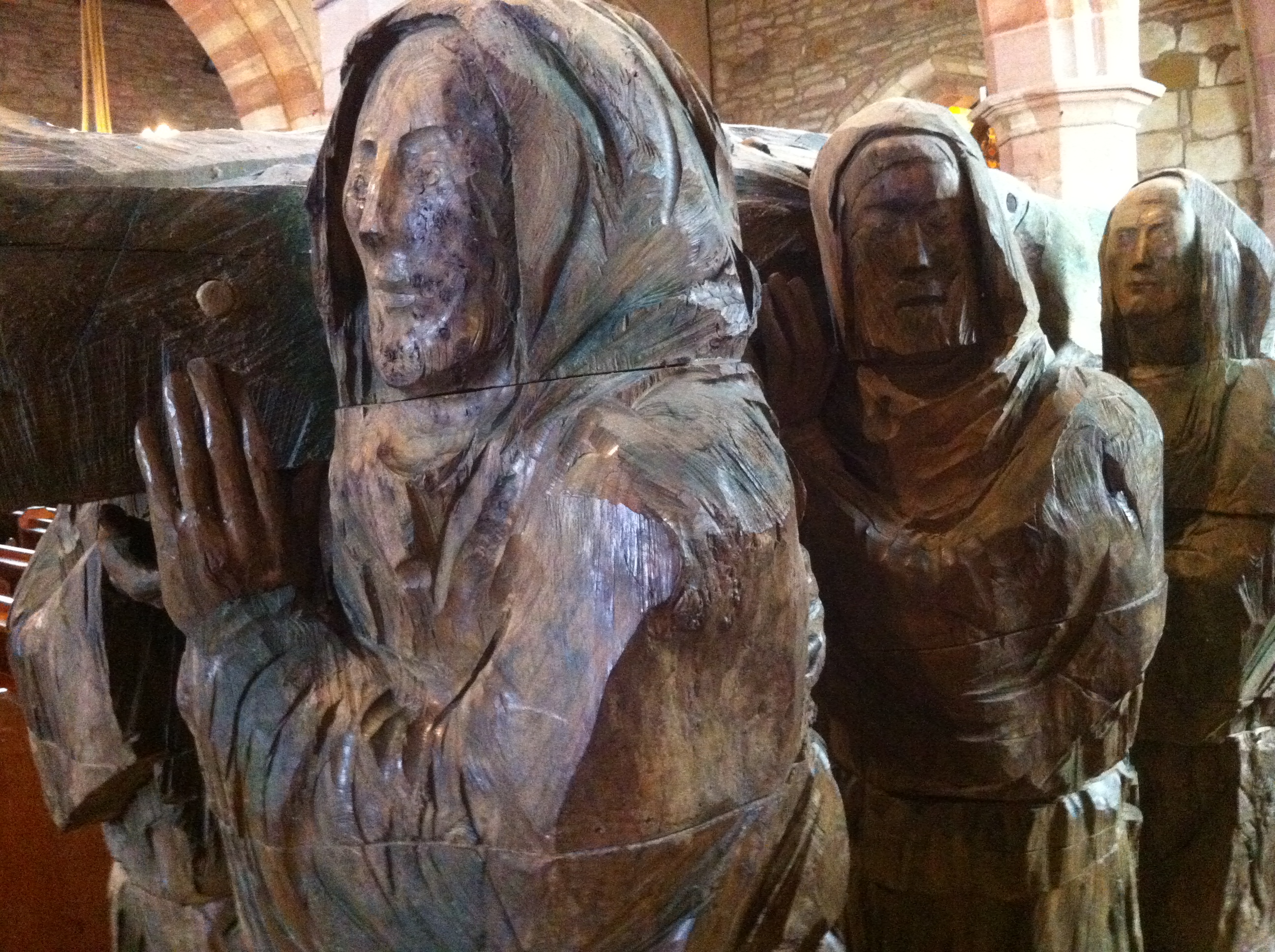
There’s something about Lindisfarne, Norway and Ireland that connects all three in history, art, and memory. And faith. Cuthbert (634-687) was an Anglo-Saxon shepherd boy trained by Irish monks from Iona, who accepted the decision at Whitby to go with Roman customs, and whose remains were troubled by Viking raiders, whose Danish descendents in the Danelaw, later Northumbria, eventually honoured him as their patron saint. Life is indeed strange. Over thirteen centuries later, a descendent of Norwegians, I arrived by foot at the cave of St. Cuthbert, accompanied by my Northumbrian friends Chris and Clare, after having marveled at the intricacies of Viking art and archaeology in Celtic Dublin and walked through Norway’s St. Olaf Way, to pay my respects at one of the resting places of an Anglo-Saxon saint.

Mostly that morning I’d been worried about keeping up with Chris. His lanky frame and long legs, combined with a love of walking, an interest in history and an excitement for the path ahead, mean that he is a wonderful pilgrimage partner – when he doesn’t mind slowing just a bit. In any case we had to slow to find the place. The signs to Cuddy’s Cave, as it is sometimes known, were not all that clear. The property is managed by UK’s National Trust, but unlike some of the Trust’s other locations there is little infrastructure – just the sandstone rock formation, stairs cut into the rock on either side, some blackened soot on the cave wall from someone attempting a campfire, and the cave itself. Standing in the cave, it’s hard not to feel the weight of the rock overhead. Here, according to which report you believe, was where St Cuthbert actually lived for a short time as a hermit seeking even more isolation than Holy Island could provide, or where centuries after his passing the monks of Lindisfarne hid out from the Vikings with the coffin of the unfortunately mobile saint. Or both.

Both Chris and I are in our 50s. When he was in his early 50s, St. Cuthbert realized that death would soon be on him, and left his post as Bishop and Prior of the active monastery at Lindisfarne/Holy Island to die in his hermit’s cell on Inner Farne Island. He left specific instructions that he did not want to be buried at the monastery because he did not want the monks to be bothered by all of the pilgrims he knew would come to his tomb. But his friends insisted and so that is where he was first laid to rest.

It was almost as if Cuthbert knew what would happen. Centuries later, the vikings raided rich Lindisfarne and laid it to waste. While the sea marauders were not interested in the saint’s spiritual blessings, they were very interested in the kinds of riches that typically adorned saints’ tombs. So the monks fled with the coffin of the saint, and wandered the countryside for seven years before eventually being led by a dun cow to the site of what became Durham cathedral.

Caves are places of shelter, life and death, despair and fear, and hope. The ferns along the path nodded at the lightest touch of a warm wind, and cicadas started up here and there in the trees to accompany our bright and lazy afternoon. As we shared a cup of tea I tried to imagine Cuthbert right there, where our packs were set against the sandstone. An ancient saint, rocks more ancient still.

In his early 50s. The nature of shrines is that we all carry something not only to, but also past such a place. I hadn’t quite finished my tea but Chris was pacing. I got up, brushing the crumbs of cake off my chest. What do you think, I asked him? Can we still make it before sunset?

carrying St Cuthbert statue


Categories
Uncategorized

Going Nowhere Fast

Blake's pilgrim sketch

By about 2 pm on the first day of walking through the Scottish Borders it was becoming clear I’d been wrong imagining the dots on my map to be quant Scots villages full of local eccentrics, well-crafted beer and heavy, happy northern food. The two areas of settlement I’d passed were small clusters of squat and shuttered houses, grey sandstone window frames, darkened slate roofs and doorways offering no welcome. They were perhaps bedroom communities for Edinburgh. Whatever they were, they were barely inhabited: there would be no conversation of any sort, quaint or otherwise. Likewise no cafe or store to pick up lunch.

Long-distance walking into unknown or lesser-known territory means reaching a series of decisions without full information. You expect to make some mistakes, and hope they’re neither major nor cumulative. You trust to luck and the kindness of others, if others happen by. Going a bit hungry your first day isn’t the worst that can happen – by far – although in that moment my stomach didn’t necessarily agree.

What was worrying was that it was already the middle of the afternoon, and my guidebook told me I had 15 or so kilometers still to walk before arriving at a closed tourist centre from which I might, if everything worked, be able to contact a ride to come pick me up for my hostel. All of which probably meant a very late meal indeed, should there be anything to be purchased at all by the time I got there. In the bottom of my pack I found the broken remains of a two-day old baguette given to me in London, and some packaged cheese I had forgotten to throw out. The cheese was long past sweating, but my hunger convinced me it might still be okay despite hours in the heat.

Dryburgh Abbey was further off the route than I had expected, a set of foundation stones and half-walls all that remains of an important medieval structure. The detour had already cost me a couple of kilometers and an hour or so and my feet, unhappy with asphalt, needed liberation from the boots. So I took them off, set my socks in the sun and stretched out my toes.

Where we choose to sit and eat can say a lot about us. There was a bench on the grass beside a very low stone wall with a plaque that read “transept side altar”. Barefoot before the altar, feeling the grass between my toes, squinting at where the monks would have filed out from their dormitory to perform the first office of the day, I felt more at home than I had in days. The river Tweed flowing slowly by, the sweat-sweet wetness of my tee-shirt drying on my back in the yellow sun, my stomach happy for, literally, crumbs: part of the joy of walking pilgrimage is the re-sizing of what is needed in life. Even home is re-defined, a sacred flagstone to sit my plastic bag on, in that moment, was enough.

Maybe it has always been so, but it seems to me that the starting point for modern Euro-North American pilgrimage is almost never a sacred destination. The starting point is somewhere and everywhere along the unfamiliar trail, in the awkward freedom of being able to go left or right and not knowing exactly which is best or how long to tarry, in the slowness of footfalls in a motorized world, and in the unfamiliar Google-free uncertainty of a path where the next way-sign might be knocked down or misleading and the next person encountered might forever remain a stranger or perhaps become a dear companion. The world shrinks and expands at the same time: we smell the greenness in whole fields of clover, feel each raindrop in a translucent summer shower, and curse the nail clippers we forgot to put in the Velcro pouch under the flap of our bags, or the single black seed pod that, rolling beneath the sock, turns to a blister on our foot. I ate in a hurry, packed up and walked quickly back over the bridge, striding back onto the path.

One of Blake’s drawings shows a pilgrim striding purposefully forward, walking stick in hand, much as I was walking toward my unknown future. At Blake’s destination awaits a monster, Death, whose maw is the final destination of no escape.

What if he is right?

I was not bereft; anyone who has a Visa card and money in their wallet, a mobile phone and a road nearby is never truly in danger. But I’m more and more convinced from my own experience and from talking to others that there is something in the practice of smallness and absence that is part of the appeal of modern walking pilgrimage. Something very powerful happens in practicing the stripping off of the layers of who we are and what we own. Maybe it simply gives us the chance to see what might be there, in us, at the nub.

In the last pages of Tomas Espedal’s ode to a vagrant life, “Tramp”, after all the poetry and late nights, the alcohol and the sex, the solitude, the philosophy and the history, he writes these words: “the path takes off to the right, through a wood, you cross an electric fence and suddenly find yourself in a clearing, you have to stop; I am brought to a halt by the sudden, soft light and the stillness.”

Maybe, I hope, that is what it might be, at the nub. That would be a nowhere to walk to, fast.

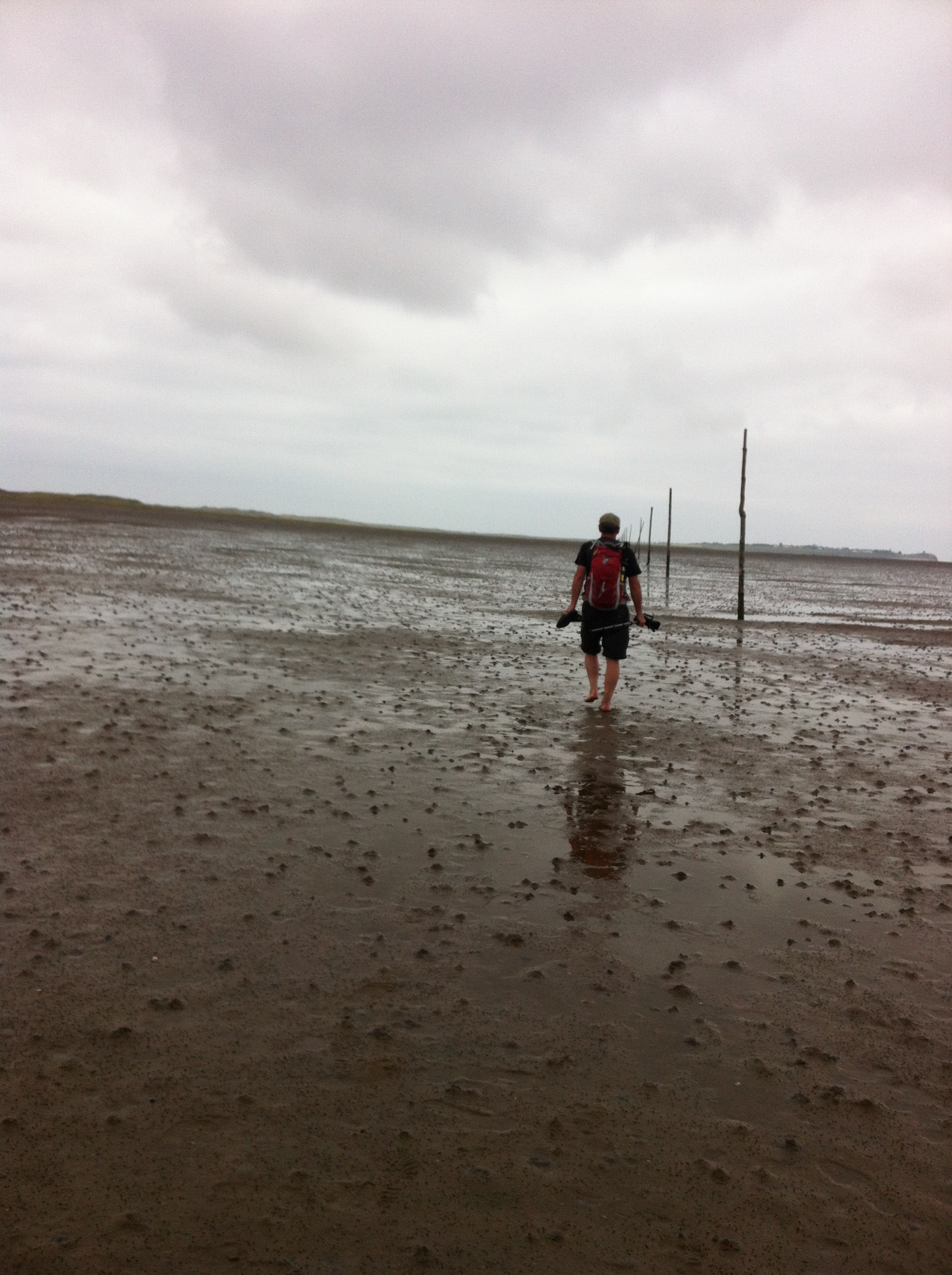
walking to Holy Island

Categories
Uncategorized

The Most Beautiful Thing

South SK River Nov 2012

This is a radio drama I wrote some years ago, that was produced and broadcast by CBC Radio One in the 1990s. It was one of the winners of a “radio drama” script competition….back in the days when there was much more radio drama! My thanks to the actors and the director who made the script come alive. I’m glad to find a home for this piece here on Something Grand. The radio play is 14 minutes long, and you listen by clicking on the title below. I hope you enjoy it!

The Most Beautiful Thing Radio Drama