Categories
Uncategorized

“Der Pilger (The Pilgrim)” reviews The Good Walk

Gotta love those Germans…
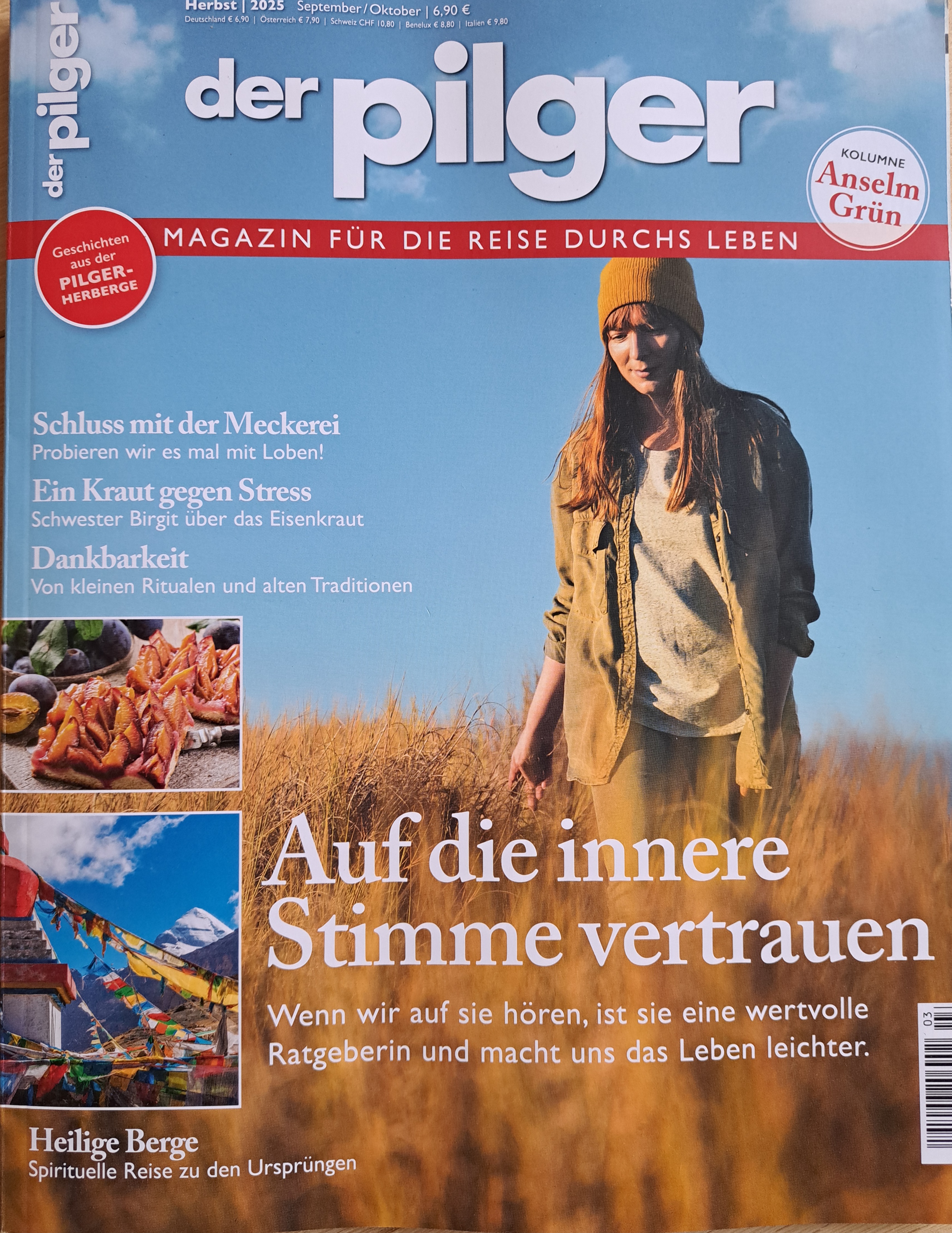
When my friend Traugott Roser contacted me to let me know he’d written a review of The Good Walk, for the magazine Der Pilger (The Pilgrim), I was overjoyed!

My hopelessly naive generalizations about Germans include that…

All Germans are fit and athletic and they LOVE walking and pilgrimages. So they’ll eat up The Good Walk. The book that really ignited the contemporary rise of the Camino was Hape Kerkeling’s fun and incredibly popular I’m Off Then: Losing and Finding Myself on the Camino de Santiago, first published in German and a sensation there.,

All Germans idealize the North American “West” and North American landscapes. Germany is a crowded country that has lost so much of its own “wildness” but still maintains a strong national mythology of origins around it. And yet …

All Germans are aware of and sensitive to Indigenous sovereignty and concerns, and …

All Germans love to read, and as a bonus, as truly civilized people are multilingual and can often read English books like mine, unlike most anglophones and folks like me, who struggle with anything more than simple tourist directions auf deutsch

SO. After all these expectations, how did the review turn out?

Thanks to Google translate, you can read on for yourself….

The Review

p. 43 New Pilgrim Perspectives:

A devout Muslim embarks on the Way of St. James, and a Canadian professor and long-time pilgrim follows the trail of spiritual wandering in the vastness of the Midwest. Two inspiring book recommendations from Protestant pastor and passionate pilgrim Traugott Roser.

The Search for a Lost Home (Die Suche nach einem verlorenen Zuhause)

“Matthew Anderson, Professor of New Testament at Concordia University in Montreal, is an experienced pilgrim who has also led his Canadian students through Spain, France, England, and Norway and has made a name for himself as a documentary filmmaker on pilgrimage. After many trips to Europe, he wonders whether pilgrimage is also possible in North America and what pilgrimage might mean there. In his new book, “The Good Walk – Creating New Paths on Traditional Prairie Trails,” he tells a compelling story of humanity’s age-old paths through the prairie of the Middle West. It is an account of a painful yet healing search for home: “Pilgrimage together with others—in the broadest sense understood as spiritually motivated hiking—is a way of searching for a lost home.” Anderson is a descendant of settlers who farmed…

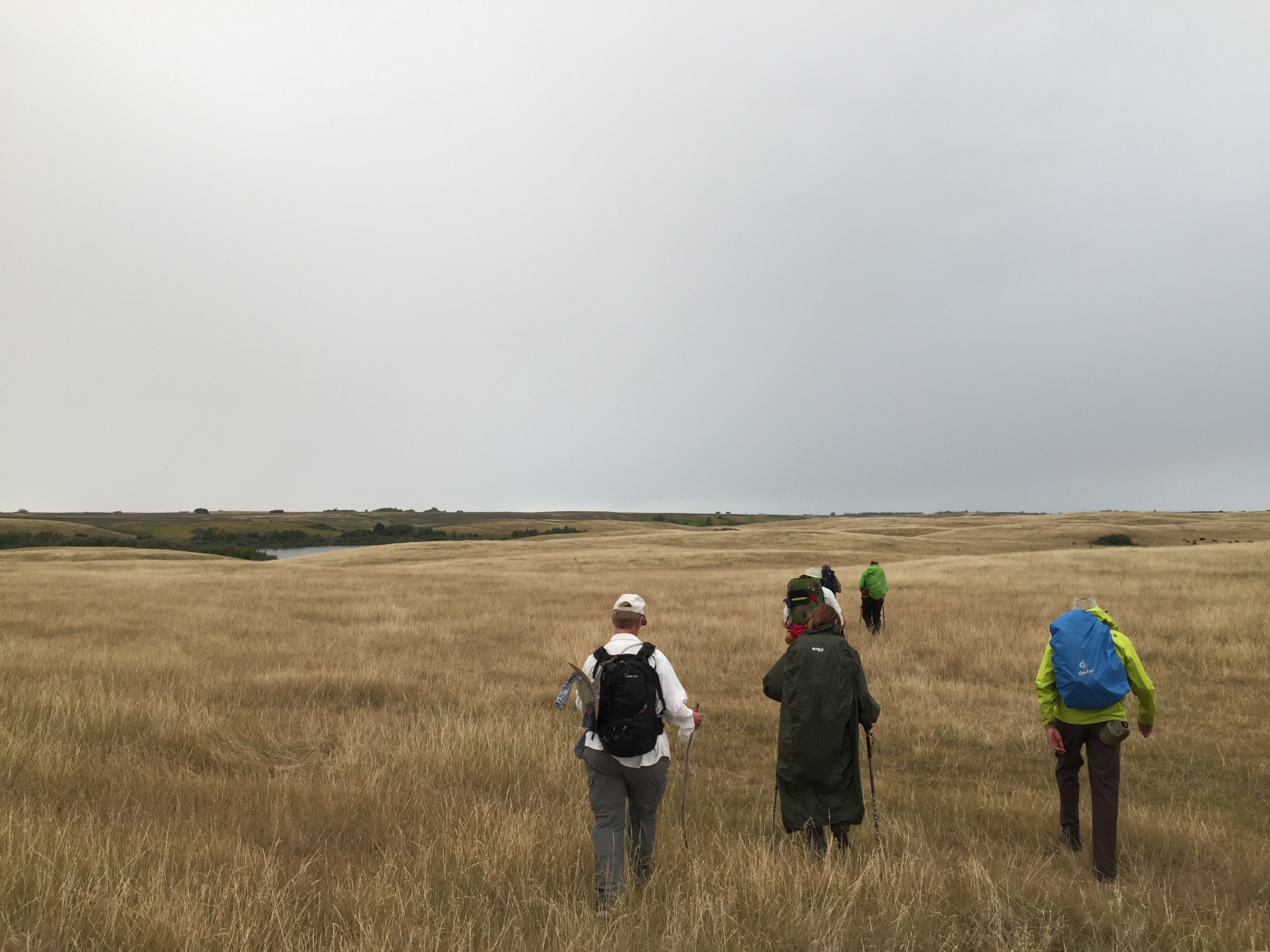
(P. 45) and built small towns on the supposedly deserted plains of Saskatchewan (see photo above), and [the region once called] the Northwest Territories. Since 2015, Anderson and his wife Sara have been traveling the trails once used by traders, settler treks, and the Northwest Mounted Police, a paramilitary force commissioned by the Canadian government. But Anderson not only gets close to the story of his own family, descendants of white European immigrants, but also of the people who lived there before and were deprived of their land through sham treaties, displacement, and targeted extermination.

Pilgrimage: intercultural and interfaith

Anderson is accompanied on his journey by various companions, including Don Bolen, the Catholic Archbishop of the Diocese of Regina. Descendants of the First Nations, the Lakota, the Nakota, and the Nehyawak (Cree) accompany them or host them, as do descendants of settlers and the Métis, descendants of European-Indigenous marriages, who historically mediated between cultures as fur traders and are now considered an independent nation.

Anderson sees his hikes through the vast landscapes as pilgrimages to places whose history has been partly forgotten, partly erased. This also changes the landscape and its perception itself: through narratives and archaeological evidence, places of living memory emerge.

The places create new relationships and deepen old ones. In this way, the pilgrims come into contact with the spiritual world, [sometimes] with the elders and wise men of the Indigenous peoples, [sometimes] with their own family history, and [always] with nature. Through Christian and Indigenous rituals, the pilgrimage becomes an intercultural and religiously unifying experience. At the same time, it is a painful journey that ties in with the tradition of penitential pilgrimage: The extermination of the North American bison took place in the vastness of the prairie. This deprived the Indigenous people of their livelihood, and thousands starved to death while faced with the government’s deliberate inaction. It is equally painful when the pilgrims encounter survivors from the church-run boarding schools (of both Catholics and Protestants):

On behalf of state authorities, children were taken from their families and  Nations and placed in Christian schools. Only in recent years did the public learn of the graves of thousands of nameless children who did not survive the ordeal.

Reward for Physical and Mental Effort

The paths across the prairie demand physical and mental effort from the pilgrims, but they also reward them: through community, forgiveness, and understanding. Matthew Anderson ultimately even succeeds in finding peace for his deceased parents and for his sister, who died very young. The pilgrim’s path is a good path, and with the project Anderson describes, a new, very unique pilgrimage tradition begins in Canada.

I couldn’t put either book down; it was precisely the different perspectives of both authors that inspired me to consider my own pilgrimage

I couldn’t put either book down; it was precisely the different perspectives of both authors that inspired me to consider my own pilgrimage on the Way of St. James in a new and more profound way: as a consciously religious experience, as a path to encounter God, and as a path to reconciliation.”

Dr. Roser’s Own Pilgrim Book

I wouldn’t be much of a friend, if at this point I didn’t mention that Traugott has published his own pilgrim book. It’s in German, titled Hola! bei Kilometer 410: Mit Allen Sinnen auf dem Jakobsweg (Hola! At kilometre 410 with all senses on the Camino de Santiago).

I wonder if a rather free, but still good, translation might be: “Hola! Fully aware and alive at kilometre 410 of the Camino de Santiago.” It’d be great to see this valuable book out for the English-language reader as well! (By the way, the other book he reviewed with mine in the above article sounds fascinating).

Traugott does all kinds of interesting teaching and research, including (like me) teaching Bible and Film classes. He is also an ethicist who teaches about ethics in healthcare and palliative care.

Thanks, Traugott, for the great review. Buen Camino! Looking forward to walking with you some day soon!

Categories
stroke-recovery

Six-Month Strokeaversary: Signs of Spring

Wow. Hard to believe it’s been six months since a shudder ran down my left arm and I found myself unable to speak for a couple seconds and Sara called an ambulance and ran for the aspirin.

And…the TIA and major stroke and everything that followed.

When I was wheeled into St Martha’s Regional hospital on a stretcher last September I had no idea it would be home for three months. Autumn was just beginning.

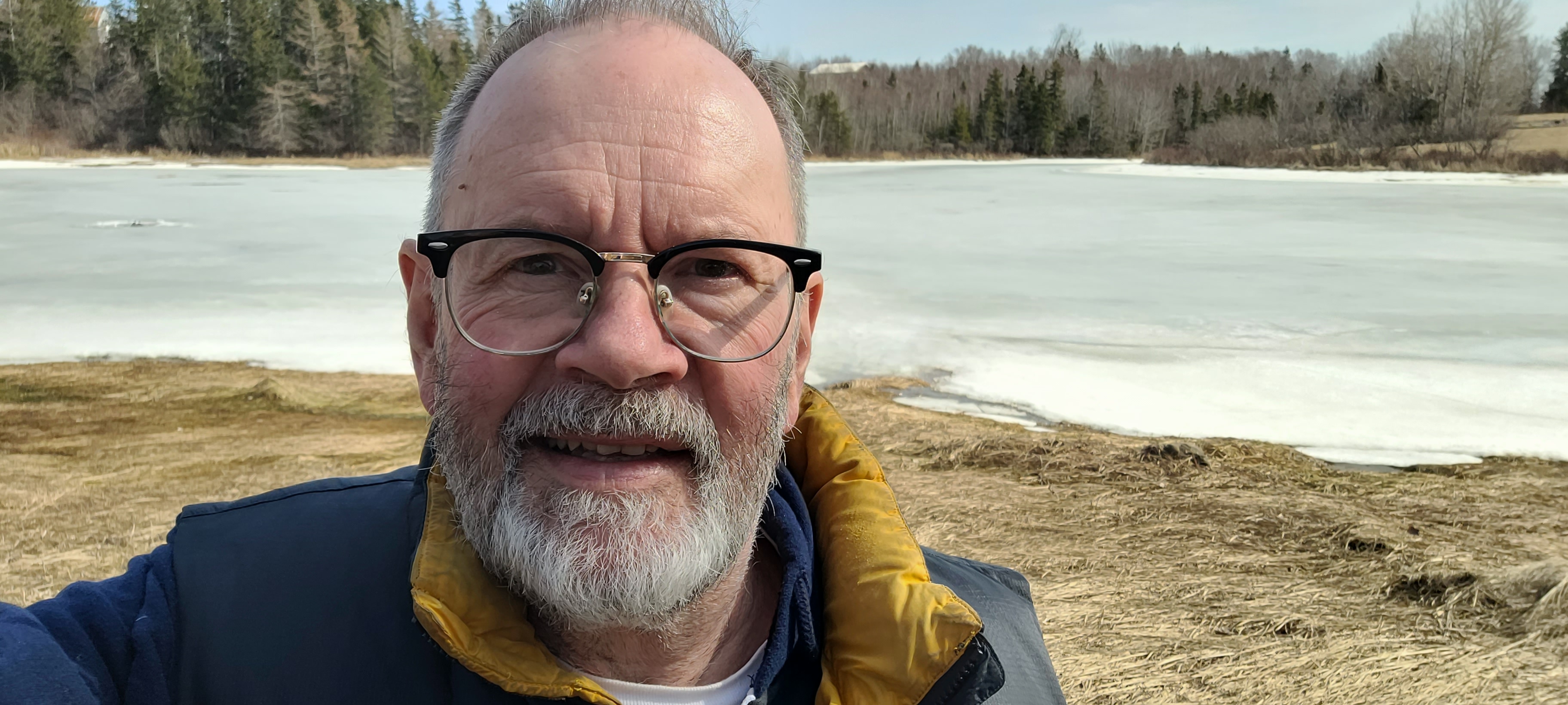
Now here we are at the spring equinox, six months later. The day before spring, the ice came off our little inlet, and those annoying fake ladybugs are waking up all around the house.

The solar panels we had installed last fall are finally free of snow and making power (I check them compulsively).

The seedlings we planted last year have survived.

All signs of spring. Another sign: I’ll have to learn how to tie my shoes again, since pull-on winter boot season is nearly over.

Here’s what else is happening…

My Heart Procedure

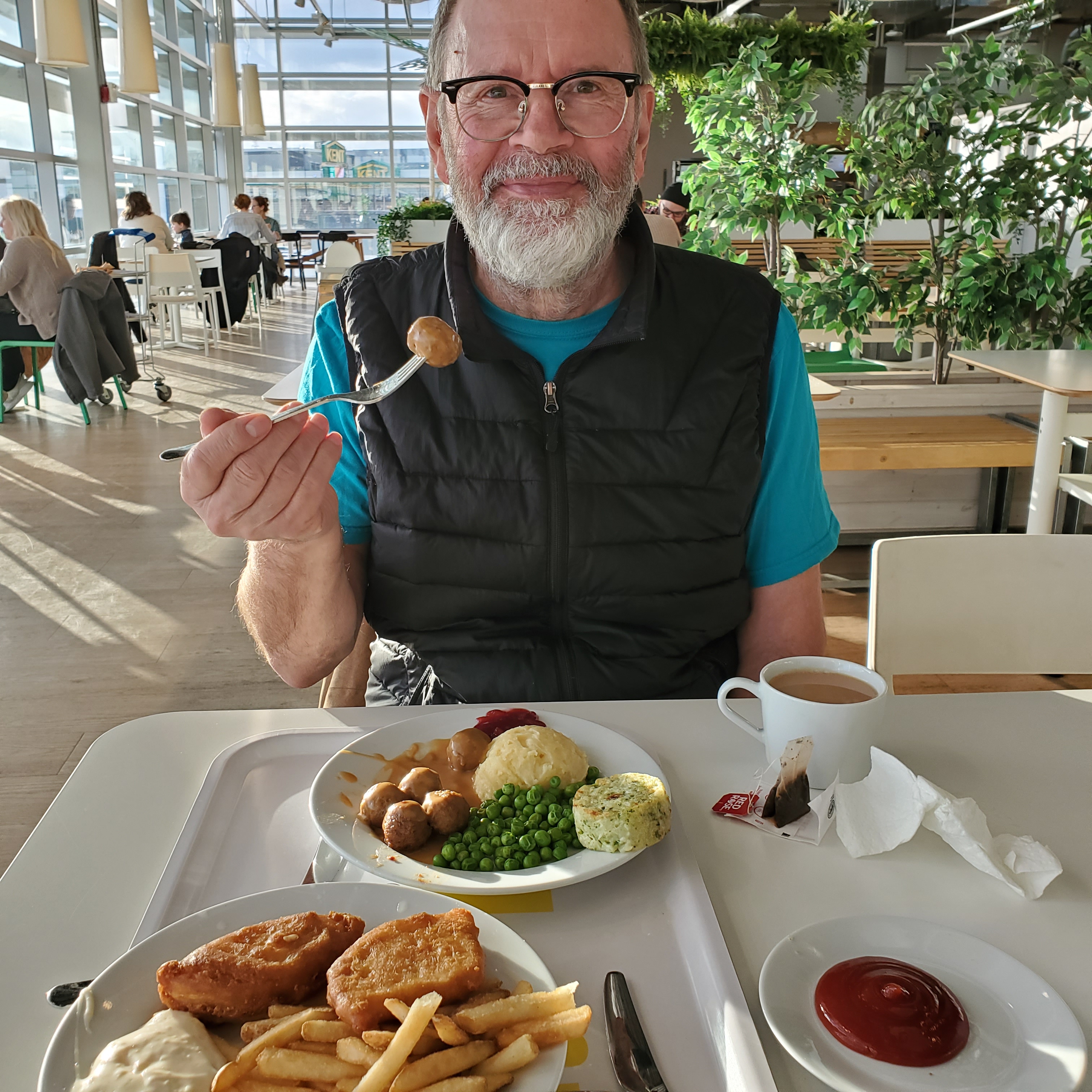
I had a pre-op appointment in Halifax last month, and Sara and I used our rare visit to the big city to have a date at IKEA (how romantic!). We then bought a car-load of groceries we can’t get in Antigonish at the surprisingly-well-stocked hole-in-the-wall that is Big Ray Convenience and Asian Store in Dartmouth.

During the appointment the surgeon teased us about being professors and grading him – but we said he already got an A+ just for taking me on. The procedure to close my PFO (Patent Foramen Ovale) will take place in a few weeks, in April. It involves inserting a soft metal “umbrella” into my heart through a tube inserted in my groin. (Really looking forward.) Once in place, it expands to close the hole in between the upper chambers of my heart (for explanation see here). Of course I’m nervous. But I’m thankful it’s considered a low-risk procedure, with recovery times of only a couple of days in most cases, and well worth it for the significant reduction in future stroke risk.

Bad Timing for the Someone Else’s Saint Party

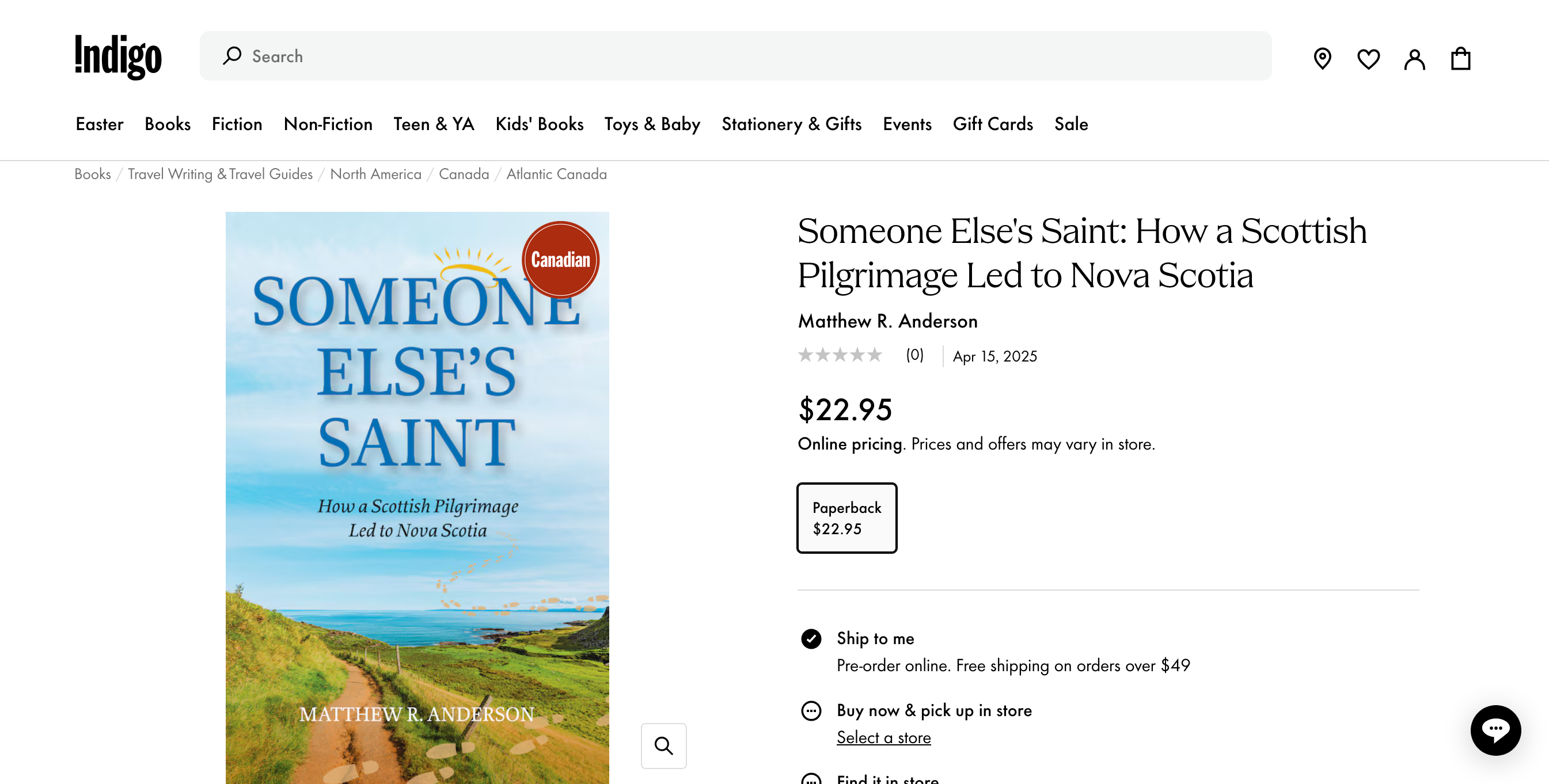
Someone Else’s Saint: How A Scottish Pilgrimage Led to Nova Scotia is coming out within the month (mid-April). It won the Pottersfield Prize for Non-Fiction last year before it was published, and the prize was publication! It’s about walking the Whithorn Way in Scotland only to find a strong connection to its saint (Ninian) right here in Antigonish, then inaugurating a new Ninian Way in Nova Scotia. I’d already arranged for a launch at the wonderful Antigonish Heritage Museum. To my delight, 2024 Canadian Traditional Musician of the Year Mary-Beth Carty had agreed to play a couple songs during the evening! But when I got the notice from the hospital about my procedure, of course it turned out to be the day before the launch. Drat. So keep your eyes peeled for an announcement once I find a rescheduled date! Fingers crossed it will still work for Mary-Beth Carty!

Flu and Field Trip

This last month I caught the flu. It really knocked back my energy … and my stroke progress. Fortunately, Sara quarantined in the other end of the house and sanitized like a surgeon and didn’t catch it, and nursed me back to health over the week or so when I was most affected. I recovered in time to lead our team-taught StFX Religious Studies class “Intro to World Religions” on a field trip to Saint Ninian Cathedral, where Father Danny MacLennan seemed delighted to welcome a gaggle of young people, and even took some brave souls down to the crypt “where the bishops are buried.”

Hearts in Motion

Twice a week I drive to town, park at a handicapped spot on campus, and spend an hour at the gym with about ten others, as part of a public health program called “Hearts in Motion.”. The others are there post heart attack or heart surgery, mostly: as far as I can tell, I’m the only stroke survivor (I’m the only participant with partial paralysis…trying to do the “windmill” warm ups with my left arm). I didn’t know what to expect starting out, but going to the gym has been great for me. The first weeks I couldn’t even get on the elliptical machine, much less use it. Now it’s my favourite. I can actually hold the moving hand grips, and release the left one and grasp it again mid-step (sometimes). The program’s physio suggested I try the rowing machine. I was doubtful – I’ve never liked that device. But he was right: the pairing of my left and right arms that’s necessary for “pulling back” the rope and handle seems to be very good for training my affected left arm to stretch and reach. There are only four more sessions, so I may have to get a membership for spring and summer just to keep up on the machines. I’m still incapable of running, even very slowly, on a treadmill. I’d trip and fall. But I’m more and more tempted to try, just briefly…

Left Leg and Foot

I’m fortunate that the Physio and Occupational Therapist outpatient departments at St Martha’s hospital are still keeping me on. They say they keep seeing progress, and tell me I’m unusual (I think in a good way?). At my most recent strength and flexibility test, the physio told me that I’ve recovered close to normal strength in my left leg. “But I still have quite a limp,” I told her. “You can see that.” “That’s your brain,” she replied. “At some point it may get back to automatically lifting your foot and adjusting your gait. But there’s no way of knowing when that might happen…” I’m hoping this is like a pilgrimage path in Scotland that I was on with Ken Wilson and Christine Ramsay. Our guide at the time told us: “Use is the cure.” The other evening some great music came on and Sara and I had a quick dance. At the end of it she was laughing: “that felt like before your stroke,” she said. “You were leading like the old Matthew!” Ahhh….that’s what I’m aiming at.

Left Arm and Hand

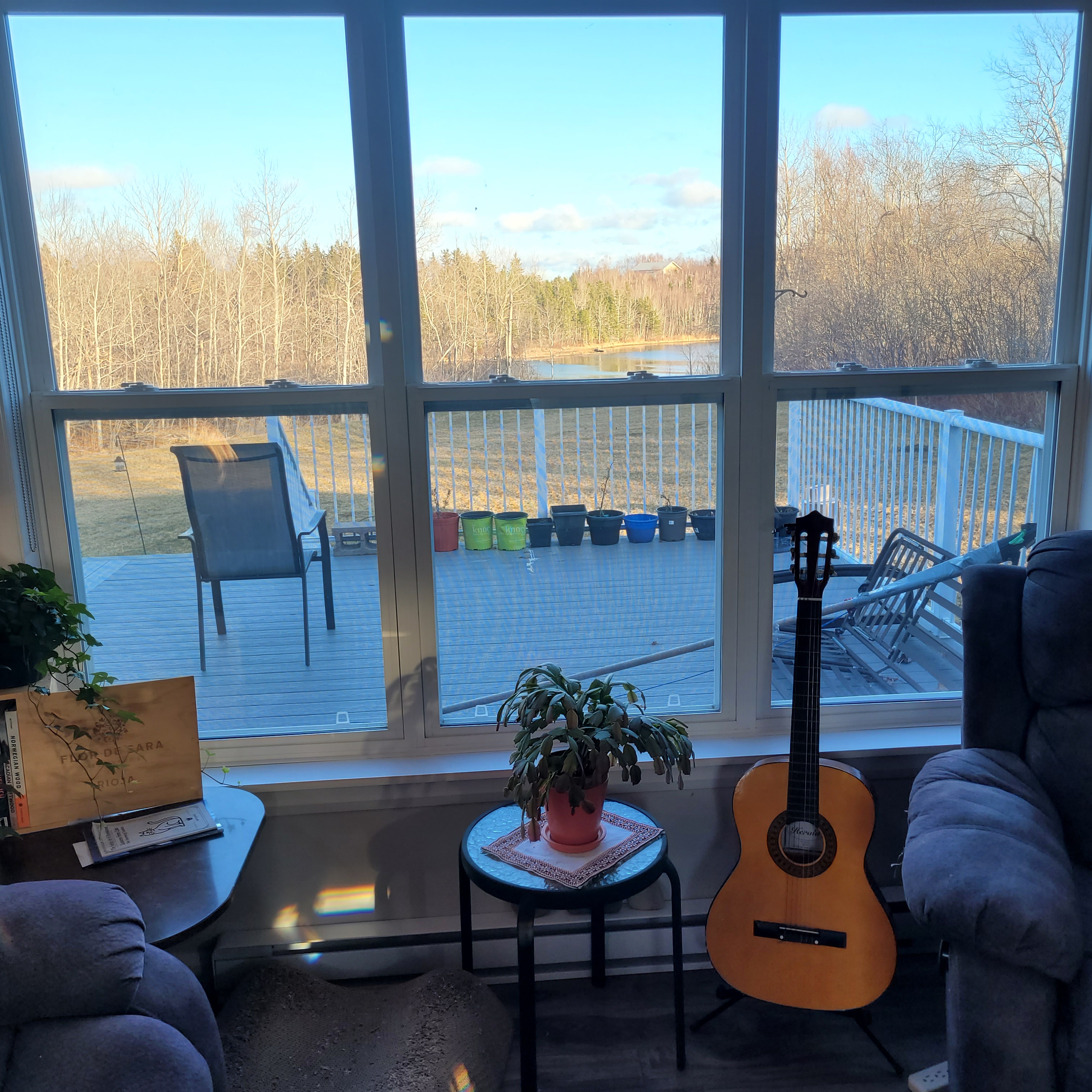
My use of my left hand continues to improve….but very, very slowly, from my perspective. My guitar chording continues to get better: now I can play E,D,A, and G with minimal help from my right hand. But it’s slow, and my strength in pressing down the strings sometimes lacks. I gave up entirely on trying to type with it. I’ll have to get back to that.

Janna, my wonderful therapy aid at St. Martha’s, makes me attempt to move clothespins from a steel wire as a strength exercise for my left hand. But what I enjoy most is playing catch with her! I’ve gotten to the point where on a good day I can catch a gently tossed tennis ball with my left hand, against my stomach, several times, and often succeed in tossing it back, although sometimes my hand won’t let the ball go.

The issue with my hand is what is called “tension” or “spasticity.” My fingers will be loose until I squeeze something (say, toothpaste). Then, instead of loosening again, my fingers stay curled – locked! Sometimes the best technique is to ignore the hand briefly, until the fingers relax again on their own. It’s a bit like trying to fool your own brain. The spasticity seems to be diminishing. But it’s a slow process.

Poetry and 2025 Saskatchewan Book Awards

My first submission of my “stroke poetry collection” went nowhere, so I’ll be editing the poetry and trying again. But yesterday I got great news that really lifted my spirits! My memoir The Good Walk: Creating New Paths on Traditional Prairie Trails is shortlisted in the “Publishing” category for the 2025 Saskatchewan Book Awards! On May 9 there will be a fancy awards ceremony in Regina, with the lieutenant governor in attendance. For now my cardiac doctor is telling me no travel. But I can’t wait for May! I’m trying to get my brother Mark, who lives there, to go in my place JUUUUUUUUUUUUUUST in case there is an award to accept.

The End of Term Approaches

All of the hospital staff seemed shocked that I planned to go back to work upon discharge. I don’t regret going back to teaching so soon. But now that the term is winding down I’m realising just how much energy it’s taking for me to go to town four days a week for teaching and physio (and, of course, I’ll stop by the grocery store or Canadian Tire often as well). The OT consultant from Halifax couldn’t believe my weekly schedule. “Of course you’re not getting through all your home exercises,” she said. “When would you do them?” Her main advice to me was to take it easier, especially after I developed frozen shoulder in my right arm last month. Sara declared the dishwasher (reaching down to load and reaching up to put dishes away) off limits and slapped a hefty 100-dollar fine on any disobedience!!! (I only made that mistake once.)

So taking it easy is part of my plan for spring. I’ll take inspiration from the Christmas cactus Sara bought me last fall for the hospital. It budded at Christmas. But in the end, no flowers materialised. Only now, after the equinox, at home, are the blooms coming.

I pray that in your life and mine, there will be delicate beauty developing in its own time this spring. In a world where small, powerful men seem so determined to distract us from their greed and incompetence by emphasizing division, brutality, and ugliness, may we be like this Christmas cactus: blooming boldly, especially where and when it is least expected, and most appreciated.

Categories
Uncategorized

Winnipeg Free Press Review of The Good Walk

What a wonderful surprise to have Paul Gehrs send me a short note to say: “I imagine you’ve already seen this, but excitement [for your book] is building here in Winnipeg.”

I hadn’t seen it. Thanks to Gail Perry of The Winnipeg Free Press for this gorgeous review!

Photo of the full-page book section spread below, or if you prefer, the link to the paper’s column here: https://www.winnipegfreepress.com/arts-and-life/entertainment/books/2024/05/04/the-trails-less-travelled

Categories
Uncategorized

Today’s the Day: The Good Walk Release!

So many years in the writing, and finally – here it is, world!

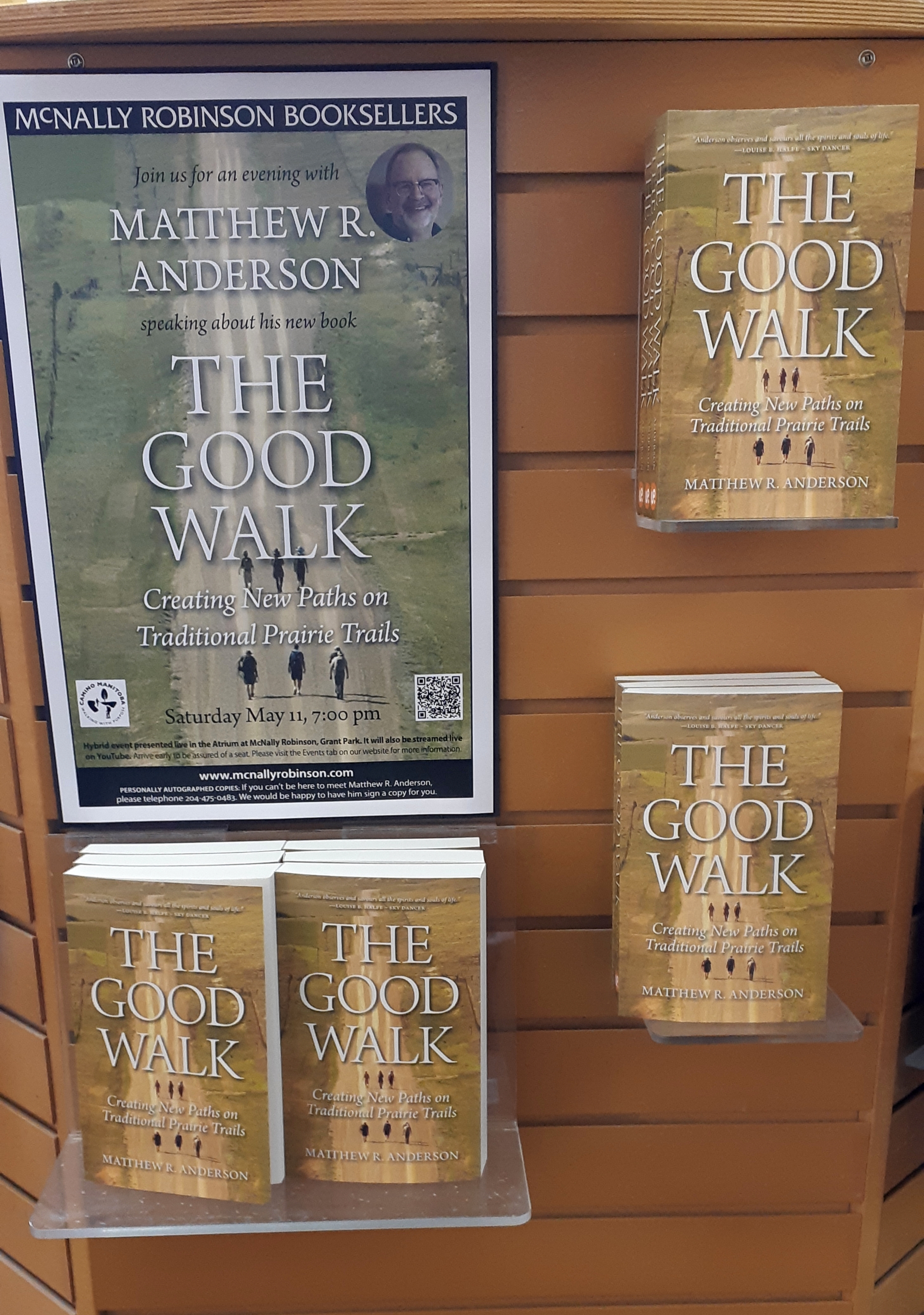
Today is the official launch of The Good Walk (University of Regina Press, 2024). It’s no longer listed on all the websites as “pre-order.” It’s out in the wild. And here’s a photo from McNally-Robinson Bookstore in Winnipeg to prove it!!

“Equal parts memoir, travelogue, and manifesto, The Good Walk recounts the adventures of settler and Indigenous ramblers who together retrace the earliest historical trails and pathways of the prairies” (from the back cover)

“Unsettles all our precious notions of a peaceable history with wisdom, erudition, and such good grace” (Trevor Herriot, author of The Economy of Sparrows and Towards a Prairie Atonement)

Review by Foreward Reviews here.

You can order the book here, or from any online bookseller!

Listen to a CBC interview about the book here.

“Anderson observes and savours all the spirits and souls of life…” Louise Halfe Skydancer

Categories
Uncategorized

Today’s Kinder Trespass

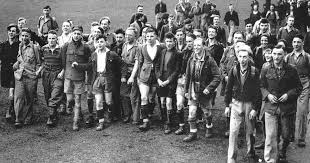
Kinder Trespass 1932

This morning I’m nursing an incision from my recent hernia surgery. But as I drink tea in Nottingham, walkers in England’s Peaks District, just a short distance away – including our friend Meredith Warren – are right now adjusting backpacks, filling water bottles, and scanning the Kinder Scout headlands. They’ll stop at the quarry where, on Sunday April 24, 1932, Benny Rothman (who arrived by bicycle to avoid police at the train) gave a rousing speech and led about 500 young people in the “Kinder Scout Mass Trespass.” That original protest might have been forgotten, except for the arrest of five of the Ramblers; Rothman got four months in prison just for his speech. The resulting public outcry led, eventually, and after much more protest, to the beautiful, wide-open British Parks that so many now enjoy, and the “Right to Roam” allowing limited public access to private land.

I climbed the 2000-foot Kinder Scout rise on a hot day last year. Oddly, the two people with me were both Canadians I had just met (we had that awkward moment in the bakery when we just had to ask, since our accents sounded so much “like home”). Between breaths we talked about whether a “Right of Responsible Access” would work in Canada. I’m convinced it would, and should: not only was much of North America an Indigenous “commons” before European contact, Settlement, and expulsion of First Nations, but for those of us who are European-background, our own histories and cultures often have clear antecedents for “everyperson’s right”. It’s ironic that the very descendants of the Irish, Scots and English who had been violently “cleared” from their commons lands by landowners so often went on to do exactly the same thing to Indigenous peoples.

We Canadians can do better. The examples are before us. National Trust’s website for Kinder Scout states “walk in the steps of the trespassers and enjoy what others fought so hard for.” We have important, historic trails on private lands on Turtle Island, too. They need limited, responsible, public access –  in my upcoming book with University of Regina Press I describe our experiences walking some of these incredibly important paths. Teaching ourselves and our children that land is a common good, requiring care, will make us all healthier and happier. Reconnecting with land – our own form of Kinder Trespass – helps those of us who are Settler be better prepared as Treaty partners with those whom our ancestors also “cleared” from the lands we call home.

See my article on “Why Canadians Need the Right to Roam” at: https://theconversation.com/why-canadians-need-the-right-to-roam-100497

IMG_2541