
Back to Work
As I got out of the passenger seat with my backpack, and teetered through the snowstorm, slightly off balance, to teach my first class in over four months at Saint Francis Xavier University, Sara rolled down the window and looked proudly yet worriedly on. I went a few steps, then stopped and glanced back. “It’s like being in grade one!” I shouted. She laughed. “That’s what I was thinking!”
That first class, and those in weeks since, have gone well, all things considered, four months after a major stroke. I have over 50 lovely students for RELS 210 Bible and Film. I do find I have to stop speaking sometimes to swallow and to catch my breath, problems I never had before. And I’m exhausted at the end of the 75 minutes. When I go to leave the amphitheatre through the doors located at the top/back, I need to look for which side has a handrail to the right. But I find I can stand for almost the whole lecture. Kudos to the current chair of our department, Dr. Robert Kennedy, for suggesting that for the first part of term at least, I do half of my teaching online to save energy.
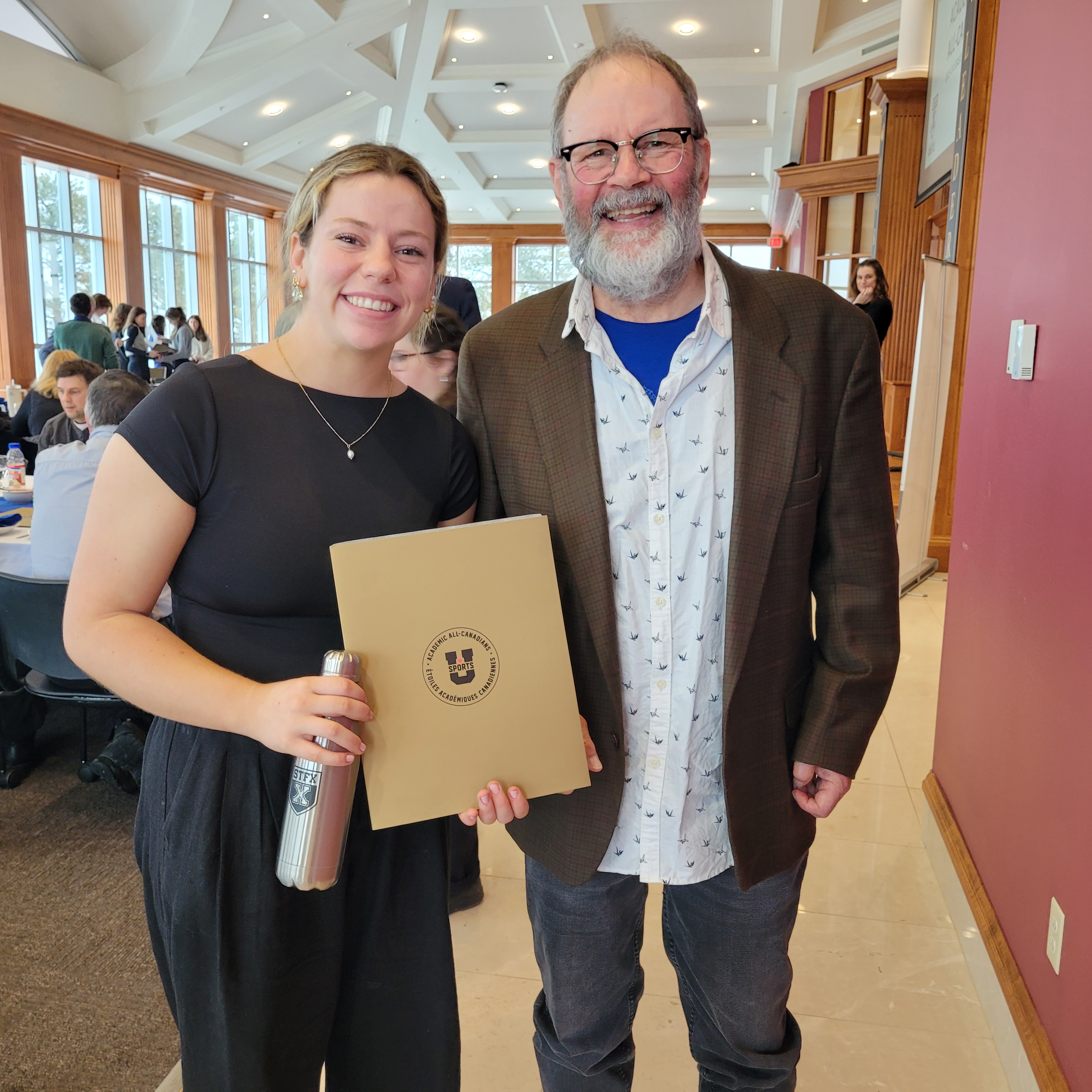
I was privileged last week to be invited by Katie Murphy, a member of StFX’s rugby team who’s been in several of my classes, to attend the Academic All-Canadian Awards breakfast as her one guest. Each Academic All-Canadian is a student athlete who maintains an average over 80% while excelling at their sport. They get to invite one favourite prof to the breakfast. Sara had the honour of being invited too, by another scholar-athlete, Myro Zastavnyy, who plays soccer. He got the highest mark in her New Testament class last term. All went fine, but a trip back and forth to a buffet table with breakfast in hand presents challenges I’ve never had to deal with before. Katie was a great help. She quipped, “once a server, always a server,” as she carried her own breakfast and some of mine back to our table.
Back to Mobility
Recently, I took my first solo drive in four months. As the kind clerk from the Nova Scotia Motor Vehicle Division assured me: “since your medical has come in all clear, there’s no reason you can’t drive right now. Just be sure to take the test again.” I have to retake both my written and road tests before the end of February, or my license will be suspended.
Off I went. It felt great – and a little scary – to be back motoring out in the big wild world all on my own like that. My first independent excursion since September. I took advantage of my first solo trip to head all the way to town to buy a pair of pull-on winter boots. I can now do up zippers fairly consistently (thanks to my friend Ken Wilson‘s gift of zipper pulls). But tying shoes? I managed to do one lace for Sara’s father’s 90th in Moncton. But it took me over five minutes, tired me right out, and even then it was loose. Pull-on boots for now.
I love two things about the photo of my prayer below from Winston Parks’s big birthday. One is that the Mayor of Moncton, Dawn Arnold, is behind me. Sara has admired her for decades, and tagged her in the facebook invitation. It was a privilege to have her there. The other is that two different members of my family, my son Daniel and my sister-in-law Barbara, when they saw the photo on the right, instantly celebrated the fact that I was holding my remarks in my left hand.


Back to the Hospital (as an outpatient)
Twice a week I drive myself to St. Martha’s Hospital. There I spend a half-hour under Jay’s watchful eye: walking on my heels, walking backwards, side-stepping, and doing high leg-lift marching that reminds me of what we used to do in high-school sports practise.
I still don’t have the left-foot strength to walk consistently on my toes, nor is my “normal” gait that smooth. But I’m getting better every week. After physio, my new Rehabilitation Assistant, Janna, takes over and guides me through 45 minutes of hand and finger exercises. I’m VERY fortunate to still be receiving this level of care! (Please, for my sake and yours, never vote for a party that has designs to privatise healthcare any more than some provinces already are!)
Back Home
This weekend, for the first time, I ventured across our driveway to spent an hour “working out” (I use that term gently) in our crowded insulated shed. Before Christmas, my brother and sister-in-law cleared space and set up the recumbent bicycle and the treadmill (from Sara’s parents’ recent move to an apartment) for me. It was great to listen to a podcast and just get my legs going. There have been both mice and a resident squirrel inside that space in the last year. We cleaned it thoroughly last summer and employed many mouse-proofing tactics, but while I pedalled I kept my eye out just in case.
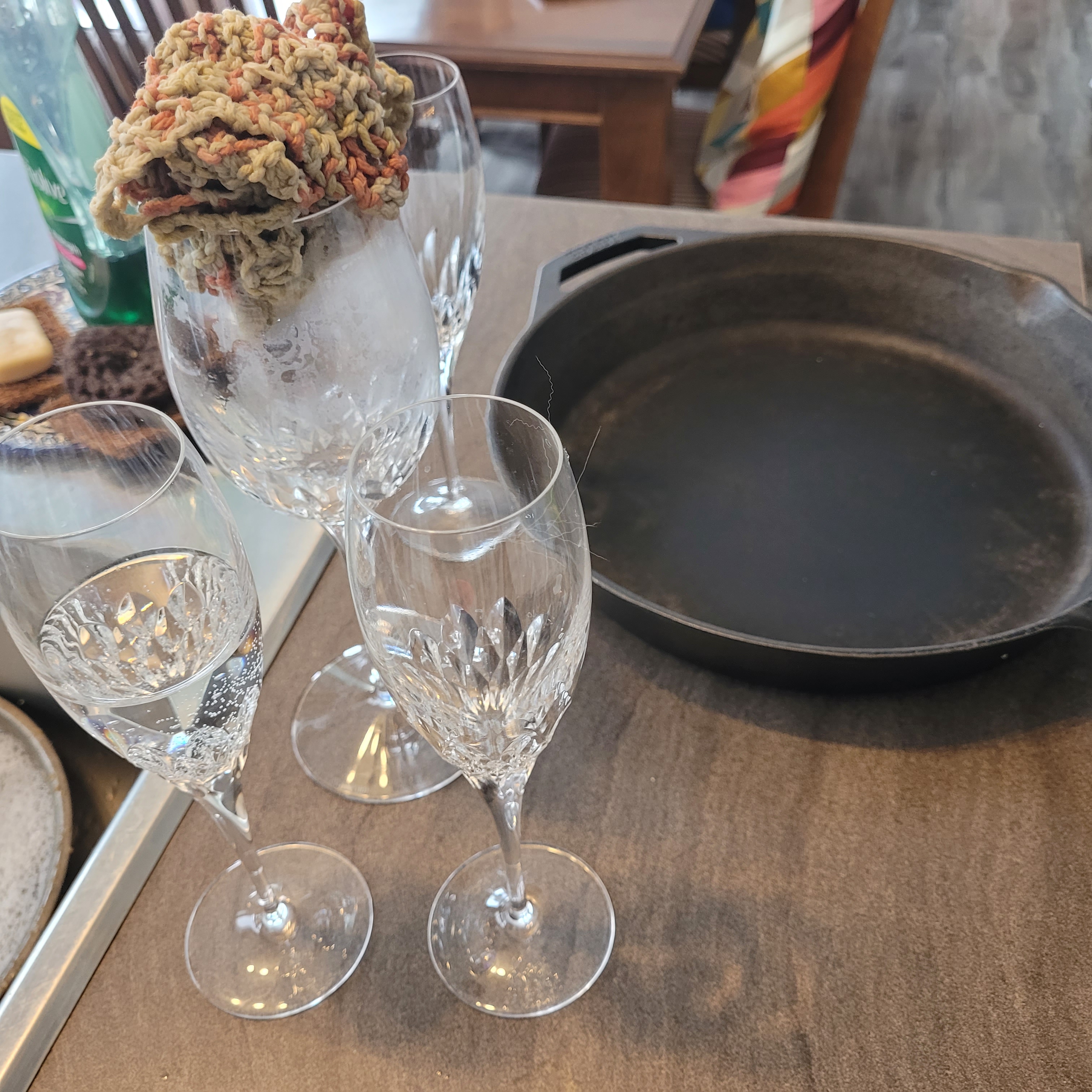
I have a full home physio routine which includes wrist exercises, doing leg lifts and arm raises, and giving my left hand the “TENS” treatment of low-level electrical current at least 30 minutes a day. I can now sometimes pick up pennies off a table with my left hand and drop them into a pill bottle, arm extended. Although I still have to use my right hand to guide my left, I can now make clearer chords on my guitar. You should see me wipe a counter! It’s a messy business. A big part of my home-work is using my left hand as much as possible to do daily tasks. I think it’s funny that as spastic as I am, Sara still trusts me to wash the crystal (and so close to the cast iron).
In some ways, it’s my expectations that are now changing. Rather than being surprised (and overjoyed) simply to be able to move my arm and hand again at all, these days more and more I find myself reaching for something, say a bar of soap, with my left hand without thinking. Then I’m surprised (and slightly disappointed) when my arm won’t extend that far, or my arm won’t straighten or fingers won’t open enough to grab it. My left hand looks and acts rather like one of those arcade claw machines, like in the movie Toy Story.

On my new low-sodium regime, I allow myself to buy these salted veggie-stix on one condition: I’m only allowed to eat them with my left hand!

I can finally, sometimes, extend my arm straight forward in a “cheers” motion. But I would never be able to hold a heavy pint of German beer in that position! I’m lifting a three pound weight for bicep curls and doing tricep work with a stretch band. Laughably light loads, but a start!
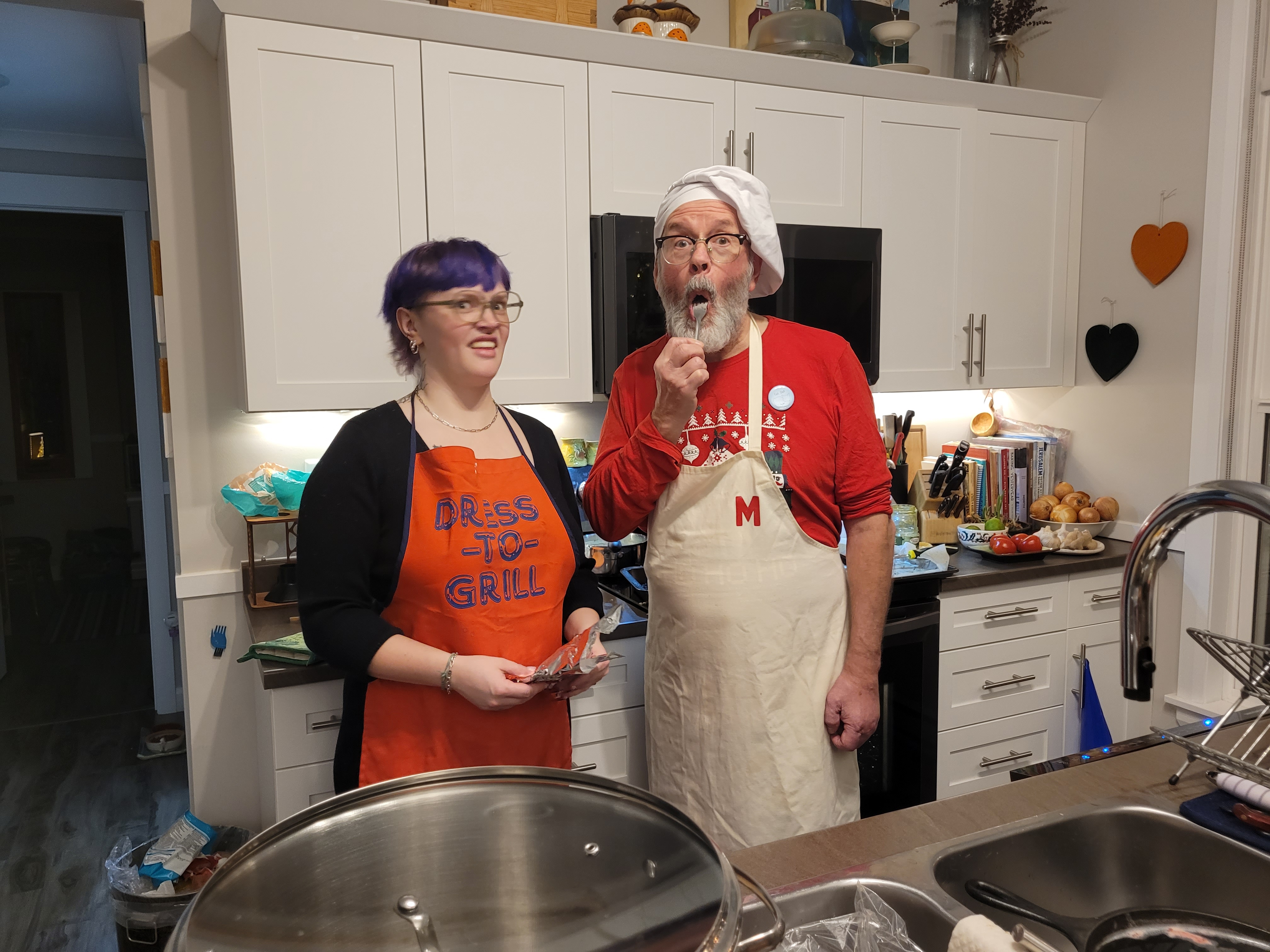
And now that I’m home, I’m noticing some more subtle stroke effects. My eyesight isn’t quite as good as before the stroke. My taste buds continue to be “off” especially around sugars and bread products (that might be the COVID I caught in hospital). And my hearing is slightly, but noticeably, worse…not so much in terms of volume, but when trying to distinguish “t”s, “d”s and the like. I keep reminding myself of how fortunate I am, and how much more damage the stroke might have done. I can use both arms for a hug. That’s worth a lot! And cooking can be the most fun home therapy of all (photo below from my youngest – Gabe’s – visit with us over Christmas, which was a joy). I’m glad that Sara didn’t mind that all my (few) presents for her were from the hospital gift shop!
Back to Writing
All fall in the hospital, it was hard to concentrate on my research project on Jerome with my fatigue, frequent interruptions, and (most welcome!) intensive rehab regime. It was Sara’s suggestion that I use some of my isolation time to get back into writing smaller things, like poetry. I came up with a small collection, which I’m submitting to a provincial competition this week. I can’t share it here (since it must be “unpublished work”), but please keep your fingers crossed for me.
I also turned around the copy-edited proofs for Someone Elses’ Saint: How a Scottish Pilgrimage Led to Nova Scotia, due out in Spring 2025.

My big question mark is typing. If I can figure out a less sensitive keyboard for practise, I’d like to try typing while including my curly-fingered left hand, just to keep those left muscle memories alive. That’s on the to-do list. I sometimes use dictation, but that isn’t the way I am most comfortable composing and the results end up different!
Back to Gratitude
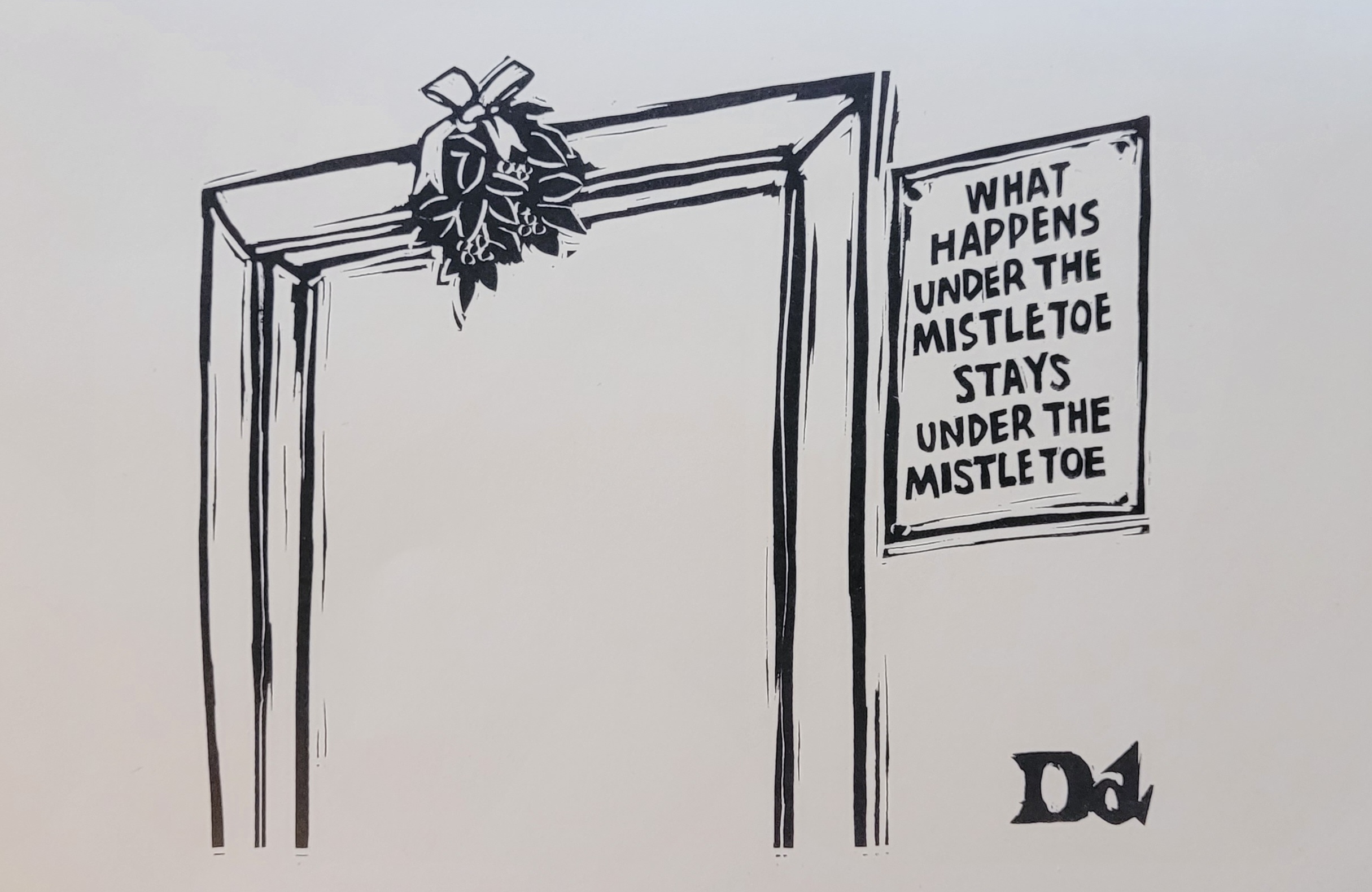
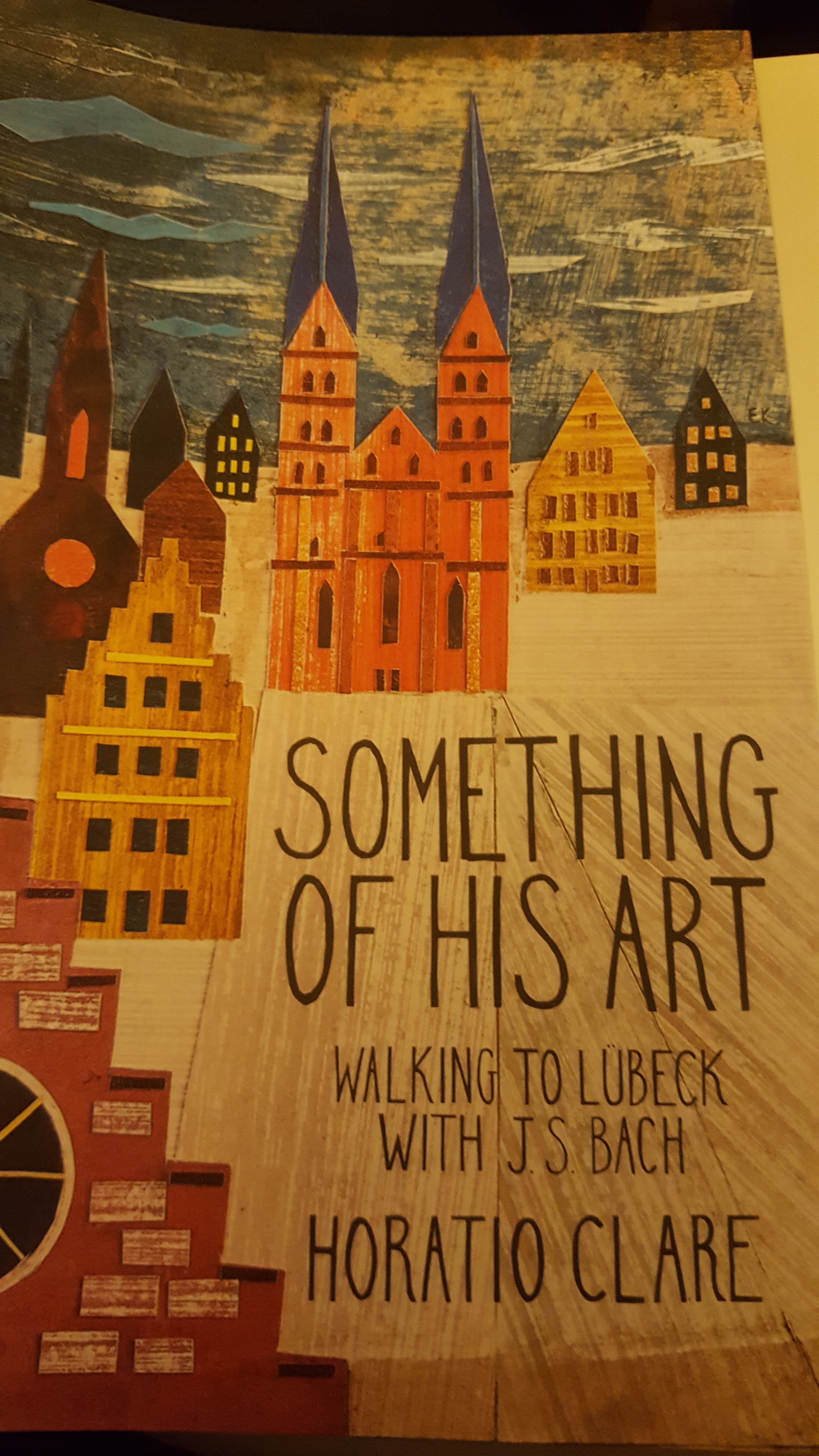
I’m still SO humbled for the ways I was supported all through my time in hospital by so many of you. Thank you! I get rushes of gratitude when I see the cards or when someone contacts me to check on how I’m doing. The postal strike gave us a kind of unexpected blessing, in that here we are in January and I’m still getting cards that were hibernating during the strike. Special recent thanks to Nadine and Phil for the so-very thoughtful box of individually wrapped and labelled goodies, and to George Greenia, who made it an Advent discipline last fall to mail us a steady stream of fun little cards of support, only to have them stack up with Canada Post and arrive all at once this week! Those of you who know George know that in addition to his kind heart he has a cheeky sense of humour. I’ll leave you with one of his mailings as an example!

I was also touched when our friend Amanda texted Sara the week after I got home, to ask, “When is Matthew’s weekly stroke report coming out? Mom and I look forward to it every Sunday.” What a miracle, to write one’s experiences and hopes into the ether, and have them land in the hearts of others.





 somethinggrand