Gotta love those Germans…
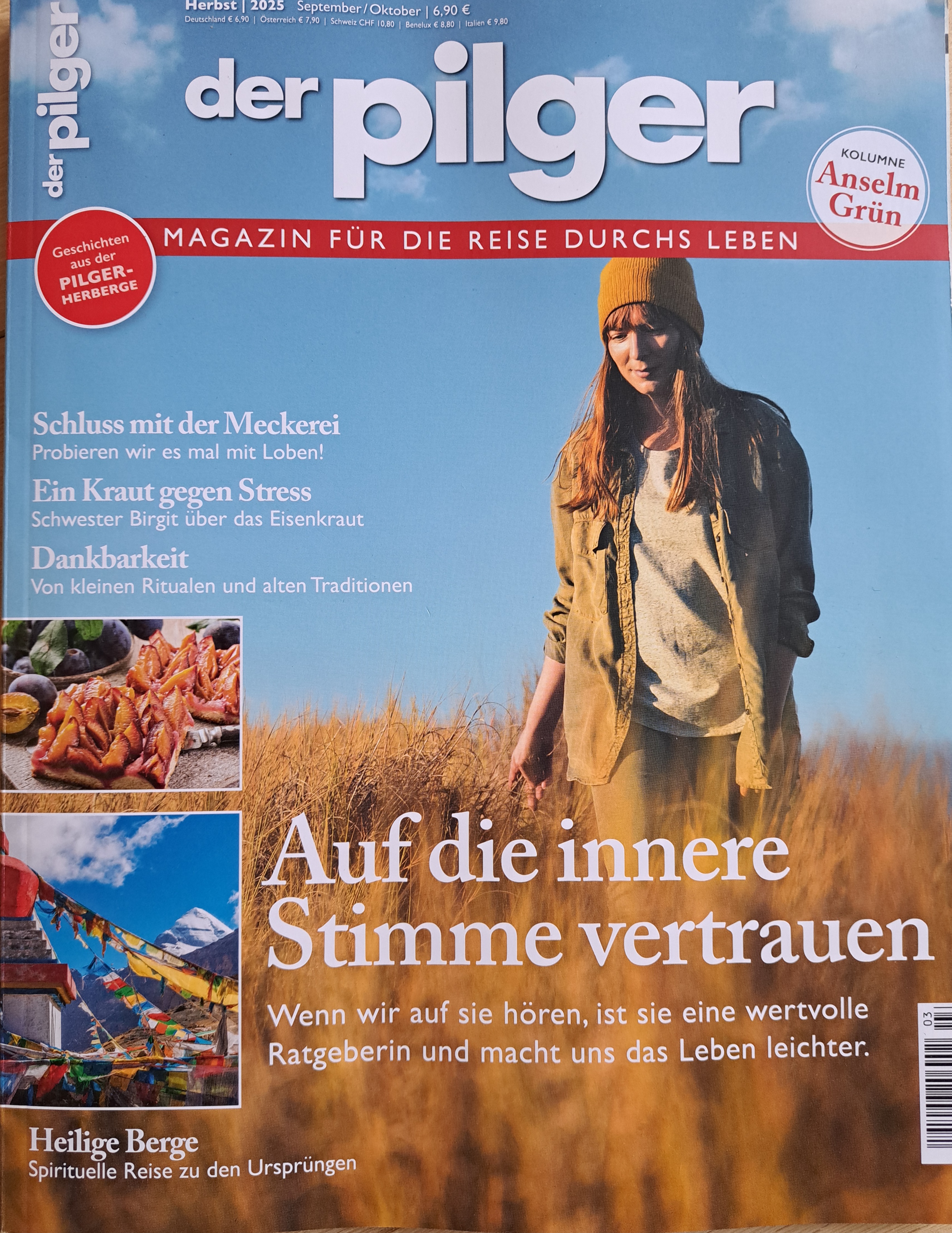
When my friend Traugott Roser contacted me to let me know he’d written a review of The Good Walk, for the magazine Der Pilger (The Pilgrim), I was overjoyed!
My hopelessly naive generalizations about Germans include that…
All Germans are fit and athletic and they LOVE walking and pilgrimages. So they’ll eat up The Good Walk. The book that really ignited the contemporary rise of the Camino was Hape Kerkeling’s fun and incredibly popular I’m Off Then: Losing and Finding Myself on the Camino de Santiago, first published in German and a sensation there.,

All Germans idealize the North American “West” and North American landscapes. Germany is a crowded country that has lost so much of its own “wildness” but still maintains a strong national mythology of origins around it. And yet …
All Germans are aware of and sensitive to Indigenous sovereignty and concerns, and …
All Germans love to read, and as a bonus, as truly civilized people are multilingual and can often read English books like mine, unlike most anglophones and folks like me, who struggle with anything more than simple tourist directions auf deutsch…
SO. After all these expectations, how did the review turn out?
Thanks to Google translate, you can read on for yourself….
The Review

p. 43 New Pilgrim Perspectives:
“A devout Muslim embarks on the Way of St. James, and a Canadian professor and long-time pilgrim follows the trail of spiritual wandering in the vastness of the Midwest. Two inspiring book recommendations from Protestant pastor and passionate pilgrim Traugott Roser.“


“The Search for a Lost Home (Die Suche nach einem verlorenen Zuhause)“
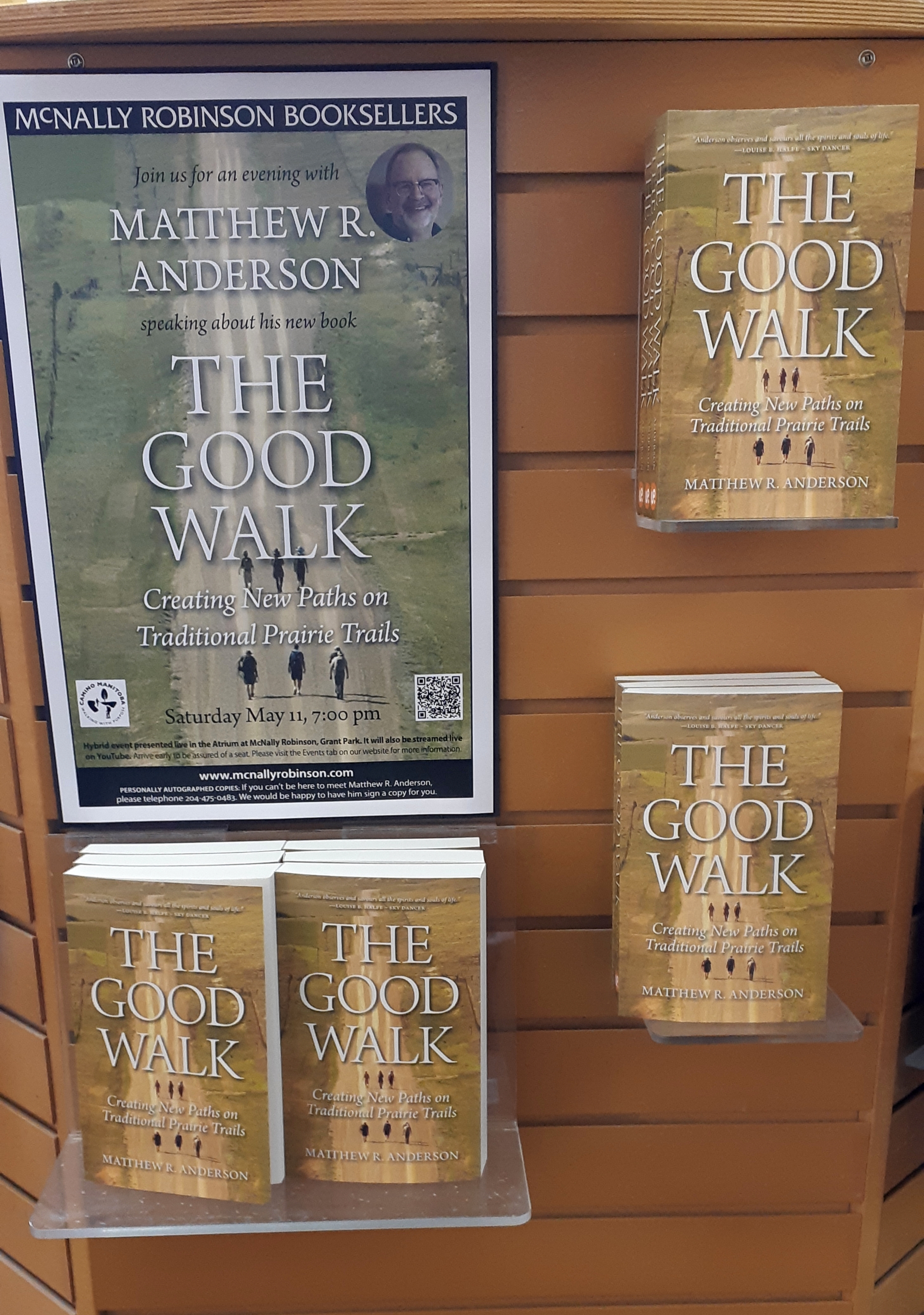
“Matthew Anderson, Professor of New Testament at Concordia University in Montreal, is an experienced pilgrim who has also led his Canadian students through Spain, France, England, and Norway and has made a name for himself as a documentary filmmaker on pilgrimage. After many trips to Europe, he wonders whether pilgrimage is also possible in North America and what pilgrimage might mean there. In his new book, “The Good Walk – Creating New Paths on Traditional Prairie Trails,” he tells a compelling story of humanity’s age-old paths through the prairie of the Middle West. It is an account of a painful yet healing search for home: “Pilgrimage together with others—in the broadest sense understood as spiritually motivated hiking—is a way of searching for a lost home.” Anderson is a descendant of settlers who farmed…
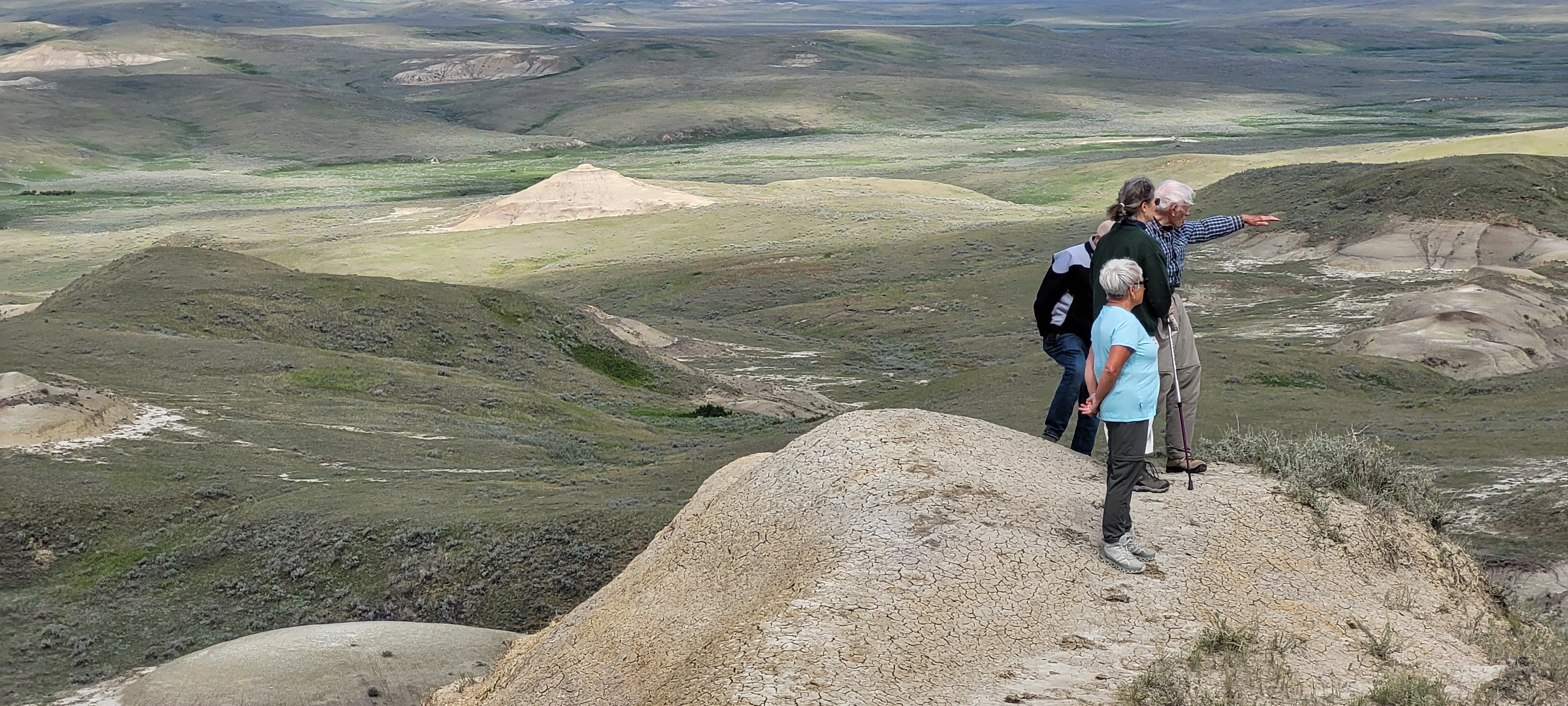
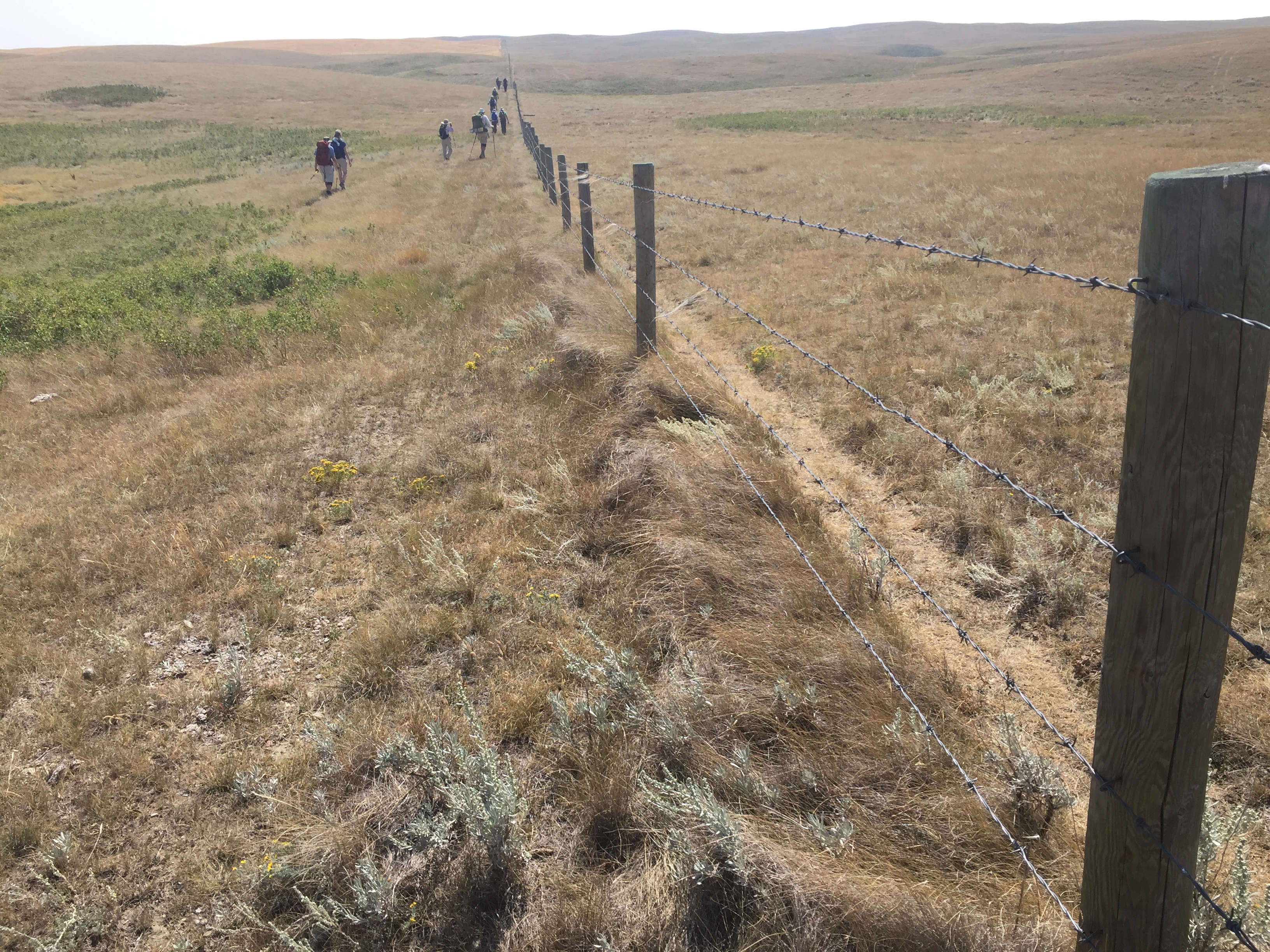
(P. 45) and built small towns on the supposedly deserted plains of Saskatchewan (see photo above), and [the region once called] the Northwest Territories. Since 2015, Anderson and his wife Sara have been traveling the trails once used by traders, settler treks, and the Northwest Mounted Police, a paramilitary force commissioned by the Canadian government. But Anderson not only gets close to the story of his own family, descendants of white European immigrants, but also of the people who lived there before and were deprived of their land through sham treaties, displacement, and targeted extermination.
Pilgrimage: intercultural and interfaith
Anderson is accompanied on his journey by various companions, including Don Bolen, the Catholic Archbishop of the Diocese of Regina. Descendants of the First Nations, the Lakota, the Nakota, and the Nehyawak (Cree) accompany them or host them, as do descendants of settlers and the Métis, descendants of European-Indigenous marriages, who historically mediated between cultures as fur traders and are now considered an independent nation.
Anderson sees his hikes through the vast landscapes as pilgrimages to places whose history has been partly forgotten, partly erased. This also changes the landscape and its perception itself: through narratives and archaeological evidence, places of living memory emerge.
The places create new relationships and deepen old ones. In this way, the pilgrims come into contact with the spiritual world, [sometimes] with the elders and wise men of the Indigenous peoples, [sometimes] with their own family history, and [always] with nature. Through Christian and Indigenous rituals, the pilgrimage becomes an intercultural and religiously unifying experience. At the same time, it is a painful journey that ties in with the tradition of penitential pilgrimage: The extermination of the North American bison took place in the vastness of the prairie. This deprived the Indigenous people of their livelihood, and thousands starved to death while faced with the government’s deliberate inaction. It is equally painful when the pilgrims encounter survivors from the church-run boarding schools (of both Catholics and Protestants):
On behalf of state authorities, children were taken from their families and Nations and placed in Christian schools. Only in recent years did the public learn of the graves of thousands of nameless children who did not survive the ordeal.
Reward for Physical and Mental Effort
The paths across the prairie demand physical and mental effort from the pilgrims, but they also reward them: through community, forgiveness, and understanding. Matthew Anderson ultimately even succeeds in finding peace for his deceased parents and for his sister, who died very young. The pilgrim’s path is a good path, and with the project Anderson describes, a new, very unique pilgrimage tradition begins in Canada.
I couldn’t put either book down; it was precisely the different perspectives of both authors that inspired me to consider my own pilgrimage
I couldn’t put either book down; it was precisely the different perspectives of both authors that inspired me to consider my own pilgrimage on the Way of St. James in a new and more profound way: as a consciously religious experience, as a path to encounter God, and as a path to reconciliation.”
Dr. Roser’s Own Pilgrim Book

I wouldn’t be much of a friend, if at this point I didn’t mention that Traugott has published his own pilgrim book. It’s in German, titled Hola! bei Kilometer 410: Mit Allen Sinnen auf dem Jakobsweg (Hola! At kilometre 410 with all senses on the Camino de Santiago).
I wonder if a rather free, but still good, translation might be: “Hola! Fully aware and alive at kilometre 410 of the Camino de Santiago.” It’d be great to see this valuable book out for the English-language reader as well! (By the way, the other book he reviewed with mine in the above article sounds fascinating).
Traugott does all kinds of interesting teaching and research, including (like me) teaching Bible and Film classes. He is also an ethicist who teaches about ethics in healthcare and palliative care.
Thanks, Traugott, for the great review. Buen Camino! Looking forward to walking with you some day soon!















 somethinggrand