Categories
stroke-recovery Uncategorized

My “Year + Two Month” Strokeaversary

Somehow my one-year strokeaversary slipped by without a blog post, even though Sara and I marked it privately. Now here we are: way past twelve months. Already to 14 and counting.

I’m not sure why I didn’t push myself to post a one-year column on the actual day.

It could have been that I wasn’t emotionally ready. I was – and I still am – processing the fact that as far as I’ve come, I haven’t yet mended as I’d wished. Paralysed and stuck in my wheelchair a year ago at St. Martha’s Regional Hospital, Antigonish, I told my youngest, Gabe, that by September 2025 we’d be going for another 100 km walk to celebrate my recovery, like we did on the Celtic Shores Trail along the Cape Breton coast in the month before the stroke.

Well….that won’t be happening anytime soon, although I still hold out hope. While I can walk farther and faster than at any point since my brain damage, my best distance is a couple of kilometres with a limp. It’s hardly 100 km in a week like we did in 2024, striding into a new coastal village every afternoon in the late-afternoon sunshine.

I also dreamt that at one year post-stroke the part of my body the slowest to recover, my left hand, would be fully back in use. I imagined somehow I’d be chording smoothly on guitar, holding my mug of tea, and most importantly, typing. The truth is that yes, I can actually DO all those things, sort of! It’s a miracle. And I recognize that miracle when I’m properly “glass-half-full” thinking. For instance, I’ve typed this blog-post using both hands.

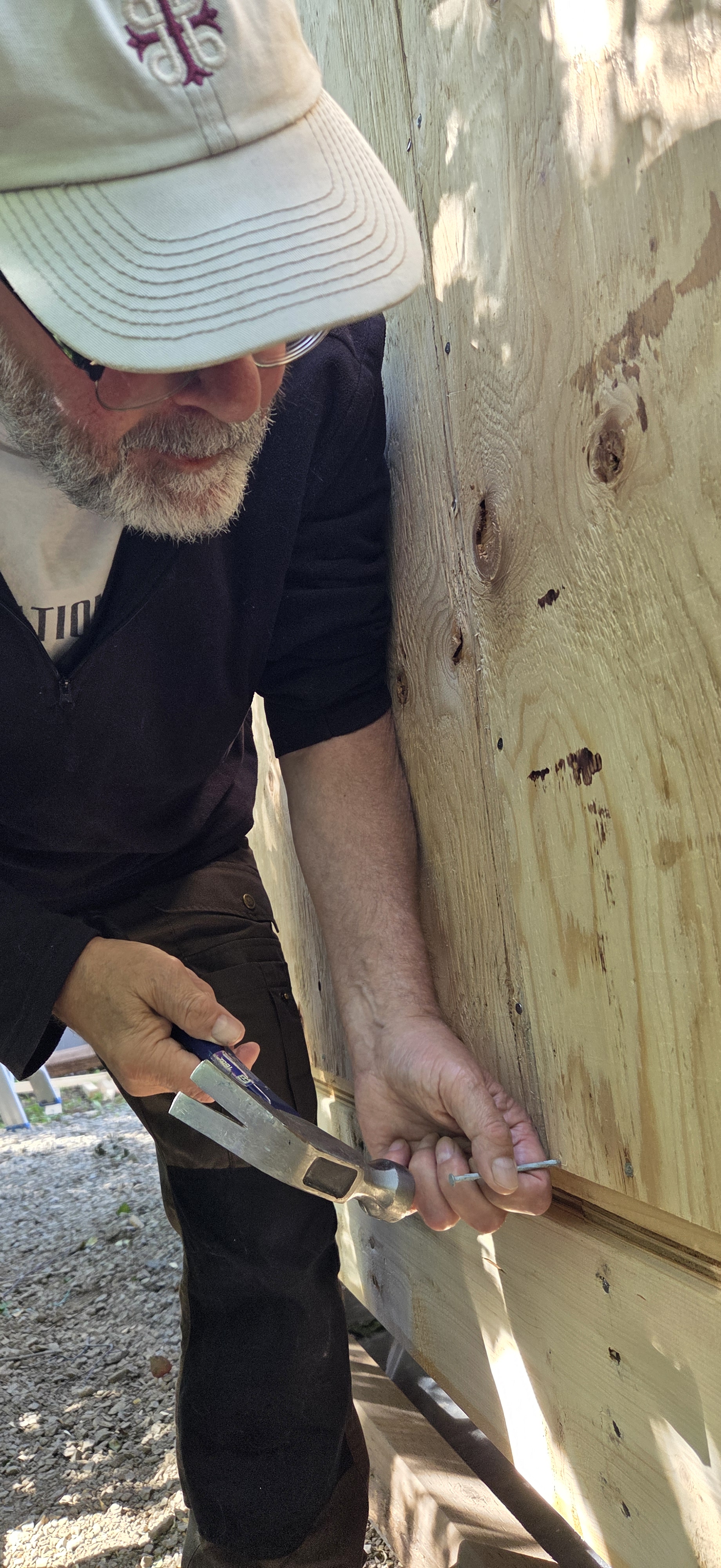
But the deeper truth is more nuanced.  Chording is still slow….usually too slow for a song to really feel like a proper song. A full cup of tea is dangerous to hold in my left hand for too long – and a hot cast iron pan more dangerous still! But I’m able to reach, and lift, and manipulate more with that hand every week. I can now screw the milk and toothpaste lids off and on as a leftie. I regularly empty the dishwasher with my left hand as therapy. I can almost snap my fingers and make the Vulcan salute. Holding a nail in September while hammering was sometimes an act of faith. But the nails got in. Eventually.
Typing is not as slow as it was. But it’s still tedious, difficult, and tends toward errors. Sara says that she can tell my typing has improved because in the last month I’ve written a lot more pieces – articles, reviews, and the like. “You must feel more comfortable composing,” she remarked. “You’re getting back to your enthusiasm for new ideas.”

I feel that too. This fall I taught an online course on Leonard Cohen and St Paul, and had a wonderful time with my adult students. My classes about early Christian asceticism at StFX are fun, and recently I took first-year kids on a tour of the Saint Ninian Cathedral, being sure to point out features I write about in my book “Someone Else’s Saint.” Sara and I each gave keynote presentations on subsequent weeks at different institutions in Halifax, which was a chance for trips “to the big city” and mini-holidays.

My public talks and interviews are happening again. I was interviewed this fall by Jesse Zink of Montreal Diocesan College in his “Principal Meets Author” Series. Be sure to listen to an upcoming episode of CBC Radio’s “The Cost of Living,” where I’ll be on a segment talking about Advent Calendars! This week I’m also presenting in the Research Chairs Colloquium Series at my university, an honour for me.
So, the one-year strokeaversary slipped by.

When she read what I just wrote above, Sara pointed out that maybe it wasn’t disappointment that stopped me after all. Maybe I let the 12-month blogpost slide simply because my fall has been so incredibly busy. True enough. But the anniversary didn’t pass completely unmarked.

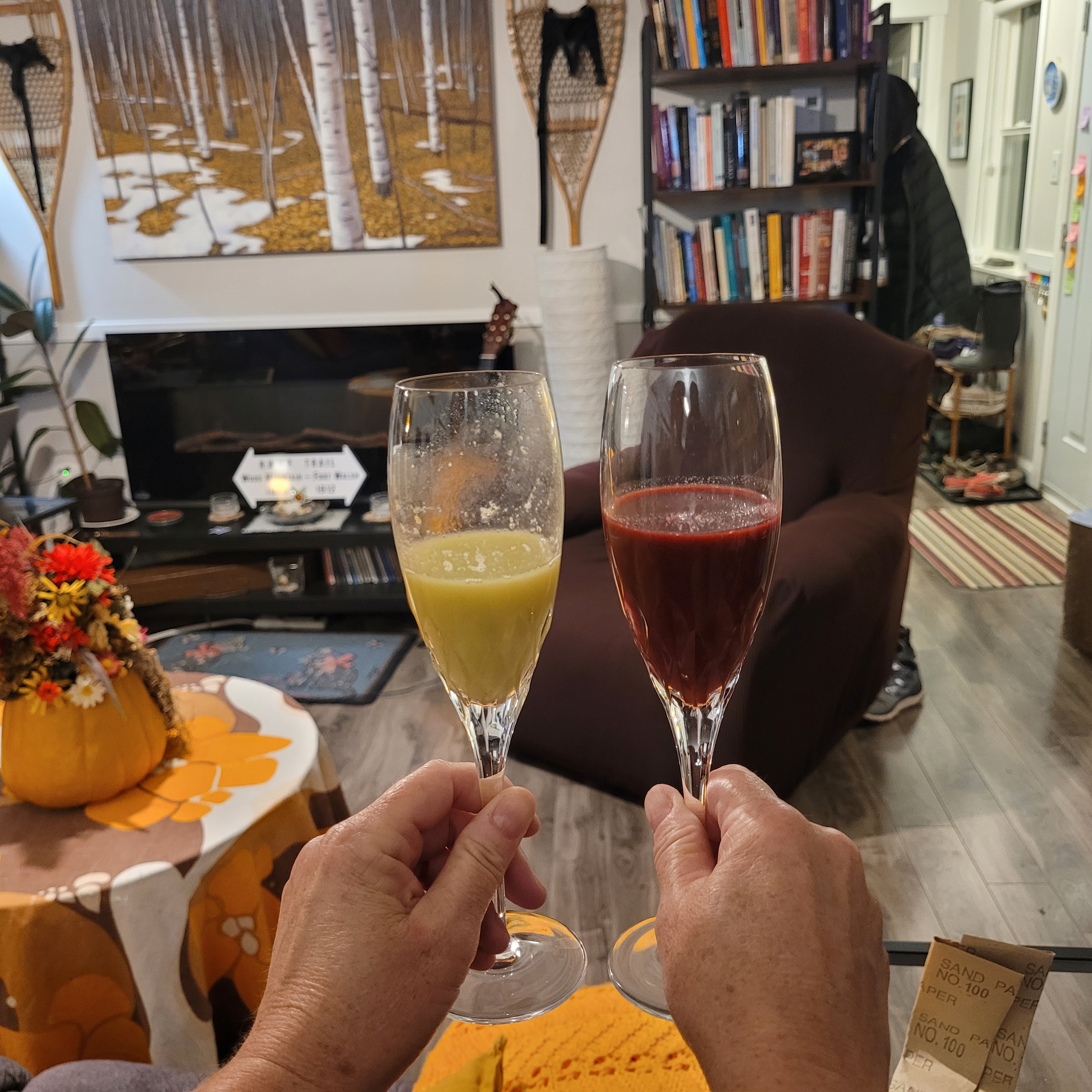
It turned out that I had a follow-up appointment at the hospital one year to the day from my initial TIA – Trans Ischemic Attack, September 16th. So I ordered two cakes from our local Sobeys and Sara and I took them in to mark the day: one for the physio ward, since that’s where I’ve spent so much time post-discharge, and the other for St. Martha Regional Hospital’s third-floor hospital wing, where I lived for almost four months last fall.

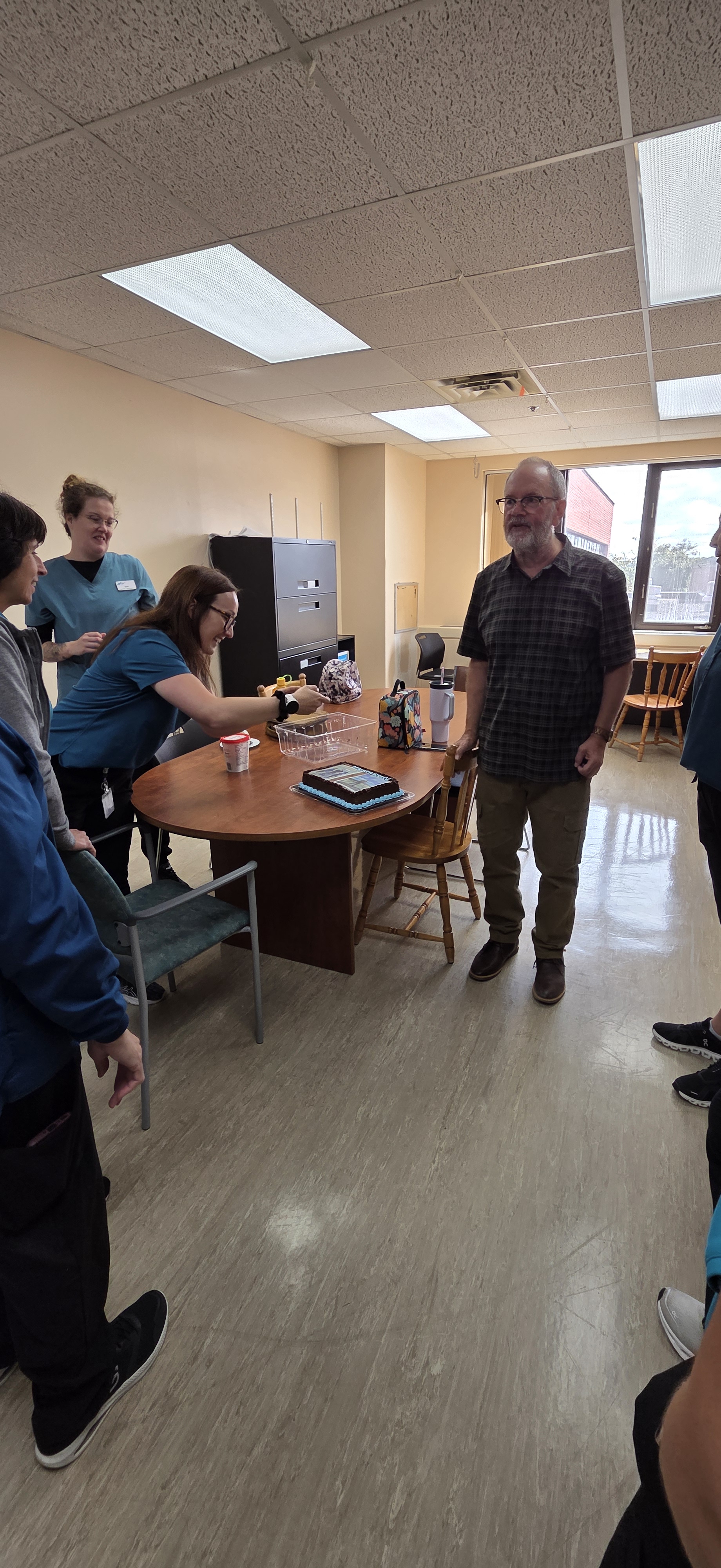
Those cakes turned out to be a pretty good metaphor for the hospitalization and recovery process, and for the nature of institutions. On the physio wing, it turned out that almost all of the Occupational Therapists and Physiotherapists who’ve worked with me this past year were there. To a chorus of “oohs” and “aahs” the cake was quickly divvied up. There was lots of laughter and shared memories, and many thanks and congratulations given and received. It was wonderful.

However, when I carried my one-year cake to the nurses’ station, it was a different story. That day, none of the faces looked familiar at all, except my own GP, who was at the desk. Apparently, there’s been quite a bit of turnover recently on the ward. A nurse politely thanked me for the cake, took it, and congratulated me on my recovery. Sara and I stood around a minute or two awkwardly, then left. I’m sure the staff there that day enjoyed the sweets. But through no fault of theirs, they didn’t know me from Adam. There was no one at the desk from “my” past, no one who shared my memories, and no one to mark with me those tumultuous months that were so significant.

That’s life, I guess. In the end, our experiences change us profoundly. Sometimes permanently. But for everyone else, things can sometimes go back to normal pretty quickly.

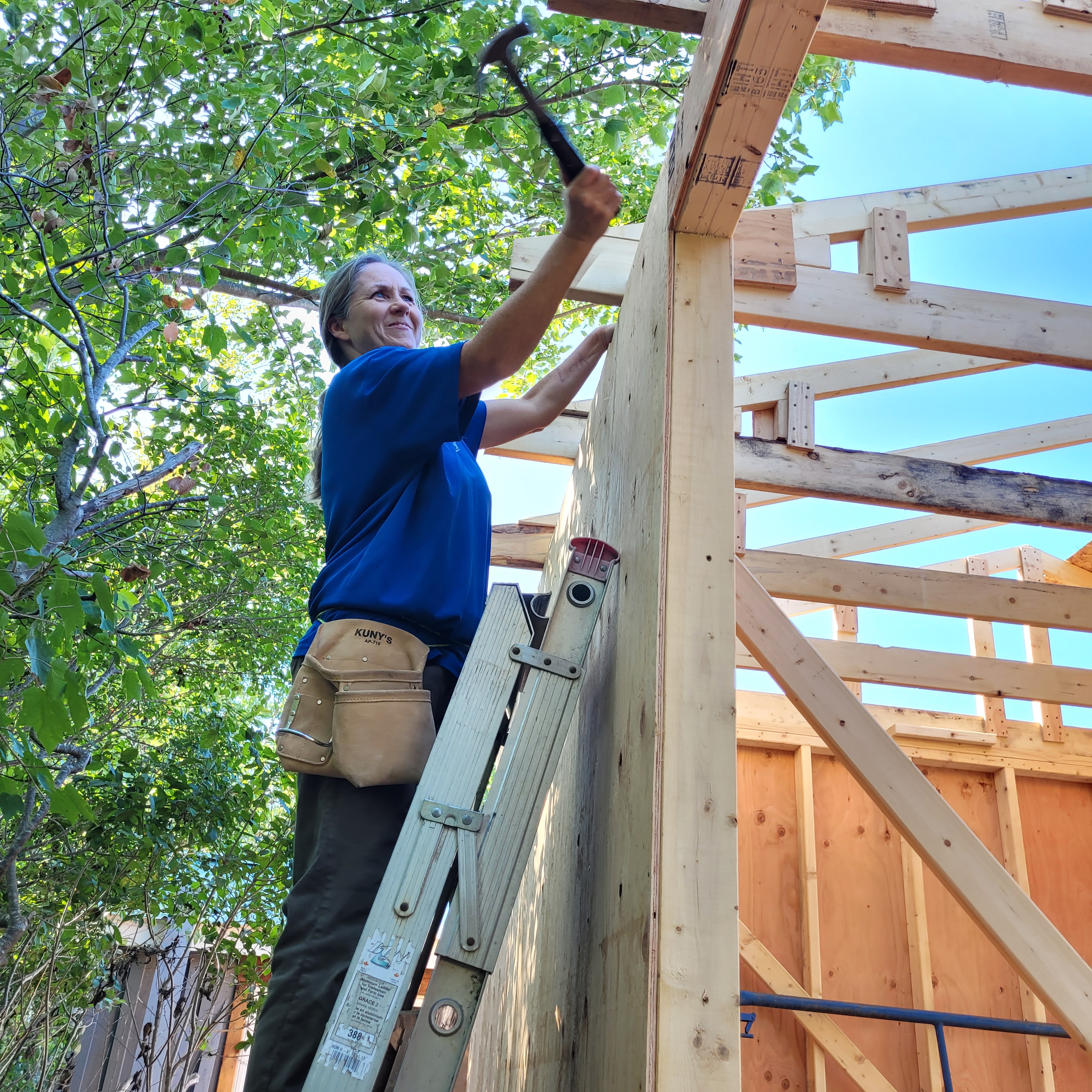
Speaking of major life-changes this fall: in October, Sara’s parents moved back to Moncton for the winter, after a wonderful, but very busy, summer of cooking, canning, and building. I took a very quick, very short trip to Montreal to hug my kids after their own family tragedy: the untimely death of my ex, their mom. Sara and I made our first juice from our first grapes, and filled our pantry with summer’s jellies. Since then my own step-mother, Mary Anderson (Hattum) passed away, along with another good friend in Saskatchewan, John McPhail. Oh yes, and a feral cat we’re calling Theodore seems to have adopted us, on and off….

Things aren’t the same as a year ago in so many ways, some large, some small. I keep having to learn and relearn the lesson that life is beautiful, often fragile, and that the time to tell folks you love and appreciate them is right now.

I feel very fortunate to be alive, and thankful every day for the chance to experience this world in all its confusing glory. Strangely enough, I believe my life has been enriched by my stroke a year ago, and by the struggles that have followed. I appreciate you who have accompanied me through this year (plus a couple of months). As the leaves drop, the Grey Cup finishes (yay SK!) and November tilts toward Advent and Christmas, I hope you find some love and joy in these days as well.

Categories
stroke-recovery

Six-Month Strokeaversary: Signs of Spring

Wow. Hard to believe it’s been six months since a shudder ran down my left arm and I found myself unable to speak for a couple seconds and Sara called an ambulance and ran for the aspirin.

And…the TIA and major stroke and everything that followed.

When I was wheeled into St Martha’s Regional hospital on a stretcher last September I had no idea it would be home for three months. Autumn was just beginning.

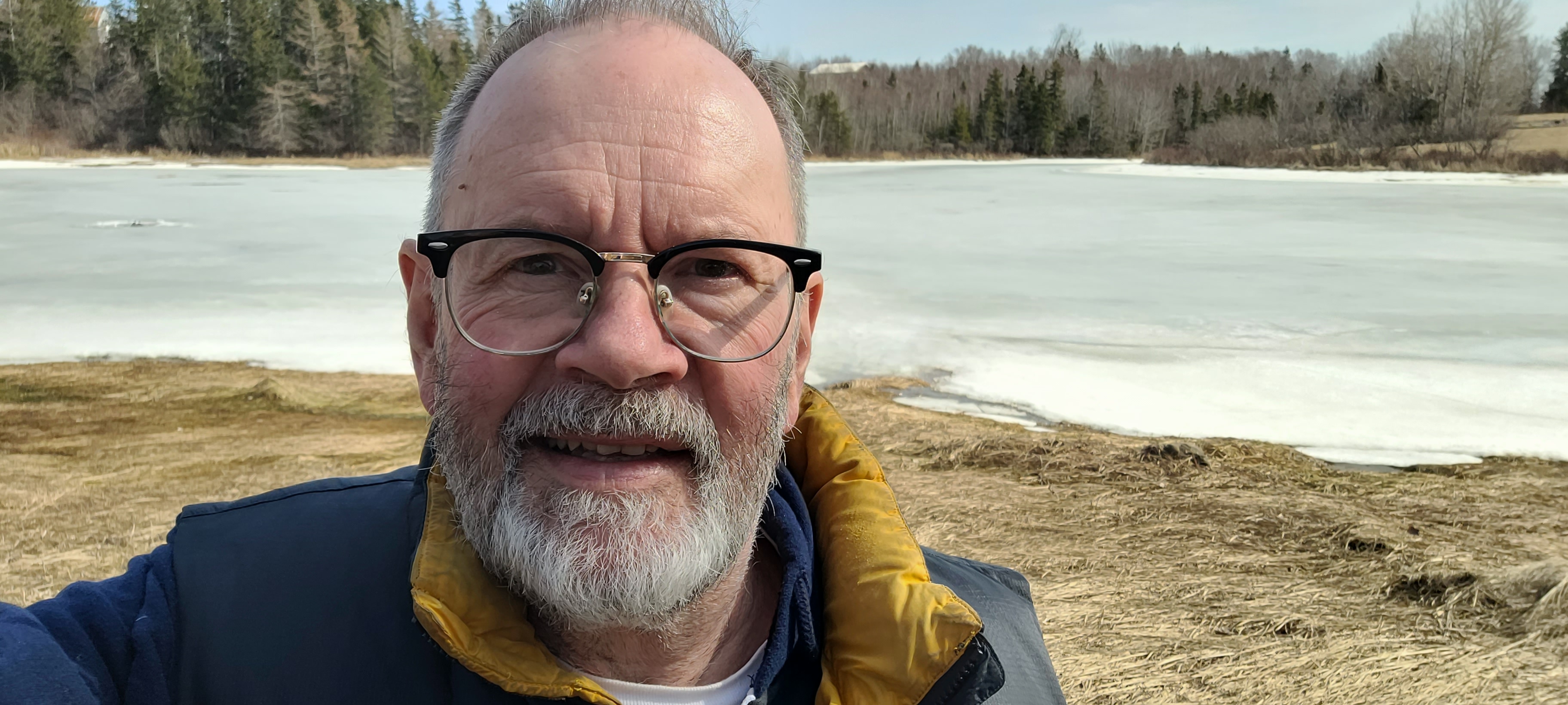
Now here we are at the spring equinox, six months later. The day before spring, the ice came off our little inlet, and those annoying fake ladybugs are waking up all around the house.

The solar panels we had installed last fall are finally free of snow and making power (I check them compulsively).

The seedlings we planted last year have survived.

All signs of spring. Another sign: I’ll have to learn how to tie my shoes again, since pull-on winter boot season is nearly over.

Here’s what else is happening…

My Heart Procedure

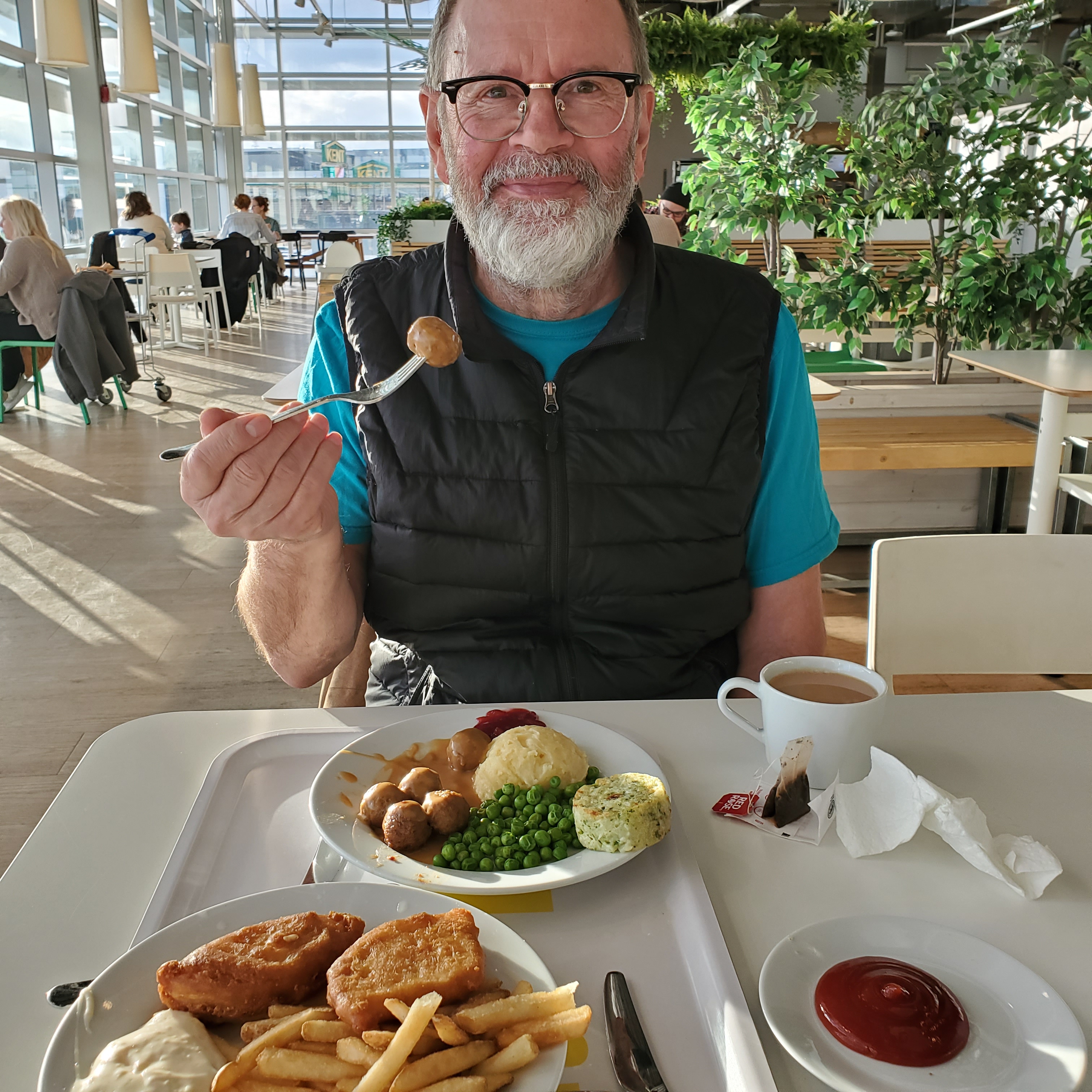
I had a pre-op appointment in Halifax last month, and Sara and I used our rare visit to the big city to have a date at IKEA (how romantic!). We then bought a car-load of groceries we can’t get in Antigonish at the surprisingly-well-stocked hole-in-the-wall that is Big Ray Convenience and Asian Store in Dartmouth.

During the appointment the surgeon teased us about being professors and grading him – but we said he already got an A+ just for taking me on. The procedure to close my PFO (Patent Foramen Ovale) will take place in a few weeks, in April. It involves inserting a soft metal “umbrella” into my heart through a tube inserted in my groin. (Really looking forward.) Once in place, it expands to close the hole in between the upper chambers of my heart (for explanation see here). Of course I’m nervous. But I’m thankful it’s considered a low-risk procedure, with recovery times of only a couple of days in most cases, and well worth it for the significant reduction in future stroke risk.

Bad Timing for the Someone Else’s Saint Party

Someone Else’s Saint: How A Scottish Pilgrimage Led to Nova Scotia is coming out within the month (mid-April). It won the Pottersfield Prize for Non-Fiction last year before it was published, and the prize was publication! It’s about walking the Whithorn Way in Scotland only to find a strong connection to its saint (Ninian) right here in Antigonish, then inaugurating a new Ninian Way in Nova Scotia. I’d already arranged for a launch at the wonderful Antigonish Heritage Museum. To my delight, 2024 Canadian Traditional Musician of the Year Mary-Beth Carty had agreed to play a couple songs during the evening! But when I got the notice from the hospital about my procedure, of course it turned out to be the day before the launch. Drat. So keep your eyes peeled for an announcement once I find a rescheduled date! Fingers crossed it will still work for Mary-Beth Carty!

Flu and Field Trip

This last month I caught the flu. It really knocked back my energy … and my stroke progress. Fortunately, Sara quarantined in the other end of the house and sanitized like a surgeon and didn’t catch it, and nursed me back to health over the week or so when I was most affected. I recovered in time to lead our team-taught StFX Religious Studies class “Intro to World Religions” on a field trip to Saint Ninian Cathedral, where Father Danny MacLennan seemed delighted to welcome a gaggle of young people, and even took some brave souls down to the crypt “where the bishops are buried.”

Hearts in Motion

Twice a week I drive to town, park at a handicapped spot on campus, and spend an hour at the gym with about ten others, as part of a public health program called “Hearts in Motion.”. The others are there post heart attack or heart surgery, mostly: as far as I can tell, I’m the only stroke survivor (I’m the only participant with partial paralysis…trying to do the “windmill” warm ups with my left arm). I didn’t know what to expect starting out, but going to the gym has been great for me. The first weeks I couldn’t even get on the elliptical machine, much less use it. Now it’s my favourite. I can actually hold the moving hand grips, and release the left one and grasp it again mid-step (sometimes). The program’s physio suggested I try the rowing machine. I was doubtful – I’ve never liked that device. But he was right: the pairing of my left and right arms that’s necessary for “pulling back” the rope and handle seems to be very good for training my affected left arm to stretch and reach. There are only four more sessions, so I may have to get a membership for spring and summer just to keep up on the machines. I’m still incapable of running, even very slowly, on a treadmill. I’d trip and fall. But I’m more and more tempted to try, just briefly…

Left Leg and Foot

I’m fortunate that the Physio and Occupational Therapist outpatient departments at St Martha’s hospital are still keeping me on. They say they keep seeing progress, and tell me I’m unusual (I think in a good way?). At my most recent strength and flexibility test, the physio told me that I’ve recovered close to normal strength in my left leg. “But I still have quite a limp,” I told her. “You can see that.” “That’s your brain,” she replied. “At some point it may get back to automatically lifting your foot and adjusting your gait. But there’s no way of knowing when that might happen…” I’m hoping this is like a pilgrimage path in Scotland that I was on with Ken Wilson and Christine Ramsay. Our guide at the time told us: “Use is the cure.” The other evening some great music came on and Sara and I had a quick dance. At the end of it she was laughing: “that felt like before your stroke,” she said. “You were leading like the old Matthew!” Ahhh….that’s what I’m aiming at.

Left Arm and Hand

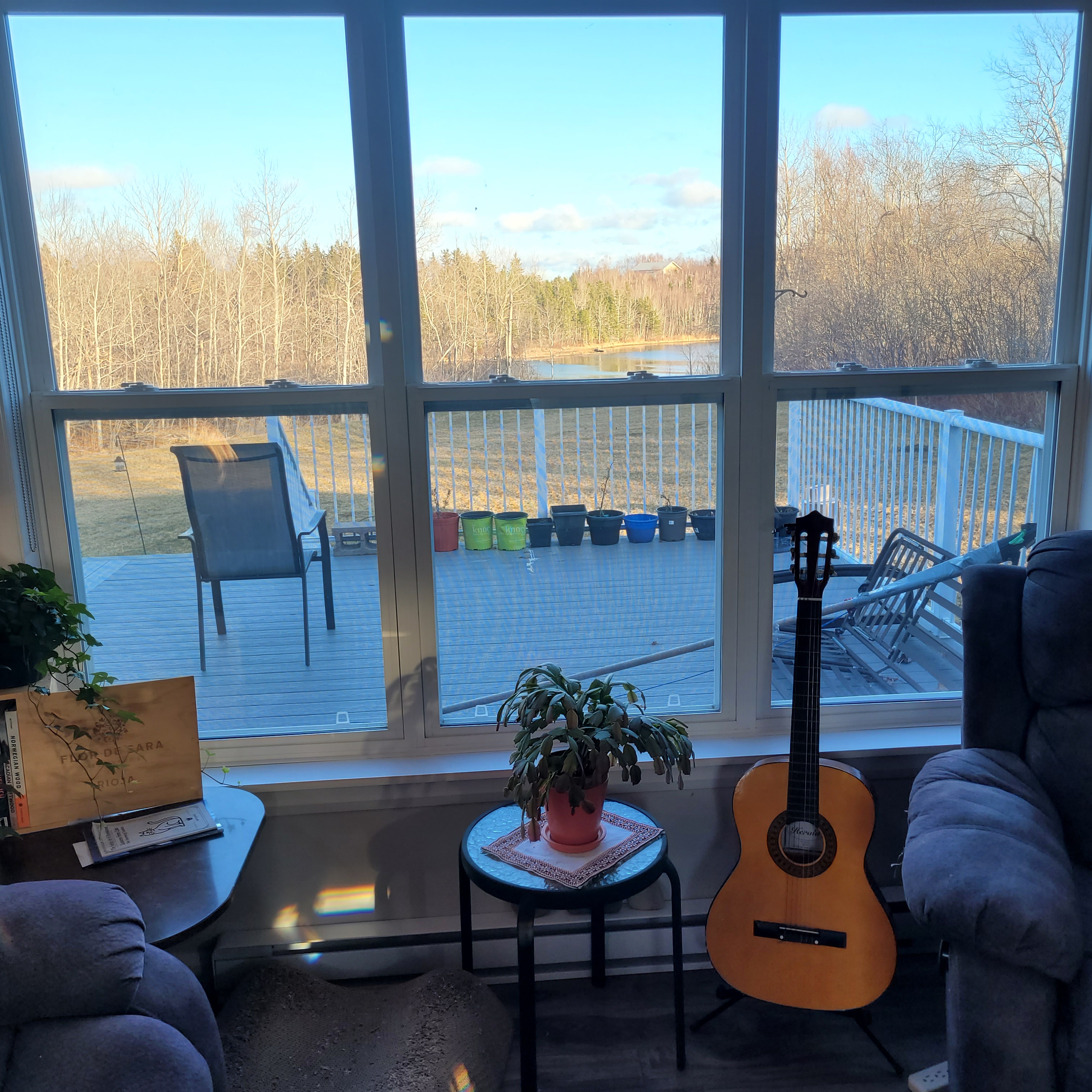
My use of my left hand continues to improve….but very, very slowly, from my perspective. My guitar chording continues to get better: now I can play E,D,A, and G with minimal help from my right hand. But it’s slow, and my strength in pressing down the strings sometimes lacks. I gave up entirely on trying to type with it. I’ll have to get back to that.

Janna, my wonderful therapy aid at St. Martha’s, makes me attempt to move clothespins from a steel wire as a strength exercise for my left hand. But what I enjoy most is playing catch with her! I’ve gotten to the point where on a good day I can catch a gently tossed tennis ball with my left hand, against my stomach, several times, and often succeed in tossing it back, although sometimes my hand won’t let the ball go.

The issue with my hand is what is called “tension” or “spasticity.” My fingers will be loose until I squeeze something (say, toothpaste). Then, instead of loosening again, my fingers stay curled – locked! Sometimes the best technique is to ignore the hand briefly, until the fingers relax again on their own. It’s a bit like trying to fool your own brain. The spasticity seems to be diminishing. But it’s a slow process.

Poetry and 2025 Saskatchewan Book Awards

My first submission of my “stroke poetry collection” went nowhere, so I’ll be editing the poetry and trying again. But yesterday I got great news that really lifted my spirits! My memoir The Good Walk: Creating New Paths on Traditional Prairie Trails is shortlisted in the “Publishing” category for the 2025 Saskatchewan Book Awards! On May 9 there will be a fancy awards ceremony in Regina, with the lieutenant governor in attendance. For now my cardiac doctor is telling me no travel. But I can’t wait for May! I’m trying to get my brother Mark, who lives there, to go in my place JUUUUUUUUUUUUUUST in case there is an award to accept.

The End of Term Approaches

All of the hospital staff seemed shocked that I planned to go back to work upon discharge. I don’t regret going back to teaching so soon. But now that the term is winding down I’m realising just how much energy it’s taking for me to go to town four days a week for teaching and physio (and, of course, I’ll stop by the grocery store or Canadian Tire often as well). The OT consultant from Halifax couldn’t believe my weekly schedule. “Of course you’re not getting through all your home exercises,” she said. “When would you do them?” Her main advice to me was to take it easier, especially after I developed frozen shoulder in my right arm last month. Sara declared the dishwasher (reaching down to load and reaching up to put dishes away) off limits and slapped a hefty 100-dollar fine on any disobedience!!! (I only made that mistake once.)

So taking it easy is part of my plan for spring. I’ll take inspiration from the Christmas cactus Sara bought me last fall for the hospital. It budded at Christmas. But in the end, no flowers materialised. Only now, after the equinox, at home, are the blooms coming.

I pray that in your life and mine, there will be delicate beauty developing in its own time this spring. In a world where small, powerful men seem so determined to distract us from their greed and incompetence by emphasizing division, brutality, and ugliness, may we be like this Christmas cactus: blooming boldly, especially where and when it is least expected, and most appreciated.

Categories
Uncategorized

Walking the Celtic Shores

“Take a picture of your father,” I said. “Something nice,” I said.

One of the frustrations I had while being the part-time director of Camino Nova Scotia was leading pilgrimages I couldn’t actually walk! I schlepped bags, drove, unlocked and cleaned halls, and cooked for the pilgrims who had signed up. All the while wishing I could walk the trails in Nova Scotia myself.

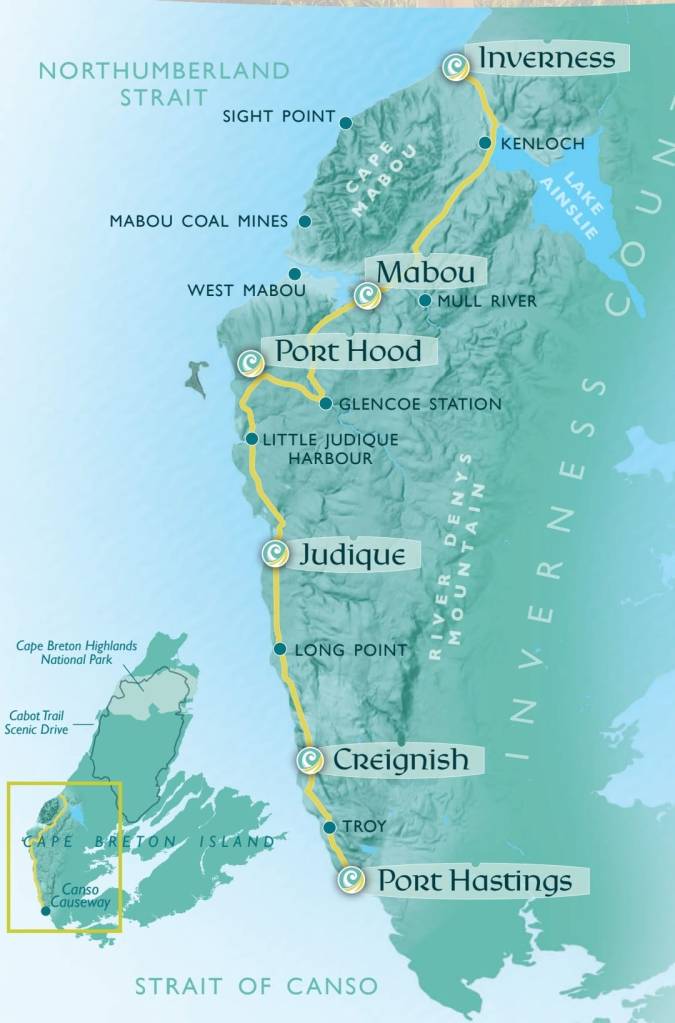
So this spring, when my youngest from Montreal suggested a “long walk with papa” I jumped at the chance. We finally settled on the Celtic Shores Trail in south-west Cape Breton. It was close to home, and because of the SATbus (Strait Area Transit) I was able to plan a way we could leave a car at the end of each day’s walk and still get back to the start point. (Although it meant some VERY early mornings by the end).

All told, we walked from Troy to Inverness. We had a WONDERFUL time, met lots of folks (although only one other distance walker on the trail), ate tons of sea-food, listened to Cape Breton fiddle music, chatted all day as we walked, and swam in the ocean.

I highly recommend this trail, and the use of the SATbus to coordinate getting back to a car at the end of each day.

Some tips: check the “take a break” walkers’ benches for wasps’ nests…before sitting down! Note that the SATbus doesn’t run weekends, and must be booked in advance. Check out the Ceilidh Fishers’ Coop in Port Hood for fresh seafood and to report your progress to a local trail volunteer. Bring bug spray (although they weren’t bad for us this time around), sunscreen, and rain-gear. We had bear-spray. Thankfully we didn’t encounter any, but we saw some fresh scat. Especially if walking on a weekend, keep your eyes open for four-wheelers, which are a far greater concern. And have fun!

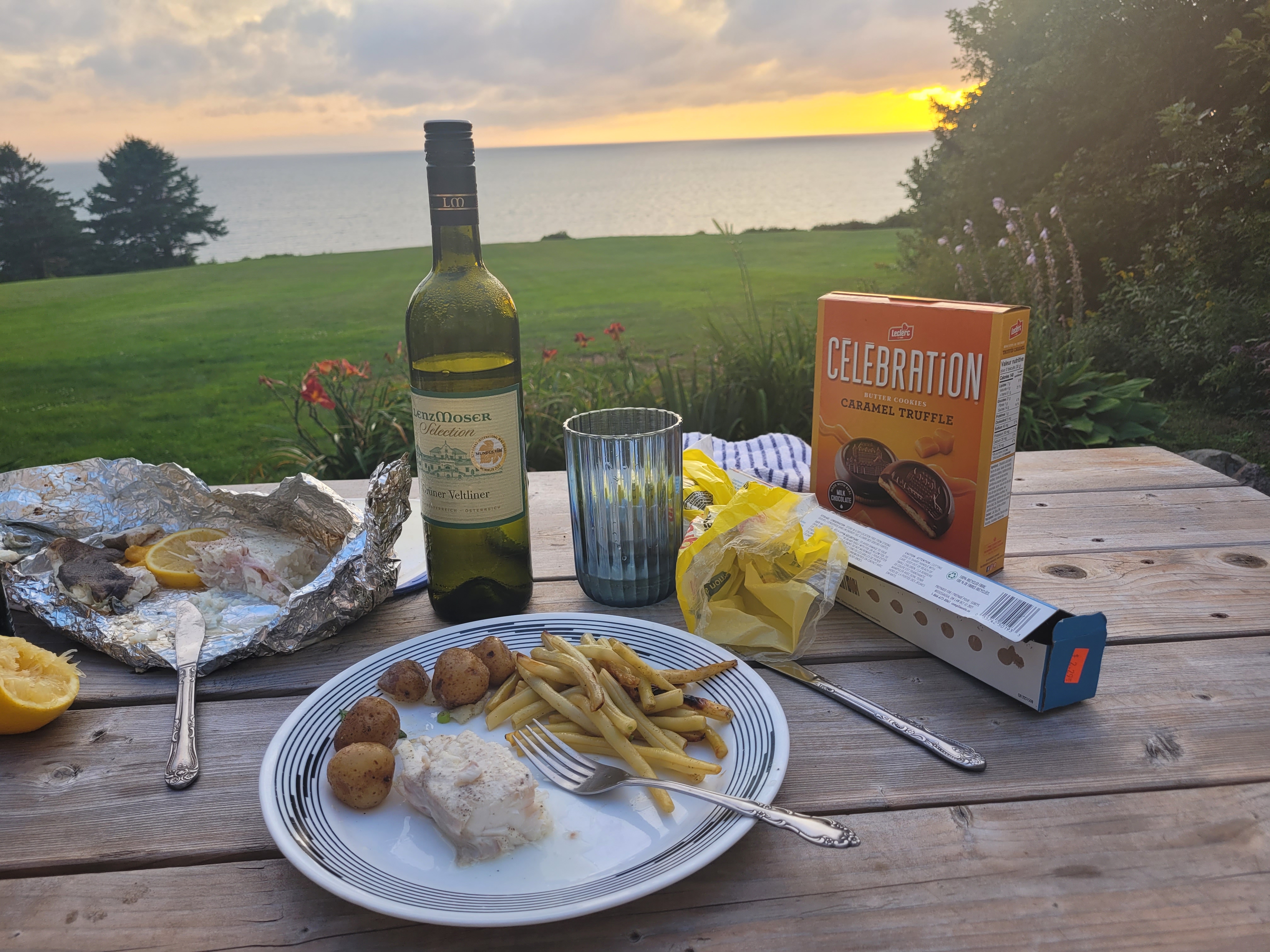
Our stationary Air B&B RV in Craigmore, NS

Categories
Uncategorized

Winnipeg Free Press Review of The Good Walk

What a wonderful surprise to have Paul Gehrs send me a short note to say: “I imagine you’ve already seen this, but excitement [for your book] is building here in Winnipeg.”

I hadn’t seen it. Thanks to Gail Perry of The Winnipeg Free Press for this gorgeous review!

Photo of the full-page book section spread below, or if you prefer, the link to the paper’s column here: https://www.winnipegfreepress.com/arts-and-life/entertainment/books/2024/05/04/the-trails-less-travelled

Categories
Uncategorized

Walking to Lübeck

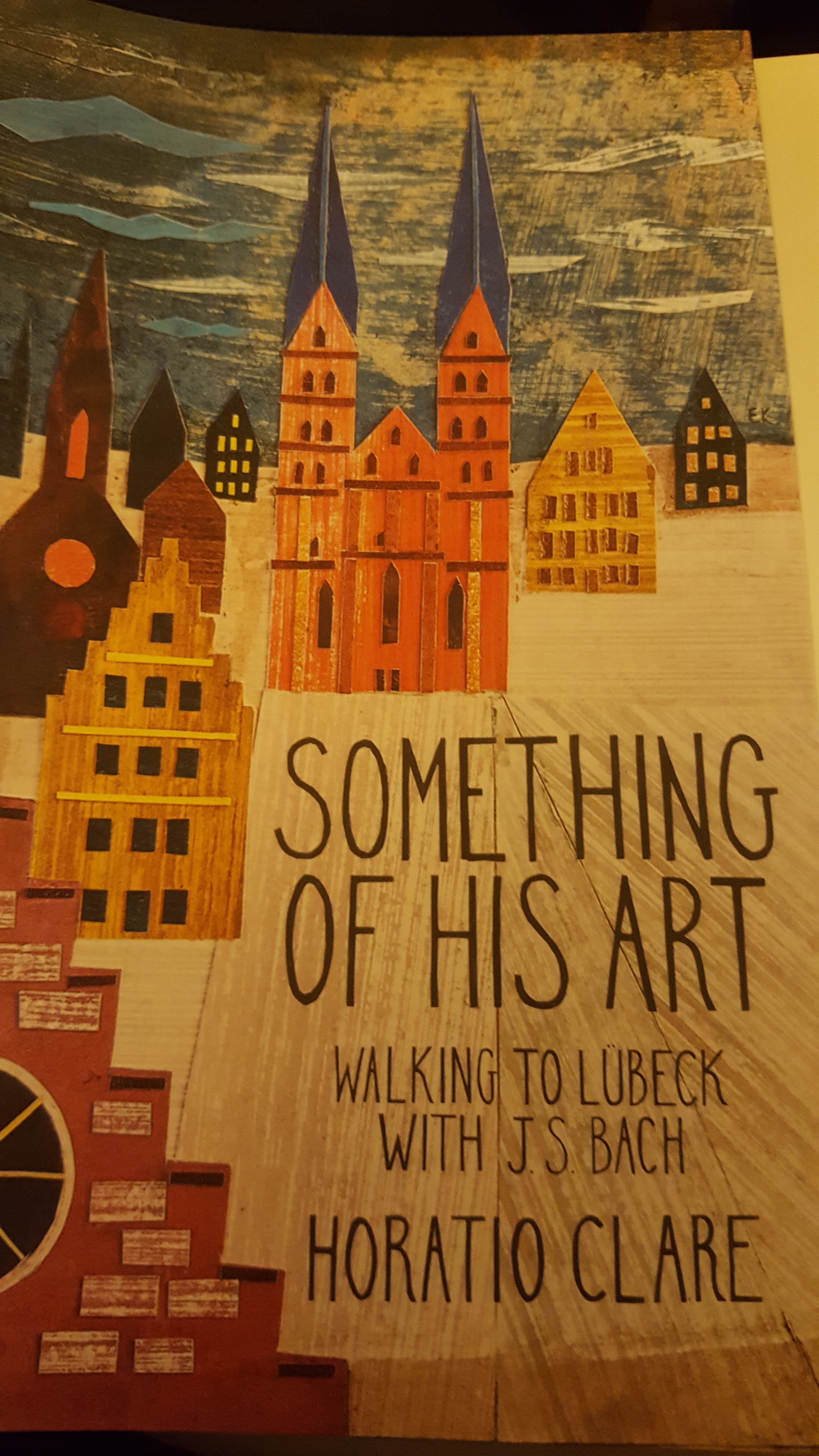
On the recommendation of Ken Wilson, I’m reading Something of his Art, a 100-page book by English-Welsh author and broadcaster Horatio Clare about a walk from Arnstadt to Lübeck, Germany. In October 1705, at the age of 20, a rebellious young Johann Sebastian Bach headed north on foot to pay a surprise visit to the elder organist and Baroque composer Dieterich Buxtehude. Clare and two others from the BBC recreated that walk, also setting out in the fall. The record of their trip – you can listen to a BBC podcast series about it – contains Clare’s reflections on everything from Bach’s temperament (students of the day carried rapiers to defend themselves) to ways that the autumn countryside – and our world – have changed because of climate degradation.

Ken loved the book; he told me I would too. He was right.

Clare walked 230 miles, roughly the distance we’ve covered in our treks on Treaty Four and Treaty Six territories. I’ve had the pleasure of singing works by both Bach and Buxtehude in various choirs over the years. And I’m a Lutheran, affected by years of hearing Bach, and by some of the same theological worldviews that inspired the composer.

But you don’t have to be musical or a Lutheran (or even a walker) to love this book: Horatio Clare is a rare treasure of an author. His rich descriptions will have you hearing the sound of their feet “through thick cushions of beech leaves, gold and bronze and red,” and seeing Lower Saxony “intricate and melancholy in the rain.” You’ll learn about Bach. More than that, you’ll find yourself walking along Thuringian trails greeting local farmers, or entering old-town Erfurt in the golden twilight. Anyone who has ventured on long treks will feel a thrill of recognition in Clare’s words: “Coming into town as night falls is a wonderful feeling after a day’s walk. You move through the streets, your eyes sharpened by the length of the day’s views, your feet tired and your muscles worked, alert and fatigued at once.”

Categories
Uncategorized

Pilgrimage Stories From Up and Down the Staircase

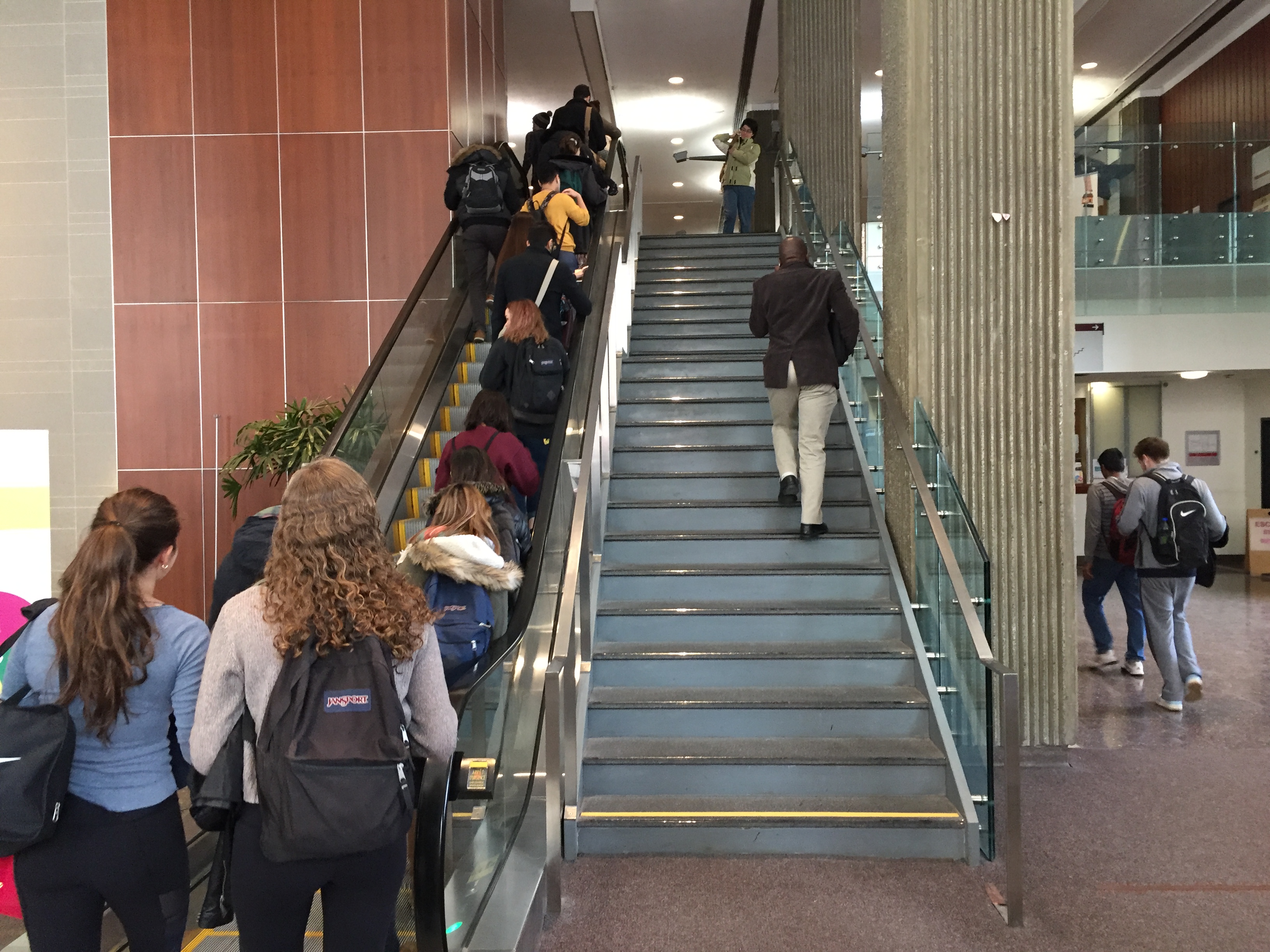
How do you walk a pilgrimage during these months of restricted travel? I’ve been walking up and down my staircase in Nottingham England, and dreaming of pilgrimages past! To share those stories I’m releasing my first-ever podcast, “Pilgrimage Stories from Up and Down the Staircase.” Each episode features a different trail, or a different character I’ve met. psuds logo finalI’ll introduce you to enthralling paths in Norway, Scotland, England, Iceland, Canada and Indigenous territories, and provide some of the resources you’ll need to walk them. All the while I’ll be telling the stories of the fascinating individuals I’ve walked with and met along the way, and sharing snatches of our conversations, songs, and experiences.
Alpine shelter

Thursday, July 30, 2020, at 5 pm Montreal time, I’m releasing the first episode: “Walking the St Olav Way.” In the 17-minute episode you’ll hear snatches of our struggle up and down mountains and jumping late-spring run-off streams and boggy marshes. You’ll meet a friendly Norwegian border agent and a marathon German pilgrim struggling to understand his life. You’ll sit with us in rustic Budsjord Gård and hear fellow pilgrim Kathryn singing as we walked. I hope you’ll listen in to this first episode, and to the others as they come out every Thursday! The series “Pilgrimage Stories from Up and Down the Staircase” will be available wherever you find your podcasts.

To find out more about St Olav before listening to the episode, why not check out some of these resources?

  • The official St Olav website, which you can find here, is a wealth of beautiful images and practical info (look for the English-language option)
  • In 2011, Alison Raju wrote The Pilgrim Guide to Trondheim, available at this website.
  • For my article about the history of the Trail and its modern-day recovery as well as some photos of our 2013 trek, see the International Journal of Religious Tourism and Pilgrimage, here.
  • For an article about the health benefits of walking the St Olav Way, written by a Norwegian scholar of pilgrimage in the same journal, see this link.

I’m looking forward to sharing my experiences with you on the “Pilgrimage Stories From Up and Down the Staircase” podcast!

Categories
Uncategorized

The Myth of an Empty Land

fullsizeoutput_6580
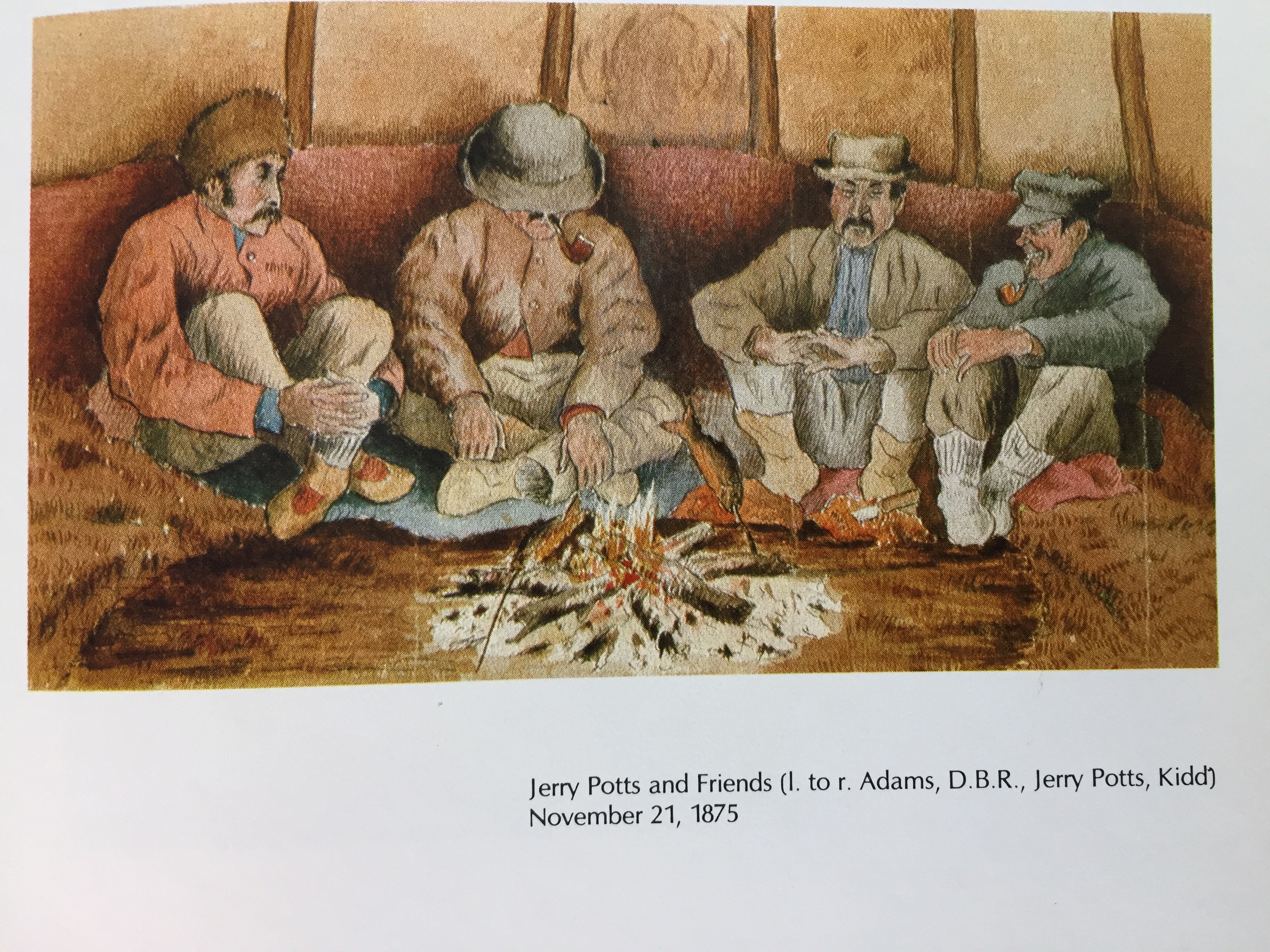
sketch by R.B. Nevitt, surgeon with the NWMP in the 1870s

Despite recent attempts to sensitize Settler-Canadians to the brutal non-mythologised realities of our arrival and eventual colonial dominance in Canada, many stories of settlement still contain some version of the words “into a wild and uninhabited land came our brave ancestors.” Narratives based on an understanding of pre-Settlement Canada as “empty” or “wild” consciously or unconsciously serve an unjust political agenda. They ignore the ways in which First Nations were relied upon and then cast aside by the early Settlers. They conveniently excuse the economic and political machinations that were used to isolate and disempower Indigenous peoples in Canada, to metaphorically and literally starve them, and to seek their eventual destruction by death or assimilation.

In part because of the Truth and Reconciliation Commission, Canadian myths of origin are changing. But it is not yet clear how they will evolve, and it is much less clear that their evolution will lead to a greater willingness on the part of non-Indigenous Canadians to see land in new ways – ways that might foster the Treaty relationships. In  November 2018 the government of Saskatchewan, responding in part to pressure from its Association of Rural Municipalities, significantly tightened rural trespassing laws.[1] This is a significant setback to public access, a backlash many think will only further damage relations with Indigenous peoples.[2] This summer I plan to walk – and camp – in Scotland and Finland, using the jokamiehenoikeus, or “right of responsible access.” These are countries in which a robust “right of responsible access” exists, and also countries from which Eastern and Western Canada derived some of their Settler populations. By studying how national myths are related to positive experiences of public use of land in Scotland and Finland, I am hoping to find resources in our own cultural histories that will help Settler-Canadians rethink their relationship to land, and thus to First Peoples.[3]

[1] https://sarm.ca/about-sarm/news/item/?n=194

[2] https://www.cbc.ca/news/canada/saskatchewan/saskatchewan-trespassing-plan-racial-tensions-1.4891278

[3] Anderson, 2018. “Pilgrimage and the Challenging of a Canadian Foundational Myth,” in Pilgrimage in Practice: Narration, Reclamation, and Healing, edited by Ian S. McIntosh, E Moore Quinn, and Vivian Keely, 148-163. Wallingford, UK: CABI Press.

Categories
Uncategorized

Geography & Wonder

Pints at the Star Inn

There is the geography we know and can trace topographically, made up of distance and terrain and movement. For instance, knowing it is about 14 miles (22 km) to the next town, there is a mountain in the way, and  a pub and a pint await us there. But there’s another geography as well, one that exists off the maps even though it overlaps them, a geography of uncertainty, of bodily ache, of imagination and story and solitude, and sometimes, if we’re fortunate, of wonder.

Since the Romantic era at least, wonder is the most gratifying of reactions to a view, natural or human. The walker cannot plan on wonder. But there are ways in which we open ourselves up to it and make ourselves available. In my experience those ways start with being silent, and with not over-planning a walk. That’s the way I felt when I woke up in Hayfield, in England’s Peaks District, the morning of the Kinder Trespass hike. Ready, but not completely prepared.

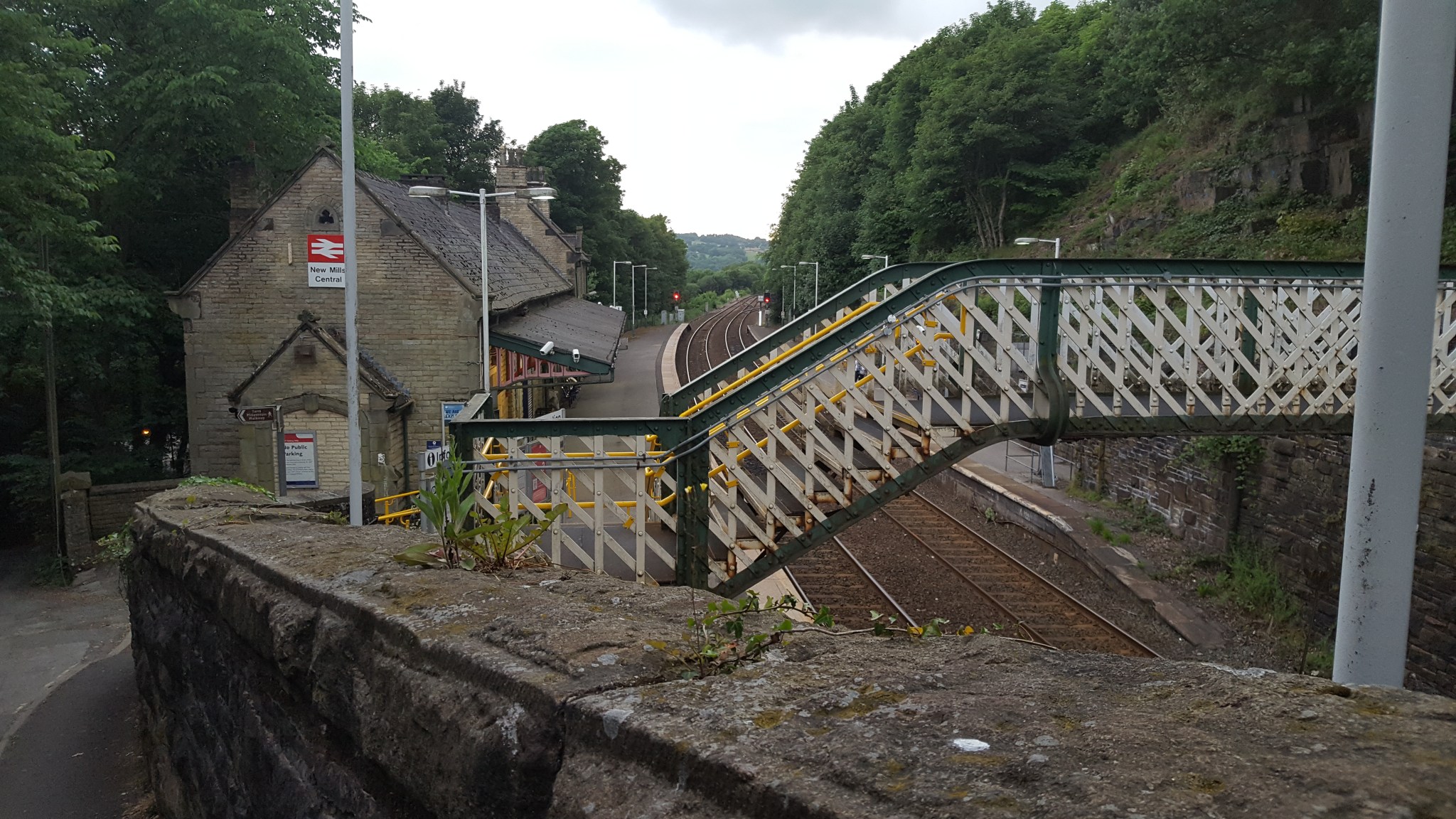
New Mills Central Train Station

Categories
Uncategorized

Why Walk?

IMG_8662

‘Pilgrimage’ is such a tired metaphor it’s hard to remember sometimes that it’s based on actually doing something.  “Let’s go on a pilgrimage to my favourite restaurant”. “Life is a pilgrimage from birth to death.” Yes, sure. But…But what keeps me interested in not just studying journeys, but also walking them, is the way the brain unhooks at 5 km/hr. Without even trying to, you begin to notice geography, and your own body, and the relationship between the two (as you walk up a long prairie hill, for instance, or start to sweat in the sun). You pay attention in a different way to nature. Or better, nature presents itself to you, when you are available: coyotes sleeping in a burrow, badgers running ahead along the fallow-line, the meadowlark calling from a grey fence-post, a family of otters playing as they cross your path from the river, some old abandoned buildings, the soil at your feet. This is almost impossible at highway speeds. When you walk, you begin to think emotional and philosophical and spiritual thoughts – not because you plan to, but just because of the leisure and the rhythm, maybe even the slight boredom. For those fortunate enough to be able-bodied, the fact is that walking is one of those conscious activities closest to being unconscious, freeing the mind up for contemplation and surprise intuitions. Walking journey connects landscape, body, story and movement in a unique way. For those of us who try to allow space for the spiritual, walking pilgrimage is a gift. It’s meditation for anyone, like me, too undisciplined or lazy to meditate in other ways. Rebecca Solnit puts it this way: Pilgrimage is premised on the idea that the sacred is not entirely immaterial but that there is a geography of spiritual power….  it reconciles the spiritual and the material, for to go on pilgrimage is to make the body and its actions express the desires and beliefs of the soul (“Wanderlust” Penguin Books, 2000. Page 50).

Categories
Uncategorized

A Five-Minute Cooks’ Tour

2016-07-21-11-19-38

on the subject of – what else? – western Christian pilgrimage (clink on the following link) https://vimeo.com/183303404