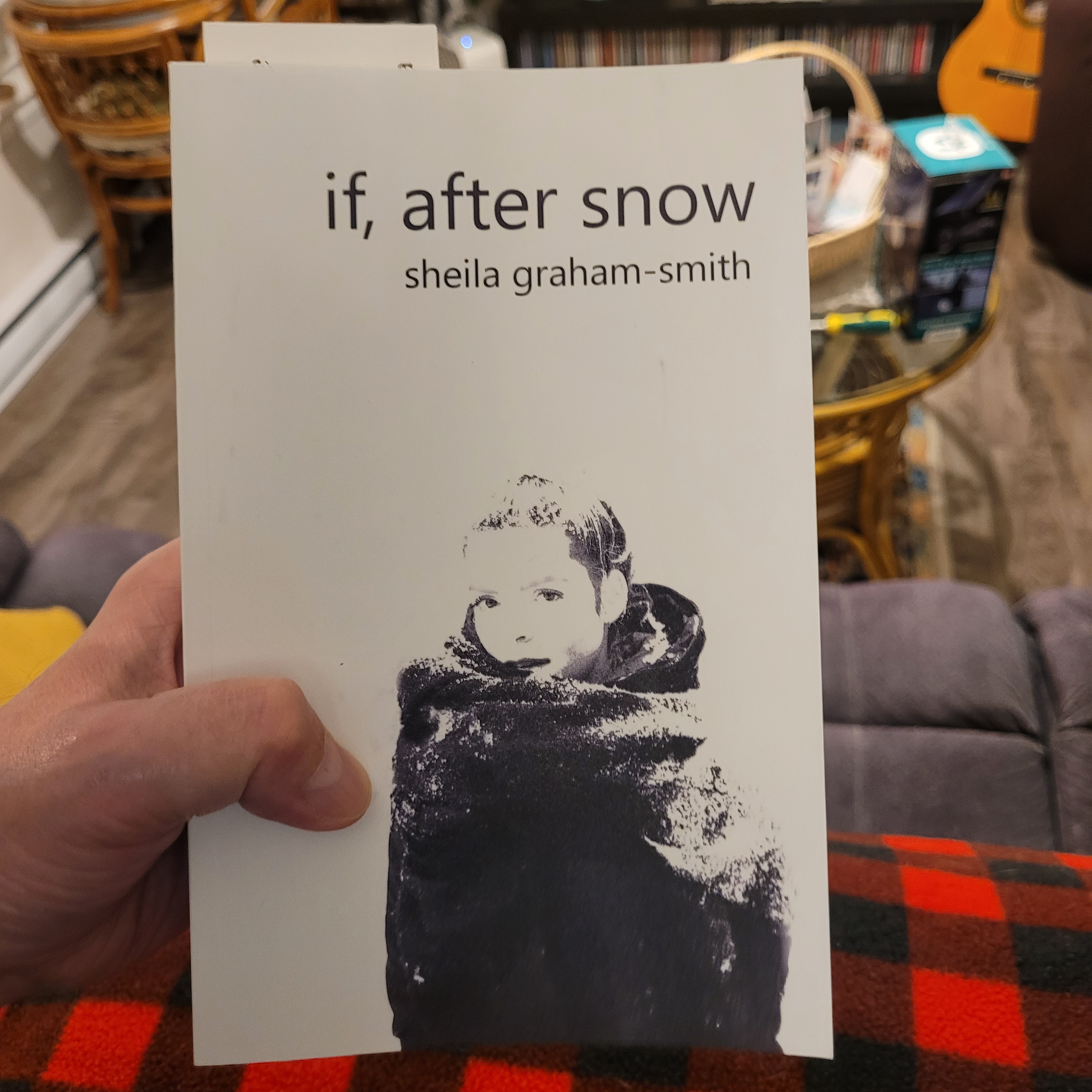
She had never heard of my book, nor I of hers (although apparently I was the first to recognize the Sappho reference in her title). We exchanged our books accompanied by firm promises to read and report back.
All Germans idealize the North American “West”and North American landscapes. Germany is a crowded country that has lost so much of its own “wildness” but still maintains a strong national mythology of origins around it. And yet …
All Germans love to read, and as a bonus, as truly civilized people are multilingual and can often read English books like mine, unlike most anglophones and folks like me, who struggle with anything more than simple tourist directions auf deutsch…
SO. After all these expectations, how did the review turn out?
Thanks to Google translate, you can read on for yourself….
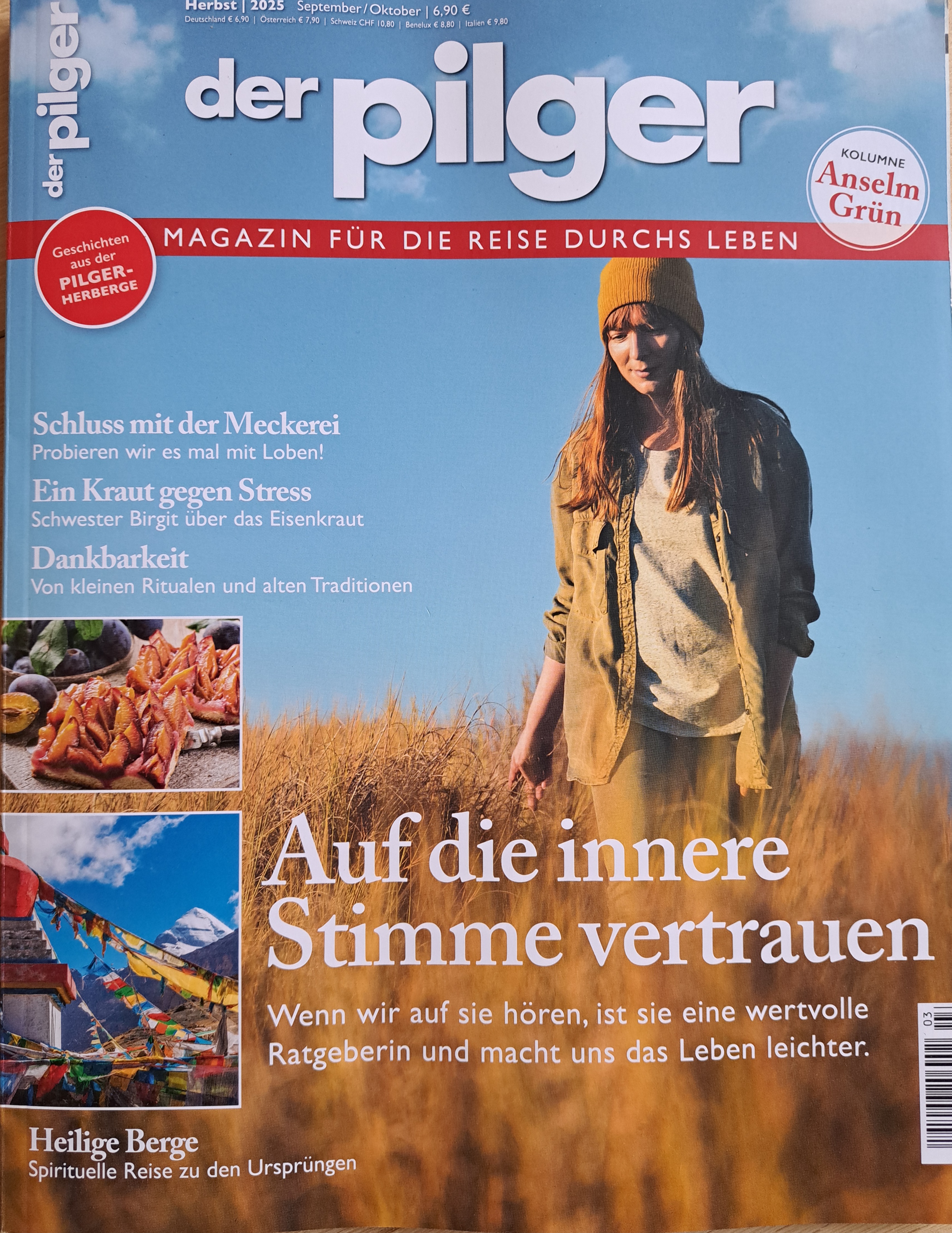
The Review
p. 43 New Pilgrim Perspectives:
“A devout Muslim embarks on the Way of St. James, and a Canadian professor and long-time pilgrim follows the trail of spiritual wandering in the vastness of the Midwest. Two inspiring book recommendations from Protestant pastor and passionate pilgrim Traugott Roser.“
“The Search for a Lost Home (Die Suche nach einem verlorenen Zuhause)“
“Matthew Anderson, Professor of New Testament at Concordia University in Montreal, is an experienced pilgrim who has also led his Canadian students through Spain, France, England, and Norway and has made a name for himself as a documentary filmmaker on pilgrimage. After many trips to Europe, he wonders whether pilgrimage is also possible in North America and what pilgrimage might mean there. In his new book, “The Good Walk – Creating New Paths on Traditional Prairie Trails,” he tells a compelling story of humanity’s age-old paths through the prairie of the Middle West. It is an account of a painful yet healing search for home: “Pilgrimage together with others—in the broadest sense understood as spiritually motivated hiking—is a way of searching for a lost home.” Anderson is a descendant of settlers who farmed…
(P. 45) and built small towns on the supposedly deserted plains of Saskatchewan (see photo above), and [the region once called] the Northwest Territories. Since 2015, Anderson and his wife Sara have been traveling the trails once used by traders, settler treks, and the Northwest Mounted Police, a paramilitary force commissioned by the Canadian government. But Anderson not only gets close to the story of his own family, descendants of white European immigrants, but also of the people who lived there before and were deprived of their land through sham treaties, displacement, and targeted extermination.
Pilgrimage: intercultural and interfaith
Anderson is accompanied on his journey by various companions, including Don Bolen, the Catholic Archbishop of the Diocese of Regina. Descendants of the First Nations, the Lakota, the Nakota, and the Nehyawak (Cree) accompany them or host them, as do descendants of settlers and the Métis, descendants of European-Indigenous marriages, who historically mediated between cultures as fur traders and are now considered an independent nation.
Anderson sees his hikes through the vast landscapes as pilgrimages to places whose history has been partly forgotten, partly erased. This also changes the landscape and its perception itself: through narratives and archaeological evidence, places of living memory emerge.
The places create new relationships and deepen old ones. In this way, the pilgrims come into contact with the spiritual world, [sometimes] with the elders and wise men of the Indigenous peoples, [sometimes] with their own family history, and [always] with nature. Through Christian and Indigenous rituals, the pilgrimage becomes an intercultural and religiously unifying experience. At the same time, it is a painful journey that ties in with the tradition of penitential pilgrimage: The extermination of the North American bison took place in the vastness of the prairie. This deprived the Indigenous people of their livelihood, and thousands starved to death while faced with the government’s deliberate inaction. It is equally painful when the pilgrims encounter survivors from the church-run boarding schools (of both Catholics and Protestants):
On behalf of state authorities, children were taken from their families and Nations and placed in Christian schools. Only in recent years did the public learn of the graves of thousands of nameless children who did not survive the ordeal.
Reward for Physical and Mental Effort
The paths across the prairie demand physical and mental effort from the pilgrims, but they also reward them: through community, forgiveness, and understanding. Matthew Anderson ultimately even succeeds in finding peace for his deceased parents and for his sister, who died very young. The pilgrim’s path is a good path, and with the project Anderson describes, a new, very unique pilgrimage tradition begins in Canada.
I couldn’t put either book down; it was precisely the different perspectives of both authors that inspired me to consider my own pilgrimage
I couldn’t put either book down; it was precisely the different perspectives of both authors that inspired me to consider my own pilgrimage on the Way of St. James in a new and more profound way: as a consciously religious experience, as a path to encounter God, and as a path to reconciliation.”
Dr. Roser’s Own Pilgrim Book
I wouldn’t be much of a friend, if at this point I didn’t mention that Traugott has published his own pilgrim book. It’s in German, titled Hola! bei Kilometer 410: Mit Allen Sinnen auf dem Jakobsweg (Hola! At kilometre 410 with all senses on the Camino de Santiago).
I wonder if a rather free, but still good, translation might be: “Hola! Fully aware and alive at kilometre 410 of the Camino de Santiago.” It’d be great to see this valuable book out for the English-language reader as well! (By the way, the other book he reviewed with mine in the above article sounds fascinating).
Traugott does all kinds of interesting teaching and research, including (like me) teaching Bible and Film classes. He is also an ethicist who teaches about ethics in healthcare and palliative care.
Thanks, Traugott, for the great review. Buen Camino! Looking forward to walking with you some day soon!
This prairie boy remembers feeling on top of the world when he got called a “Montreal Creative” by Nantali Indongo on CBC Radio One Montreal in 2012:
But I have to admit being “author Matthew Anderson of Antigonish, Nova Scotia” feels pretty great in 2025. That’s my moniker in this “Story Behind the Story” interview for the South Branch Scribbler. Interviewer Allan Hudson is a New Brunswick writer and promoter of writing, and The South Branch Scribbler is his blog. He reached out to talk about the backstory of Someone Else’s Saint: How a Scottish Pilgrimage Led to Nova Scotia, published this coming week.
If you live near Moncton NB, I’ll be joining Allan at the 3rd Annual Greater Moncton Riverview Dieppe Book Fair, April 26 2025. Riverview Lion’s Centre 10am to 3pm.
If you live further afield, Someone Else’s Saint is available from Indigo, or by request at those two symbols that the world is still a good and just place: your independent bookseller or your public library.
Photo of walker Harold Steppuhn, by Matthew R Anderson
A friend asked if I had any recommendations for books or articles on the benefits of walking. Do I? Of course–too many, as I discovered when trying to make a list! So here, for others who may be interested, is a very partial catalogue (under construction) of books and articles in English or translated to English. Some are about specific paths or trails, some are thematic, some meditative, some memoir, some scientific, and many have more than one of these ingredients. My favourite books in this genre combine memoir, humour, historical reminiscence, and observations about walking. So that’s what I’ve also tried to write.
Solvitur ambulando: it is solved by walking
Some suggestions
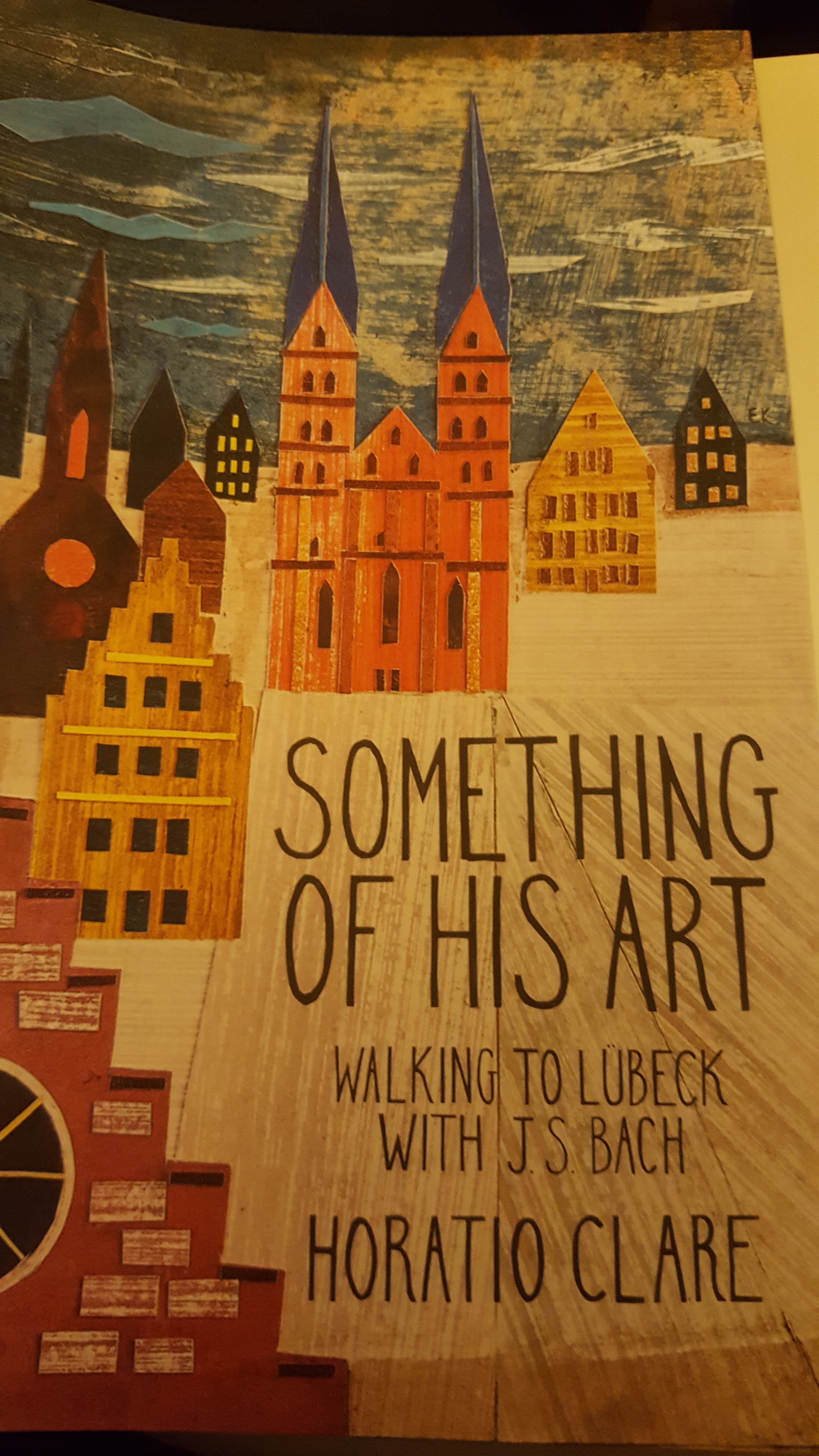
Horatio Clare, Something of His Art: Walking to Lübeck with J.S. Bach (Dorset: Little Toller, 2018). Nice BBC-style writing (there are podcasts of this as well) about following Bach’s footsteps through paths.
Linda Cracknell, Doubling Back: Ten Paths Trodden in Memory (Glasgow: Freight Books, 2014). Good memoir of esp Scottish trails, combined with travelogue and literary commentary. Available (through a new publisher) on Amazon.
Annie Dillard, Pilgrim at Tinker Creek (San Francisco: Harper and Row, 1974). In some ways, this book helped start the “new nature writing” and its emphasis on walking. Or it picked up on Thoreau, since it’s really about walking and observing in a small area. A classic.
Dwayne Donald, “We Need a New Story: Walking and the wâhkôtowin Imagination,” Journal of the Canadian Association for Curriculum Studies (JCACS) La Revue de l’association canadienne pour l’étude du curriculum (RACÉC) Vol. 18, No. 2, (2021): 53-63. Focusses from nêhiyaw (Cree) perspective on the uses of walking as a way of changing things, including attitudes and history of settlement.
Nancy Louise Frey, Pilgrim Stories: On and Off the Road to Santiago (Berkeley: University of California Press, 1998). This entertaining, well-written book is specifically about the Camino de Santiago as “therapeutic walking”
Frédéric Gros, A Philosophy of Walking (New York: Verso, 2014). Gros focusses on the history of walking and philosophical thinking.
M. Brennan Harris (2019) “The Physiological Effects of Walking Pilgrimage,” International Journal of Religious Tourism and Pilgrimage: Vol. 7: Iss. 1, Article 9. doi:https://doi.org/10.21427/q6de-av43 Available at: https://arrow.tudublin.ie/ijrtp/vol7/iss1/9. Pretty much what it says, and interesting from an exercise scientist’s point of view.
Trevor Herriot, The Road is How: A Prairie Pilgrimage through Nature, Desire, and Soul. HarperCollins, 2014. I know Trevor and have walked with him. He’s a good writer and a keen observer of humanity and nature, and passionate about the environment and justice for Indigenous peoples.
Werner Herzog, Of Walking in Ice. Translated by Martje Herzog and Alan Greenberg (Minneapolis: University of Minnesota Press, 2015). Short and interesting, this account details Herzog’s journey north on foot to visit a supposedly dying friend.
Erling Kagge, Silence in the Age of Noise (New York: Pantheon, 2017). (translated from the Norwegian). Lovely reflection, on the meditative aspects of walking.
Gideon Lewis-Kraus, A Sense of Direction: Pilgrimage for the Restless and the Hopeful (New York: Penguin/Riverhead, 2012). Details three different pilgrimages including Hasidic pilgrimages, in extremely well-written, urban “New Yorker” style. Emphasis on the “restless” part of the title.
Robert Macfarlane, The Old Ways (London: Penguin, 2013). The prototypical English countryside walking book. A classic must-read of the genre, about the English countryside, full of interesting and educational asides.
Lisbeth Mikaelsson, “Pilgrimage as Post-secular Therapy.” Scripta Instituti Donneriani Aboensis 24 (2014): 259–273. Pretty much what it says, as academic treatment.
Robert Moor, On Trails: An Exploration (New York: Simon and Schuster, 2016). An entertaining and well-written general exploration, tending toward the environmental and natural place of walking, rather than the historical.
O’Mara, Shane In Praise of Walking (Bodley Head, 2019). Haven’t read this yet but absolutely will, since it’s by a fellow Dubliner. From a neuroscientist!
Thelma Poirier, Rock Creek (Regina SK: Coteau Books). Poetic explorations of land and history from Poirier’s three day walk to the source of the creek in Wood Mountain. In the tradition of Nan Shepherd and Annie Dillard.
Nan Shepherd, The Living Mountain (Aberdeen: University of Aberdeen Press, 1977). A classic meditation on place and our longing for connection to the natural world, set in the Cairngorm Mountains, Scotland. Walking-and noticing-locally.
Leanne Betasamosake Simpson, As We Have Always Done: Indigenous Freedom Through Radical Resistance (Minneapolis: University of Minnesota Press, 2017); See chapter 9 “Land as Pedagogy.” From Anishinaabe perspective, on land as teacher (walking has a place but secondary, in this treatment)
Rebecca Solnit, Wanderlust: A History of Walking (New York: Penguin, 2000). I still think this is the greatest book of this genre, by a fantastic, insightful, author concerned not only with walking but also with justice.
Solnit, A Field Guide to Getting Lost (New York: Penguin, 2005). Great, but not as good as Wanderlust (or maybe I just compare everything to that).
Thoreau (need I say more?)
Edmund White, The Flâneur: A Stroll Through the Paradoxes of Paris (New York: Bloomsbury, 2001). Interesting for being a perspective about the history and philosophy of urban walking.
Raynor Winn, The Salt Path. (London: Penguin, 2019). More on a specific set of English historic paths, with general observations about walking.
There are LOTS of popular articles about the benefits of walking. A smattering, in no particular order:
And last but not least, Matthew Anderson (that’s me!!) The Good Walk. A memoir of how we launched the long-distance pilgrimages that Canadians and Indigenous folks have been taking almost yearly since on traditional trails across the prairies. I’m looking for a publisher!
On the recommendation of Ken Wilson, I’m reading Something of his Art, a 100-page book by English-Welsh author and broadcaster Horatio Clare about a walk from Arnstadt to Lübeck, Germany. In October 1705, at the age of 20, a rebellious young Johann Sebastian Bach headed north on foot to pay a surprise visit to the elder organist and Baroque composer Dieterich Buxtehude. Clare and two others from the BBC recreated that walk, also setting out in the fall. The record of their trip – you can listen to a BBC podcast series about it – contains Clare’s reflections on everything from Bach’s temperament (students of the day carried rapiers to defend themselves) to ways that the autumn countryside – and our world – have changed because of climate degradation.
Ken loved the book; he told me I would too. He was right.
Clare walked 230 miles, roughly the distance we’ve covered in our treks on Treaty Four and Treaty Six territories. I’ve had the pleasure of singing works by both Bach and Buxtehude in various choirs over the years. And I’m a Lutheran, affected by years of hearing Bach, and by some of the same theological worldviews that inspired the composer.
But you don’t have to be musical or a Lutheran (or even a walker) to love this book: Horatio Clare is a rare treasure of an author. His rich descriptions will have you hearing the sound of their feet “through thick cushions of beech leaves, gold and bronze and red,” and seeing Lower Saxony “intricate and melancholy in the rain.” You’ll learn about Bach. More than that, you’ll find yourself walking along Thuringian trails greeting local farmers, or entering old-town Erfurt in the golden twilight. Anyone who has ventured on long treks will feel a thrill of recognition in Clare’s words: “Coming into town as night falls is a wonderful feeling after a day’s walk. You move through the streets, your eyes sharpened by the length of the day’s views, your feet tired and your muscles worked, alert and fatigued at once.”
Have you ever had nagging doubts about whether you behaved properly at some event? Or thought back on an experience, only to realize you now think about it in an entirely different way than you once did? It can happen in pilgrimages too. It was enlightening to check back with Ásta Camilla Gylfadóttir about our 2016 trek with her and a group of other Icelanders from Bær to Skálholt. I’ve been worried that with our English-language needs and our massive tourist luggage we eight Canadians “spoiled it” for the Icelanders that year. But for Milla, our walk is only a bright memory. For her, the fact that there were Canadians along on the Pílagrimar only made it better. I can’t tell you how liberating our recent Zoom chat turned out to be.
Which makes me realize once again that there are many parts to a walking pilgrimage: the journey is only one of them. A big part of any pilgrimage is narrative: the stories that gave rise to the pilgrimage (at Lourdes, for instance, the Marian appearance to Bernadette), but also the stories that come out of the experience of the pilgrims. Like the dozens of crutches left in Brother André’s chapel at St Joseph’s Oratory, Montreal, or the hundreds of pilgrim blogs, videos, books, and poems arising from the Camino de Santiago in Spain, these later stories “layer on” to the original narratives, making the original journeys richer, more complex, and more about the present. A pilgrimage stays ever-present – and ever meaningful – in its re-telling and sharing. For that I’m thankful.
My pilgrimage podcast is now available on Spotify and on TuneIn, as well as Apple Podcasts (some episodes missing) and it’s hosted on Podbean!
I just posted the second episode in my podcast series “Pilgrimage Stories from Up and Down the Staircase”! In these 20 minutes you come along for the first part of the walk along the St. Cuthbert Way from Melrose Scotland to Holy Island, England. You’ll meet Chris and Clare, and find out why she’s Saint Clare, to me. I hope you enjoy the show, which you can find on Podbean here, and on Apple podcasts, here!
How do you walk a pilgrimage during these months of restricted travel? I’ve been walking up and down my staircase in Nottingham England, and dreaming of pilgrimages past! To share those stories I’m releasing my first-ever podcast, “Pilgrimage Stories from Up and Down the Staircase.” Each episode features a different trail, or a different character I’ve met. I’ll introduce you to enthralling paths in Norway, Scotland, England, Iceland, Canada and Indigenous territories, and provide some of the resources you’ll need to walk them. All the while I’ll be telling the stories of the fascinating individuals I’ve walked with and met along the way, and sharing snatches of our conversations, songs, and experiences.
Thursday, July 30, 2020, at 5 pm Montreal time, I’m releasing the first episode: “Walking the St Olav Way.” In the 17-minute episode you’ll hear snatches of our struggle up and down mountains and jumping late-spring run-off streams and boggy marshes. You’ll meet a friendly Norwegian border agent and a marathon German pilgrim struggling to understand his life. You’ll sit with us in rustic Budsjord Gård and hear fellow pilgrim Kathryn singing as we walked. I hope you’ll listen in to this first episode, and to the others as they come out every Thursday! The series “Pilgrimage Stories from Up and Down the Staircase” will be available wherever you find your podcasts.
To find out more about St Olav before listening to the episode, why not check out some of these resources?
The official St Olav website, which you can find here, is a wealth of beautiful images and practical info (look for the English-language option)
In 2011, Alison Raju wrote The Pilgrim Guide to Trondheim, available at this website.
For my article about the history of the Trail and its modern-day recovery as well as some photos of our 2013 trek, see the International Journal of Religious Tourism and Pilgrimage, here.
For an article about the health benefits of walking the St Olav Way, written by a Norwegian scholar of pilgrimage in the same journal, see this link.
I’m looking forward to sharing my experiences with you on the “Pilgrimage Stories From Up and Down the Staircase” podcast!
Last Saturday, October 26, a group of eleven, mostly Settler Canadians, walked the Seaway between 25-30 km from Kahnawà:ke’s Cultural Centre to Montreal. I’m a Settler scholar from Treaty Four territory, and I planned this walk as a “bodily territorial acknowledgement,” in preparation for our Theology in the City Conference at Concordia this week. We pilgrims were a mixed group – a Buddhist monk, two professors, two undergraduate students, a doctoral student, and a writer! With the knowledge and approval of the Traditional Longhouse of the Mohawk Nation at Kahnawà:ke, we began with a smudge led by Dr Christine Jamieson (Interior Salish – Boothroyd Nation) – Christine teaches Indigenous spirituality in our Dept of Theological Studies. Then we were off! We were blessed by the nicest day of the week: sunny, dry, and warm. We were enthusiastic walkers who made good time, and were back in Montreal by supper. I’m thankful for the good conversations and quiet moments of beauty and contemplation along the way. Thanks also to the enthusiastic reporters from the Concordian, led by Jad Abukasm, who walked the first leg with us and enjoyed breakfast at our table at the Sunnyside Diner (formerly Friendly’s) in Kahnawà:ke!
Tomorrow, September 16, is the feast day of Saint Ninian. In July, together with Christine Ramsay, Ken Wilson, and Sara Parks, I walked the Whithorn Way in Scotland, the medieval Royal pilgrimage route to St Ninian. To honour Saint Ninian Day here’s a short video of that pilgrimage!








 Which makes me realize once again that there are many parts to a walking pilgrimage: the journey is only one of them. A big part of any pilgrimage is narrative: the stories that gave rise to the pilgrimage (at Lourdes, for instance, the Marian appearance to Bernadette), but also the stories that come out of the experience of the pilgrims. Like the dozens of crutches left in Brother André’s chapel at St Joseph’s Oratory, Montreal, or the hundreds of pilgrim blogs, videos, books, and poems arising from the Camino de Santiago in Spain, these later stories “layer on” to the original narratives, making the original journeys richer, more complex, and more about the present. A pilgrimage stays ever-present – and ever meaningful – in its re-telling and sharing. For that I’m thankful.
 I’ll introduce you to enthralling paths in Norway, Scotland, England, Iceland, Canada and Indigenous territories, and provide some of the resources you’ll need to walk them. All the while I’ll be telling the stories of the fascinating individuals I’ve walked with and met along the way, and sharing snatches of our conversations, songs, and experiences.


 somethinggrand