Categories
Uncategorized

Smudging and Walking

smudging or just before

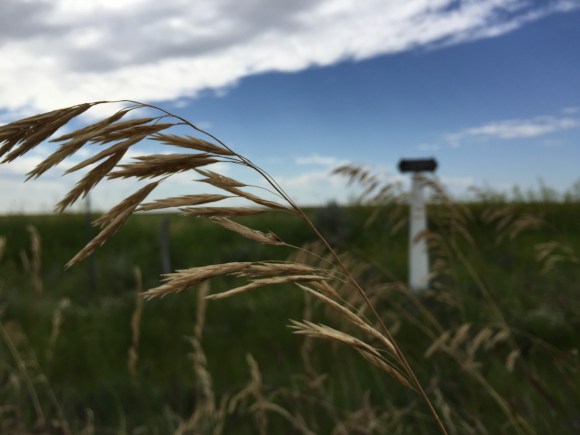
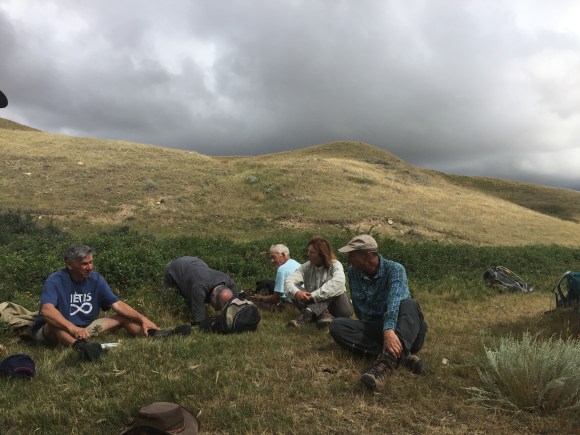
There aren’t any pictures, really. That’s because we don’t want to disturb or disrespect what we’re doing by recording it. Just about every morning, before we start walking, Rick Kotowich, a Métis/First Nation walker, smudges our group and we reflect on what we’re thankful for and what we hope for, give thanks for the land and the people we meet. A few times, local ranchers or farmers happen by to see us just as we’re about to begin, and it’s been interesting: every one has been interested in joining in. The elements of the smudge, sage and sweetgrass, reflect the country we’re walking through (besides buckbrush, there’s been lots of sage growing wild). We remember ourselves and the land we’re walking through with the smudge. And in this dry year, we are fastidious about making sure everything is done safely.
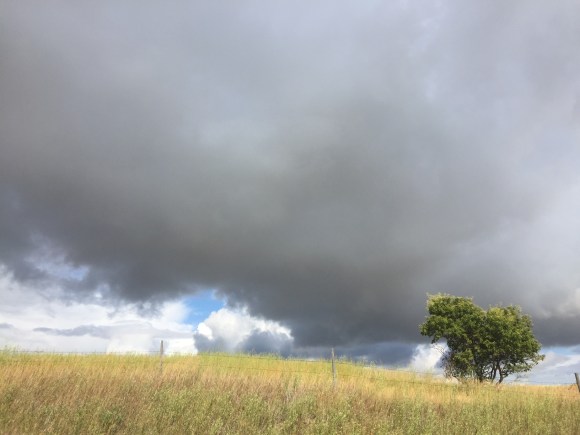
tree against stormcloud

quotes of the day (yesterday) from a local rancher, looking out over the horizon as he talked to us: “awful nice country…until the farmers found it.” Or from Fred, one of the walkers, looking at his tent: “my mess is changing, which I’m taking as a sign of hope”.

Categories
Uncategorized

The Kindness of Strangers

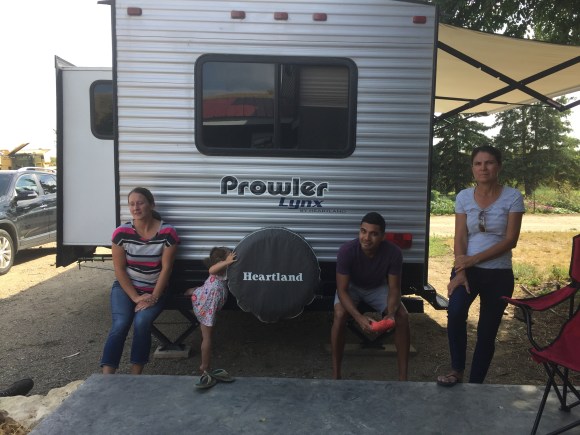
Apple-cinnamon cookies, given by the good folks of Kyle Lutheran as we passed by (too late for the service, but not the snacks!). Iced-tea and cookies from the young women of the Swift Current Hutterite Colony. Cold water, muffins and washroom use (always appreciated!) from the Elliott family, near Otter Springs, who saw us passing and took up the binoculars to have a better look.

Hutterite women offering iced tea

People ask what the difference between pilgrimage and tourism might be. One of the main differences, I’ve discovered, is how the pilgrim relies on the kindness of strangers. Especially on an arid prairie landscape, both feet blistered, under 28 degree Celsius heat and no wind or shade, a refill of water is a blessing, pure and simple.

Elliott family welcome.jpg

Tonight we’re resting and recharging in rented rooms in Elrose SK. Only 16 or 17 km today, but they were hot ones…I was thankful for the mid-day break, sitting on a tarp in the midst of a rare oasis of cottonwood poplars listening to the red-winged blackbirds complain at our intrusion. White Bear Lake was a surprise. Tomorrow we pass by Otter’s Creek and see the depression in the earth where a home was once built into the earth. This trail seeps history at every step.

IMG_2636

earthen home Matador SK


Categories
Uncategorized

Honouring the Ancestors

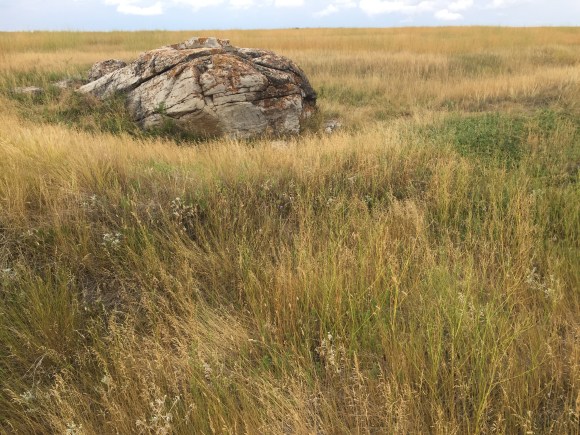
grandfather rock

Almost 30 km on foot today, so my fellow trekkers tell me. It FELT long, that’s for sure. Down, over and back up the beautiful South SK River valley, where in 1952 my mother posed for Everett Baker for this photo (discovered by Hugh Henry of the SHFS). I laid tobacco, borrowed from Ken Wilson, at the spot in memory of my mother, who died last year. Then, moments later, we also laid tobacco at the grandfather stone (above). You can feel how smooth and cool the rock is, even in the prairie sun, worn by centuries of bison rubbing themselves against ‘grandfather’

Mom by Everett Baker 1952 SHFS .jpg

Finally, after the first really painful day of walking, arriving in Kyle, where gracious locals welcomed us for an evening (below). Thanks to all my relatives who came out in addition, and to Cathy and John, from Outlook! It was fun to see the country churches where I preached as a young student. The next morning, the men eating breakfast at the hotel all seemed to know who we are, offering coffee and advice on socks (wear two – avoids blisters, said one quietly, on his way out). Small town Saskatchewan….we’ve been treated graciously. And even, last night, hot showers!

kyle meeting Sat Aug 5

Categories
Uncategorized

What the Battleford Trail Means

IMG_2444.jpg

On the 150th anniversary of Canada, we just walked today by a traditional Indigenous burial site that has probably existed for 4,000 years. We’re all walking this trail for different reasons. Mine are these: 1/ to draw attention to the fact that there IS a trail of national historical importance, walked by Big Bear and his starving and freezing Plains Cree, right after they signed Treaty 6, the route run by the Métis freighters hauling goods overland from the end of the CPR line at Swift Current to Battleford in 1882, and the route taken by Col, Otter and his troops on their way to fight the North-West Rebellion. And 2/ to show that it’s important to remember that there is a public interest in access even to historic trails on private land. And 3/ to underline the importance of the Indigenous peoples to the history of Canada and Saskatchewan, and the long history they have in this area.

Categories
Uncategorized

Coming up in August!

In August we’re walking an incredibly important trail from Swift Current to Fort Battleford – a trail used by First Nations, Métis overland freighters, and Colonel Otter’s Canadian militia. Big Bear, after signing Treaty Four, came overland near here. We need to remember our important historical paths, and in the spirit of the TRC, to point out to non-Indigenous peoples how Canadian history has been shaped and formed by the removal of the First Peoples from the land. Are you interested in walking or helping sponsor a walker? You can!

Categories
Uncategorized

Crossing the Line

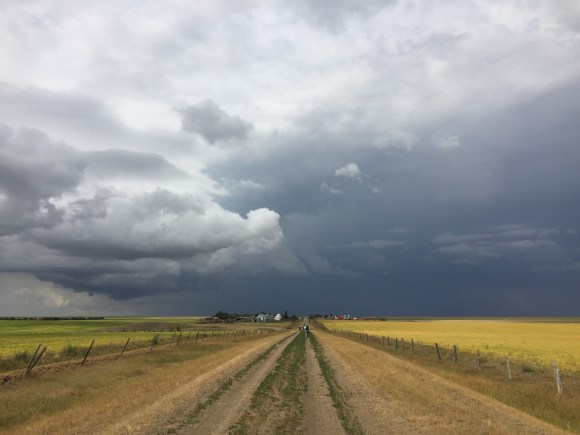
clouds and direction sign over SC SK

“Well, you know, it’s just across the Line,” my aunt said to me, about a town in North Dakota that my cousins were visiting. I haven’t heard that word for a while. In Montreal they don’t use it. But I grew up in Saskatchewan hearing it. “The Line”. Do you know where that word for the US border comes from, I asked my aunt? “No idea,” she answered.

Today is national aboriginal day. The 20th such day, and the first since the Truth and Reconciliation Commission issued its recommendations. Though it’s a small thing, one of the things we who are Settlers can do to mark this day is to remember where some of our words come from. They’re signs of a history willfully forgotten.

I grew up in Treaty Four land – except there were no “Indians”. The First Nations were, for me, like the ancient Egyptians: important people no longer around. What I DIDN’T know, because it wasn’t in my schoolbooks or taught in my classes, or talked about by my parents or grandparents, was that the original inhabitants had only been gone 85 years or so when I was born. The big secret I learned only years later was that they had been pushed off the land they had just signed title to, to make way for people like my grandparents and me.

Using the word “The Line” for the border is a relic of the days not so long ago when the 49th parallel was called “The Medicine Line” by the First Nations, especially the Lakota. They could cross it and the American Army, who were fighting a vicious battle with them south of the border, would not follow. This was good medicine, and at the time, the Canadian government was generally respected for such protection. Soon enough, our government starved the Lakota back south, and pushed the so-called ‘Canadian Indians’ north by starvation, an intentional policy to make an “Indian-free” land-belt for the railroad and its Settlers.

When we say “the Line” for the border, we echo those days. Even better, then: let us actually remember them – with honesty, apology, and intent to make good what was wrongly done.

Categories
Uncategorized

And I Have Felt a Presence

2015-07-26 10.57.57

For I have learned

To look on nature, not as in the hour

Of thoughtless youth; but hearing oftentimes

The still, sad music of humanity,

Nor harsh nor grating, though of ample power

To chasten and subdue. And I have felt

A presence that disturbs me with the joy

Of elevated thoughts; a sense sublime

Of something far more deeply interfused,

Whose dwelling is the light of setting suns,

And the round ocean and the living air,

And the blue sky, and in the mind of man


(William Wordsworth, Tintern Abbey, July 13, 1798)

Categories
Uncategorized

The Surprise Dinner Guest

Max Mirau with Hugh and Matthew

An example of one of my interviews with a self-professed “old timer”:

My father used to hunt deer year-round. Didn’t care a bit for the hunting licenses. He was a generous man and would hunt deer and give them to all of the neighbours. No one had much money then, so the meat was welcome, but my mother used to fret about his illegal hunting and give him trouble over it. Then one day the policeman came to the door on horseback after a long ride. He was tired and hungry and my father, always hospitable, asked him to stay to eat. Mom had a huge venison roast in the oven. She brought it out and served it, shaking with fear that father would be clapped into jail for poaching. The policeman finished eating, wiped his mouth, said “that was one of the finest beef dinners I’ve ever eaten”, got on his horse, and rode away.

Max Mirau, Swift Current, an old friend of my father’s.

Categories
Uncategorized

Our North-West Company of Pilgrims

middle of the road picnic Pinto Butte

Yesterday two of our group of four pilgrims ended their leg of the walk. Rick Kotowich will be staying for the community event tonight in Val Marie, and then heading home, perhaps to join us again near the end of the pilgrimage. My former teaching assistant, Hayden Thomassin, managed to find a spot on the Greyhound to Regina and is in place for his flight home today.

Already well over 100 km traversed. We’ve met some very nice people – in the photo above, three local ranch families (thanks esp to Keith and Margaret Walker and to Howard and Fern Hanson!) came together to meet us as we passed one of the few roads that day. They brought watermelon, rhubarb cake, and cold water, and lots of smiles. We needed the break and the refreshment. It was perhaps our hardest walking – through mile after mile of natural prairie grassland, over cactus and dry bog and sage and speargrass. By the end of the walk, our laces were furry with the speargrass that worked its way into my shoes and caused a painful blister. Our companions on this portion of the walk were Dave and Esther Green on horseback. We also came across all kinds of wildlife: deer, antelope, coyote, Swainson’s hawks with their scratchy cries overhead, and the tail end of a small horned lizard skittering down a hole. None of the rattlesnakes that live in these hills, unfortunately (or fortunately!).

At the end of the day I stumbled across a huge solitary boulder, rubbed smooth over years by the bison herds now gone. When my companions went to see it, they said: “didn’t you see? It wasn’t a boulder but a sleeping buffalo”. Sure enough, it was in the shape of a sleeping bison. Yet another of the magical places that sit alone on this land.

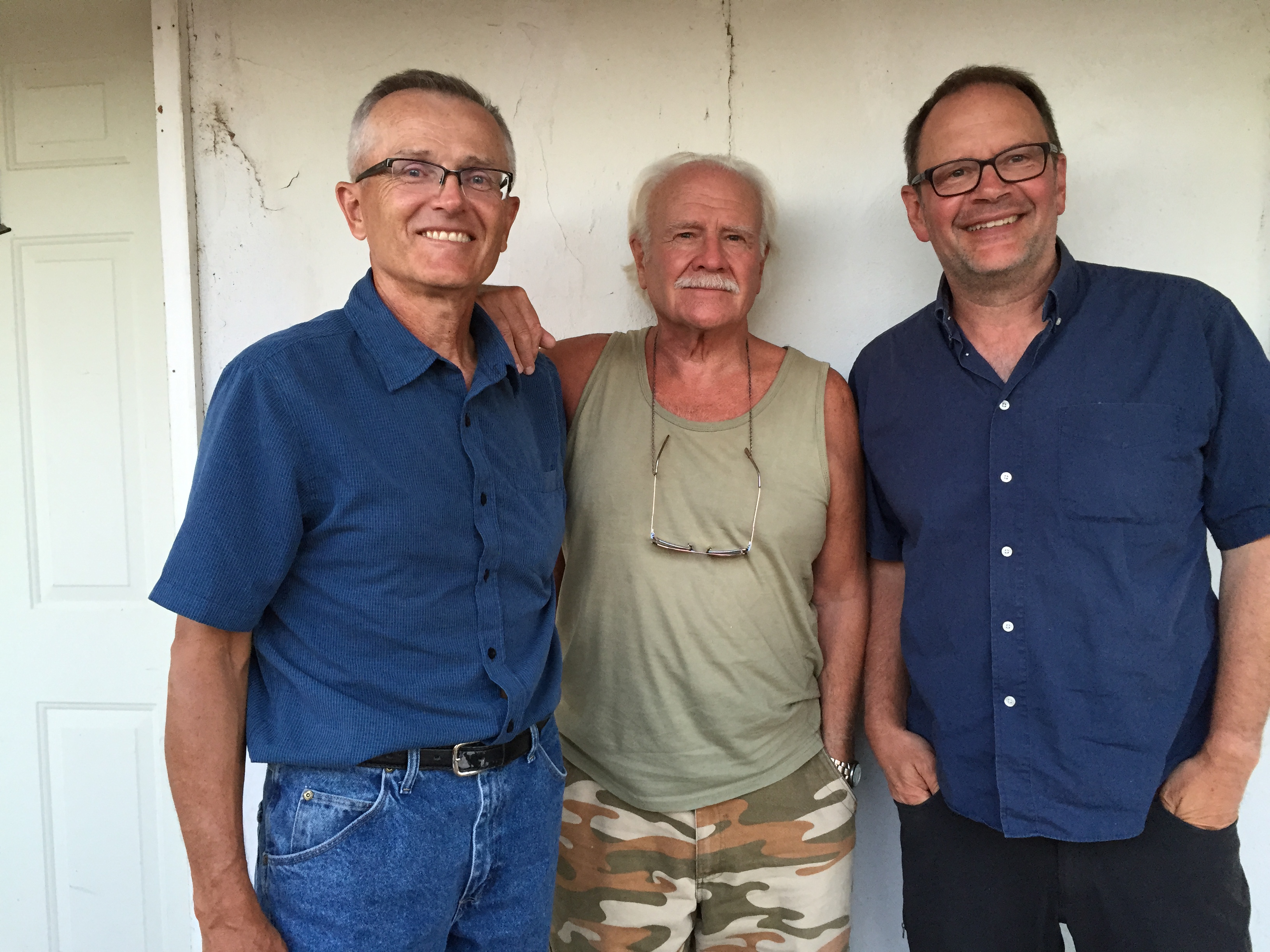
Hugh and I will miss Hayden and Rick. Rick’s attention to the spirit and the feeling of the land was inspirational, and Hayden brought a wonderful openness and enthusiasm to this first experience. More pilgrims are joining us today, so the company will change. But the journey, and the land, will stay the same.

Matt and Rick by NWMP trail post Pinto Butte July 23

(Photos by Marshall Drummond of Val Marie)

Hayden and Matthew selfie VM bar

Categories
Uncategorized

From Here to There (and in between)

IMG_2304

It’s only a matter of a few hours, but oh what a difference those few hours can make!

sunset elevator 3 full tree