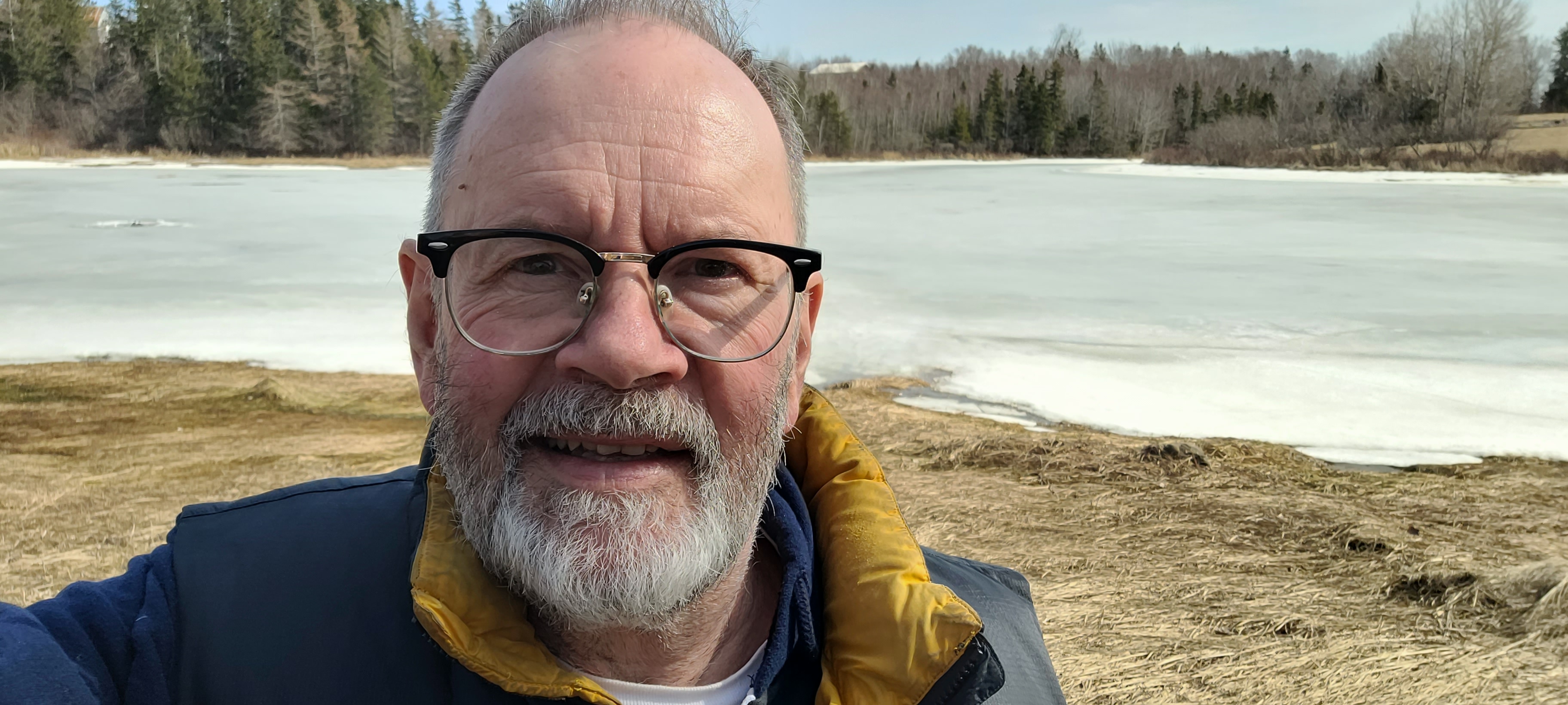
Wow. Hard to believe it’s been six months since a shudder ran down my left arm and I found myself unable to speak for a couple seconds and Sara called an ambulance and ran for the aspirin.
And…the TIA and major stroke and everything that followed.
When I was wheeled into St Martha’s Regional hospital on a stretcher last September I had no idea it would be home for three months. Autumn was just beginning.
Now here we are at the spring equinox, six months later. The day before spring, the ice came off our little inlet, and those annoying fake ladybugs are waking up all around the house.
The solar panels we had installed last fall are finally free of snow and making power (I check them compulsively).

The seedlings we planted last year have survived.

All signs of spring. Another sign: I’ll have to learn how to tie my shoes again, since pull-on winter boot season is nearly over.
Here’s what else is happening…
My Heart Procedure
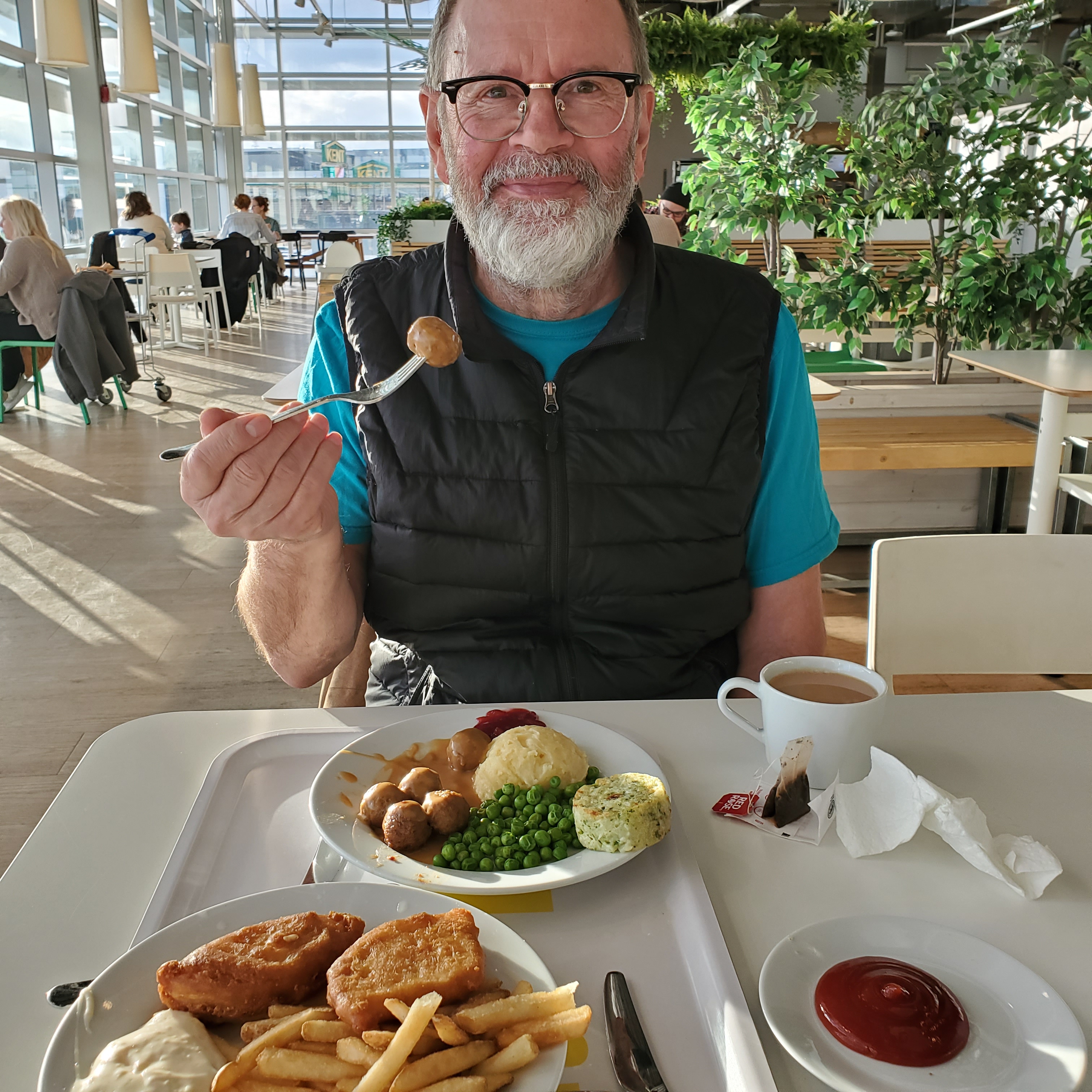
I had a pre-op appointment in Halifax last month, and Sara and I used our rare visit to the big city to have a date at IKEA (how romantic!). We then bought a car-load of groceries we can’t get in Antigonish at the surprisingly-well-stocked hole-in-the-wall that is Big Ray Convenience and Asian Store in Dartmouth.
During the appointment the surgeon teased us about being professors and grading him – but we said he already got an A+ just for taking me on. The procedure to close my PFO (Patent Foramen Ovale) will take place in a few weeks, in April. It involves inserting a soft metal “umbrella” into my heart through a tube inserted in my groin. (Really looking forward.) Once in place, it expands to close the hole in between the upper chambers of my heart (for explanation see here). Of course I’m nervous. But I’m thankful it’s considered a low-risk procedure, with recovery times of only a couple of days in most cases, and well worth it for the significant reduction in future stroke risk.
Bad Timing for the Someone Else’s Saint Party
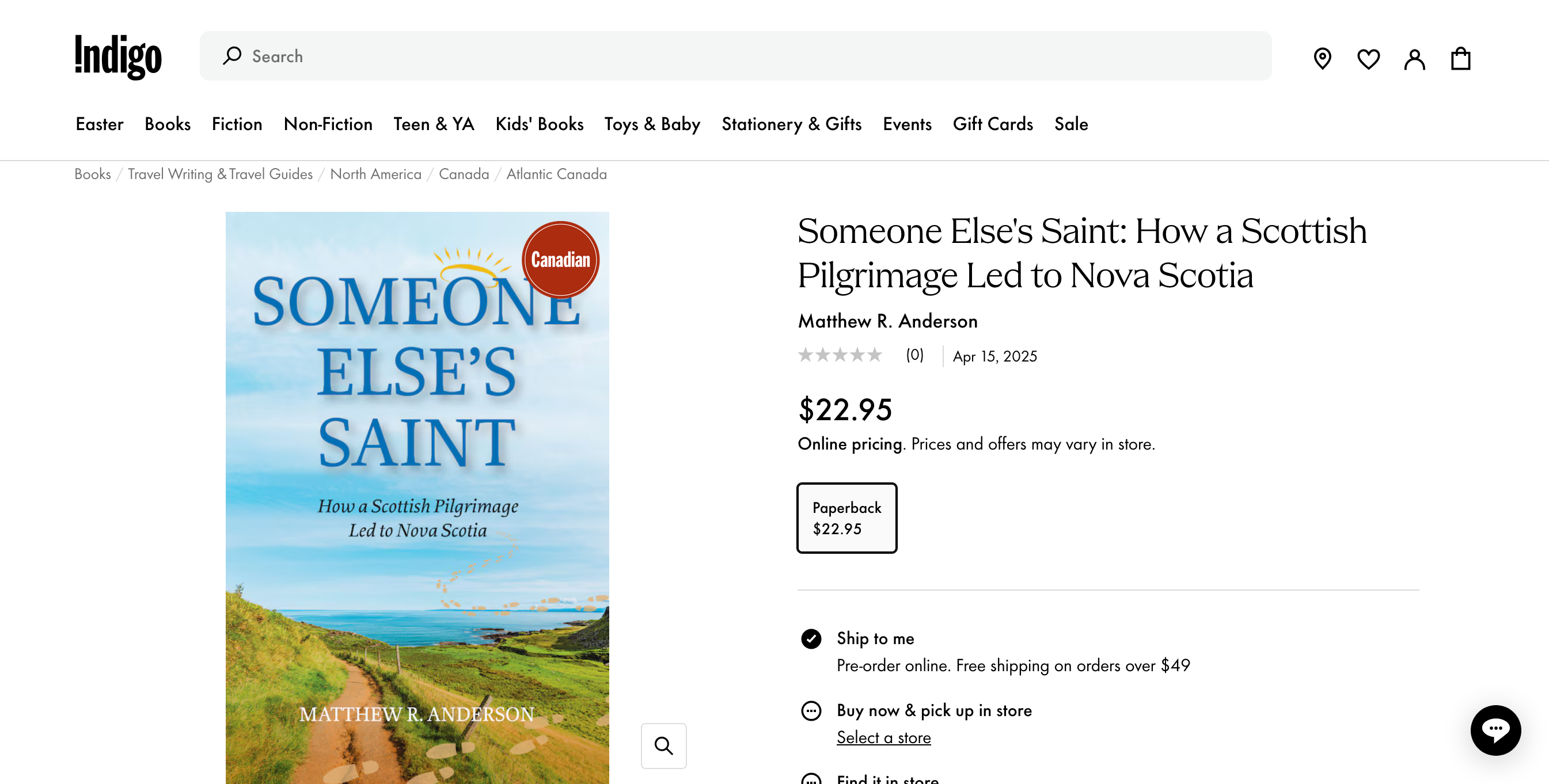
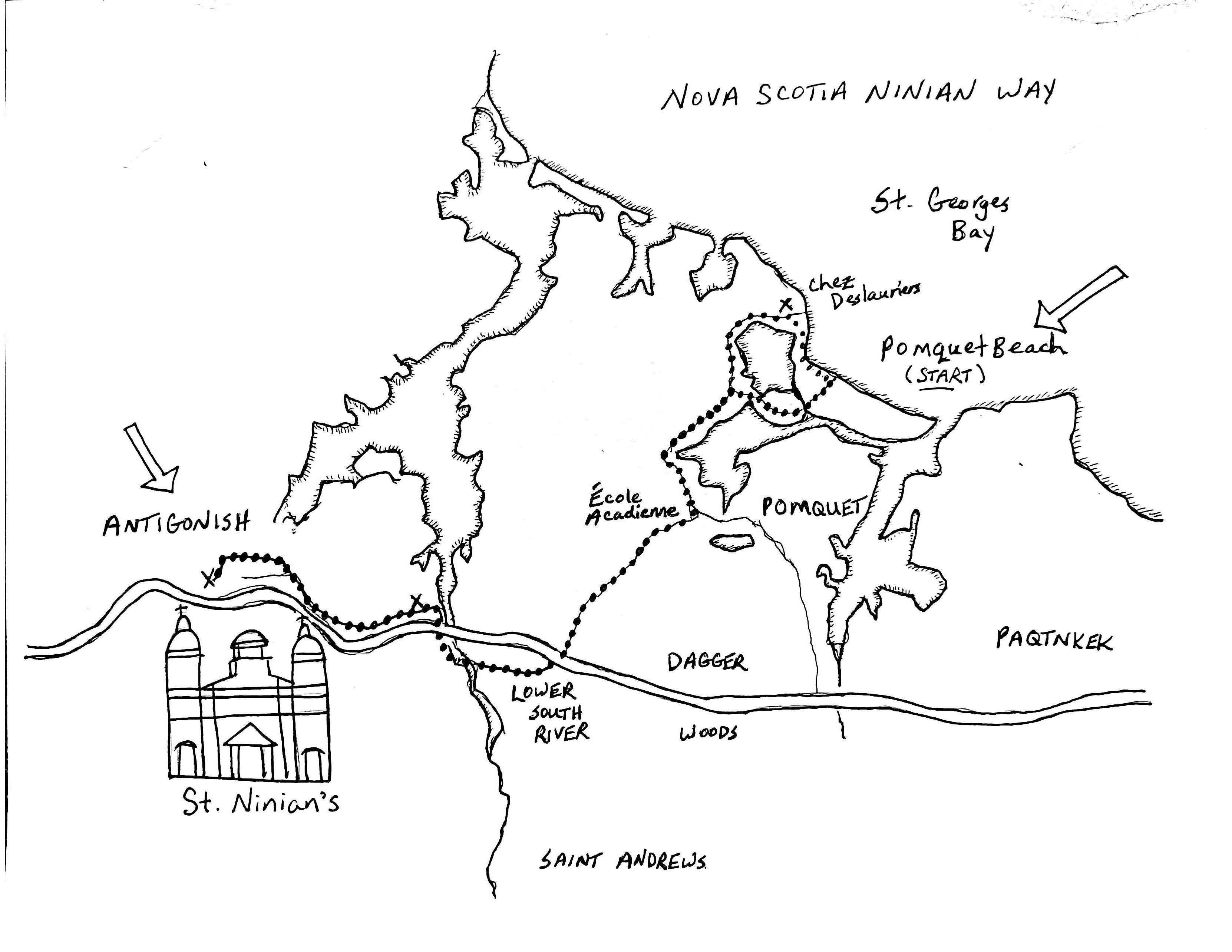
Someone Else’s Saint: How A Scottish Pilgrimage Led to Nova Scotia is coming out within the month (mid-April). It won the Pottersfield Prize for Non-Fiction last year before it was published, and the prize was publication! It’s about walking the Whithorn Way in Scotland only to find a strong connection to its saint (Ninian) right here in Antigonish, then inaugurating a new Ninian Way in Nova Scotia. I’d already arranged for a launch at the wonderful Antigonish Heritage Museum. To my delight, 2024 Canadian Traditional Musician of the Year Mary-Beth Carty had agreed to play a couple songs during the evening! But when I got the notice from the hospital about my procedure, of course it turned out to be the day before the launch. Drat. So keep your eyes peeled for an announcement once I find a rescheduled date! Fingers crossed it will still work for Mary-Beth Carty!
Flu and Field Trip

This last month I caught the flu. It really knocked back my energy … and my stroke progress. Fortunately, Sara quarantined in the other end of the house and sanitized like a surgeon and didn’t catch it, and nursed me back to health over the week or so when I was most affected. I recovered in time to lead our team-taught StFX Religious Studies class “Intro to World Religions” on a field trip to Saint Ninian Cathedral, where Father Danny MacLennan seemed delighted to welcome a gaggle of young people, and even took some brave souls down to the crypt “where the bishops are buried.”
Hearts in Motion

Twice a week I drive to town, park at a handicapped spot on campus, and spend an hour at the gym with about ten others, as part of a public health program called “Hearts in Motion.”. The others are there post heart attack or heart surgery, mostly: as far as I can tell, I’m the only stroke survivor (I’m the only participant with partial paralysis…trying to do the “windmill” warm ups with my left arm). I didn’t know what to expect starting out, but going to the gym has been great for me. The first weeks I couldn’t even get on the elliptical machine, much less use it. Now it’s my favourite. I can actually hold the moving hand grips, and release the left one and grasp it again mid-step (sometimes). The program’s physio suggested I try the rowing machine. I was doubtful – I’ve never liked that device. But he was right: the pairing of my left and right arms that’s necessary for “pulling back” the rope and handle seems to be very good for training my affected left arm to stretch and reach. There are only four more sessions, so I may have to get a membership for spring and summer just to keep up on the machines. I’m still incapable of running, even very slowly, on a treadmill. I’d trip and fall. But I’m more and more tempted to try, just briefly…
Left Leg and Foot
I’m fortunate that the Physio and Occupational Therapist outpatient departments at St Martha’s hospital are still keeping me on. They say they keep seeing progress, and tell me I’m unusual (I think in a good way?). At my most recent strength and flexibility test, the physio told me that I’ve recovered close to normal strength in my left leg. “But I still have quite a limp,” I told her. “You can see that.” “That’s your brain,” she replied. “At some point it may get back to automatically lifting your foot and adjusting your gait. But there’s no way of knowing when that might happen…” I’m hoping this is like a pilgrimage path in Scotland that I was on with Ken Wilson and Christine Ramsay. Our guide at the time told us: “Use is the cure.” The other evening some great music came on and Sara and I had a quick dance. At the end of it she was laughing: “that felt like before your stroke,” she said. “You were leading like the old Matthew!” Ahhh….that’s what I’m aiming at.
Left Arm and Hand
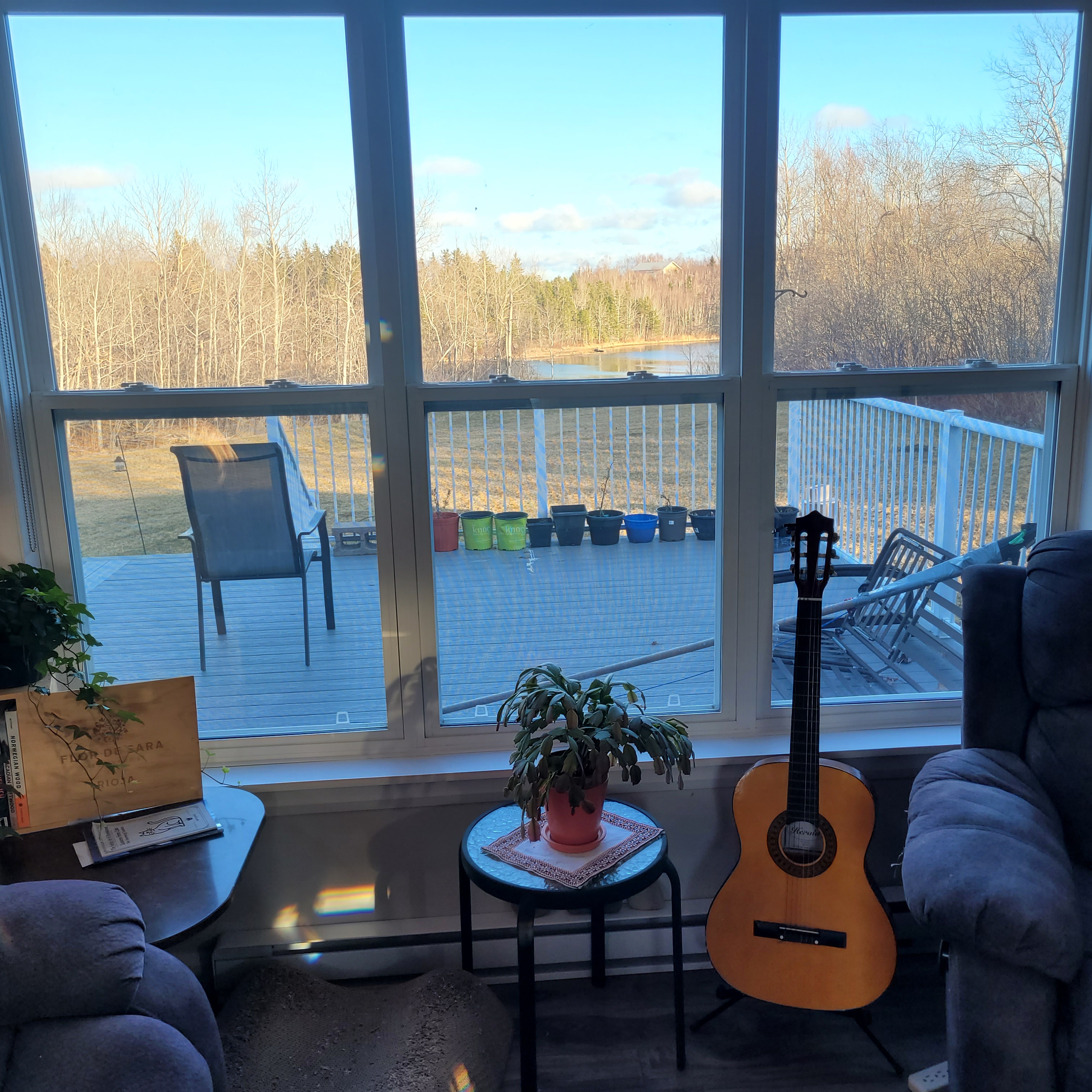
My use of my left hand continues to improve….but very, very slowly, from my perspective. My guitar chording continues to get better: now I can play E,D,A, and G with minimal help from my right hand. But it’s slow, and my strength in pressing down the strings sometimes lacks. I gave up entirely on trying to type with it. I’ll have to get back to that.
Janna, my wonderful therapy aid at St. Martha’s, makes me attempt to move clothespins from a steel wire as a strength exercise for my left hand. But what I enjoy most is playing catch with her! I’ve gotten to the point where on a good day I can catch a gently tossed tennis ball with my left hand, against my stomach, several times, and often succeed in tossing it back, although sometimes my hand won’t let the ball go.
The issue with my hand is what is called “tension” or “spasticity.” My fingers will be loose until I squeeze something (say, toothpaste). Then, instead of loosening again, my fingers stay curled – locked! Sometimes the best technique is to ignore the hand briefly, until the fingers relax again on their own. It’s a bit like trying to fool your own brain. The spasticity seems to be diminishing. But it’s a slow process.
Poetry and 2025 Saskatchewan Book Awards

My first submission of my “stroke poetry collection” went nowhere, so I’ll be editing the poetry and trying again. But yesterday I got great news that really lifted my spirits! My memoir The Good Walk: Creating New Paths on Traditional Prairie Trails is shortlisted in the “Publishing” category for the 2025 Saskatchewan Book Awards! On May 9 there will be a fancy awards ceremony in Regina, with the lieutenant governor in attendance. For now my cardiac doctor is telling me no travel. But I can’t wait for May! I’m trying to get my brother Mark, who lives there, to go in my place JUUUUUUUUUUUUUUST in case there is an award to accept.
The End of Term Approaches

All of the hospital staff seemed shocked that I planned to go back to work upon discharge. I don’t regret going back to teaching so soon. But now that the term is winding down I’m realising just how much energy it’s taking for me to go to town four days a week for teaching and physio (and, of course, I’ll stop by the grocery store or Canadian Tire often as well). The OT consultant from Halifax couldn’t believe my weekly schedule. “Of course you’re not getting through all your home exercises,” she said. “When would you do them?” Her main advice to me was to take it easier, especially after I developed frozen shoulder in my right arm last month. Sara declared the dishwasher (reaching down to load and reaching up to put dishes away) off limits and slapped a hefty 100-dollar fine on any disobedience!!! (I only made that mistake once.)
So taking it easy is part of my plan for spring. I’ll take inspiration from the Christmas cactus Sara bought me last fall for the hospital. It budded at Christmas. But in the end, no flowers materialised. Only now, after the equinox, at home, are the blooms coming.
I pray that in your life and mine, there will be delicate beauty developing in its own time this spring. In a world where small, powerful men seem so determined to distract us from their greed and incompetence by emphasizing division, brutality, and ugliness, may we be like this Christmas cactus: blooming boldly, especially where and when it is least expected, and most appreciated.






 a destination where on a clear day you can see Ireland, England, and the Isle of Man, Arts & Crafts art and architecture,
 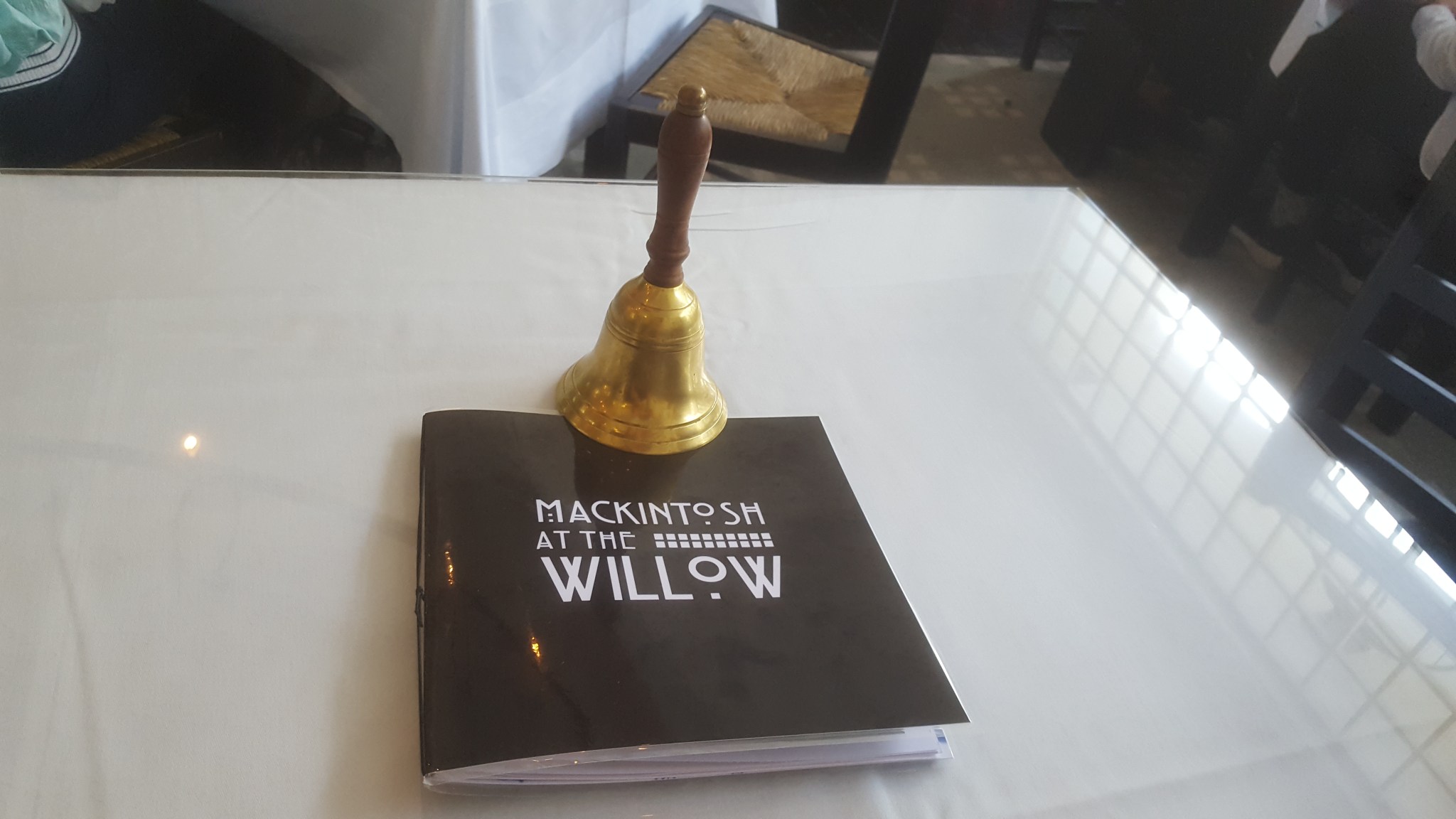 scones with jam, the moors, you’re more likely to be soaked in cold rain than baked by unending heat,
 Robbie Burns, and…I didn’t even mention A.D. Rattray’s Whiskey Experience in Kirkoswald!
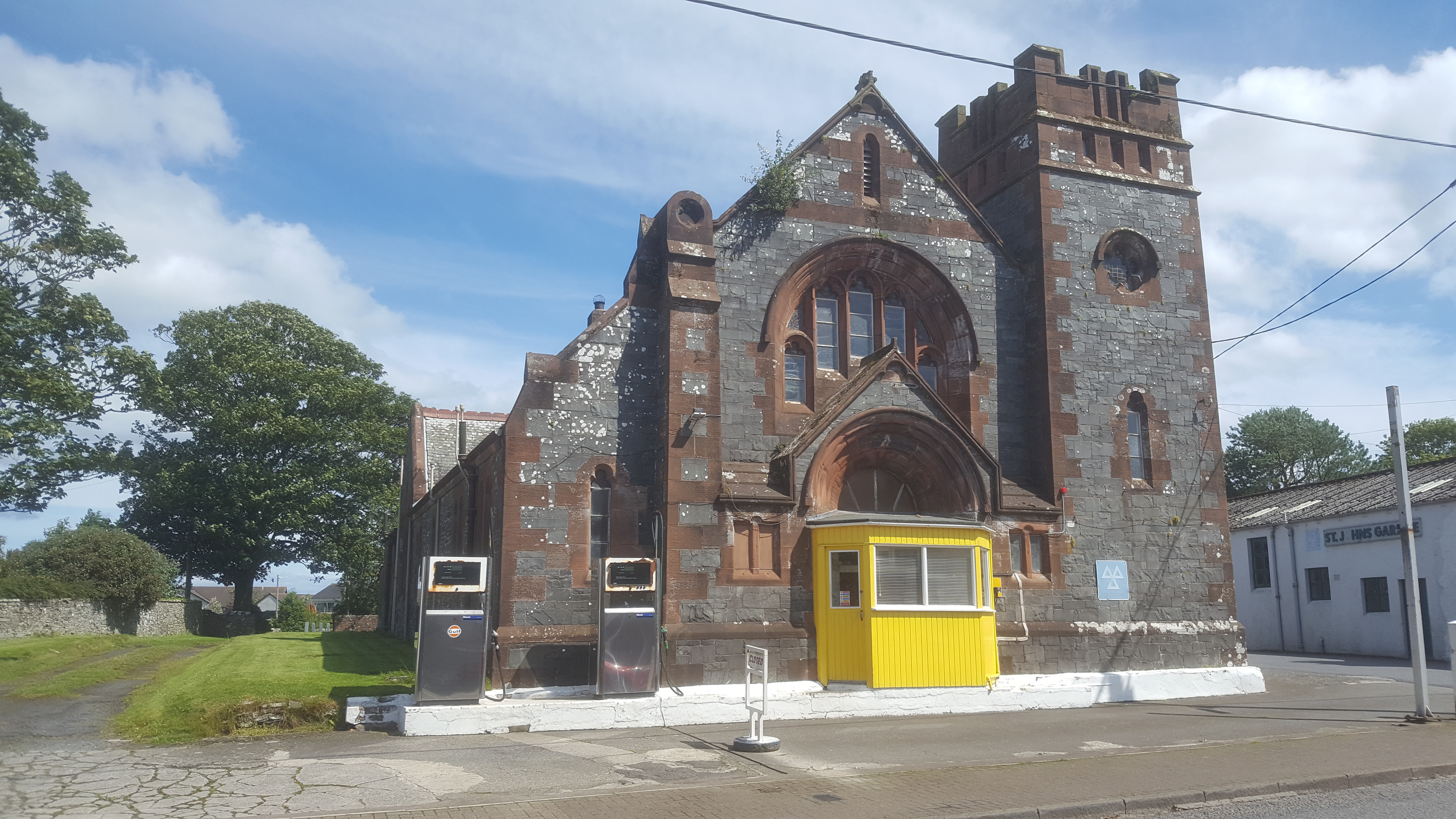
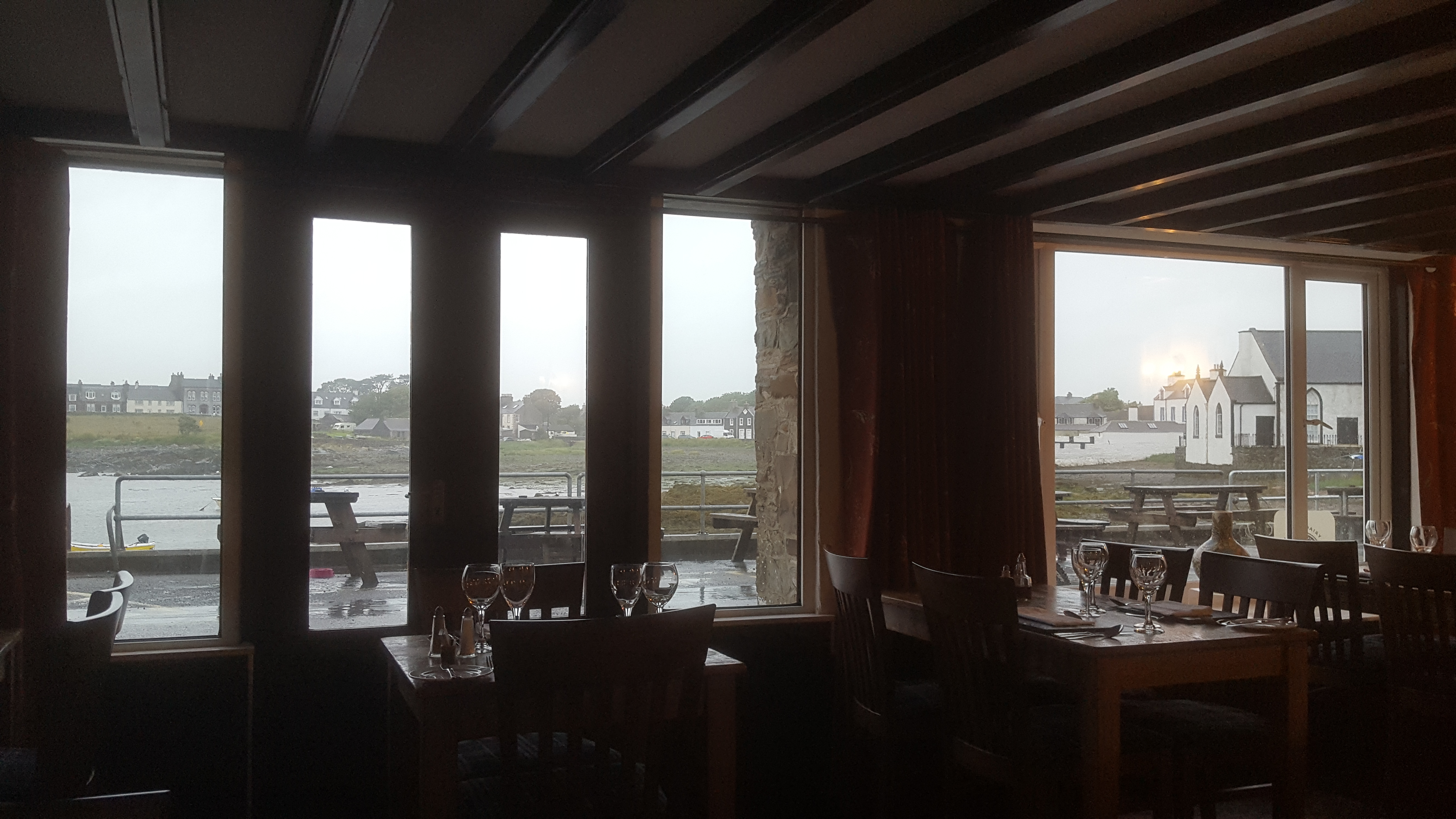
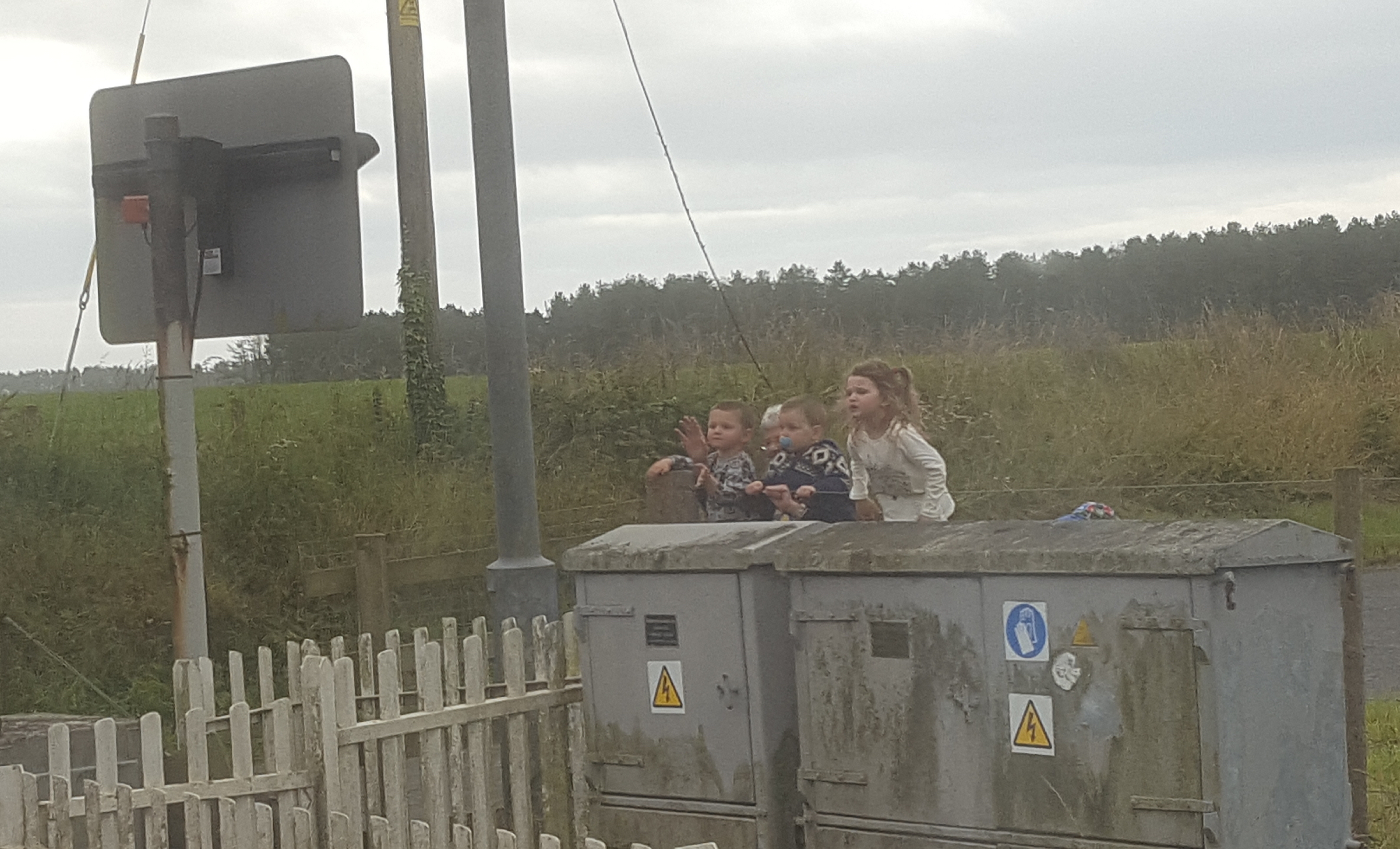
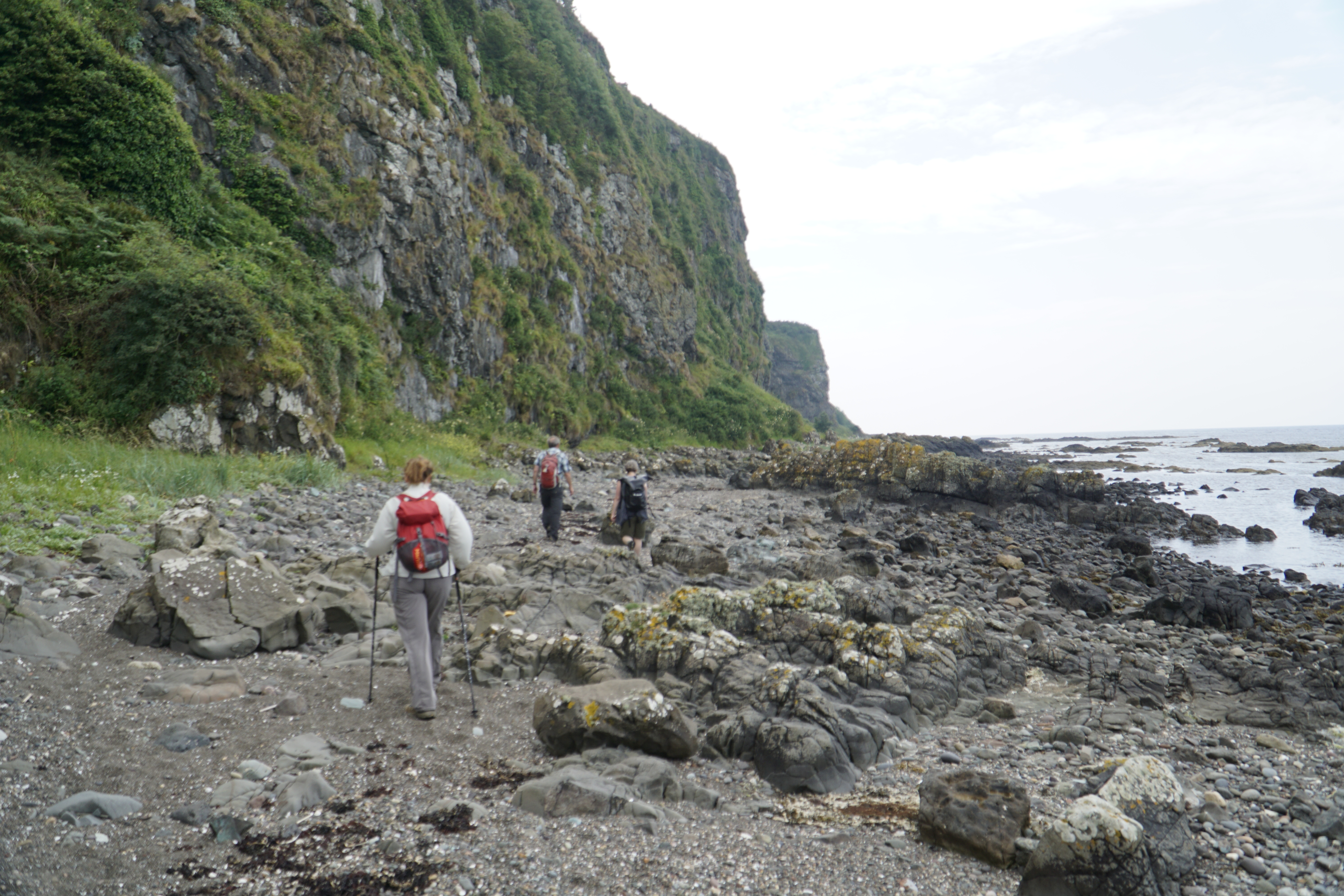
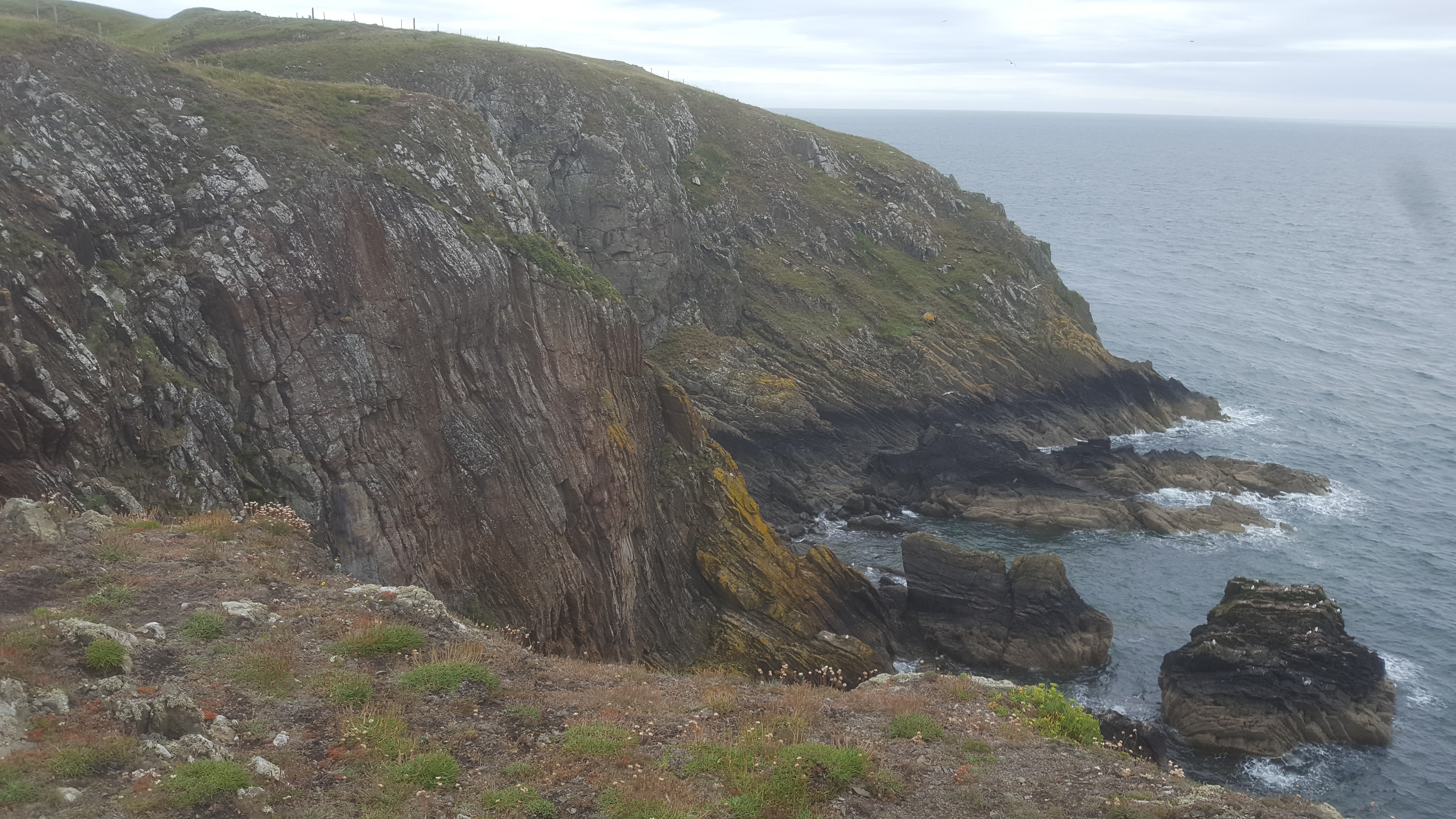 Today was a vertiginous day. It’s the perfect word, although I had to look it up. Vertiginous has two meanings, both true today: extremely high and steep, and suffering from vertigo. I don’t know how the Scots do it. We had just passed through a short section – the worst – where the path was within two metres of the edge and a stumble could easily topple you down 200-feet onto the rocks. A couple ambled toward us with a dog tied to the woman’s waist. When we said hi, she cheerily told us “he has to be tied up. He’s a naughty dog and we had to call the coast guard to fetch him a couple weeks ago.” Hmm.


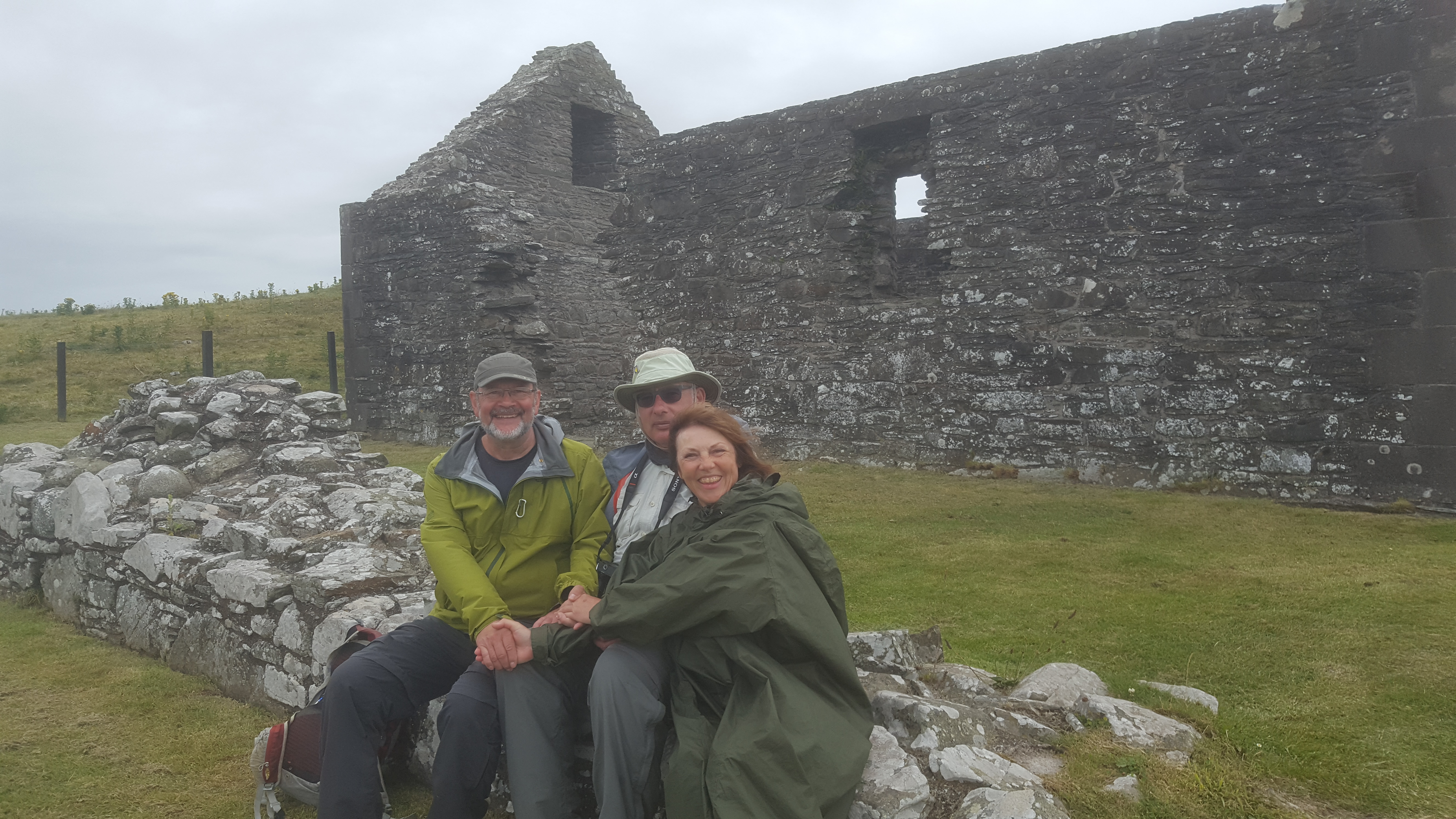

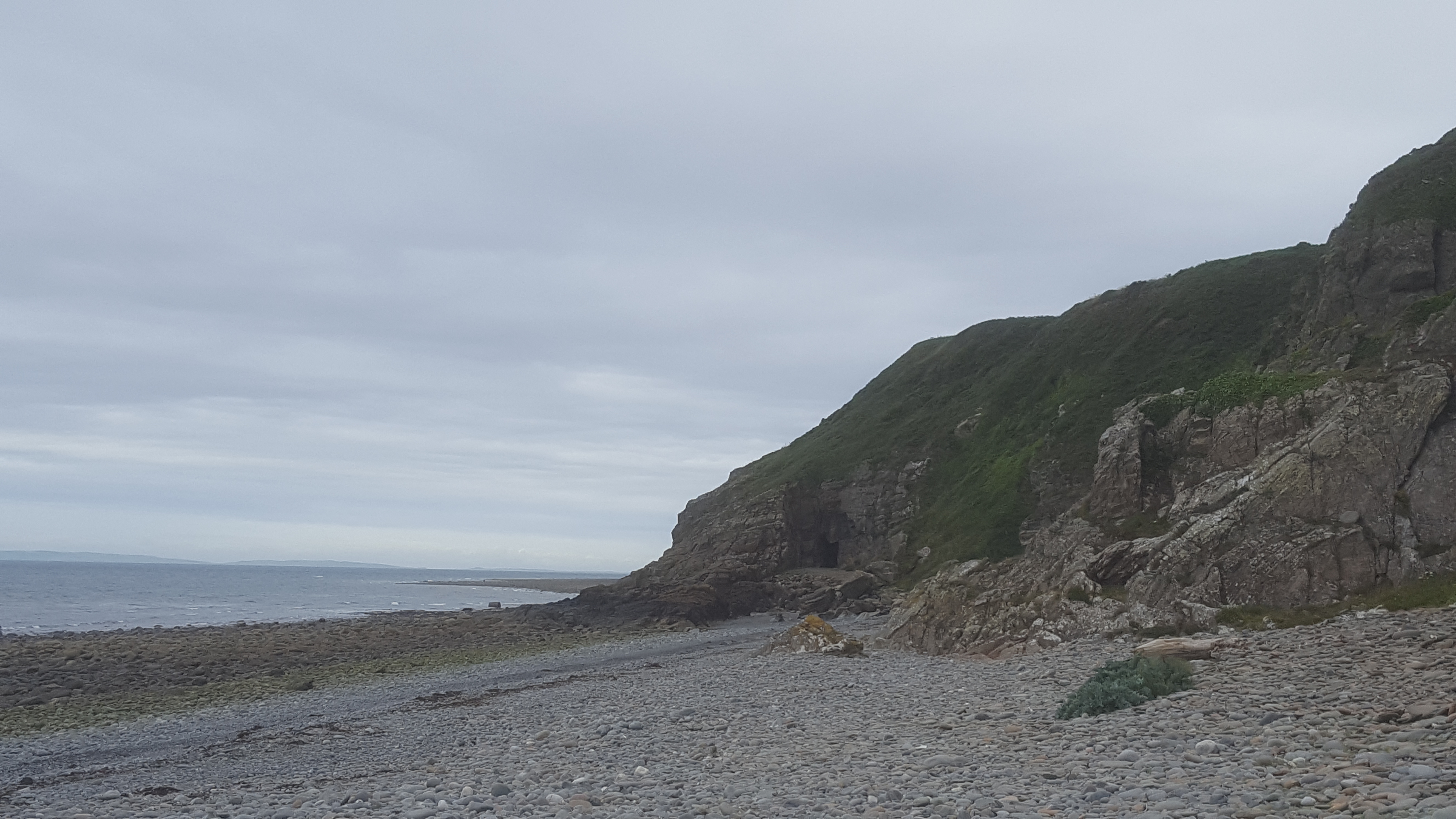

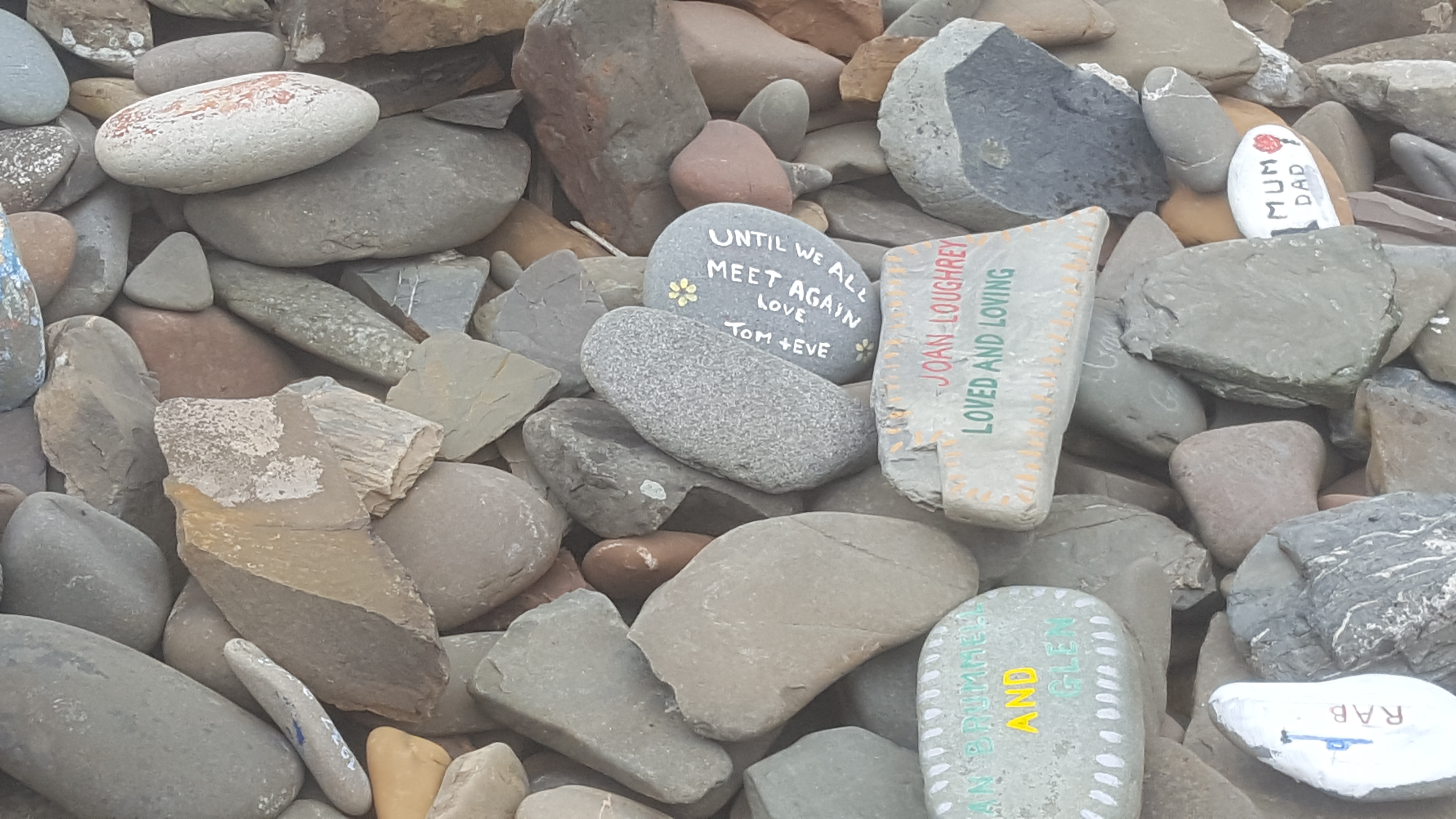


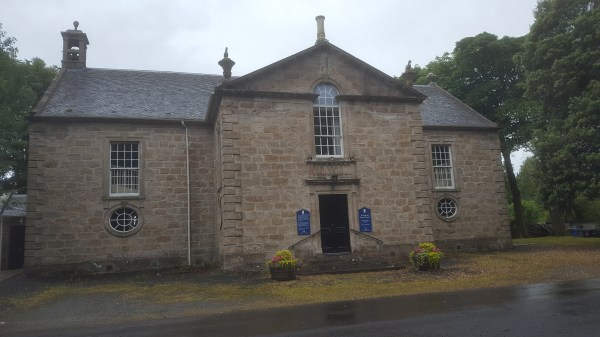
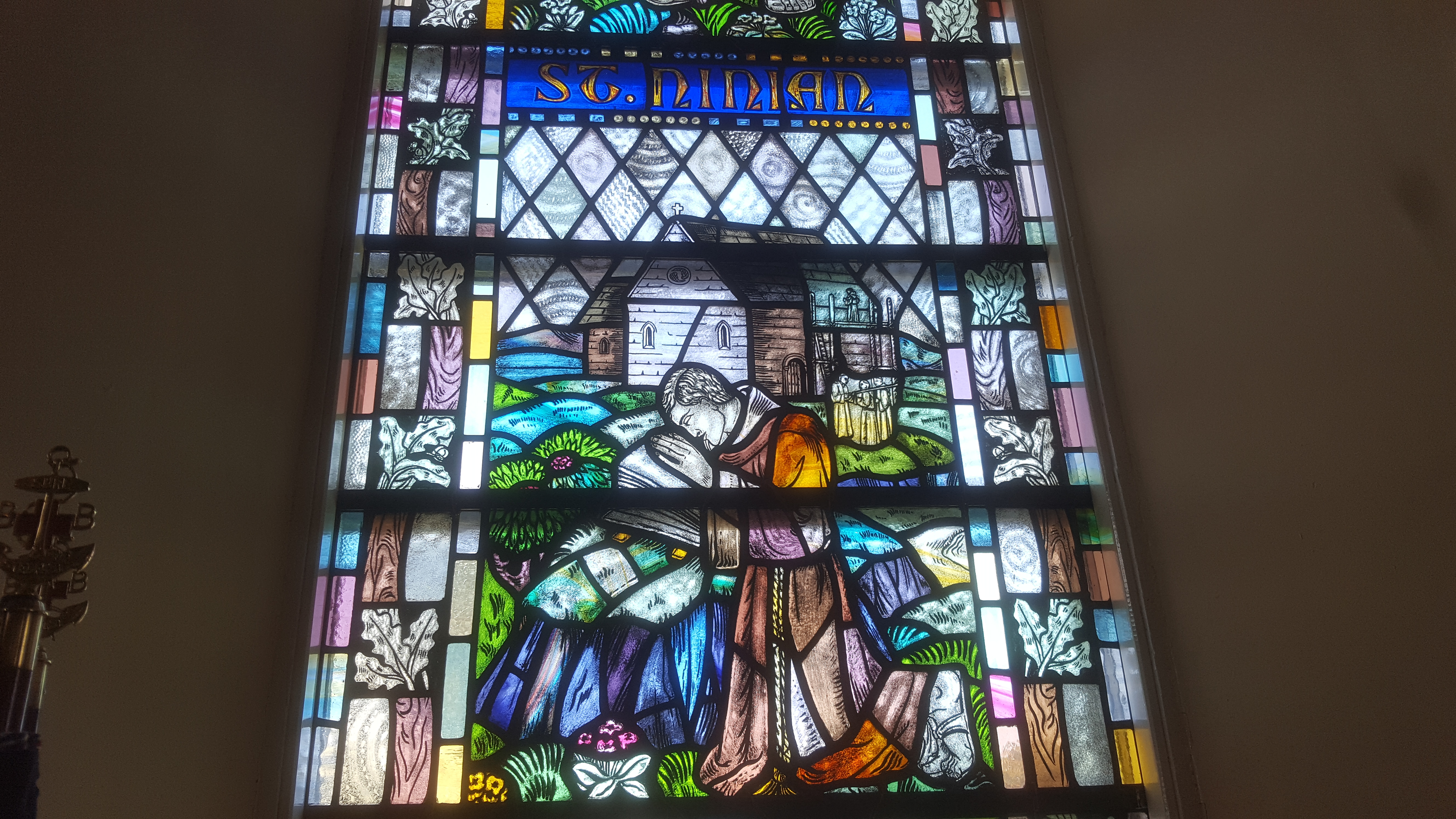 At the church in the ruins of Whithorn Abbey, no one was there to greet us. But the doors were open. Inside was Ninian, the fifth century saint, in stained glass, and a desk of pilgrim stuff. “Welcome to all pilgrims” said a little sign. “Please accept our certificate.” I wasn’t going to take one. We walked nine miles today, and overall already quite a distance. However I didn’t come as a pilgrim, but as a researcher and walker.
  Christine and Ken, despite being not as officially religious as me, picked up a copy, filled it out, and got me to sign on with them. That made it feel somehow like a group recognition.
  Was the certificate the sign of our “arrival” at the end of the pilgrimage? Not really: tomorrow we go to St Ninian’s Cave, where stone fragments of fifth and sixth century altar pieces have been found. Maybe it’s there. From the cave we walk our final 11 miles around the coast to the Isle of Whithorn. The destination there is really the Steam Packet Inn, a pub overlooking the harbour. Not especially religious, but tasty.
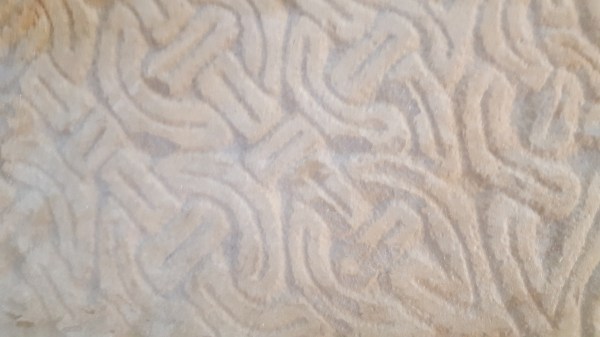 The endless looping stonework knots are reminiscent of Ireland and of Lindisfarne, brought to Whithorn in part by Norse Christians out of Ireland. From the back of the museum I walked into the crypt where a line of Bishops were buried, and finally into the grotto that once held St Ninian’s bones. I admit: this felt like more of a destination than anywhere else. It felt like a holy place. The fact that whatever bones were there were lost during the Reformation doesn’t bother me much. 21st century western pilgrims aren’t fixated on a saint’s body, but more on their own. And mine, especially my ankles, have felt the distance.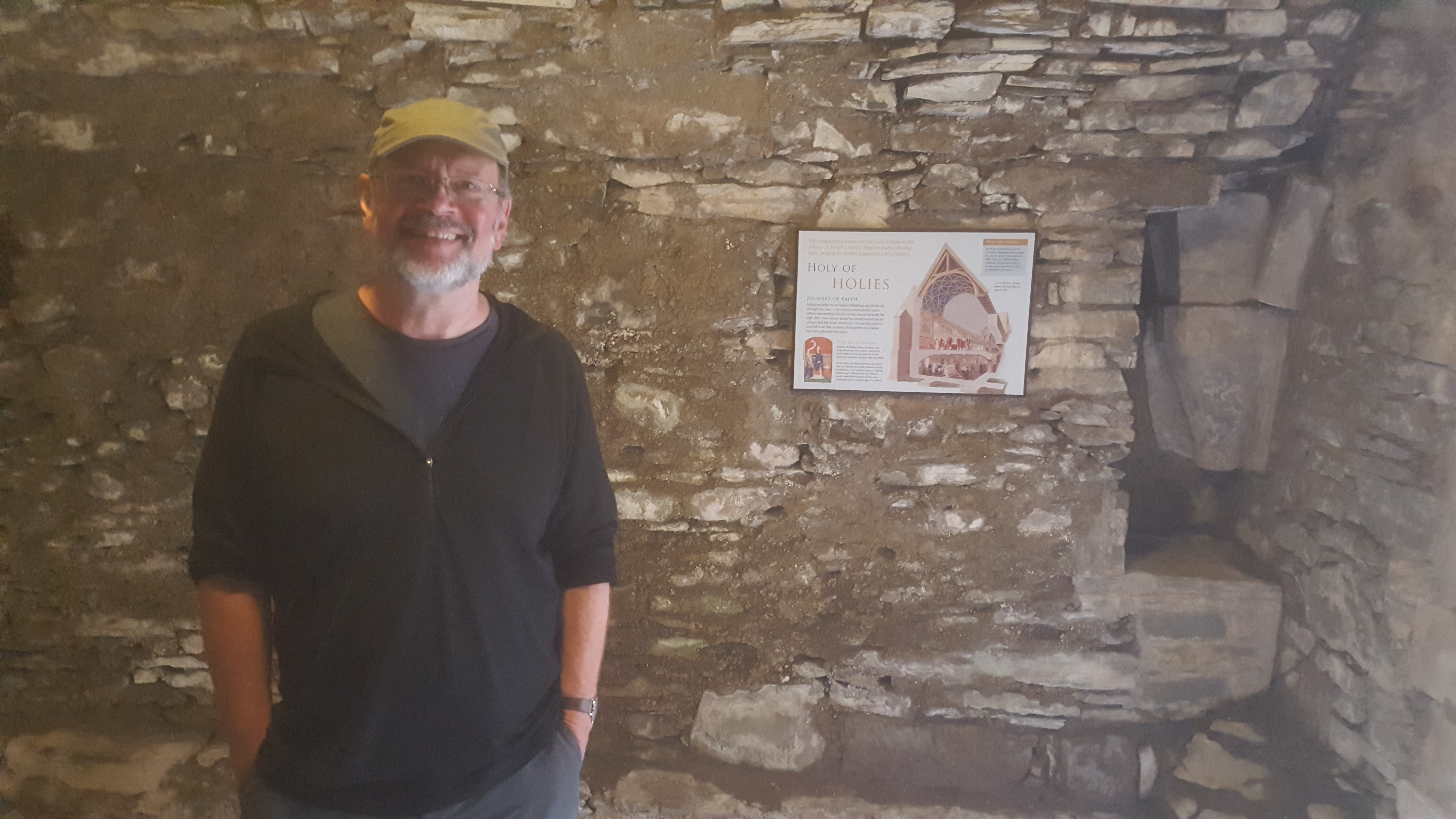
 On the subject of Ninian: I’ve long had a semi-teasing argument going with Sara Terreault, who teaches pilgrimage and Insular (Celtic) Christianity, that St Ninian never even existed, but was a made-up figure. Not that I held that firmly, but I knew it was a good way to tease her. I will have to come up with something else. The presence of the Latinus Stone,
 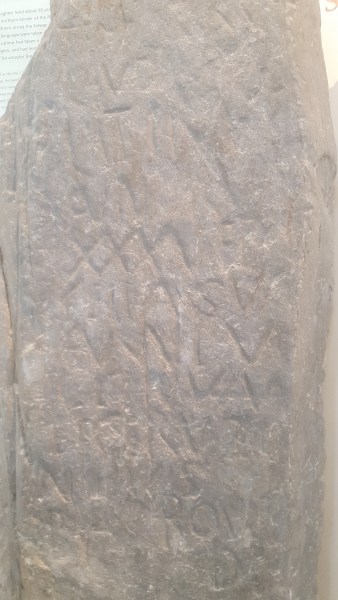 with a name in both Latin and the local Celtic language indicates Christianity at Whithorn by about 450 CE. Although there may be little hard evidence of Ninian, there is so much circumstantial reference, in addition to Bede’s account, that one has to accept that a late Roman-age Briton helped introduce official Christianity to what is now Scotland. Even the cab driver who brought us home tonight knew the whole story and could provide the arguments, in addition to other interesting tidbits. As his BMW sped by within inches of stone walls he pointed to them and told us that French Prisoners of War from Napoleon were forced to build them for the Scots.
  When we first arrived, this dog, who lives at our B&B, couldn’t wait to find out who the visitors were.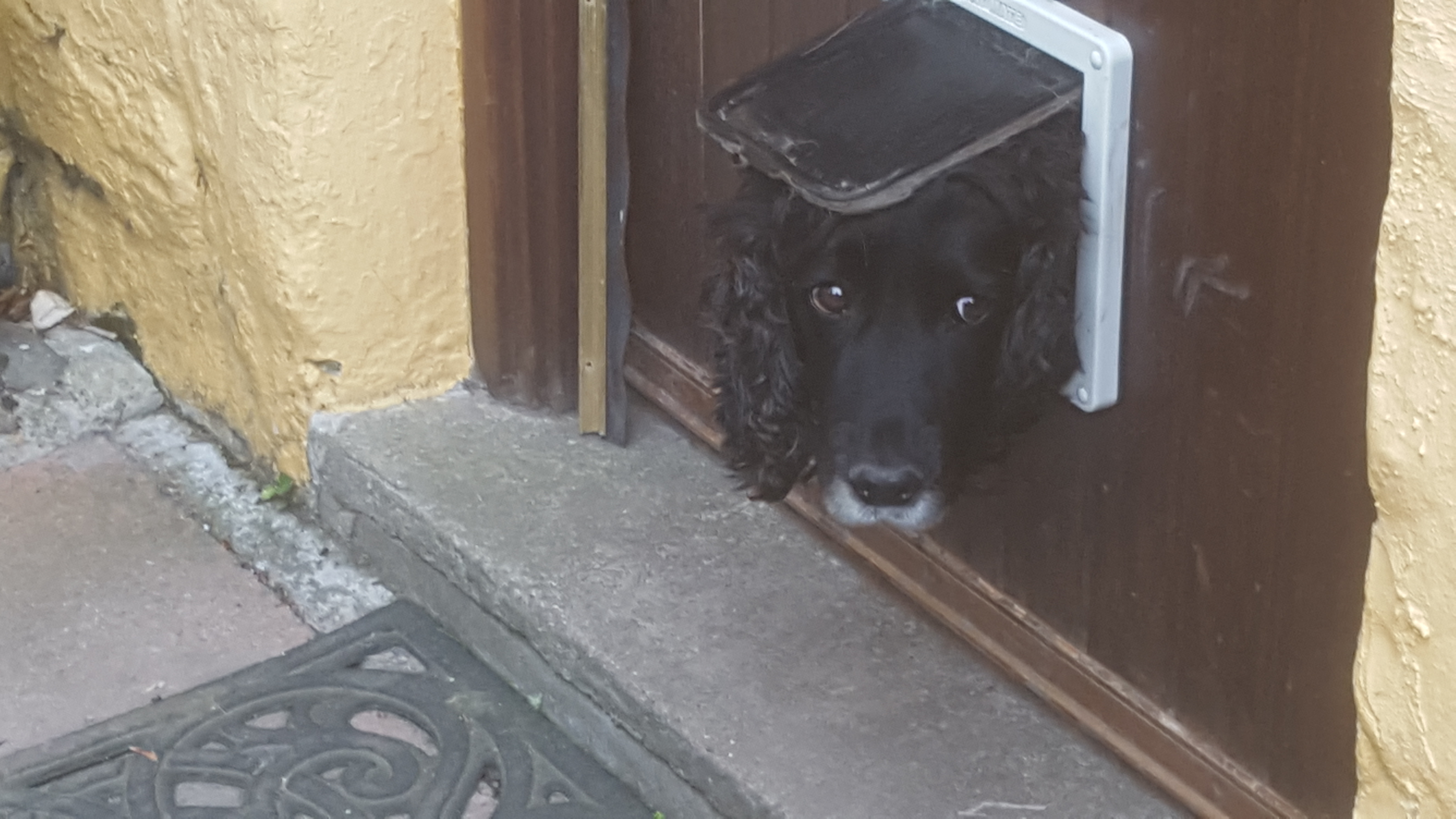
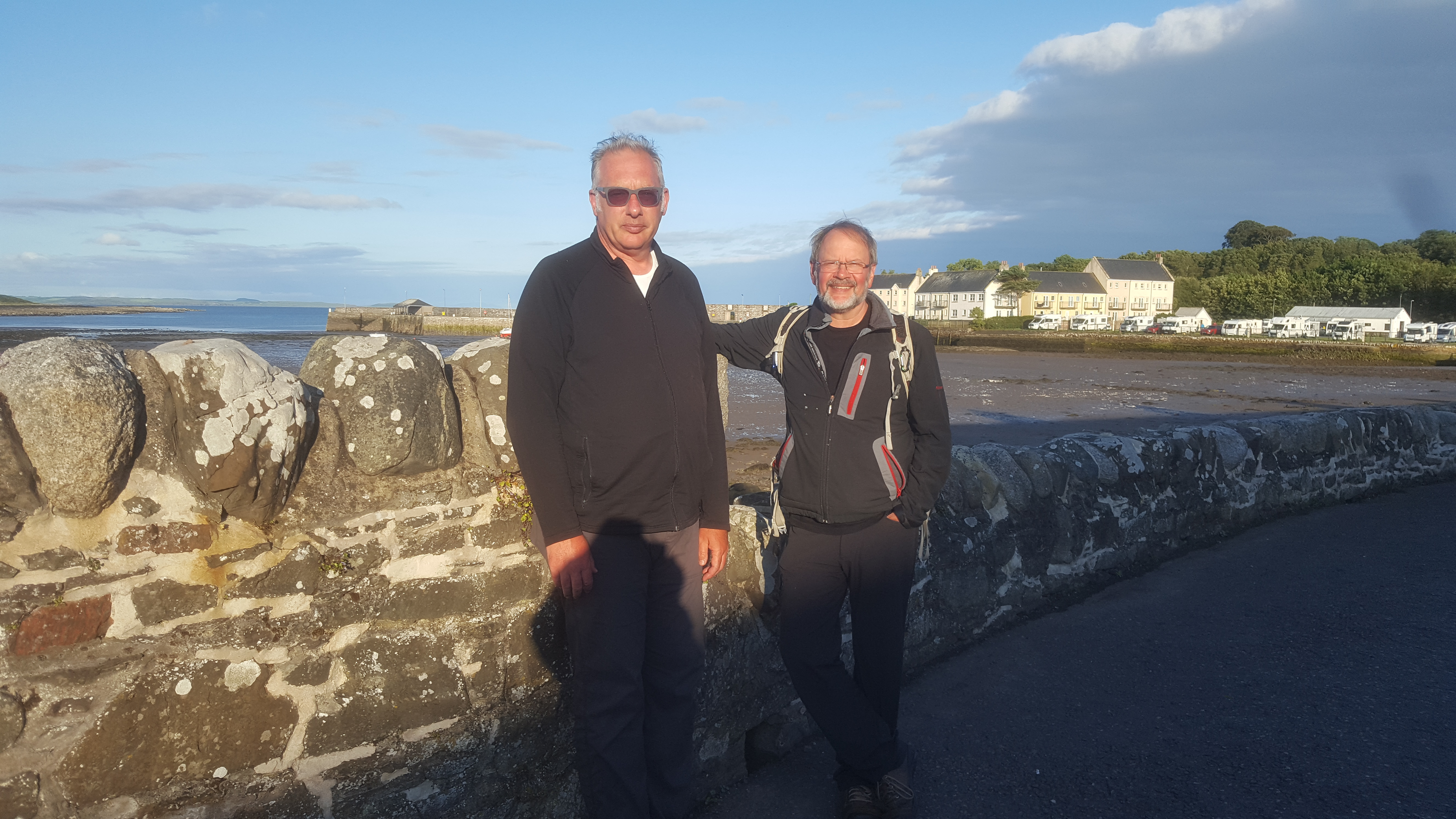

 Secondly, we arrived at our “hikers’ shed” only to find that the lovely & picturesque village of New Luce has no pub, no restaurant, and no store – although all are planned – and that the owners of our accommodation hadn’t been warned we were wanting supper. They very kindly found a can of soup. We were planning to make do with that and some crackers until local walker and walking activist Peter Ross showed up at our door, asking if we needed anything and offering a ride for groceries. Finally, owing to the fact that a local rented cottage won’t receive its guest for a couple days, we got a place to shower! New Luce has got to be the most lovely little village we’ve come across – it’s vying for the flower award for the UK this year.


 By the way, Peter told us that all the garbage we’d seen on the coast was NOT Scottish: “a lot of that’s drifted in from Dublin and Liverpool and Belfast with the prevailing currents,” he told us, “But we Scots have to clean it up.” On the walk today we came across a poignant reminder, in rural Scotland, of Canada’s international garbage. We could hardly believe what we were seeing!





 somethinggrand