Categories
Uncategorized

A Stranger to These Parts

Porter arrival Sudbury

‘I can’t believe you almost stole that scarf,’ the woman in the airplane seat across from me says to an older woman who must be her mother. The two chortle. They like each other, clearly. ‘Well, it just got stuck on the end of my purse,’ the mother laughs back. ‘Is it my fault it was hanging there? I didn’t even see it until the alarm went off!’ She turns, maybe just a bit flirtatious with the giddiness of a weekend away in the big city with her daughter. “Look at me – I’m hardly the type!”

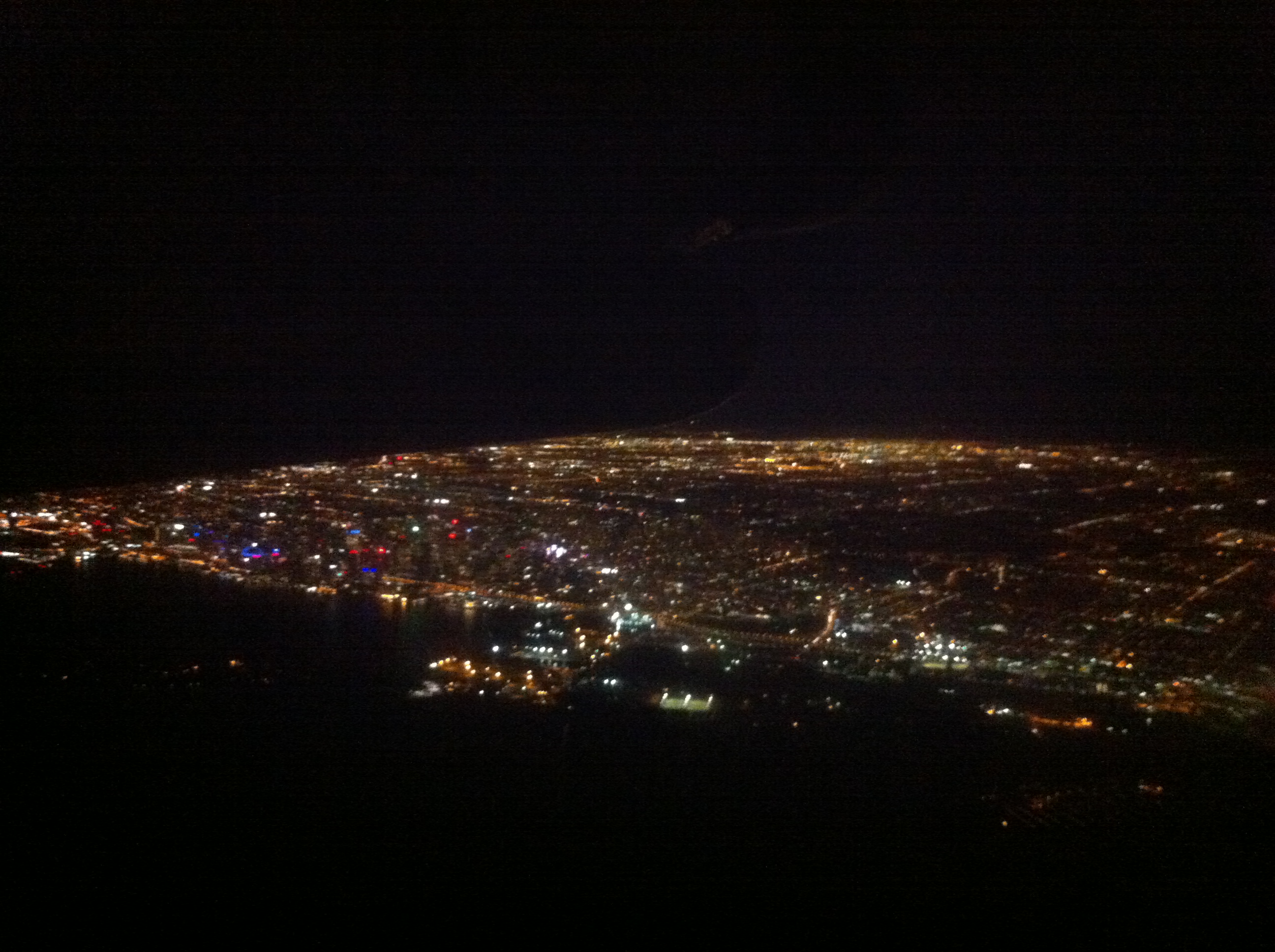
The cabin crew dim the lights shortly after our take off to Sudbury. How miraculous it is to hang thousands of feet above a huge city at night. To watch the glow of human achievement stretch away to every horizon in magnificent strings and squares of bright fires. However snide we Montrealers might sometimes be about Toronto, how impressive is this city on the edge of the Great Lake, how vast a plain of light, of movement and life. And how strange to be a descendent of savannah dwellers, not barefoot and on the ground but suit-jacketed and seat-belted and in the air, climbing Jacob’s ladder like the angels he only dreamt about. Listening to the turboprops whistle, eating almonds, watching from this incredible vantage point I realize that, when you think about it at all, this is so new in human history that however banal it might sometimes feel, we are still among the first generations to be privileged to experience it.

The root meaning of ‘pilgrim’ is stranger, or foreigner. Not all strangers are pilgrims, perhaps. But I think all pilgrims must in some way be foreigners. And to hang in the air at night, above a city, watching the lights….? That is foreign indeed.

It is perhaps because I am a stranger that I noticed the man who now sits in the seat three rows back. Nervous hands, rolling his thumbs against his fingers as they checked out his boarding pass, walking awkwardly, so tall his head, even bowed, slid along the ceiling of the cramped cabin. Unusual black pants and boots. Or the woman one row up and to the right, in a business-jacket, like me a bit unkempt, who had a resume out in the lounge, and is now tapping it absent-mindedly with her pen while looking out the window. An academic, almost certainly, on her way to an interview. Or the child, ten or eleven maybe, trying to take up as little space as possible, perhaps on her way to meet a divorced parent with weekend parenting rights. So much life and drama in such a small metal tube. Life at 8,000 feet and climbing.

There is one light in particular that catches my eye with its brightness and unusual movement. It takes me a minute to realize that it is not, like all the others, following one of the lines that demarcate streets and highways. The way it’s crossing the city, it must, like us, be in the air. Another plane, below us? I watch it move sideways to our path. And then, abruptly, it stops. What?

The flight attendant interrupts my reverie. Your drink? she says. But it’s not a question. I realize that she must have memorized the orders of all twenty or so people on the plane, without paper or pad. I take the glass, turn back to the view. The bright light is still there, still immobilized. Did I miss something? Planes don’t just stop, and there’s no dark strip of a runway. A helicopter, maybe? How strange.

‘So, do you live in Sudbury?’ asks the older woman beside me, when we land and it’s time to get off.

‘No,’ I smile back. ‘Just visiting.’

‘Oh, I thought so,’ she says. ‘A stranger to these parts.’

Toronto from the air

Categories
Uncategorized

Scouting the Trail

Today we scouted the beginning of the North-West Mounted Police Trail. It meant piling five of us into a big Dodge Ram and pounding over the Wood Mountain hills. Thelma, a renowned poet and historian from the area, called it the “Boundary Commission Trail” several times, since the original NWMP trek was further north. Or it might be the “Metis Trail”, or the “Major Walsh” trail (although she doesn’t have kind words for him).

Anyway, we scouted it. Today we pulled out maps. Come summer we will walk.

Between then and now dreams and visions.

Categories
Uncategorized

My Corner of Gloryland

 John Golling (Grandpa) as young man 1          farm-2-new-homeland

This week I’ve been seeing some of the old photos of my grandparents and their parents before them, and hearing stories of the first European settlers on this prairie. My grandparents, like most of their neighbors, were hard-scrabble, tough immigrants. Before electricity, before water lines, before roads even, they came. They came for the promise of land. Most of them were not as romantic about the countries they had left as we, their grandchildren, are. After all, they’d made the decision to go. In the words sung by Archie and the Boys (see below), the old time band that played today at my father’s care home in Herbert SK, they wanted, not the old, but the new: their own ‘piece of gloryland’. And the Government of Canada was happy to promise it to them.

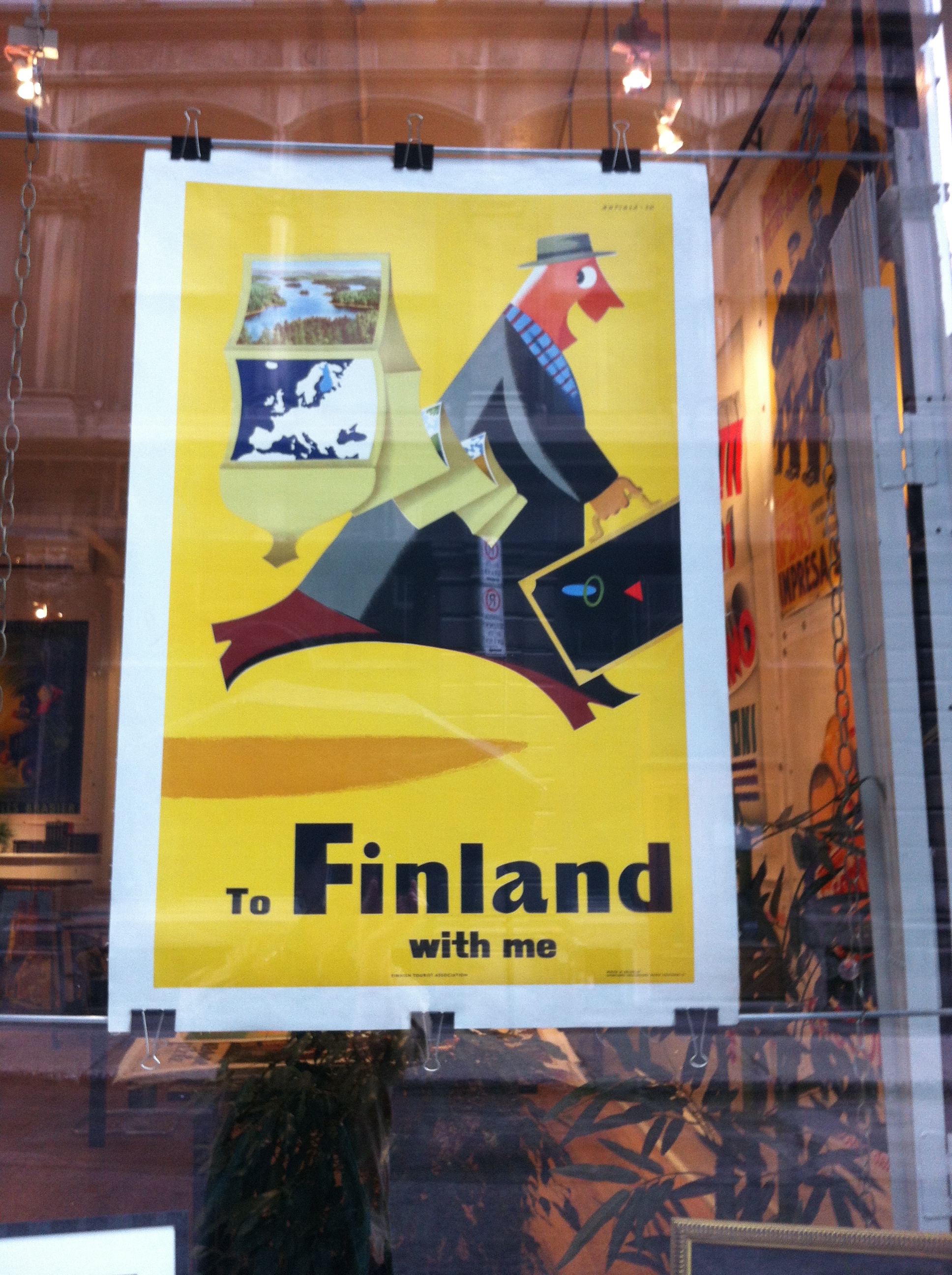
The posters advertising the new homeland, however, neglected to mention that there were already people living here. The nomadic First Nations and mobile Metis were not used to, nor invited into, this new world of fences and property title and cattle rather than bison. A combination of starvation and forced removal cleared the land of Aboriginal peoples so that my grandparents – more fortunate pawns, but pawns nonetheless – in a continental political-economic development scheme, could take their place.

Did it turn out to be Gloryland? Saskatchewan is a great place. But we are all – First Nations and settlers alike, but particularly First Nations, still feeling the aftershocks of that great removal. To me, the posters advertising a new homeland in the Canadian West for European immigrants aren’t just art. They’re chilling propoganda.

(Photo is of John Samuel Golling, my grandfather. Thanks to Archie and the Boys for their music and their permission to post!)

Categories
Uncategorized

Of stories and spaces

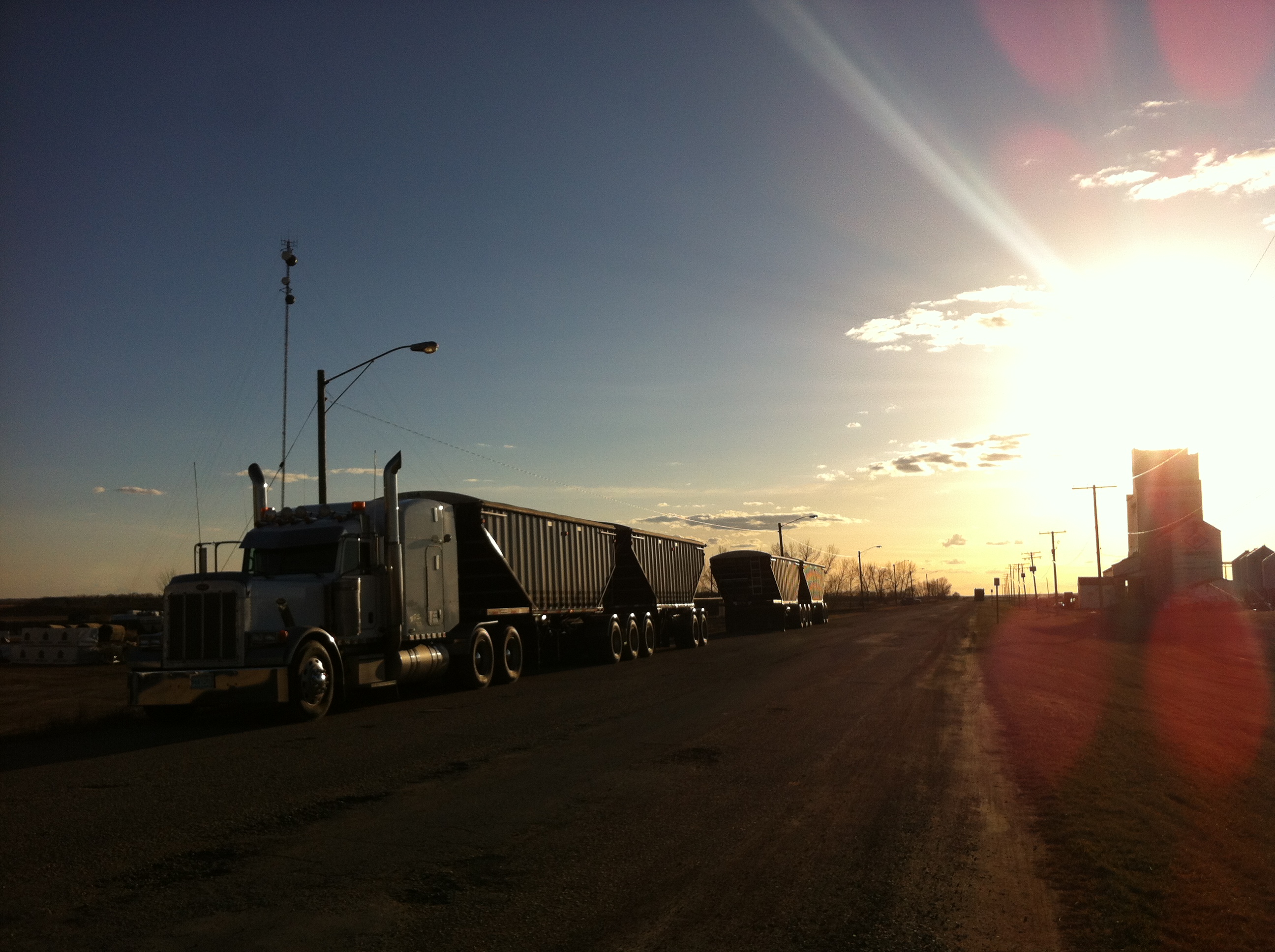
Herbert with semi trailer

We human beings find our sense of place by attaching it to stories. “This happened here, and then under the oak trees, or by the prairie slough, or on the top of Mont Tremblant, this other thing happened.” Places without narratives are just spaces, the blanks at the edges of our maps, unknown and unknowable.

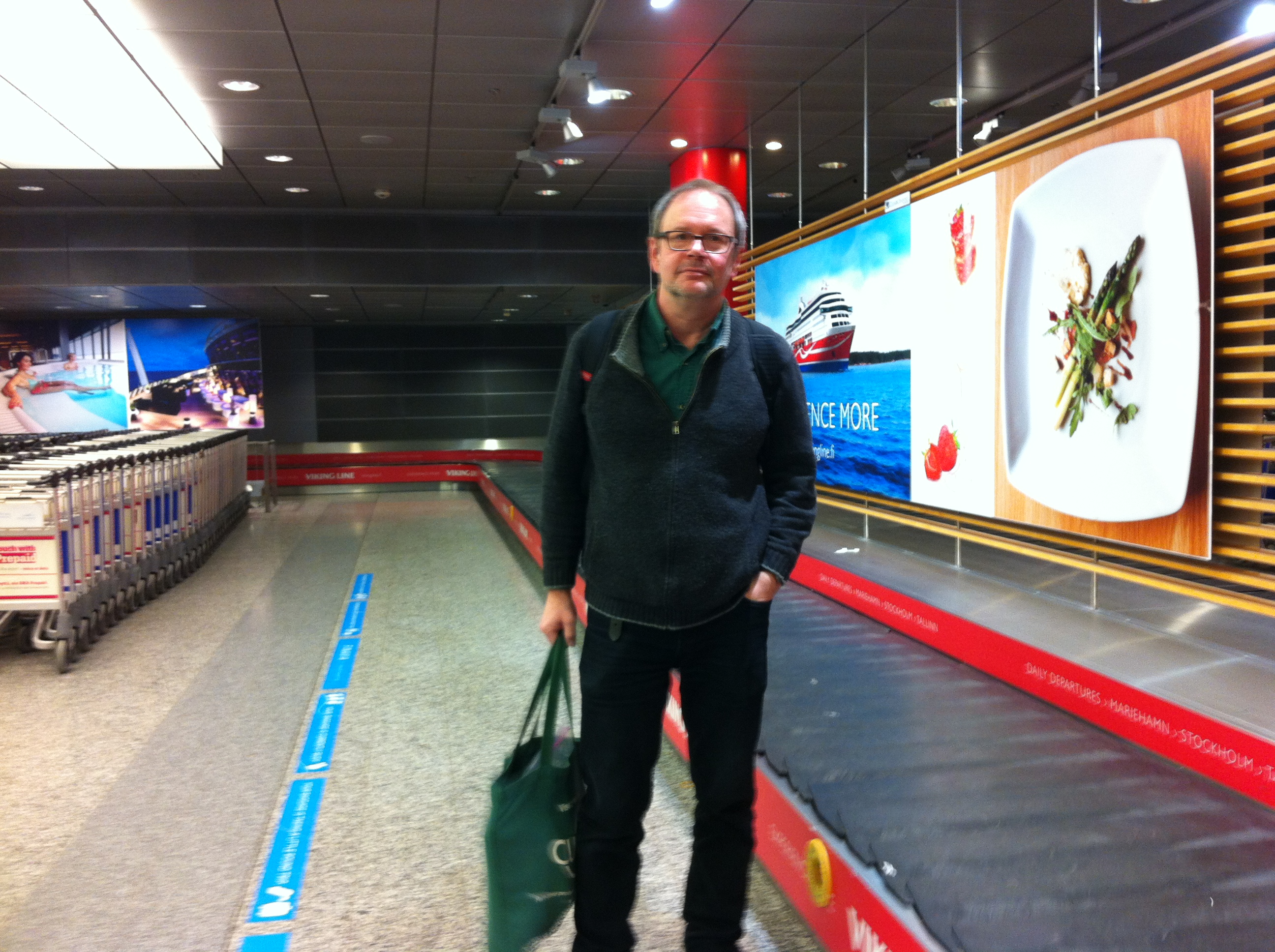
Airports, for the sake of safety and convenience, do everything they can to tell the same story everywhere in the world. Boarding pass – security – gate – runway. If it weren’t for the constant human drama – families saying goodbye at the entry, the security fellow flirting with his colleague, the noisy high-school group on their way somewhere – airports, with their standardized everything, risk becoming mere spaces, simple stops on the way to real places like home-towns and vacations, and reunions and the city of your new job.

Here’s what excites me: if it’s the story that turns a space into a place, that means that if we add to the story, we can add to the place. A harmful story, of wrongs done and injustice, can change, at least a bit, in the retelling. We can tell OUR story of that space, and if in our story there is at least some hope, and some openness, and some healing, then maybe… Maybe the place itself changes too.

Still thinking of how it will feel to walk the North West Mounted Police Trail in July.

waiting at the baggage Helsinki

Categories
Uncategorized

Dream-walking the Trail

NWMP trail map Eastend

This week I sat down and traced a trail across southern Saskatchewan. I had help: two photocopied RM (rural municipality) maps provided by Hugh Henry of the SK Historical and Folklore Society. For a few hours over a couple of glasses of good Spanish wine I guess-timated how far we could walk in a day, where we might stop, where there might be abandoned farmyards or churches with outhouses, where we could park an RV and when we might hit a small town where there would be showers. Then I sent the schedule off to Hugh, who with his better knowledge of the land made some important corrections, and suggested places where we might need horses to scout the trail ahead of us.

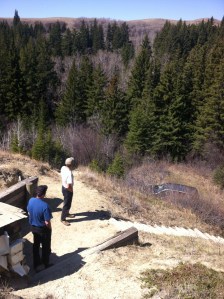
Wow. Just having the 20 day schedule in front of me makes this summer’s walk seem so much more real. Outside it was -19 in urban Verdun. But in my mind’s eye the prairie grass waved, the heat beat down on us, and we looked for miles and miles over rolling prairie toward Val Marie, or Mankota, or Eastend.

“Build it and they will come” are the famous words from Shoeless Joe, Kinsella’s novel, also about the plains, that became “Field of Dreams”. We are building it, step by step, in our imaginations. We will see when, and how, we actually walk this path of dreams.

NWMP Trail general

Categories
Uncategorized

Lac Pelletier memories

IMG_1899

It’s January in Toronto, a glacial wind in your face, a cloudy, gritty, dirty-snow winter day. Somewhere in the middle of the never-ending curtain of noise that always plays in a city, one sound in particular sits up in my hearing, calling for attention. It’s a motor gurgling. Eventually I notice. Where have I heard that before?

And then, without any more thinking, I hear what, in downtown Toronto in January, that sound most certainly CANNOT be. I hear a boat’s outboard as you pull up to the dock, the propeller free-wheeling in neutral just before it turns off.

Standing in my parka, hearing that sound, I’m instantly transported. Somehow I’m back to a warm summer evening decades ago. I feel the light gold-gilded across Lac Pelletier and the twilight heavy with insects. I’m sitting on a boat rocking gently in the water, ready to take out the last skiiers of the day. Our voices are quiet, the lake unnaturally calm, as if it’s waiting. My shirt off, as it has been all day. Mind empty of anything but the moment, my only teen-age responsibility making sure there’s gas for the motor. Never knowing such a clarity of existence would be what would pull the older me back, so many decades later, on a cold and snowy afternoon, for an envious peek.

So far from North York Mills. Our memories are time machines. But they’re touchy ones, triggered by who knows what and when, here and gone again, taking us where they want us to go.

Categories
Uncategorized

Sir John A’s birthday and the ‘Indians’

John_A_Macdonald_(ca._1875)

So.

Sir John A. Macdonald – he of the vest, the big nose, the whiskey bottle, and the reins of government – is 200 today. This afternoon in Kingston Ontario’s city hall, Prime Minister Stephen Harper gave a speech to kick off the year-long 200th anniversary celebrations of the birth of Canada’s first prime minister.

Such anniversaries are always political, especially in an election year. But with luck, this anniversary will also be a learning opportunity. Especially for those, like me, who are “settler”, or “newcomer” Canadians, there’s a chance this year to find out just how wrong is our founding myth of the kinder, gentler, Canada. In retrospect, Sir John A. fits right in with some who are pushing to remember Canada as a military, conquering nation. Because, against the First Nations, under Macdonald and others, we were all that, and worse.

To mark the 200th anniversary, you might want to get a copy of “Clearing the Plains”, by James Daschuk. It’s a riveting and disorienting re-telling of Canadian history. From Chapter Six onward, Macdonald figures prominently. For example: “On 24 March 1882, the prime minister announced to Parliament that all Indians in the territory of Assiniboia would be removed, by force if necessary, from the land south of the proposed railway.” Growing up in southern Saskatchewan, I came to wonder why there were no aboriginal people around. Now I know. Reading Daschuk’s book, you realize that they were systematically lied to, starved, beaten, cheated, and forcefully relocated. The treaties, once signed, were ignored, since the true goal was to clear the land for European settlement, for the railway, and for the (often Montreal) investors who were looking for a profit.

Macdonald was the architect behind much of this terrible attack. But he was not the only one. The Liberals, when they were in power during that period, were even harsher in their treatment of First Nations. Some have even argued that, judged in the light of the time, Macdonald was better than most. Disturbingly, both Liberals and Conservatives hid their power and money-grabbing behind ideals of so-called “Christian statesmanship”.

Daschuk concludes his book with this telling statement: “The effects of the state-sponsored attack on indigenous communities that began in the 1880s haunt us as a nation still.” This summer, I’m hoping, with a group of others, to walk the North West Mounted Police Trail, a 275 km half-forgotten path that was crucial to that 1875-85 clearing of the plains. That will be our small way to mark this ambiguous anniversary.

Categories
Uncategorized

Love and the Rhythm of Walking

From Paul Salopek’s most recent post. Paul is a Pulitzer-prize winning journalist who writes the “Out of Eden” blog for National Geographic, while walking the world. He’s now in Turkey. This beautiful piece of writing is taken from “The Geography of Desire” post, at: http://outofedenwalk.nationalgeographic.com/2015/01/05/the-geography-of-desire

“There comes an old, old longing while walking through the world. Walking, you learn each new landscape the way you might explore the face of a lover—up close, by grazing your fingertips over the features, without distraction, with a sort of doomed attentiveness, acutely aware that each mile sliding by is gone forever, knowing it won’t hold. The best walking and writing must happen this way. You begin to move forward, eyes closed.”

Categories
Uncategorized

some talk, some walk

K Jan 2015

While I spent much of my day writing about pilgrimage, a true peregrino was in my living room reading Albert Camus. My nephew was in town for a stopover, carrying everything he needs to live on my couch or, if need be, rough (including a mandolin, for busking). He’s between trips here, there, and everywhere. He’s most recently back from South America, off again in a couple of days, likely to be tree planting in BC come spring. When I told him my grand plans for walking the North West Mounted Police Trail, and explained some of the history behind why we should re-learn the cultural and environmental changes that have done so much damage to First Nations and to the rest of us, eventually he nodded in understanding. “That’s a trip I’d be interested in,” he said, finally, picking a complicated arpeggio on my guitar. “But I would go by myself. And I wouldn’t make a documentary.” I went back to my writing and he went back to being the kind of pilgrim I sometimes write about.

Categories
Uncategorized

Soon Enough

IMG_1587

The few lights that are on in my apartment this January 1 evening don’t so much illuminate it as provide a counterpoint to the darkness. There are candles here and there, gusts of winter wind at the door. We are at the change of years, a liminal moment, a threshold time. Folks don’t go out much today. Everyone prefers to stay at home with soup, maybe a movie. It’s quiet on my street. My boots, recently repaired, sit at the door. Soon enough, we tell ourselves.

This year will be, I hope, a good year for pilgrimage. I’ve heard from Concordia University that the Vieux Montreal – Kahnawake student walk that’s part of our Department’s summer-term class on Pilgrimage will most likely be accepted for what’s called the “FundOne” initiative. That means that Concordia will advertise our 34-km pilgrimage for crowd funding, to help pay the costs of the students. Old Montreal is so close to the Mohawk territory, and yet so far away. If you’d like to contribute something to help this worthwhile walk, there will be a chance!

Our own conference will take place May 8-9 at Concordia, under the title “Indigenizing Pilgrimage”. This doesn’t mean only Aboriginal and First People’s pilgrimage, although it certainly includes that. It will be about ALL the ways we can, and should, from Sussex to Saskatchewan, connect our intentional, transformative journey to the actual physical places through which we move. Sara and Christine and I managed to get both of the keynote speakers we had dreamt of having – Raymond Aldred, a Treaty Eight Cree and professor in Calgary, and Simon Coleman, a pioneer pilgrimage scholar and professor at the U of T. It will be a great event.

And in July, if all goes well, I will be walking, together with Hugh Henry of the SK History and Folklore Society, and some – how many? – others, 300 km across the southern plains and low hills of Saskatchewan, tracing with our feet the North West Mounted Police Trail. Raymond Aldred has said of the First Nations’ need to recover their past that “when you have no history you have no future.” I am hoping that it is equally true of those of us who are from settler stock, that when we re-visit, re-walk, and remember our past in a new way, particularly by remembering the generations of ill treatment of First Peoples, we might also re-imagine and re-create our future together in new ways as well.

There is another gust of wind at the door. It is winter in Canada/Turtle Island, but that doesn’t keep the pilgrimages from beginning. I’m feeling the itch to walk.