Categories
Uncategorized

“Der Pilger (The Pilgrim)” reviews The Good Walk

Gotta love those Germans…
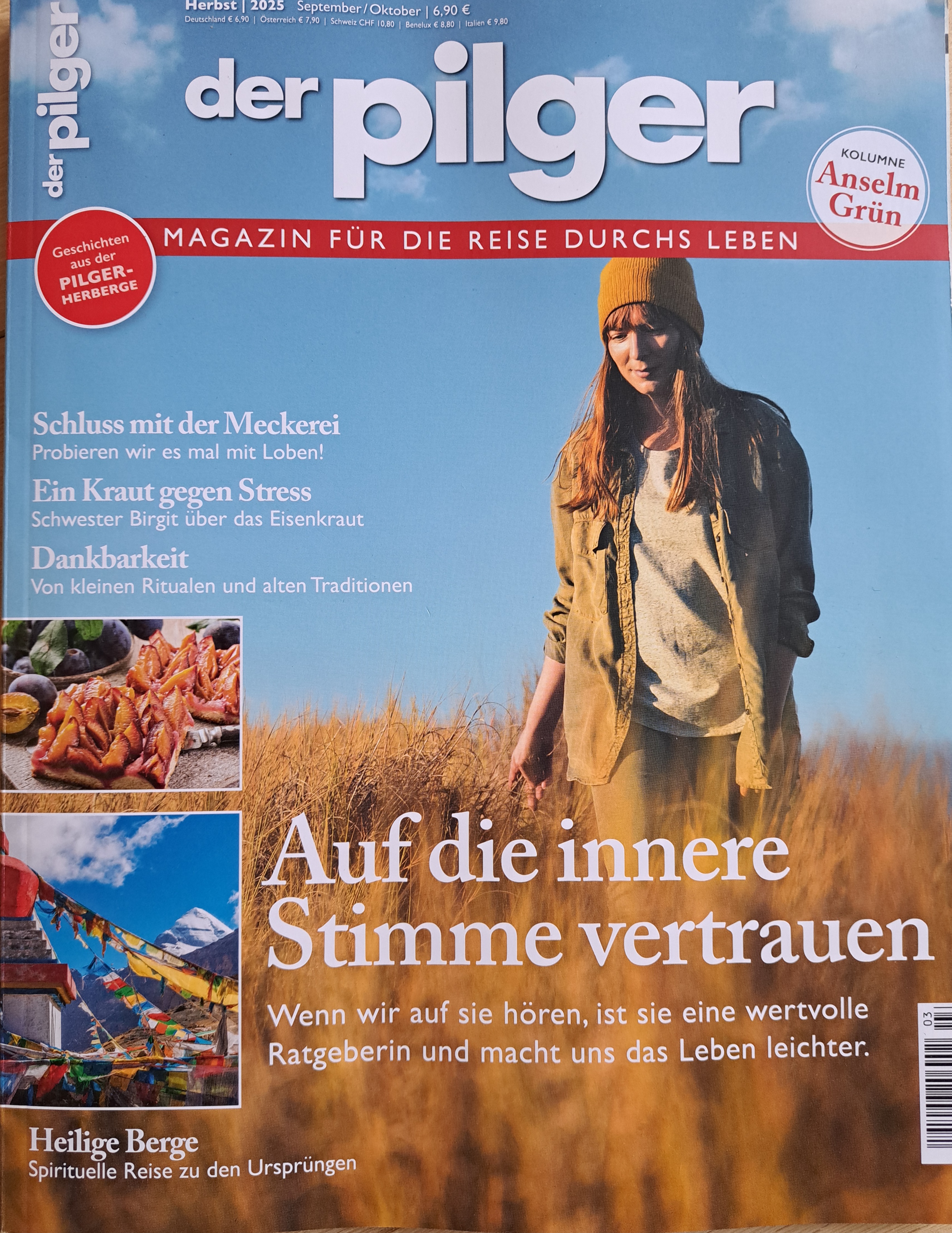
When my friend Traugott Roser contacted me to let me know he’d written a review of The Good Walk, for the magazine Der Pilger (The Pilgrim), I was overjoyed!

My hopelessly naive generalizations about Germans include that…

All Germans are fit and athletic and they LOVE walking and pilgrimages. So they’ll eat up The Good Walk. The book that really ignited the contemporary rise of the Camino was Hape Kerkeling’s fun and incredibly popular I’m Off Then: Losing and Finding Myself on the Camino de Santiago, first published in German and a sensation there.,

All Germans idealize the North American “West” and North American landscapes. Germany is a crowded country that has lost so much of its own “wildness” but still maintains a strong national mythology of origins around it. And yet …

All Germans are aware of and sensitive to Indigenous sovereignty and concerns, and …

All Germans love to read, and as a bonus, as truly civilized people are multilingual and can often read English books like mine, unlike most anglophones and folks like me, who struggle with anything more than simple tourist directions auf deutsch

SO. After all these expectations, how did the review turn out?

Thanks to Google translate, you can read on for yourself….

The Review

p. 43 New Pilgrim Perspectives:

A devout Muslim embarks on the Way of St. James, and a Canadian professor and long-time pilgrim follows the trail of spiritual wandering in the vastness of the Midwest. Two inspiring book recommendations from Protestant pastor and passionate pilgrim Traugott Roser.

The Search for a Lost Home (Die Suche nach einem verlorenen Zuhause)

“Matthew Anderson, Professor of New Testament at Concordia University in Montreal, is an experienced pilgrim who has also led his Canadian students through Spain, France, England, and Norway and has made a name for himself as a documentary filmmaker on pilgrimage. After many trips to Europe, he wonders whether pilgrimage is also possible in North America and what pilgrimage might mean there. In his new book, “The Good Walk – Creating New Paths on Traditional Prairie Trails,” he tells a compelling story of humanity’s age-old paths through the prairie of the Middle West. It is an account of a painful yet healing search for home: “Pilgrimage together with others—in the broadest sense understood as spiritually motivated hiking—is a way of searching for a lost home.” Anderson is a descendant of settlers who farmed…

(P. 45) and built small towns on the supposedly deserted plains of Saskatchewan (see photo above), and [the region once called] the Northwest Territories. Since 2015, Anderson and his wife Sara have been traveling the trails once used by traders, settler treks, and the Northwest Mounted Police, a paramilitary force commissioned by the Canadian government. But Anderson not only gets close to the story of his own family, descendants of white European immigrants, but also of the people who lived there before and were deprived of their land through sham treaties, displacement, and targeted extermination.

Pilgrimage: intercultural and interfaith

Anderson is accompanied on his journey by various companions, including Don Bolen, the Catholic Archbishop of the Diocese of Regina. Descendants of the First Nations, the Lakota, the Nakota, and the Nehyawak (Cree) accompany them or host them, as do descendants of settlers and the Métis, descendants of European-Indigenous marriages, who historically mediated between cultures as fur traders and are now considered an independent nation.

Anderson sees his hikes through the vast landscapes as pilgrimages to places whose history has been partly forgotten, partly erased. This also changes the landscape and its perception itself: through narratives and archaeological evidence, places of living memory emerge.

The places create new relationships and deepen old ones. In this way, the pilgrims come into contact with the spiritual world, [sometimes] with the elders and wise men of the Indigenous peoples, [sometimes] with their own family history, and [always] with nature. Through Christian and Indigenous rituals, the pilgrimage becomes an intercultural and religiously unifying experience. At the same time, it is a painful journey that ties in with the tradition of penitential pilgrimage: The extermination of the North American bison took place in the vastness of the prairie. This deprived the Indigenous people of their livelihood, and thousands starved to death while faced with the government’s deliberate inaction. It is equally painful when the pilgrims encounter survivors from the church-run boarding schools (of both Catholics and Protestants):

On behalf of state authorities, children were taken from their families and  Nations and placed in Christian schools. Only in recent years did the public learn of the graves of thousands of nameless children who did not survive the ordeal.

Reward for Physical and Mental Effort

The paths across the prairie demand physical and mental effort from the pilgrims, but they also reward them: through community, forgiveness, and understanding. Matthew Anderson ultimately even succeeds in finding peace for his deceased parents and for his sister, who died very young. The pilgrim’s path is a good path, and with the project Anderson describes, a new, very unique pilgrimage tradition begins in Canada.

I couldn’t put either book down; it was precisely the different perspectives of both authors that inspired me to consider my own pilgrimage

I couldn’t put either book down; it was precisely the different perspectives of both authors that inspired me to consider my own pilgrimage on the Way of St. James in a new and more profound way: as a consciously religious experience, as a path to encounter God, and as a path to reconciliation.”

Dr. Roser’s Own Pilgrim Book

I wouldn’t be much of a friend, if at this point I didn’t mention that Traugott has published his own pilgrim book. It’s in German, titled Hola! bei Kilometer 410: Mit Allen Sinnen auf dem Jakobsweg (Hola! At kilometre 410 with all senses on the Camino de Santiago).

I wonder if a rather free, but still good, translation might be: “Hola! Fully aware and alive at kilometre 410 of the Camino de Santiago.” It’d be great to see this valuable book out for the English-language reader as well! (By the way, the other book he reviewed with mine in the above article sounds fascinating).

Traugott does all kinds of interesting teaching and research, including (like me) teaching Bible and Film classes. He is also an ethicist who teaches about ethics in healthcare and palliative care.

Thanks, Traugott, for the great review. Buen Camino! Looking forward to walking with you some day soon!

Categories
Uncategorized

Eight-Month Strokeaversary: How’s My Heart?

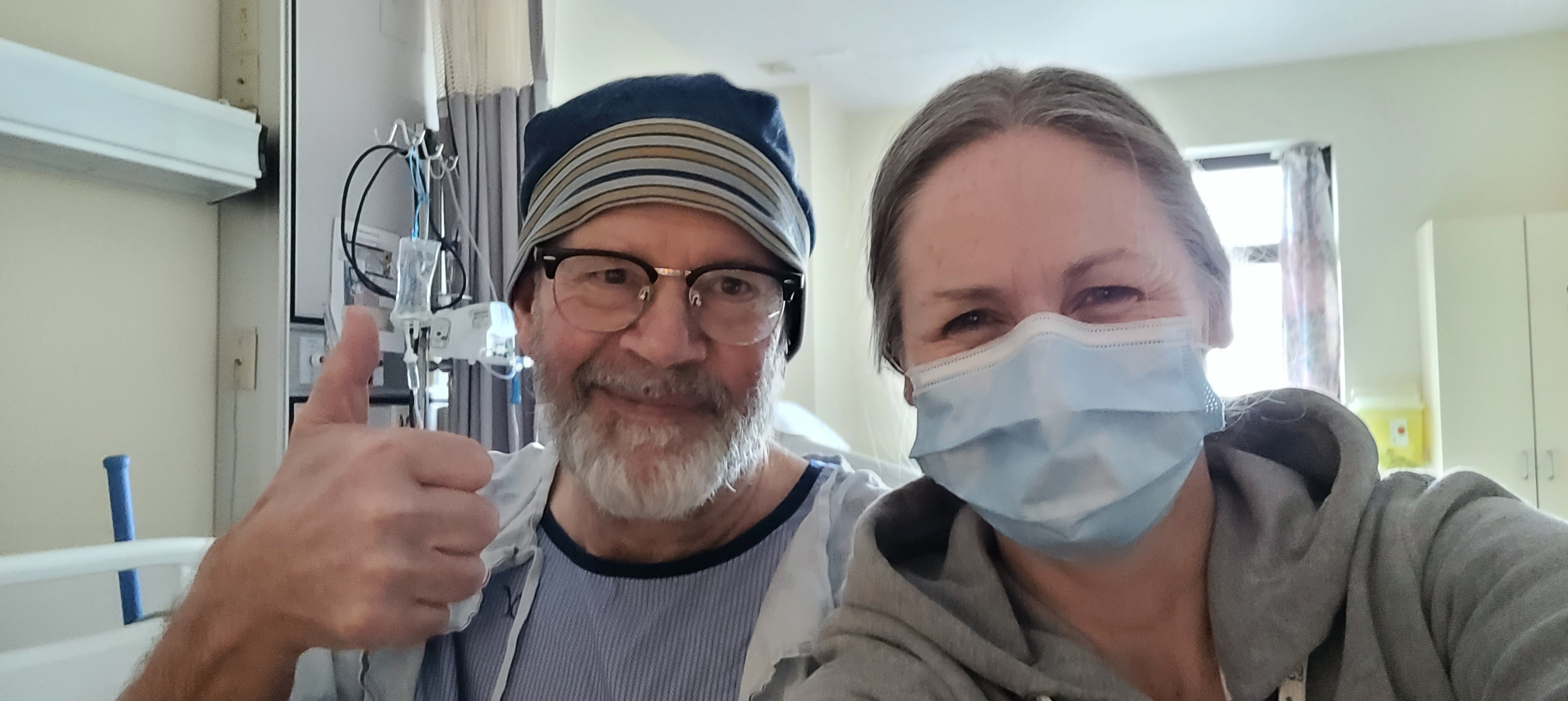
Several kind folks have messaged me recently asking for a health update, and saying they’ve missed my posts. The fact is: I’ve had a stroke-and-surgery update half-started on my laptop for maybe six weeks! But so much has been happening I couldn’t finish it until now.

In this post, I’ll share some of those events. In a forthcoming post, I’ll focus on more of the details of my actual health update — especially for those who’ve also had (or have loved ones who’ve had) major strokes, or who’ve had PFO Closure surgery, or who may be waiting for news of my hand and leg!

# 1 Heart Surgery in Halifax

A month ago I had a procedure to close the PFO (hole between the upper chambers) in my heart. I was kept awake for the surgery which went well …. but it meant long hours of final grading to finish beforehand, travelling the 2 1/2 hours to Halifax the night before, with Sara as my chauffeur, nurse, and help-mate, the operation itself (more on that in my next post, but a pivotal moment was hearing the surgeon say “I’ve never done that before”!), then trying to follow doctor’s orders (no lifting for a month) to recuperate.

#2 A Book in The Hand

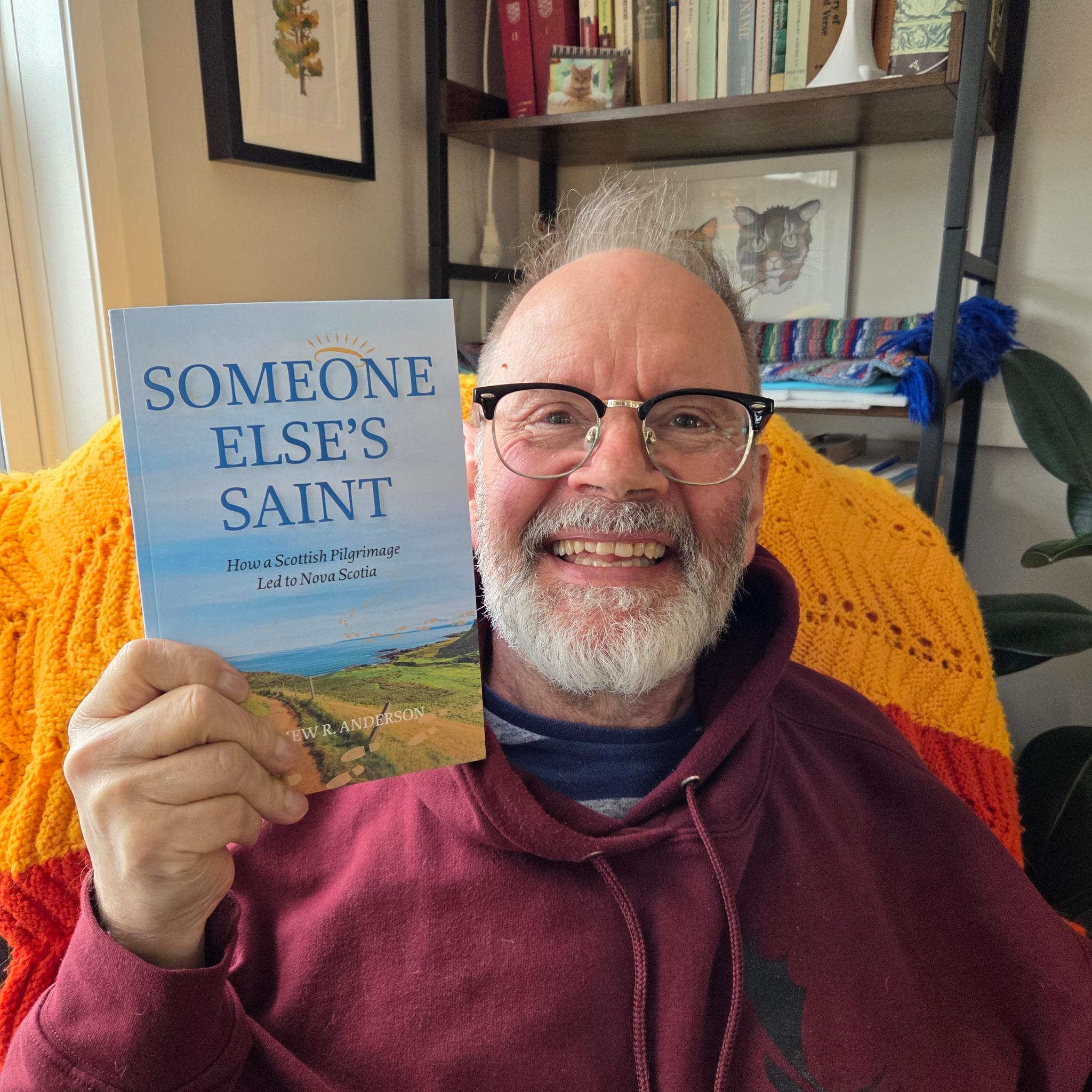
The moment we drove down our driveway on the trip home from the hospital, my – now patched up – heart leaped. Two boxes sitting on the doorstep turned out to contain the first shipment of my latest book, Someone Else’s Saint: How a Scottish Pilgrimage Led to Nova Scotia (Pottersfield Press, an homage to Nova Scotia and to Scotland, and second-place winner of the 2025 Pottersfield Creative Prize for Non-fiction). Sara lugged the boxes in, as ten pounds is my upper limit for lifting while I recuperate. Excitement soon yielded to post-op fatigue…

#3 Throw a Tartan Over It

Just a few days after my return from hospital, I was able to launch Someone Else’s Saint at the wonderful Antigonish Heritage Museum. It was a lovely warm evening, thanks to the talents and scheduling flexibility of friends Barry Mackenzie (colleague from the StFX history department and director of the museum), Lewis MacKinnon (poet and Executive Director of Gaelic Affairs for Nova Scotia), and star musician Mary Beth Carty (Canadian Traditional Singer of the Year 2024). During setup, Barry rapidly produced a variety of tartans, one to cover the cardboard recycling, one for the book table staffed by Sara, and one for the treats baked by museum volunteers. He confided that one of the museum’s life hacks is “just throw a tartan over it.” Even though there were other community events that night, and grade deadlines and convocation to compete with, my (now hole-less) heart melted to see departmental colleagues, community members, and even fellow pilgrims all the way from Halifax come out in support.

pilgrims extraordinaires: Brent King, me, Joann Chapman

#4 Medicine Hat Heartbreak

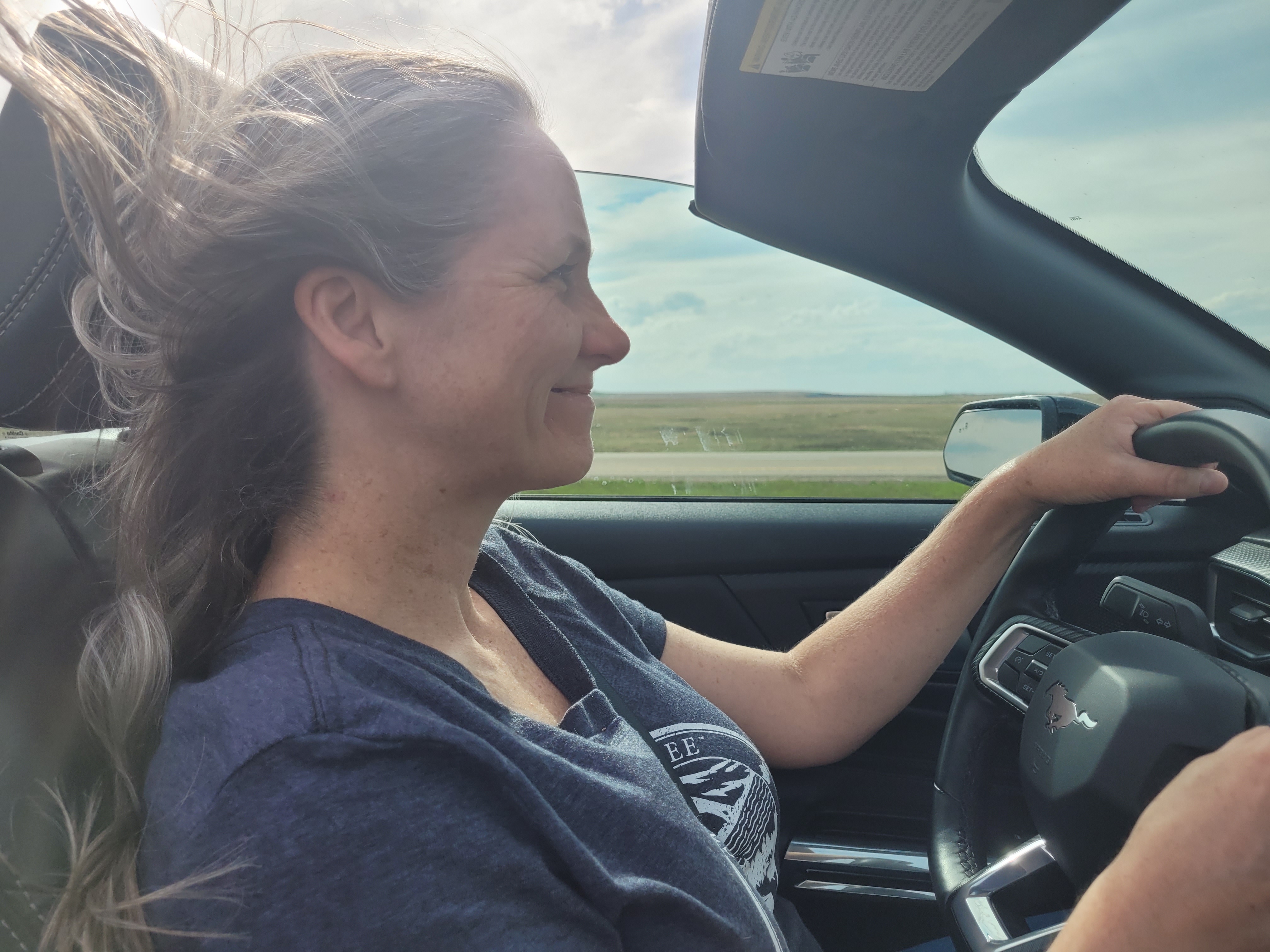
The biggest thing that happened has yet to completely sink in. My always-happy, full-of-life-and-fun, strong as an ox brother in law Vern Enslen had died – a shock to us all, but above all to my sister Kandace in Medicine Hat. As soon as it was confirmed that I could safely fly after surgery, Sara and I booked the next flight to Alberta. There (still somewhat unsteady on my feet) I conducted the largest service the funeral director had seen in years. “By far,” were his words: “It’s a testament to Vern.” Vern, pictured below, was a gregarious and good-hearted extrovert who made friends with everyone – turned out the funeral director was a buddy as well. We spent valuable time with my sister, still in shock, and with other family, including crowds of my cousins Sara had never met. We had booked a “manager’s choice” car rental out of Calgary airport to save money, and were surprised to be handed the keys to a 2024 Mustang convertible. We both had the exact same thought: it would be just like Vern to arrange this from the great beyond, to remind us of the jovial, sport-loving, boisterous tone he would want his friends to take as they celebrated his life well lived. It seemed odd after a funeral, yet somehow fitting, to be cruising back to the airport with the top down. After the accumulated fatigue of grief, unexpected travel, working with my sister to arrange the funeral, and the intense two days of visiting, we returned to Nova Scotia on a red-eye flight that involved no sleep and a LOT of walking–the most I’d done since the stroke. Whewff.

#5 Heart’s Desire

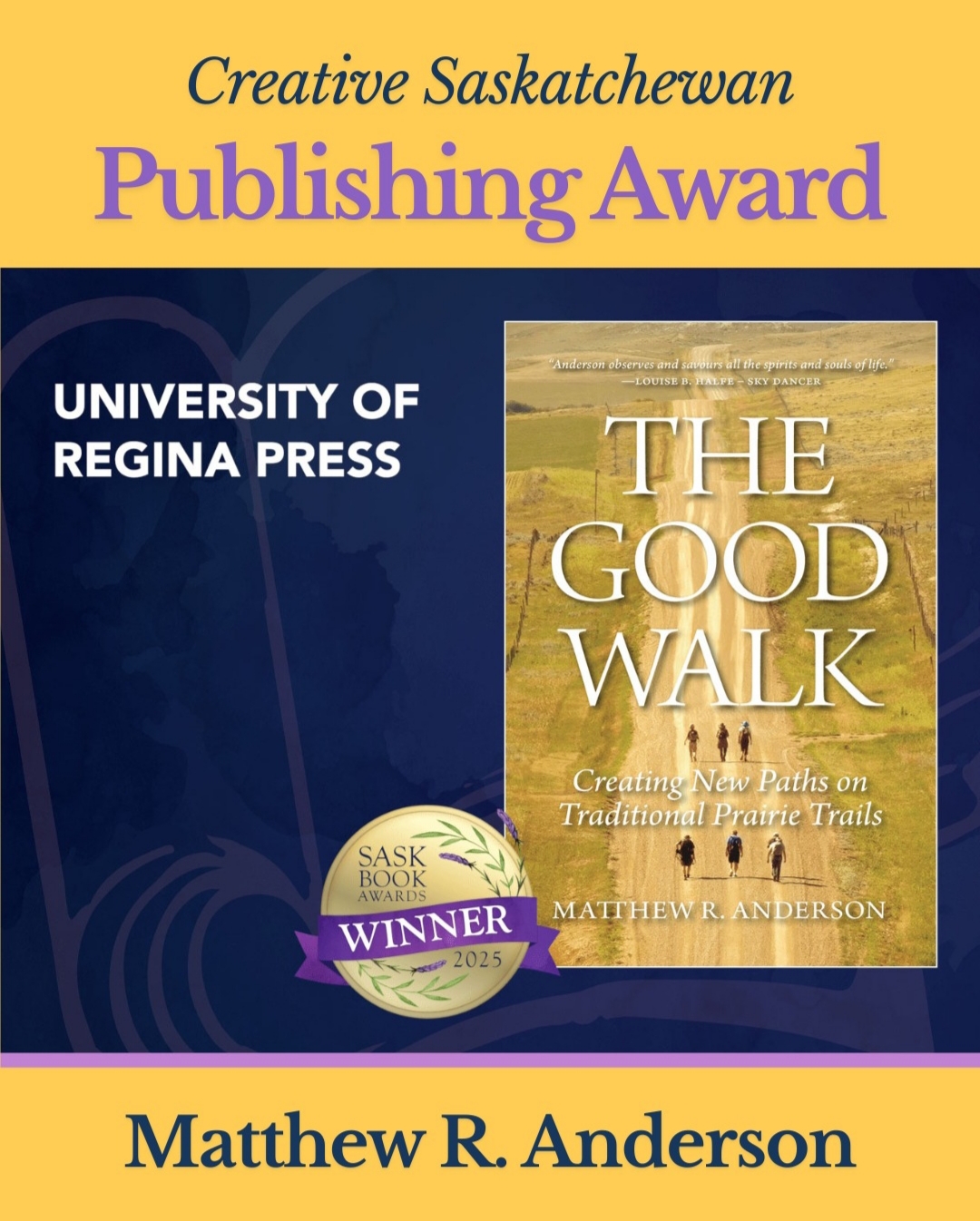
The night of the funeral turned out to also be the night of the Saskatchewan Book Awards gala. Before Vern’s death, I’d been notified that The Good Walk: Creating New Paths on Traditional Prairie Trails was shortlisted. An unimaginable dream come true, for a book so close to my heart — a memoir of my family’s history and our prairie walks, intertwined with the troubled history of Canada’s prairies. But after Vern’s death, the nomination fled to a dusty corner of my mind. Immediately following the funeral, I collapsed into bed at our Medicine Hat hotel, and didn’t even think to check for the winners. Then an email pinged in from my friend and fellow walker Simone Hengen, who was attending the gala in Saskatoon. She sent a photo of what she was seeing on screen at that moment: a Powerpoint showing The Good Walk. At first, I didn’t understand what I was looking at. Then I saw the little gold medallion that said “winner.” University of Regina Press had won the Creative Saskatchewan Publishing Award for my book! It was strange to be jubilant in the midst of loss, but again it felt fitting as I remembered that Kandace and Vern, with his eternal ingenuity and myriad connections, had done so much to outfit me for the long walks across the Prairies recounted in this book.

#6 Faint of Heart

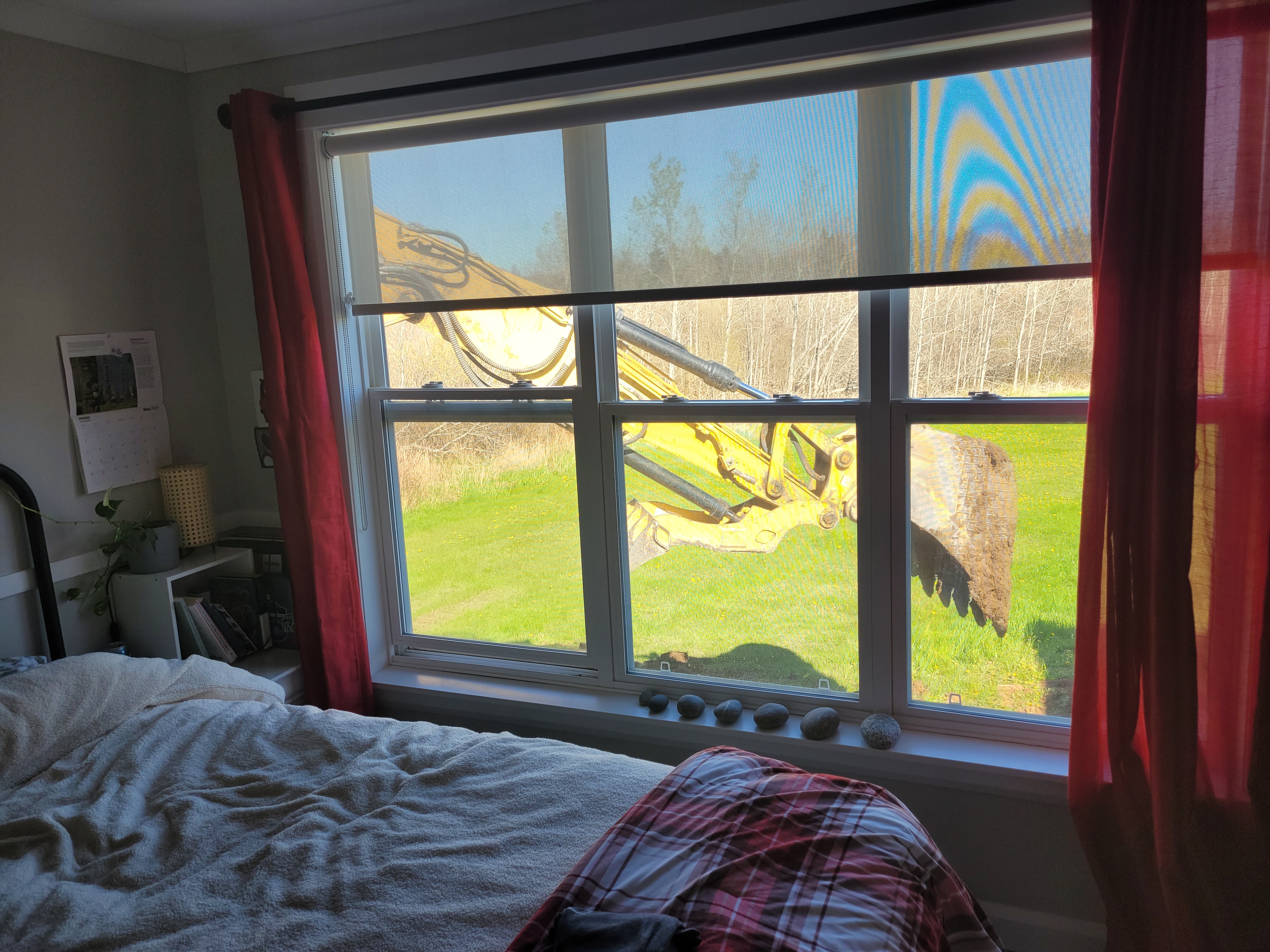
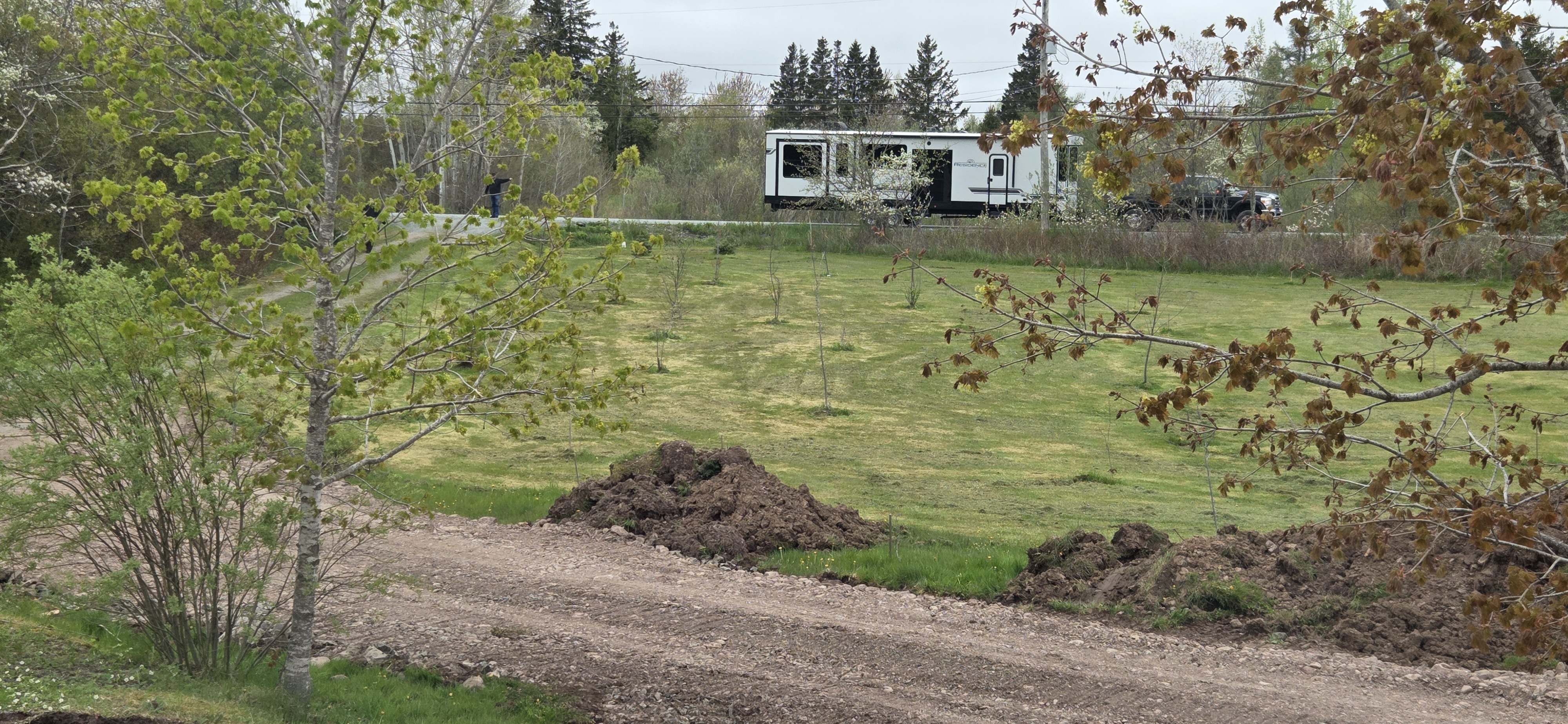
Shortly after we arrived back home, earth-moving equipment showed up to widen our driveway and build a gravel platform for the trailer Sara’s parents Winston and Shirley are going to use as their summer cottage on our property. The platform and driveway were a great success – as an added bonus, they evaded a future problem when they spotted an issue with our septic tank and promptly fixed it. However, the delivery guy from Bouctouche NB didn’t have the gumption to manoeuvre the trailer into place. He was nervous about backing up, and afraid to raise the telephone wires a few inches to clear the air conditioner on top of the unit. In the end he abandoned the huge trailer on the side of the road and went back to New Brunswick, leaving us hoping for the best. Just then, a typical Pomquet neighbour stopped to chat. (No strangers here, only neighbours waiting to happen.) She offered her husband Joe’s tractor and services. The next day, Victoria Day, Joe Rennie showed up and had the unit parked in no time. Sara used our Canadian Tire snow rake duct-taped to a branch clipper to hold up the wires for the trailer to clear. Now, if we can just nab the electrician for hookup, Sara’s parents’ move will be complete…

#7 Heart-Recovery

I want to be sure to mention this: while I’ve posted a lot about my writerly highlights above, life is life. It’s also true that during these last few weeks I got two disheartening manuscript rejections from publishers, and I heard that I’d not received a different book prize for which I’d been shortlisted!

You get the picture. Between surgeries, book prizes, book launches, manuscript rejections, tragic funerals, and major construction we’ve been through quite the roller coaster of events and emotions. Major ups and downs. It feels like a year’s worth of changes have been jammed into a few short weeks.

The surgery and the busy-ness have certainly affected my recovery. More on that very soon in my next post.

Categories
Uncategorized

Pilgrimage Stories From Up and Down the Staircase

How do you walk a pilgrimage during these months of restricted travel? I’ve been walking up and down my staircase in Nottingham England, and dreaming of pilgrimages past! To share those stories I’m releasing my first-ever podcast, “Pilgrimage Stories from Up and Down the Staircase.” Each episode features a different trail, or a different character I’ve met. psuds logo finalI’ll introduce you to enthralling paths in Norway, Scotland, England, Iceland, Canada and Indigenous territories, and provide some of the resources you’ll need to walk them. All the while I’ll be telling the stories of the fascinating individuals I’ve walked with and met along the way, and sharing snatches of our conversations, songs, and experiences.
Alpine shelter

Thursday, July 30, 2020, at 5 pm Montreal time, I’m releasing the first episode: “Walking the St Olav Way.” In the 17-minute episode you’ll hear snatches of our struggle up and down mountains and jumping late-spring run-off streams and boggy marshes. You’ll meet a friendly Norwegian border agent and a marathon German pilgrim struggling to understand his life. You’ll sit with us in rustic Budsjord Gård and hear fellow pilgrim Kathryn singing as we walked. I hope you’ll listen in to this first episode, and to the others as they come out every Thursday! The series “Pilgrimage Stories from Up and Down the Staircase” will be available wherever you find your podcasts.

To find out more about St Olav before listening to the episode, why not check out some of these resources?

  • The official St Olav website, which you can find here, is a wealth of beautiful images and practical info (look for the English-language option)
  • In 2011, Alison Raju wrote The Pilgrim Guide to Trondheim, available at this website.
  • For my article about the history of the Trail and its modern-day recovery as well as some photos of our 2013 trek, see the International Journal of Religious Tourism and Pilgrimage, here.
  • For an article about the health benefits of walking the St Olav Way, written by a Norwegian scholar of pilgrimage in the same journal, see this link.

I’m looking forward to sharing my experiences with you on the “Pilgrimage Stories From Up and Down the Staircase” podcast!

Categories
Uncategorized

Fences Don’t Make Good Neighbours

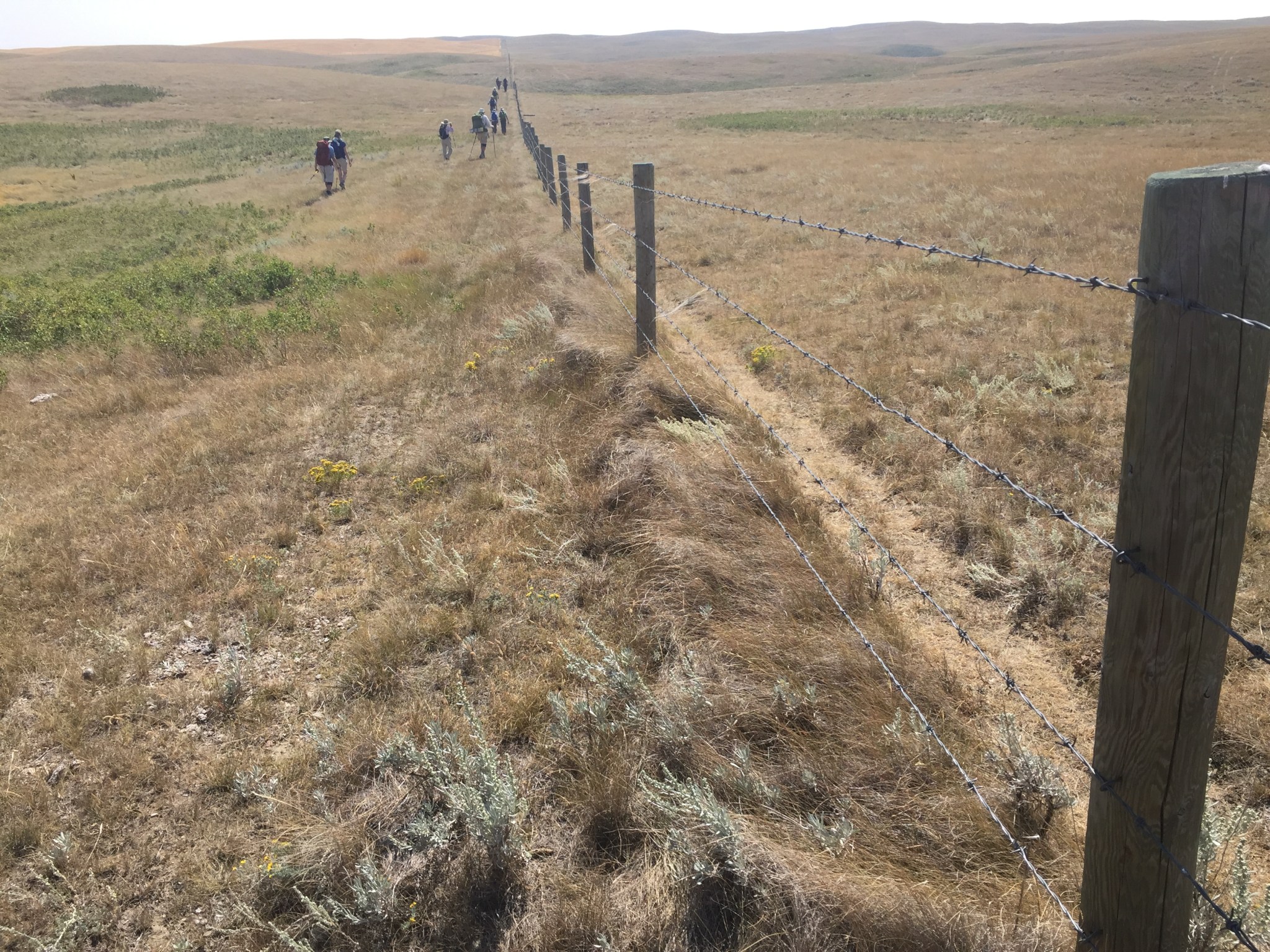
classic fence photo of pilgrims

There are a lot of misconceptions about the Right of Responsible Access, or the “Right to Roam”. A friend of mine in Saskatchewan recently said her farm was broken into a number of times despite the fact they installed cameras. “I don’t think Right to Roam is a good idea,” she wrote me. That’s terrible. But the fact is, “Right to Roam” doesn’t allow people to break into buildings. Unfortunately, putting up more NO TRESPASSING signs won’t stop crooks, either… they already know what they’re doing is illegal. Whether the government of SK adopts responsible access, or (as seems more likely) accepts the association of rural municipalities’ request for tighter trespassing laws, either way, nothing changes when it comes to farmer’s yards and buildings. Breaking in is illegal already. In countries like Scotland, if anything, the laws got tighter when the Right of Access came in.  The two problems in Saskatchewan, and elsewhere, are a “they can go to hell” culture, and a lack of enforcement of EXISTING laws.

THE EVIDENCE            The idea is to reduce property damage and theft and to live in healthy communities. Everyone agrees. So what’s the evidence? Evidence-based arguments show that, in Finland, Norway, Scotland, Sweden, and Iceland, countries that are quite similar to Canada with northern climates, and small populations spread over big areas – in those countries increasing access, rather than decreasing it, is what decreases rural crime, vandalism and littering. Increasing access actually puts more sympathetic eyes on the land, rather than fewer. It increases public interest and public attention. Criminals don’t work out in the open. They dump their garbage, or deface a wall, or break through a lock, when no one is looking.

CHINOOK PARKWAY   I grew up in Swift Current SK. There’s a trail along the Swift Current Creek called the Chinook Parkway. It wasn’t there when I was a kid.  I spent a lot of time along that creek looking for garter snakes and later, golf balls. But the area was always dirty and dangerous. There were too many broken beer bottles in the long grass – no one cared. If Swift Current had put up a fence along the creek and increased fines tenfold it wouldn’t have stopped kids from breaking bottles and starting campfires and leaving garbage. Police can’t be everywhere. But creating a public access space in the Chinook Parkway where people walk and jog and cycle has put more people out in the open. It’s made the river’s edge – and the city – healthier, and better, and safer.

GRADUAL CULTURAL CHANGE           You don’t make a rule and expect it to change everything, you try to change the culture gradually. What option will create greater, and healthier community for Canadian people? Does the higher the fence mean the better the neighbour, really? In Norway and Sweden and Scotland and Finland and Austria and some other countries, there’s a whole culture where people are trained up, from childhood, to know how to be on the land – how to respect crops, and animals, and fences, and private buildings. They know how to pick berries or mushrooms and respect property at the same time. Sure, it doesn’t happen overnight. But the question to ask ourselves is: what will be the direction that bringing in a new piece of legislation will take us?

LIABILITY:        Some landowners will say: well, we could never have the Right of Responsible Access in Canada because some city person would come out here and fall down a badger hole and before you know it I’d be sued. FALSE. In Scotland and in other countries where they’ve brought in such laws, at the same time they passed laws protecting landowners from lawsuits. It wasn’t difficult. In those countries, it’s nearly impossible for someone to sue a landowner for personal injury while exercising responsible access. The only exception would be if the landowner willingly and intentionally set some kind of trap for walkers. Shy of that, they’re protected. For more on this, and on the evidence for crime rates, see “This Land is Our Land” (a terrible title, but a good book), by Ken Ilgunas.

THE QUESTION:          So the question is: what kind of future makes for better community? Do you want to live in a land where there’s more fear, more danger, where if you break down on the road you’re afraid to go and ask for help? Or do you want you and your children to grow up in a land where landowners are respected and yet at the same time, everyone feels a connection to, and a responsibility for, the land? Where people can stop by the side of the road and pick chokecherries or saskatoons or raspberries, or have a picnic (making sure to pick up their garbage). Where city dwellers understand some of the problems of farmers and ranchers, because they actually know something about the land and have met the people? The more people feel a connection to the land, the way farmers and ranchers do, the more everyone – even urban people – act as allies. Fences don’t make people safe. Good relations do.


Categories
Uncategorized

Walking the Land: a Canada 150 post

Heritage Saskatchewan sponsored film-maker Kristin Catherwood, who made this short film for the Canada 150 year. It features me and Hugh Henry, talking about the importance of the Swift Current – Battleford Trail, the 350 km trek we finished in August 2017. Thanks Kristin!

Categories
Uncategorized

A Stranger to These Parts

Porter arrival Sudbury

‘I can’t believe you almost stole that scarf,’ the woman in the airplane seat across from me says to an older woman who must be her mother. The two chortle. They like each other, clearly. ‘Well, it just got stuck on the end of my purse,’ the mother laughs back. ‘Is it my fault it was hanging there? I didn’t even see it until the alarm went off!’ She turns, maybe just a bit flirtatious with the giddiness of a weekend away in the big city with her daughter. “Look at me – I’m hardly the type!”

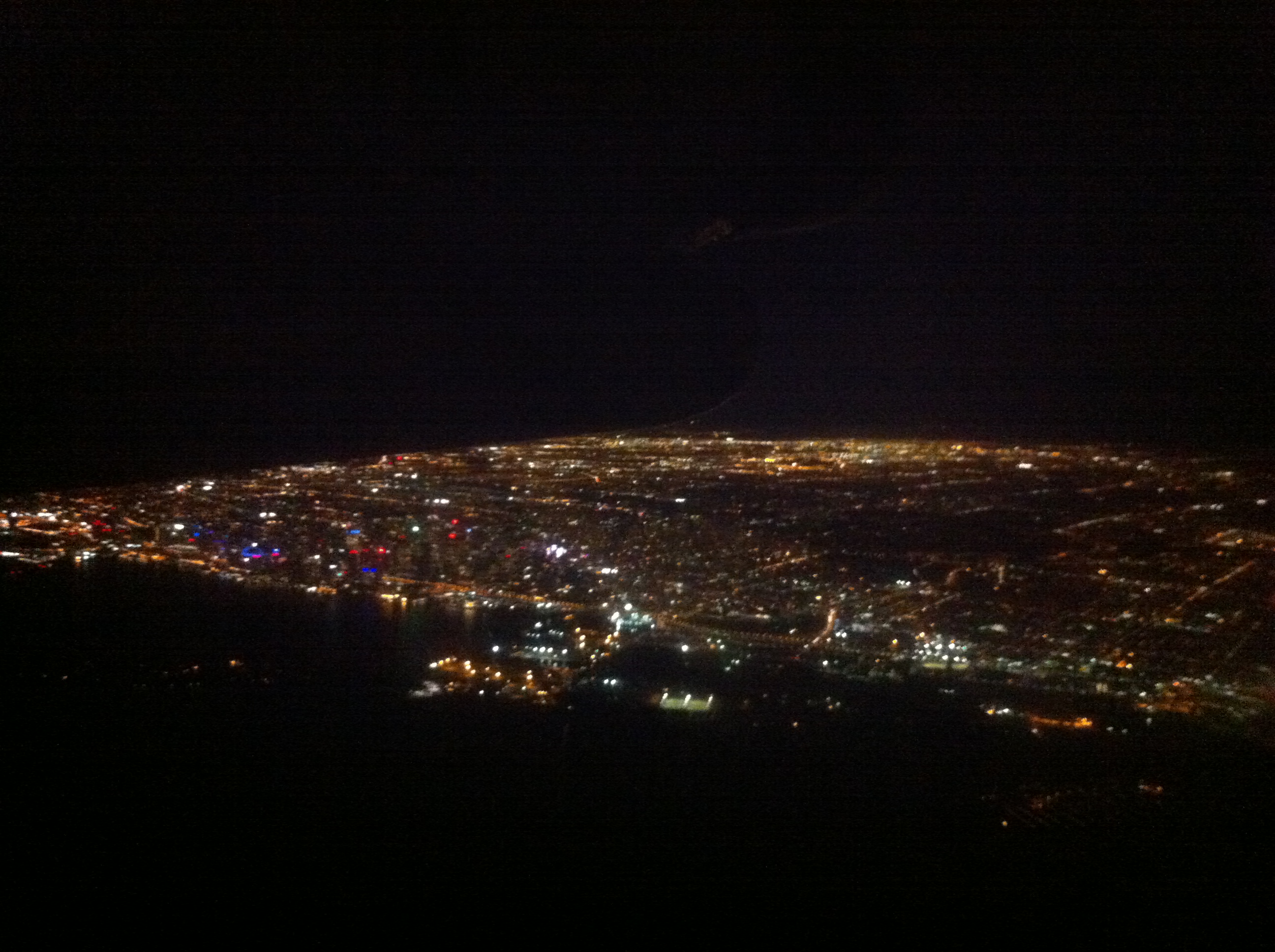
The cabin crew dim the lights shortly after our take off to Sudbury. How miraculous it is to hang thousands of feet above a huge city at night. To watch the glow of human achievement stretch away to every horizon in magnificent strings and squares of bright fires. However snide we Montrealers might sometimes be about Toronto, how impressive is this city on the edge of the Great Lake, how vast a plain of light, of movement and life. And how strange to be a descendent of savannah dwellers, not barefoot and on the ground but suit-jacketed and seat-belted and in the air, climbing Jacob’s ladder like the angels he only dreamt about. Listening to the turboprops whistle, eating almonds, watching from this incredible vantage point I realize that, when you think about it at all, this is so new in human history that however banal it might sometimes feel, we are still among the first generations to be privileged to experience it.

The root meaning of ‘pilgrim’ is stranger, or foreigner. Not all strangers are pilgrims, perhaps. But I think all pilgrims must in some way be foreigners. And to hang in the air at night, above a city, watching the lights….? That is foreign indeed.

It is perhaps because I am a stranger that I noticed the man who now sits in the seat three rows back. Nervous hands, rolling his thumbs against his fingers as they checked out his boarding pass, walking awkwardly, so tall his head, even bowed, slid along the ceiling of the cramped cabin. Unusual black pants and boots. Or the woman one row up and to the right, in a business-jacket, like me a bit unkempt, who had a resume out in the lounge, and is now tapping it absent-mindedly with her pen while looking out the window. An academic, almost certainly, on her way to an interview. Or the child, ten or eleven maybe, trying to take up as little space as possible, perhaps on her way to meet a divorced parent with weekend parenting rights. So much life and drama in such a small metal tube. Life at 8,000 feet and climbing.

There is one light in particular that catches my eye with its brightness and unusual movement. It takes me a minute to realize that it is not, like all the others, following one of the lines that demarcate streets and highways. The way it’s crossing the city, it must, like us, be in the air. Another plane, below us? I watch it move sideways to our path. And then, abruptly, it stops. What?

The flight attendant interrupts my reverie. Your drink? she says. But it’s not a question. I realize that she must have memorized the orders of all twenty or so people on the plane, without paper or pad. I take the glass, turn back to the view. The bright light is still there, still immobilized. Did I miss something? Planes don’t just stop, and there’s no dark strip of a runway. A helicopter, maybe? How strange.

‘So, do you live in Sudbury?’ asks the older woman beside me, when we land and it’s time to get off.

‘No,’ I smile back. ‘Just visiting.’

‘Oh, I thought so,’ she says. ‘A stranger to these parts.’

Toronto from the air

Categories
Uncategorized

Speed Dating Riga

Freedom

monumental monuments
Trying to see a city in four hours feels a bit like speed-dating: you’ll hear a story, you’ll get an impression, but it’s not enough on which to build a relationship. The cheapest ticket north from Frankfurt to Stockholm is an Air Baltic flight that sticks me in Latvia’s capital for a layover too long to sit and do nothing and too short for a real, proper visit. Where some might find that annoying, I’ve never been to Riga. A quick run in seems the least I can do.

Fortunately, the airport is small. The pretty woman in blue at the city information desk is incredibly friendly and helpful. Yes, I can take a taxi, it’s right over there. But why do that when the city bus is almost as fast and costs one-thirtieth the amount? I don’t want to change money for four hours, so I charge the equivalent of one euro for two bus tickets. It leaves over there, from the other side of the parking lot, she points, handing me a card. In two minutes. You’ll have to hurry. I run out the door and into cool straw-yellow Baltic sunshine, me and my backpack bouncing the 100 meters or so to the waiting bus.

I’m in my seat, still breathing heavy, when I hear someone calling me. “Sir? Sir?” Coming down the bus aisle is the same woman in the blue uniform. Sir, she says, smiling, I forgot to give you your second pass. Here it is. She has run the whole distance behind me, in stilettos, to give me a ticket worth 50 cents.

Bus #22 is half-full. Young men in sunglasses, clearly airport workers off-shift, polished leather shoes and pressed shirts, lean against the windows of the bus with their eyes closed and ear buds in. Small old men sit in suits that seemed as grey as their skin, while several elderly women in shapeless but colourful shift dresses peer into each other’s huge paper bags and chortle in a language impossible to understand. Hipster couples, the men in shorts with deck shoes, the women in red pants with v-necked sweaters, hold swaying baby-carriages in place. Beside me sits a pair that look for all the world like some younger, Baltic version of Brangelina. He a rougher Brad Pitt in a white tee-shirt, and behind her sunglasses, high heels and fur-lined vest, hers an adolescent Angelina smile. We pass by gaunt old concrete apartment buildings, interspersed with modern concrete homes. Occasionally there is an old framed cottage, the wood grey with age, fading paint and single-pane glass, old flowerboxes gone to colourful riot.

At the next stop three men who appear to be in their late twenties step on to my section. They move together, a unit of something that seems, from the reactions of the other passengers, foreign. One of them, bare-chested under an open Adidas jacket, turns on music as soon as they sit down. 60s style Russian, or maybe Ukrainian or one of the Republics, the singer’s voice floating over the seats. The old women stop talking and turn to stare. The three men seem oblivious, talking loudly, looking only at each other. When the Brangelina couple leave the bus, the woman gets caught in the doorway a second, her one high-heeled leg stuck for a second on the inside of the bus the occasion for great hilarity from the Russians.

Where the bus drops me it’s only a few steps to the old town. A group of pre-schoolers, all dressed in bright tee-shirts, straggle at the hip level of their monitor as they pass under a giant statue of two officers in greatcoats and caps, back to back, looking out over the river. The squares are full of people. A Mexican ship is in port: small clean-cut men, their skin olive against the bleached white of impeccable uniforms, carry cameras on their belts and examine the wares of the street sellers. The products are typically Baltic: carved wood, bright, intricate knitted goods, and amber in every possible shape and setting. I’m trapped at one of the tables in front of a statue of the Bremen town musicians. The woman managing the stall seems as excited for a chance to practice her English as to show off the wares, which are beautiful, but exactly the same as at the next table. Further down I notice traditional wooden Russian dolls painted with European soccer players. In one of the shops I come across unique and exquisite ceramic houses like some that I saw coming into town. I’d like one, but where would I put it?

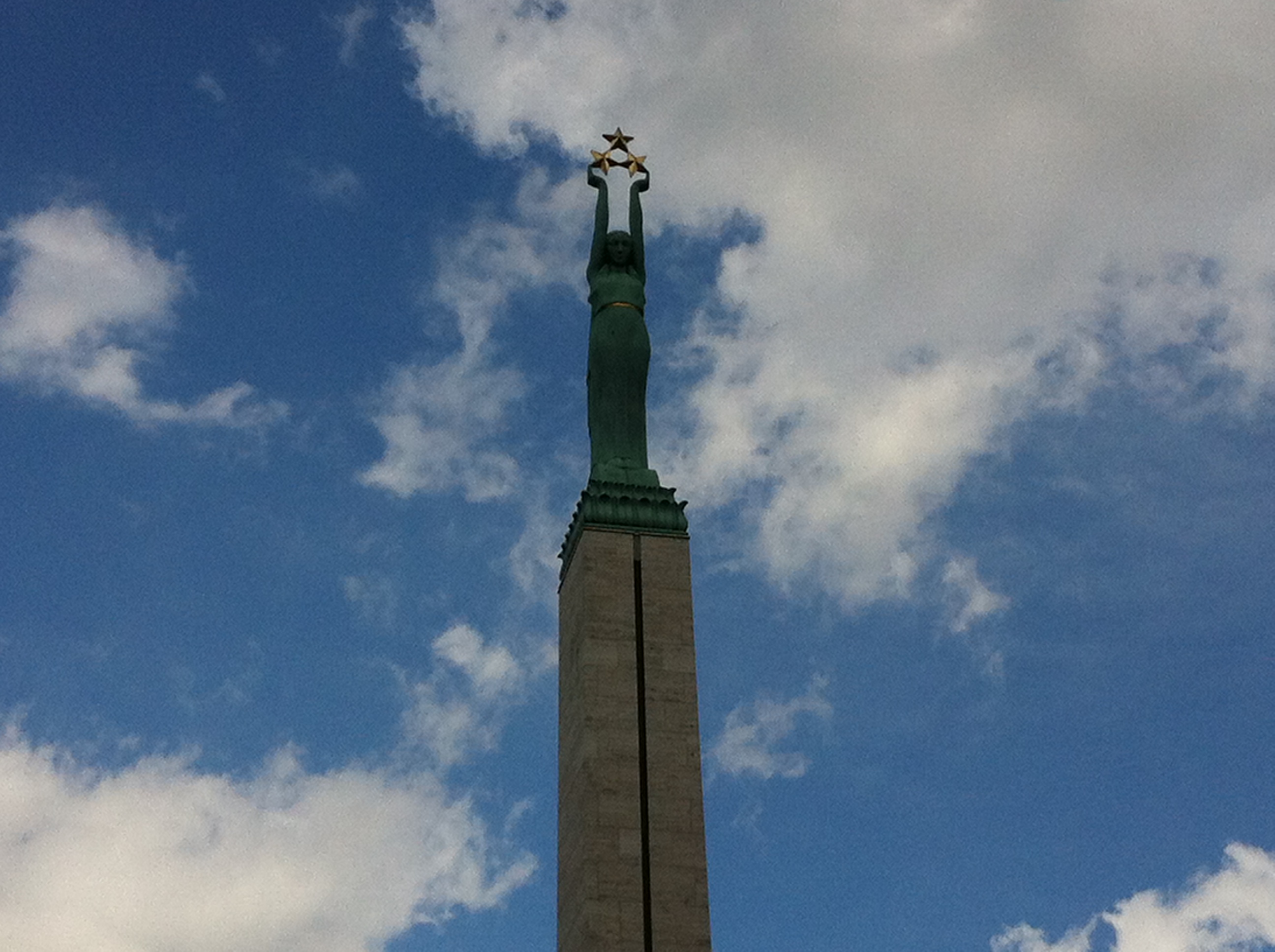
The churches are quiet and simple. I take photos of some of the art deco ornamentation that graces the buildings. The statues and monumental reliefs are…. well, monumental. These are twentieth century work. Big-shouldered men in army uniforms and helmets, carrying rifles. Big shouldered, bare-breasted women, carrying heavy loads. There is another giant statue at the opposite edge of the old city, titled “Freedom”. On top of a granite column high above the street, the two-storey, stylized figure of a woman in a robe thrusts three golden stars up to the heavens. Perhaps it was called “Progress”, I think. Later on I walk by a small triangular shrine, quite different from the monuments, simply titled “1991 Barikades”. There are fresh flowers on it. Here and there I see testimonies of struggle, pocketed between coffee shops and western fast-food franchises. But I’m like a half-deaf man trying to hear a conversation about a subject I don’t recognize.

A tram passes. I think that its compact size, clean lines and wrap-around windows make it look retro, like something from the 1950s, and then realize that it probably is a piece of equipment still in use from then. On the street nearby, a group of women laugh and talk to each other in Latvian as they take turns releasing arrows at an archery range.

I’ve just enough time for something to eat before going back to the airport. There’s an old convent across from the street sellers, converted to a restaurant called “Domini Canes”. I take that as a sign and sit down. The waitress brings me a bowl of ginger-lamb-lentil soup. The presentation looks like something from a flight magazine: trickles of balsamic reduction on the four corners of a large white bowl, traced with herbs and flowers. For a second I could be in Paris or London, Toronto or New York or Hong Kong. Then I take a bite of the bread. It’s thick and brown and heavy, tasting of molasses, spread thick with butter and garlic, and says only one thing: there’s nowhere quite like Riga.

archery

barikades

Categories
Uncategorized

At Norwegian Customs

When it’s my turn at the customs booth the uniformed official in the booth asks why I’m visiting Norway. “The Saint-Olaf trail,” I say. Then, when her face registers nothing, I add: “I’m going to walk on the St-Olaf way from Dovre to Trondheim.” I’m careful to pronounce the “h” in Trondheim as a “y”, the way I’ve heard it done. “So you’ll be coming back to Oslo?” she asks. She’s not looking at me, making a point of it, flipping through the pages, checking where I’ve been on this passport. “No, flying out from Trondheim.” I get to say that “y” twice, a secret pleasure. “When do you leave the country?” This still looking at my passport as if it contains some secret unknown to me but that she has to discover.
She’s about my age, I realize, or only very slightly older, in her mid 50s, maybe. I think I see in her face the same kind of lines I know from my childhood among the Scandinavian settlers in the Canadian west where I grew up. But maybe that’s the romantic part of me, stretching to make some connection in this land whose people and language seems so foreign to me, even though half my genes come from this soil. “In 13 days” I answer. I wonder if there’s a problem. Then, because my default is always to try to make contact, even when I shouldn’t, I add: “I hope, at least. Depends on how it goes on the Way.” She reaches for her stamp without any indication that she’s even heard what I’ve said. Then, as she pushes the official imprint of Norway down onto the paper, she looks up and, almost unbelievably, smiles, a big broad smile. “So you’re a pilgrim?” she asks. Despite my attempts to introduce just that subject, I’m caught off guard. “I guess so,” I answer awkwardly. “Enjoy your time in Norway. Have a good trip.” She hands me back the passport, the words “Canada” on the top, facing me. Then when she looks up at me, I hesitate in place, wondering if there’s more of this conversation to come, until I realize she’s actually looking through me to the person behind me. “Next,” she calls out.