Categories
Uncategorized

“Der Pilger (The Pilgrim)” reviews The Good Walk

Gotta love those Germans…
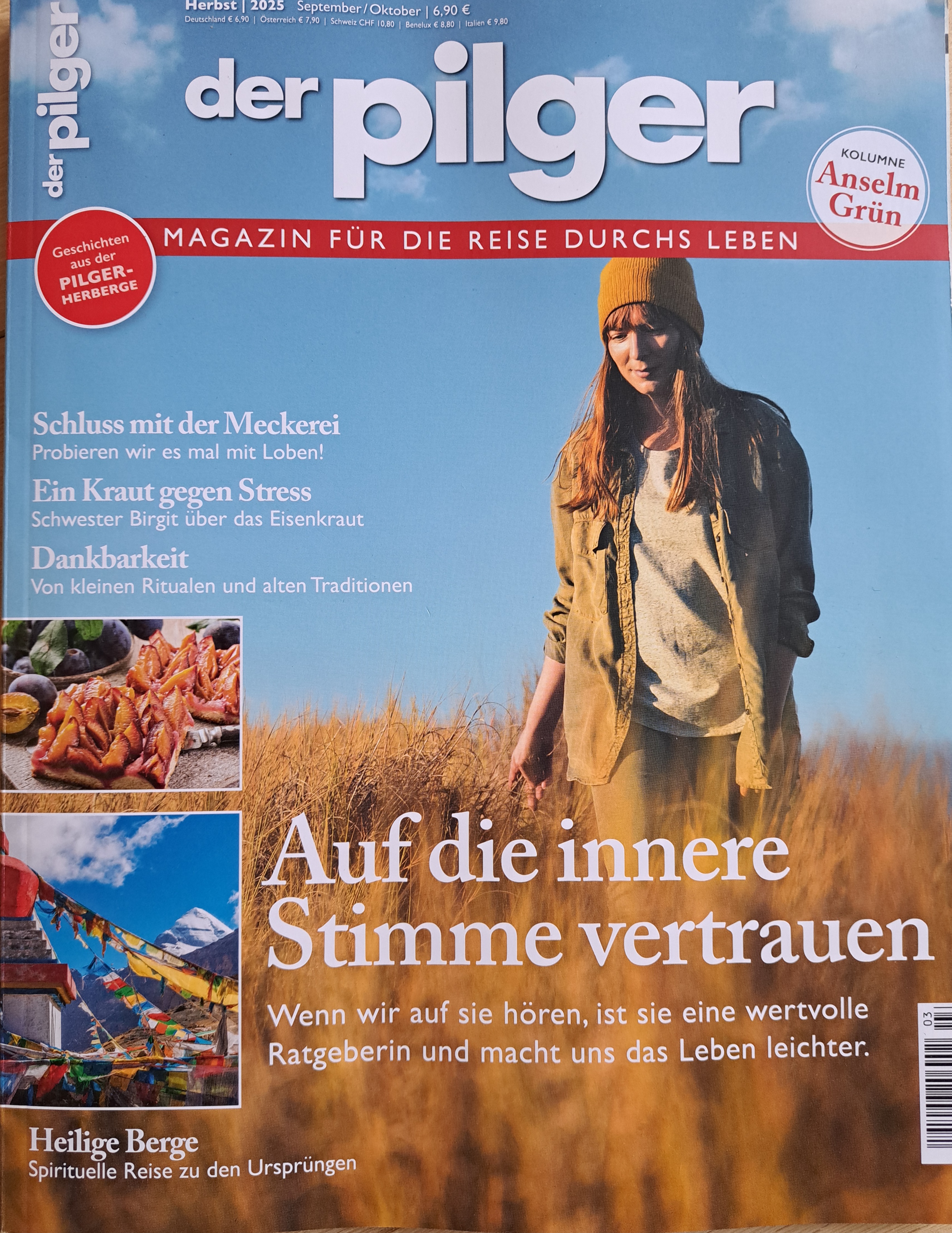
When my friend Traugott Roser contacted me to let me know he’d written a review of The Good Walk, for the magazine Der Pilger (The Pilgrim), I was overjoyed!

My hopelessly naive generalizations about Germans include that…

All Germans are fit and athletic and they LOVE walking and pilgrimages. So they’ll eat up The Good Walk. The book that really ignited the contemporary rise of the Camino was Hape Kerkeling’s fun and incredibly popular I’m Off Then: Losing and Finding Myself on the Camino de Santiago, first published in German and a sensation there.,

All Germans idealize the North American “West” and North American landscapes. Germany is a crowded country that has lost so much of its own “wildness” but still maintains a strong national mythology of origins around it. And yet …

All Germans are aware of and sensitive to Indigenous sovereignty and concerns, and …

All Germans love to read, and as a bonus, as truly civilized people are multilingual and can often read English books like mine, unlike most anglophones and folks like me, who struggle with anything more than simple tourist directions auf deutsch

SO. After all these expectations, how did the review turn out?

Thanks to Google translate, you can read on for yourself….

The Review

p. 43 New Pilgrim Perspectives:

A devout Muslim embarks on the Way of St. James, and a Canadian professor and long-time pilgrim follows the trail of spiritual wandering in the vastness of the Midwest. Two inspiring book recommendations from Protestant pastor and passionate pilgrim Traugott Roser.

The Search for a Lost Home (Die Suche nach einem verlorenen Zuhause)

“Matthew Anderson, Professor of New Testament at Concordia University in Montreal, is an experienced pilgrim who has also led his Canadian students through Spain, France, England, and Norway and has made a name for himself as a documentary filmmaker on pilgrimage. After many trips to Europe, he wonders whether pilgrimage is also possible in North America and what pilgrimage might mean there. In his new book, “The Good Walk – Creating New Paths on Traditional Prairie Trails,” he tells a compelling story of humanity’s age-old paths through the prairie of the Middle West. It is an account of a painful yet healing search for home: “Pilgrimage together with others—in the broadest sense understood as spiritually motivated hiking—is a way of searching for a lost home.” Anderson is a descendant of settlers who farmed…

(P. 45) and built small towns on the supposedly deserted plains of Saskatchewan (see photo above), and [the region once called] the Northwest Territories. Since 2015, Anderson and his wife Sara have been traveling the trails once used by traders, settler treks, and the Northwest Mounted Police, a paramilitary force commissioned by the Canadian government. But Anderson not only gets close to the story of his own family, descendants of white European immigrants, but also of the people who lived there before and were deprived of their land through sham treaties, displacement, and targeted extermination.

Pilgrimage: intercultural and interfaith

Anderson is accompanied on his journey by various companions, including Don Bolen, the Catholic Archbishop of the Diocese of Regina. Descendants of the First Nations, the Lakota, the Nakota, and the Nehyawak (Cree) accompany them or host them, as do descendants of settlers and the Métis, descendants of European-Indigenous marriages, who historically mediated between cultures as fur traders and are now considered an independent nation.

Anderson sees his hikes through the vast landscapes as pilgrimages to places whose history has been partly forgotten, partly erased. This also changes the landscape and its perception itself: through narratives and archaeological evidence, places of living memory emerge.

The places create new relationships and deepen old ones. In this way, the pilgrims come into contact with the spiritual world, [sometimes] with the elders and wise men of the Indigenous peoples, [sometimes] with their own family history, and [always] with nature. Through Christian and Indigenous rituals, the pilgrimage becomes an intercultural and religiously unifying experience. At the same time, it is a painful journey that ties in with the tradition of penitential pilgrimage: The extermination of the North American bison took place in the vastness of the prairie. This deprived the Indigenous people of their livelihood, and thousands starved to death while faced with the government’s deliberate inaction. It is equally painful when the pilgrims encounter survivors from the church-run boarding schools (of both Catholics and Protestants):

On behalf of state authorities, children were taken from their families and  Nations and placed in Christian schools. Only in recent years did the public learn of the graves of thousands of nameless children who did not survive the ordeal.

Reward for Physical and Mental Effort

The paths across the prairie demand physical and mental effort from the pilgrims, but they also reward them: through community, forgiveness, and understanding. Matthew Anderson ultimately even succeeds in finding peace for his deceased parents and for his sister, who died very young. The pilgrim’s path is a good path, and with the project Anderson describes, a new, very unique pilgrimage tradition begins in Canada.

I couldn’t put either book down; it was precisely the different perspectives of both authors that inspired me to consider my own pilgrimage

I couldn’t put either book down; it was precisely the different perspectives of both authors that inspired me to consider my own pilgrimage on the Way of St. James in a new and more profound way: as a consciously religious experience, as a path to encounter God, and as a path to reconciliation.”

Dr. Roser’s Own Pilgrim Book

I wouldn’t be much of a friend, if at this point I didn’t mention that Traugott has published his own pilgrim book. It’s in German, titled Hola! bei Kilometer 410: Mit Allen Sinnen auf dem Jakobsweg (Hola! At kilometre 410 with all senses on the Camino de Santiago).

I wonder if a rather free, but still good, translation might be: “Hola! Fully aware and alive at kilometre 410 of the Camino de Santiago.” It’d be great to see this valuable book out for the English-language reader as well! (By the way, the other book he reviewed with mine in the above article sounds fascinating).

Traugott does all kinds of interesting teaching and research, including (like me) teaching Bible and Film classes. He is also an ethicist who teaches about ethics in healthcare and palliative care.

Thanks, Traugott, for the great review. Buen Camino! Looking forward to walking with you some day soon!

Categories
Uncategorized

First Solo Pilgrim on the Nova Scotia Ninian Way

When Sara and I first arrived in Nova Scotia for her new job at St. Francis Xavier University, I was bemused to find all kinds of connections to Saint Ninian. In Montreal, I’d endlessly debated Ninian’s existence with Prof. Sara Terreault when we taught pilgrimage together at Concordia. When we moved to England and I was taking advantage of pilgrimages there, I’d enticed friends Ken and Christine to come over and join me as the first group of Canadians to walk Scotland’s nascently revamped Ninian walk, The Whithorn Way. Almost as soon as I arrived in Antigonish I admit I started concocting a fanciful pilgrimage here called “The Nova Scotia Ninian Way,” that would explain the strange choice of Ninian as the patron Saint of the cathedral here while weaving in the often suppressed histories of Gael and Acadian settlers, and original Mi’kmaw peoples on this Land.

Then the Antigonish Heritage Museum invited me to give a talk on Ninian.

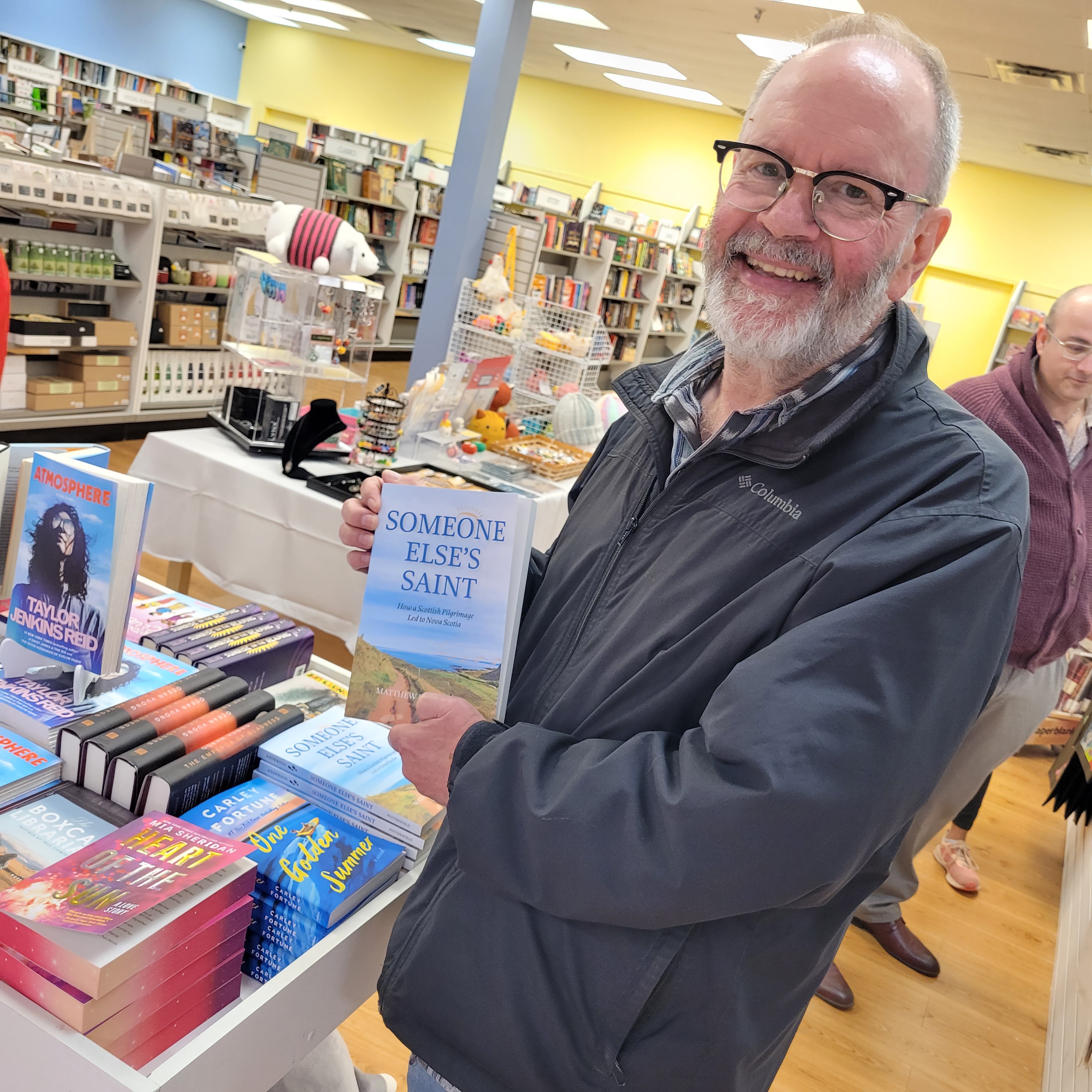
Sara found it a bit weird that I was pulling all-nighters for a talk that wasn’t any longer than a lecture for class. Finally I revealed to her that the talk was spiralling out of control! The deadline for the annual Pottersfield Prize for (unpublished) Creative Non-fiction was approaching …. one thing had led to another and I had myself a manuscript. It was a braiding together of two walks to Ninian–one in Scotland and one in Antigonish–and the stories of impossible underdog successes amid terrible colonial destruction on both sides of the Atlantic. To my amazement, the book, Someone Else’s Saint, won second prize!

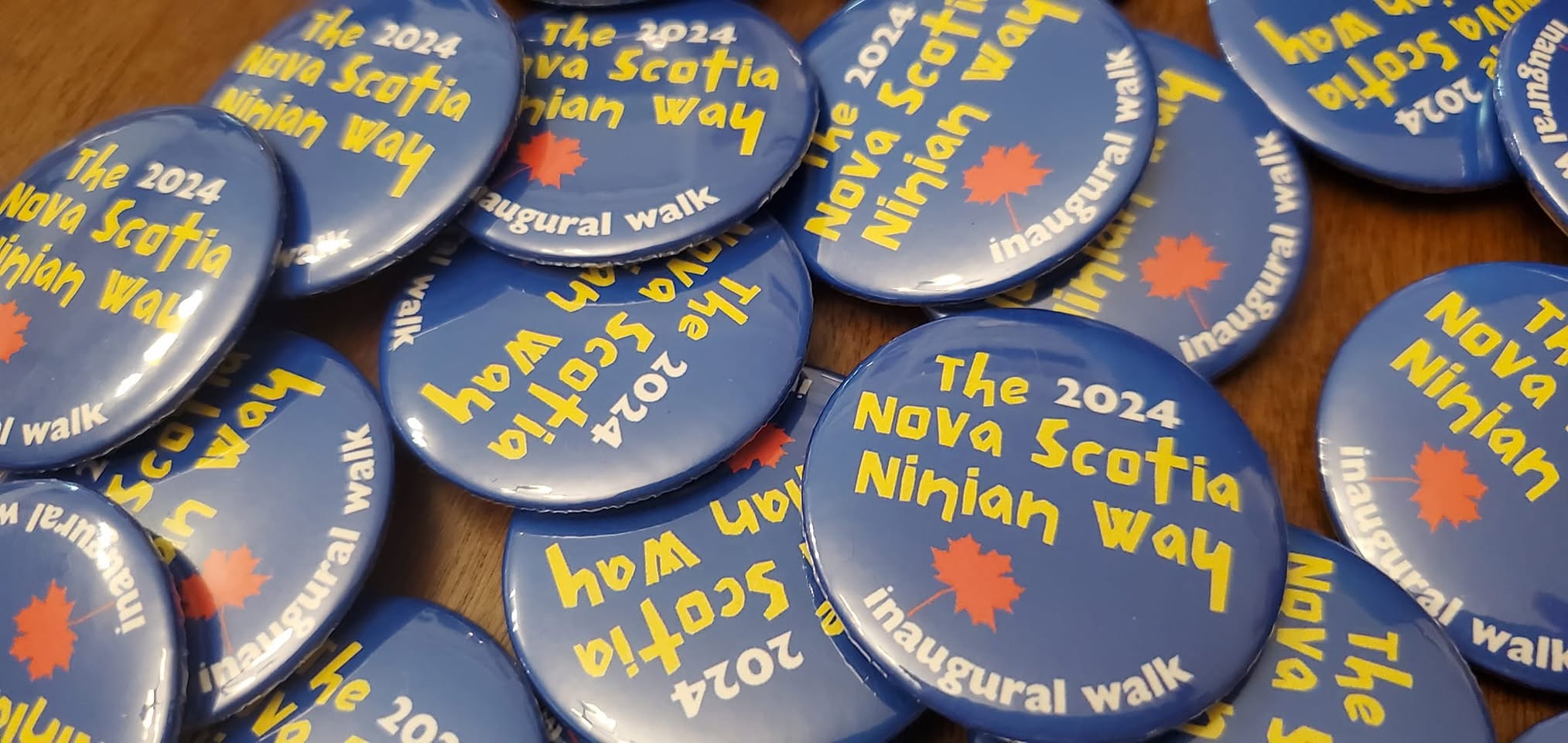
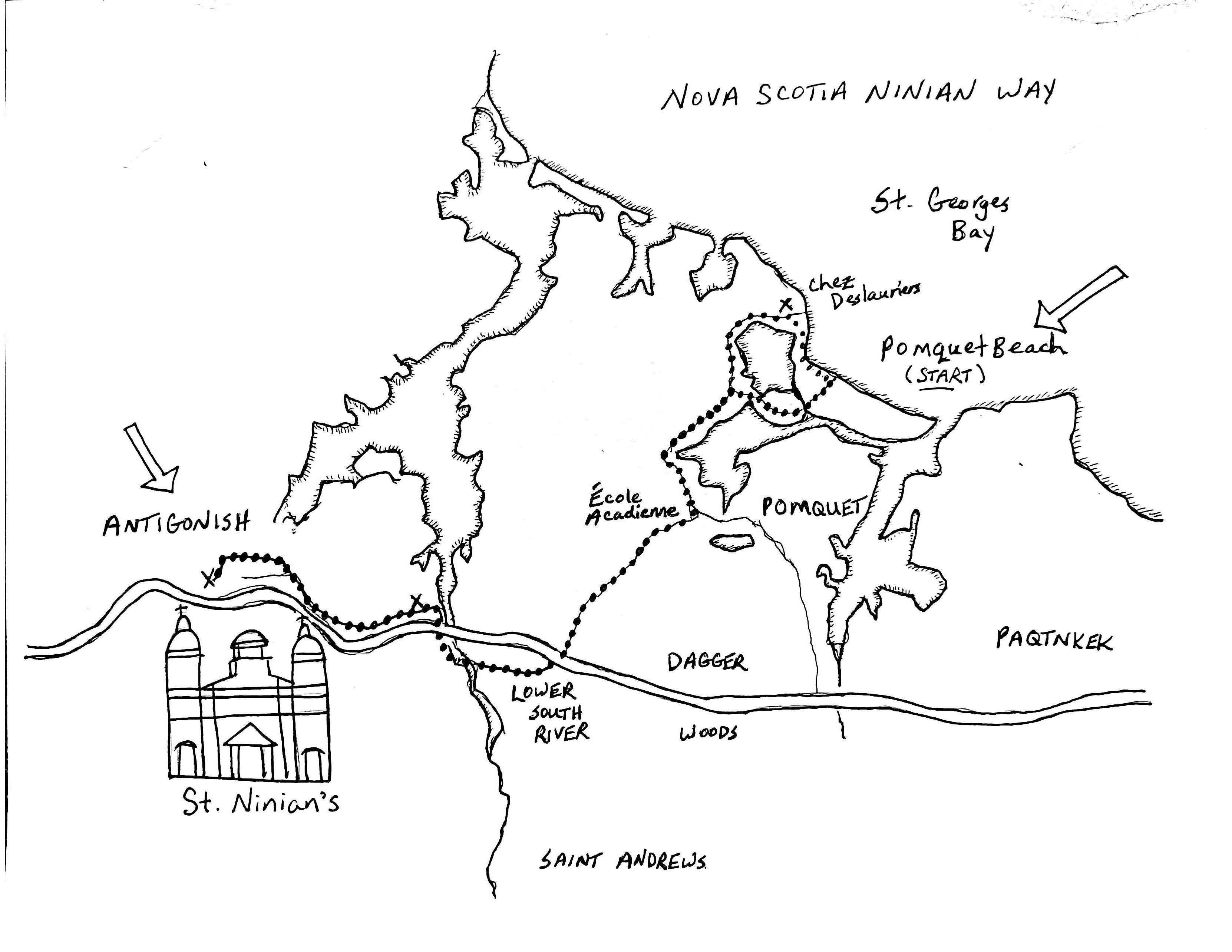
Since there was going to be a Real Life book, I knew then and there that there had to be a Real Life pilgrimage to match. What kind of a fraud would I feel like at book talks if I hadn’t even walked the trajectory I was describing? So the “word became flesh.” Soon, a map was drawn, rest stops were arranged, and a dozen or so adventuresome pilgrims (you know who you are…and thank you!) signed on to walk the inaugural Nova Scotia Ninian Way. We timed the pilgrimage to end at Saint Ninian Cathedral just in time for their 125th Anniversary Mass.

Talk about a bucket list moment.

I sure didn’t think it was likely the Nova Scotia Ninian Way would be walked again.

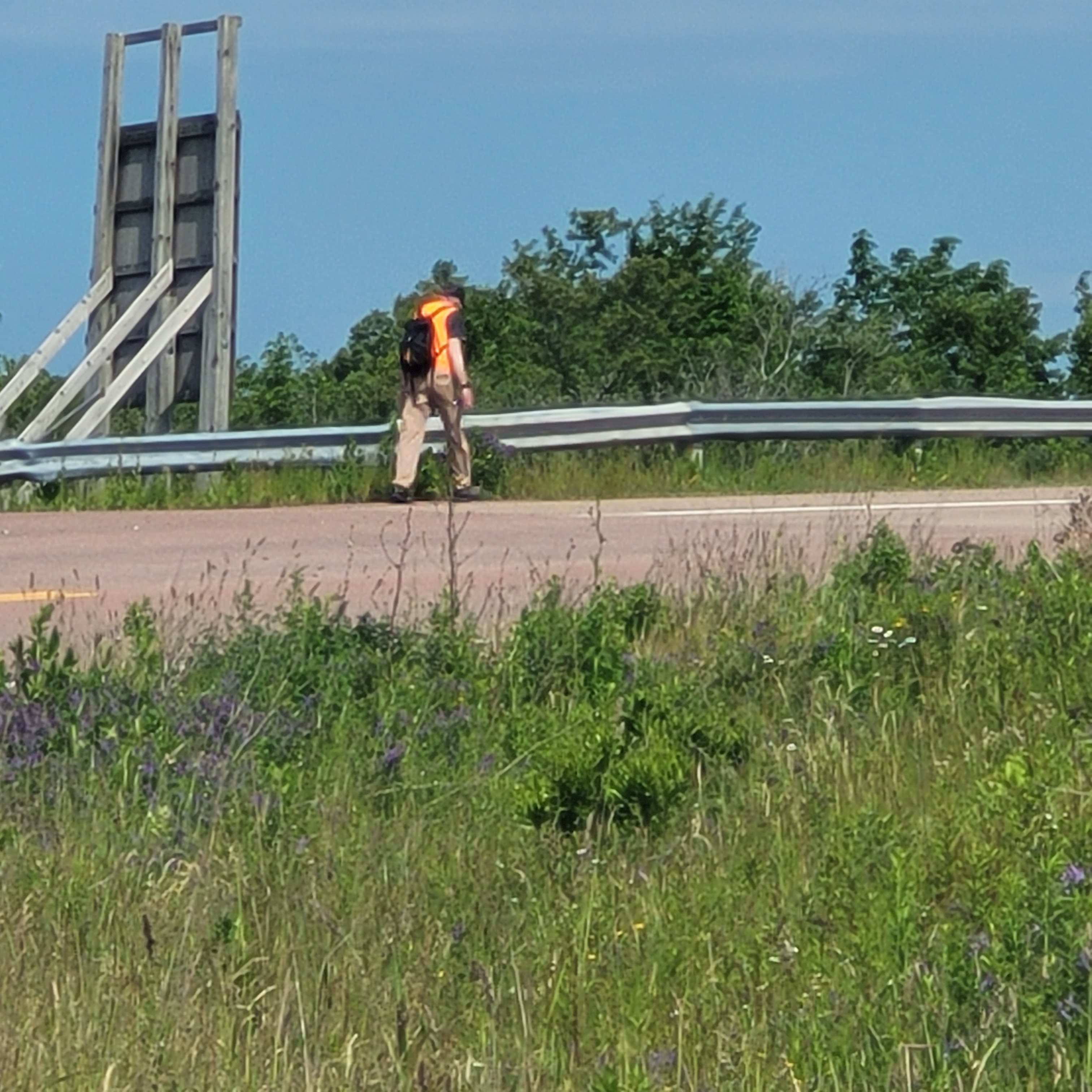
But today, my friend, and fellow walker/writer Ken Wilson is out there in a heat wave walking the entire 25 kms!

I shouldn’t be surprised. Ken essentially has a PhD in meaningful walking, he’s the author of Walking the Bypass, out soon with University of Regina Press, and he’s all through the Scottish portions of Someone Else’s Saint (although he wasn’t 100% enamoured of his depiction in the infamous STINGING NETTLE scene and the WET SOCKS FIASCO) as he let me know via his blogged review.)

But what an honour to have the likes of Ken check out this Antigonish Pilgrim Path AKA The Nova Scotia Ninian Way!

__________________________

Check out Ken Wilson’s blog “Reading and Walking”: https://readingandwalking.wpcomstaging.com/…/22/pomquet/

Buy Someone Else’s Saint: https://www.indigo.ca/…/someone…/9781990770692.html

Preorder Walking the Bypass: https://uofrpress.ca/Books/W/Walking-the-Bypass

Read about the Nova Scotia Ninian Way: https://somethinggrand.ca/…/29/a-nova-scotia-ninian-walk/

Categories
Uncategorized

The Top 10 Reasons to Walk the Whithorn Way Next Time You’re Thinking Camino

full Scottish breakfast

#1.  Scottish breakfasts

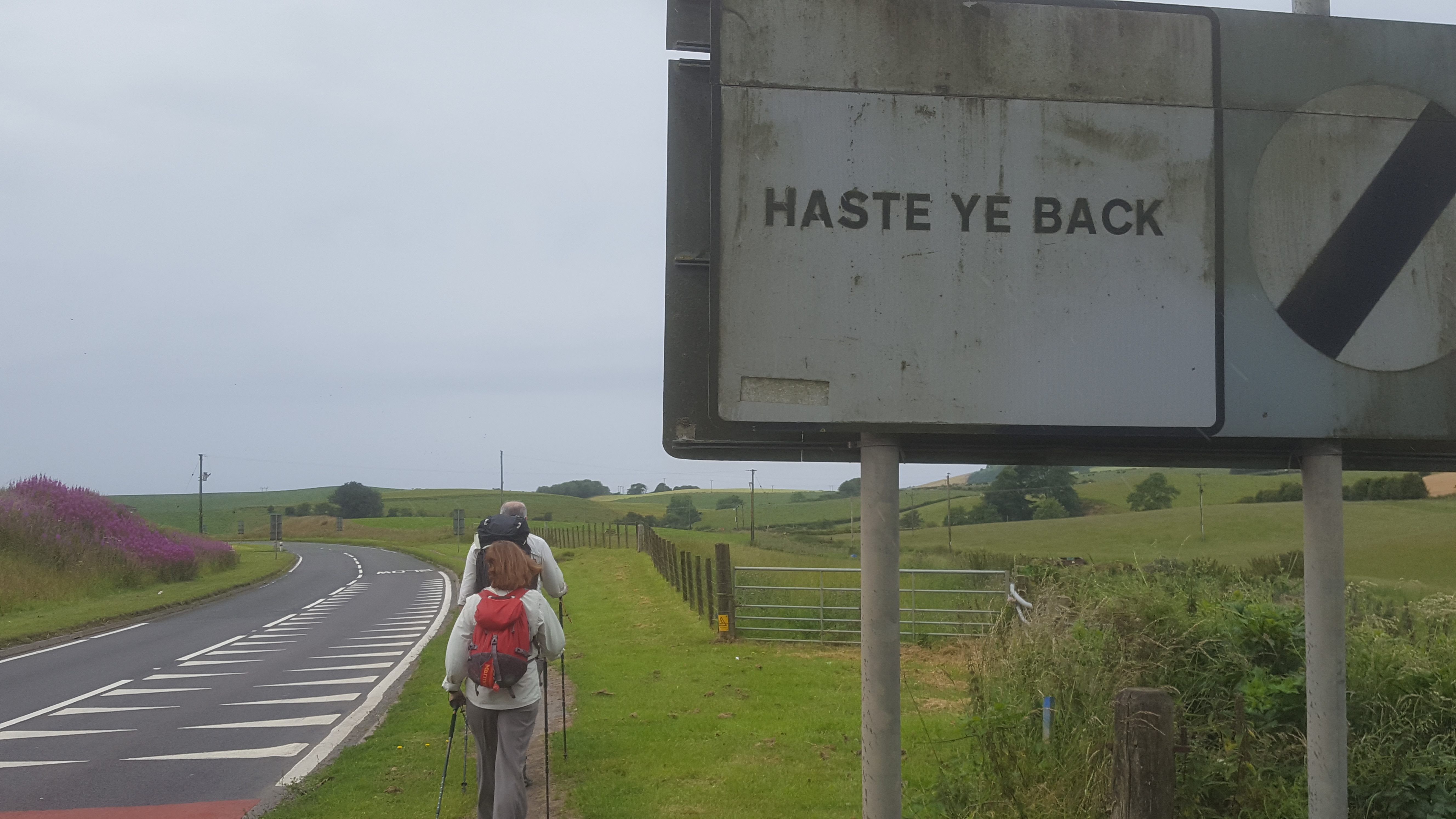
Haste Ye Back

#2   if you speak English, they speak the same language. Sort of.

Dunure Castle
The Black Vault in Dunure Castle

#3   place names – like the Waters of Luce – that sound like they come from The Princess Bride

Tatty Neeps and Haggis
‘tatties and ‘neeps (and haggis)

#4   ‘tatties and ‘neeps

Miles of Coastline Ken
photo: Ken Wilson

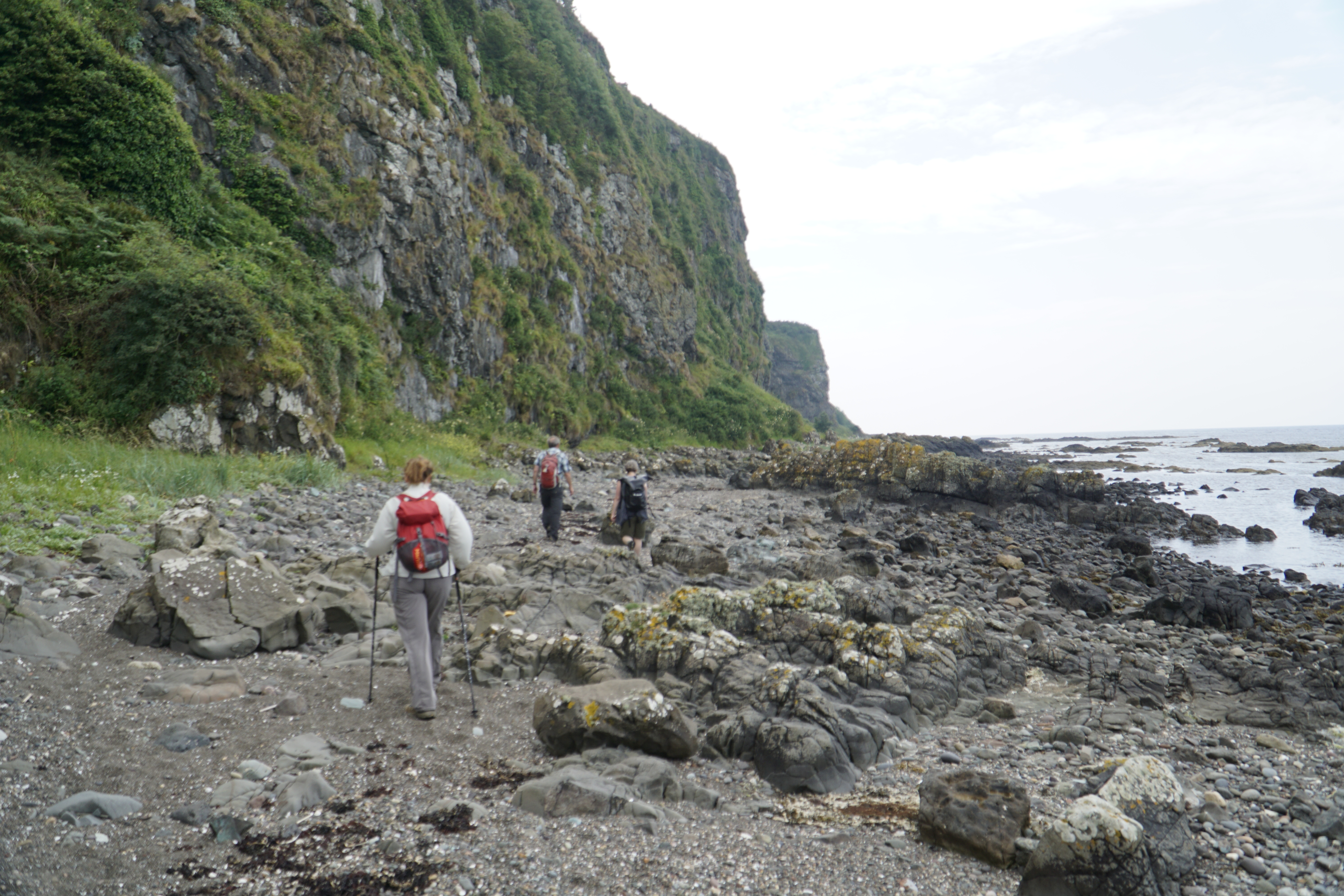
#5   miles and miles of coastal paths

No need to fight for space

#6   no need to fight for space on the trail or in albergues

Scones Jam Ken
scones and jam (for haggis, see above!)

#7   haggis is less disgusting than pulpo

St Ninian
stained glass of St Ninian at Glasgow Cathedral

#8   a saint who may have known the real King Arthur and St Patrick

Drumtroddan Standing Stones

#9   currags, castles, cairns, and caves (and neolithic standing stones)

Cask Ales

#10   real Scottish ales

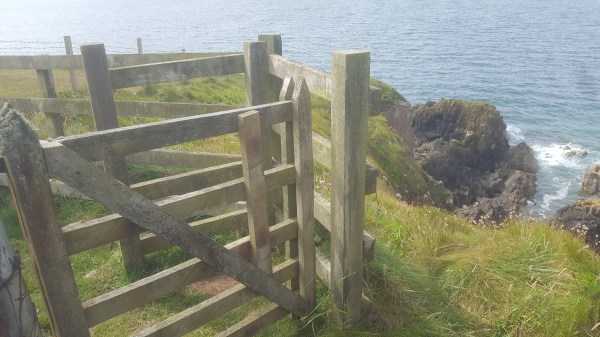
Kissing Gate

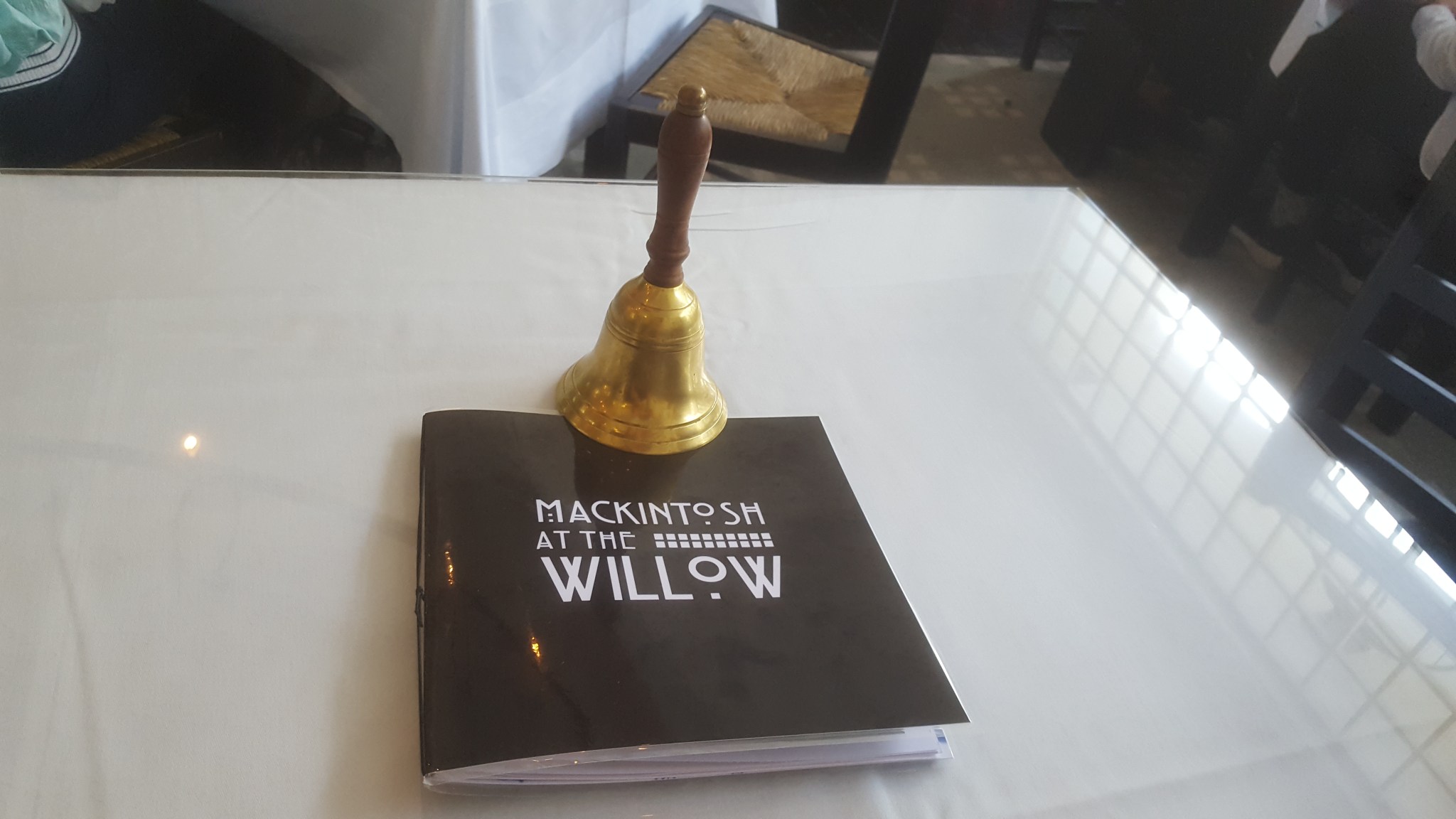
And lots more: kissing-gates on the edges of cliffs, Norse-Scots stone crosses, Stone crossa destination where on a clear day you can see Ireland, England, and the Isle of Man, Arts & Crafts art and architecture, Mackintosh at the Willow menuscones with jam, the moors, you’re more likely to be soaked in cold rain than baked by unending heat, Burns cottage slogan
Christine walking through forest RainRobbie Burns, and…I didn’t even mention A.D. Rattray’s Whiskey Experience in Kirkoswald!

Categories
Uncategorized

Fresh Trout after the Prestergatta


Day two of our pilgrimage through Iceland: We’re sitting, eight Canadians and ten Icelanders, at one long table. Our host, Hulda Gudmundsdottír, who has put us in her renovated barn (barn being a word that hardly describes the luxury of the place) comes around as we finish our meal of lake trout, potato salad and greens. Did you like the fish? She asked. I went out and caught it with my son in nets, three days ago.

The fish is only one of the wonders of this place. Elínborg Sturludottr led us along the prestergatta today, the priests’ path from the small church where we had our matins (morning devotions) to the even tinier church where we had our vespers (evening devotions). Our other priest guide, Floki Kristinsson tells us that the morning church was built on the site where Rudolf, the English monk who had accompanied St Olaf up to his death in 1030, came that same year to Iceland and started the first monastery. The Icelanders are a fun group, their humour in contrast to the starkness of this land. For the first time today, we came across what we Canadians call real trees. The Icelanders told us: what do you do if you’re lost in a forest in Iceland? Stand up. At which they laughed uproariously. We climbed up and out of the fjord this morning, 1000 feet, and came down the valley to this beautiful lake setting. In passing we were offered an unexpected afternoon coffee and some sort of sweet flatbread, by an Icelander who is interested in our pilgrimage. This place, including the people, is truly a place of wonders.

An extra treat on this blogpost: fellow pilgrim, Ásta Camilla Gylfadóttir, reads a short Icelandic folktale titled: The church builder at Reyn. Click on this link for her lovely diction and accent!

July 20 afternoon coffee
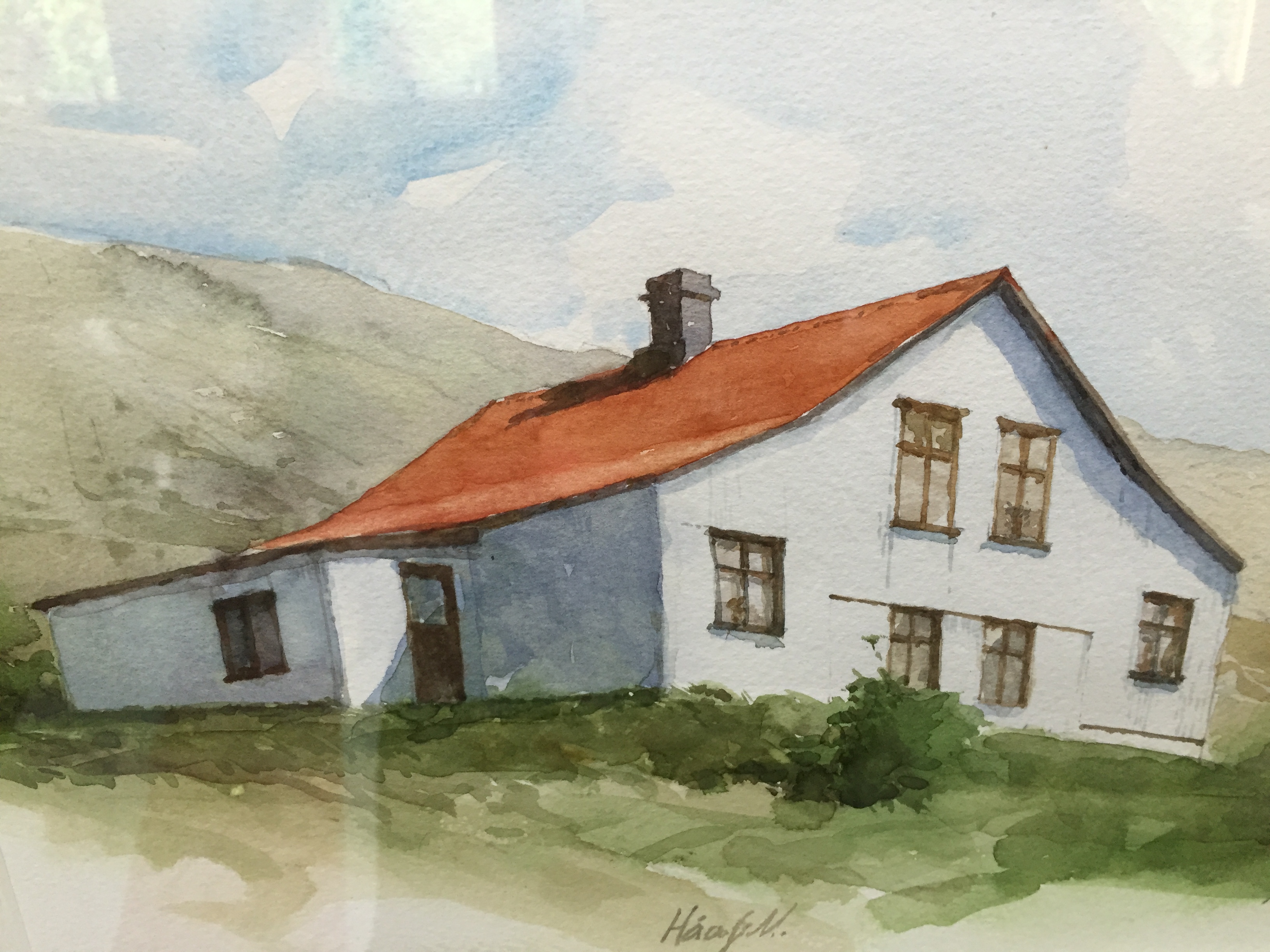
July 20 afternoon coffee traditional Icelandic cottage

Categories
Uncategorized

When the Shrine becomes the Self

Allen pondering

a ten minute conversation with Sara Terreault, at Concordia, Montreal, about what makes post-modern pilgrimage post-modern!

Categories
Uncategorized

A Musical Moment

Kathryn Scott, Madonna Hamel and Matthew Anderson try to remember the words and harmonies to Java Jive. We were camping overnight at Chimney Coulee, near Eastend SK, and half-way through our group’s 350 km trek along the North West Mounted Police Patrol trail. This is a moment from a summer 2015 pilgrimage organized by Hugh Henry and Matthew Anderson. The video was shot by James Page, photographer, from Val Marie SK. on the NWMP Patrol Trail pilgrimage July 30, 2015

Categories
Uncategorized

Jellied Salads and Howling Coyotes

jellied salad McCord

I’m writing this from a tent behind the museum in McCord SK, listening to the howling of what sounds like a hundred coyotes. They’re making quite a joyous racket to the south and east of town. Our tents are pitched just behind the old railroad station which is the museum….I had a sponge bath in what must once have been the platform for departing passengers, since this is day three with no running water or electricity close for us. Wondered if someone on that platform could travel in time, what they would think of what they saw, and of this town.

McCord may not have a cafe or more than one main street, but it has palpable community spirit. They took us in and gave us a wonderful potluck supper, and then came out in numbers (50 people) for our presentation on the North West Mounted Police Patrol trail walk. Thelma Poirier, a poet from neighboring Glentworth, talked about how lovely it was to think of this as pilgrimage. Many others loved the slides Hugh showed from the 50s and 60s, people from this area, even one sitting in the audience.

After another day of walking (today only having to cross 4 barbed wire fences and not over 20 like yesterday), we actually got here early today. There was much less walking through waist high hay fields or over bog. Today much of our path was on a lovely dirt road and we had lunch in the lee of an old farmyard’s trees, while the grasshoppers blew around in biblical proportions.

People here, when I ask them on camera, are far too polite to say that they think we’re crazy to be walking. They even brought out the best: jellied salads, potato salad, sweet and sour meatballs, and Saskatoon pie for dessert! And sent us home with our lunch for tomorrow….

Categories
Uncategorized

Making Medicine Pouches

I love my aunt. She’s always been like a second mother to me. Especially these last years, when my own mother failed, my aunt, as so often, was forced to be the safe harbour in which our family finds shelter.

My aunt is surprising. She stays up late and at 88 years old, still likes to travel. If there are potatoes to dig, she just might go dig them. She’s tough – and still, in the ways that count, old fashioned.

But not old fashioned in many other ways. We did something together tonight that I never thought we would do. We made and tied medicine pouches, with elk leather and sweetgrass from Kahnawake Mohawk Territory. The pouches are destined to be used as gifts here in Saskatchewan.

A big part of pilgrimage is learning how to receive the kindness of others. We haven’t even really begun our local Camino – this North West Mounted Police Patrol Trail pilgrimage – and so far there have already been meals, a donated vehicle, and beds to keep us sheltered until we put up our tents.

But part of pilgrimage is also recognizing what gifts we strangers bring with us to these lands we cross, and bringing physical evidence of such gifts with us. That is why I have the sweetgrass and the red string from the Mohawk, for some of the First Nations and Metis people we will meet here. I read recently that even though the Mohawk almost never came this far west, there was a group of them that overwintered, in the 19th century, in the Cypress Hills, where so many other First Nations gathered in the final, collapsing days of the bison hunting economy.

I wonder what those Mohawk saw, and thought. My aunt and I cut the leather and together wrapped up the sweetgrass. It felt like something blessed to be doing this with her, my aunt with whom so often I’ve gone to church and sung hymns as well. Someone with whom I hold this land, this prairie, in common. I held the pouch up to her nose: that smells so good, I said. Doesn’t it. That smell of leather.

She smiled. Or maybe what smells so good, she answered, is the sweetgrass.

Isabelle and the pouches

Categories
Uncategorized

Five clues that you’re already a pilgrim (even if you haven’t yet walked a trail)


Take this simple test. You know you’re a pilgrim when….


1. you find yourself washing our your shirt or underwear by hand even when you’re at home.


2. you think it would be cool to live a very full life out of a very small bag


3. it seems completely normal to you to carry blister bandages and pack water every time you step out the door


4. you’ve come to believe that for the most part, strangers are just friends you haven’t yet met


5. in your mind you dream of new landscapes to walk, and when you walk, you dream of new landscapes for your mind

at rest at St Cuthbert's cave

Categories
Uncategorized

The birthing of a pilgrimage

Allen ponderingThis hostel is accredited, begins the promotional blurb for Meso Gård , and recommended by the National Pilgrim Centre. It has met the same requirements, and holds the same standard, as the pilgrim accommodation along Camino de Santiago. But a Spanish pilgrim who comes to Norway will find themselves, not in a bunk room in barren and dusty Castrojeriz, but in a typical sod-roofed, log-cabin style Norwegian hostel in the Rennesbund district along the St-Olaf’s Way, where a river rushes by, birds are singing, mountain flowers bloom around you and everything is green. Meso is a world away from a Spanish albergue. And the differences aren’t just in the lack of Rioja and dust (the first to better deal with the second).

Those who planned the St-Olav Weg have tried to make it familiar. The elements are as standardized as the boarding procedure at airports. There is a passport, obtained from an official pilgrim centre and sized appropriately for tucking into a backpack, local business stamps validating one’s walk along the trail, trail markers along paths and roads and paint slashes on rocks to guide the way, ‘pilgrim meals’ offered at some local restaurants, and several revitalized ancient routes (traceable on a smart-phone app) toward a cathedral city celebrating a medieval saint.

Yet the similarities between the two pilgrimage routes are overshadowed by differences as high as Norway’s mountains. The mountains, in fact, may be the most obvious initial difference, at least from the Camino Frances part of the Spanish trail. It’s been less than two weeks since I walked with five other Canadians from Dovre, in the Dovrefjell district of Norway, 250 or so kilometres to Trondheim. As far as I know, we were the first group of Canadians ever to walk this way as pilgrims. Unlike my experiences on the crowded Camino Frances, there were very few others we met. Those we did echoed our experience of a satisfying but extremely tough walk through conditions more like the high Rockies than the Meseta. In part because of an unusually late, cold and wet spring, we forded swollen mountain streams, jumped from hillock to hillock through kilometres of bog, and in sections of the trail found ourselves going days without seeing other human beings, much less a store to purchase supplies. We fell down, we froze, we saw incredible beauty, one of our group broke her ankle among the endless tree roots. It may be ancient, but it was not an urban walk. Café con leche? Forget it, unless you have a thermos, some farm experience and can catch one of the abundant sheep or goats.

Because it is still early in the redevelopment of the St-Olaf Way, one of the most fascinating parts of the walk, for me, was how we met those still trying to put their mark on how the trail will develop. I felt like we were there at the beginnings of something important. We met chapel builders who want to make sure there will be a spiritual component to the walk, officials who seek the ‘new spirituality’, walkers interested primarily in ecology and environment, and others who are developing their businesses in hopes of increasing numbers of high-tech backpackers showing up at their doorsteps.

All of which raises some interesting questions. What gives a particular pilgrimage its unique character? Is there such a thing as a more or less authentic pilgrimage? It seems to me that the inevitable conflict of values in this birthing of a European pilgrimage route is useful, because it helps bring about something that, however it borrows from the past, is new. As my friend Allen Jorgenson noted, the role of land, and of landscape, is more important than some of us have realized. Maybe we should be talking about pilgrimscapes, and how the outer journey influences the shape of the inner one.

Whatever the medieval St-Olaf route once was, there is now a struggle for its modern identity. It is definitely not the Camino. What it will be remains to be seen.
Alpine shelter